
Last Updated: May 22, 2026
Understanding the difference between a dry socket and a healthy (normal) socket is crucial after a tooth extraction. Many patients search online for pictures of dry socket vs normal healing to visually confirm whether their extraction site is healing properly or developing complications. While images can be helpful, knowing the biological process behind healing provides even clearer answers.
What Is a Healthy Socket vs a Dry Socket?
A healthy socket is the site left behind after a tooth is extracted. Once the tooth is removed, the body immediately begins the healing process. A blood clot forms inside the socket, acting as a protective barrier over the exposed bone and nerve endings. Over time, this clot is replaced by granulation tissue and eventually new bone and gum tissue, leading to complete healing.
In contrast, a dry socket (alveolar osteitis) occurs when this blood clot:
-
Dislodges too early
-
Dissolves prematurely
-
Or fails to form properly
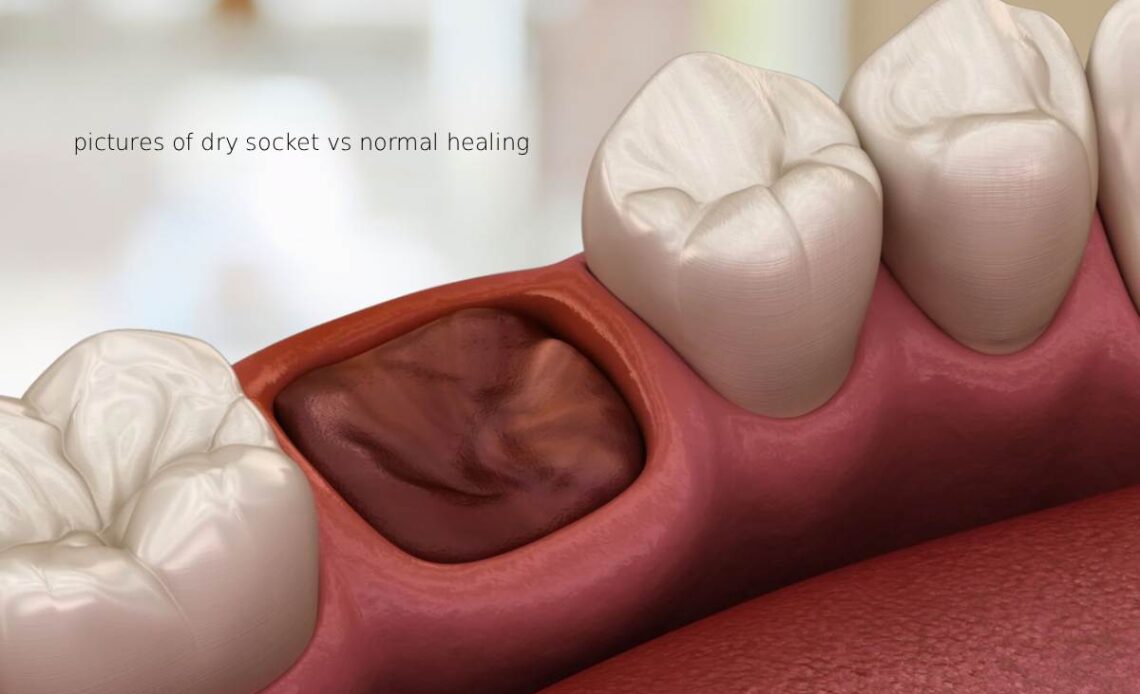
Without the clot, the bone and nerves remain exposed to air, food particles, and bacteria. This exposure explains why pictures of dry socket vs normal healing often show a visibly empty or whitish socket in dry socket cases, compared to a dark red or pink clot in healthy healing sockets.
The Causes of Dry Socket: Why It Happens After Tooth Extraction
Several factors increase the risk of developing a dry socket after extraction:
-
Dislodging of the blood clot:
Activities such as vigorous rinsing, spitting, using a straw, or smoking can remove the clot from the socket. -
Poor blood supply:
Some patients may struggle to form a stable clot due to reduced circulation or underlying health conditions. -
Infection or surgical trauma:
Difficult extractions (such as impacted wisdom teeth) or bacterial contamination raise the likelihood of dry socket formation. -
Certain medications:
Birth control pills and medications affecting blood clotting can interfere with proper socket healing.
Difference Between Normal Socket and Dry Socket After Tooth Extraction
Normal Socket After Tooth Extraction
After extraction, the socket initially appears empty but quickly fills with a protective blood clot. This clot prevents exposure of the nerves and bone, allowing healing to progress smoothly. Pain gradually decreases day by day, swelling subsides, and gum tissue begins to close over the site.
In pictures of dry socket vs normal healing, a normal socket usually looks:
-
Dark red or pink
-
Moist
-
Free from exposed bone
Dry Socket After Tooth Extraction
A dry socket occurs when the clot breaks down or disappears. As a result, the underlying bone and nerves are exposed, making healing slow and painful. Pain from a dry socket often increases 2–4 days after extraction, sometimes radiating to the ear, jaw, or temple.
In comparison images, a dry socket often appears:
-
Whitish or gray
-
Dry or empty
-
With visible bone
Dry Socket Complications
If left untreated, dry socket can lead to multiple complications, including:
-
Persistent and severe pain at the extraction site
-
Increased risk of infection due to bacterial exposure
-
Delayed healing and prolonged recovery
-
Spread of infection to surrounding gums, teeth, or jawbone
-
Bone inflammation (osteomyelitis) in severe cases
-
Chronic bad breath or foul taste
-
Difficulty eating or speaking due to discomfort
-
Higher risk of recurring dry sockets in future extractions
Prompt dental treatment significantly reduces these risks.
Treatment of Dry Socket
Once diagnosed by a dentist, dry socket treatment typically includes:
-
Thorough cleaning and irrigation of the socket
-
Medicated dressing or gauze placement to protect the site
-
Pain-relief medications or medicated pastes
-
Follow-up visits to monitor healing
Self-treatment is not recommended, as professional care ensures proper recovery.
Bottom Line
A dry socket is a common but preventable complication following tooth extraction. Under normal conditions, a blood clot forms and protects the socket, resulting in smooth healing. However, when this clot is lost, a dry socket develops, leading to intense pain, delayed healing, and visible differences—often prompting people to search for pictures of dry socket vs normal healing.
Recognizing symptoms early and visiting your dentist promptly can prevent serious complications and speed up recovery.
FAQs
How Do I Know if It’s Normal Pain or a Dry Socket?
Normal post-extraction pain gradually improves. Dry socket pain worsens over time and is often accompanied by bad breath, an unpleasant taste, and visible bone.
Can a Dry Socket Heal on Its Own?
In some cases, yes—but healing is slower and more painful without treatment. Following your dentist’s care instructions is strongly recommended.
How Do I Know If My Socket Is Healing?
Signs of healing include reduced pain, less swelling, and gum tissue forming over the socket.
How Long Does a Dry Socket Take to Heal?
Most dry sockets heal within 7–10 days with treatment. Severe cases may take 3–4 weeks.
What Should I Do If a Dry Socket Doesn’t Heal After 3 Weeks?
If symptoms persist beyond three weeks, consult your dentist immediately for further evaluation and care.
Also read: Left Eye Twitching for a Female Astrology Meaning