
Last Updated: May 21, 2026
Introduction to Hemoglobin A1c (HbA1c)
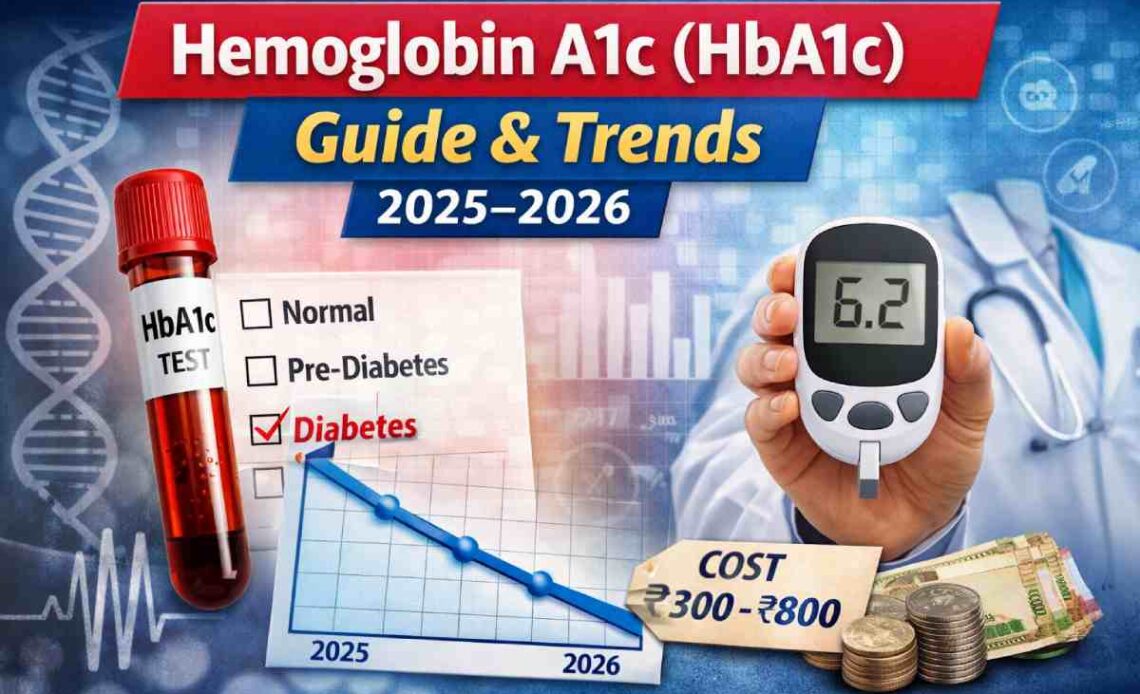
Hemoglobin A1c (HbA1c), also known as glycated hemoglobin, is one of the most critical blood tests used to diagnose and monitor diabetes. Unlike regular blood sugar tests that show glucose levels at a specific moment, HbA1c reflects average blood glucose levels over the past 8–12 weeks.
This test works by measuring how much glucose is attached to hemoglobin—the protein in red blood cells responsible for carrying oxygen. Since red blood cells live for approximately 3 months, HbA1c provides a long-term picture of blood sugar control.
HbA1c Normal Range
Normal: Below 5.7%
Prediabetes: 5.7% – 6.4%
Diabetes: 6.5% or higher
Recent clinical insights (2026) emphasize that HbA1c is more reliable than daily sugar tests because it captures hidden fluctuations that single readings may miss.
Types of Medical Specialists Who Interpret HbA1c Results
Understanding HbA1c requires expert medical interpretation. Below is a table of specialists involved:
| Specialist Type | Role in HbA1c Management | When to Consult |
| Endocrinologist | Diabetes diagnosis & treatment planning | High HbA1c (>6.5%) |
| Diabetologist | Specialized diabetes care | Long-term diabetes management |
| General Physician | Initial screening & guidance | Routine checkups |
| Nutritionist/Dietitian | Diet planning for HbA1c control | Prediabetes & lifestyle changes |
| Cardiologist | Manages heart risks linked to diabetes | High HbA1c with cardiac issues |
HbA1c Test Prices Across India (Detailed Cost Analysis)
The cost of HbA1c testing varies depending on city, lab quality, and services like home collection.
Price Table (India 2025–2026)
| Location / Provider | Price Range (INR) |
| Basic Lab Test | ₹300 – ₹800 |
| Home Collection Services | ₹349 – ₹649 |
| Premium Labs | ₹600 – ₹750 |
| Discounted Packages | ₹250 – ₹450 |
- Average cost in India: ₹300–₹800
- Budget testing available as low as ₹250 in some cities
- Online platforms offer tests starting around ₹329–₹399
Insight: Tier-1 cities often have slightly higher prices due to advanced lab infrastructure.
HbA1c Test Availability by Location (Geographical Analysis)
Major Cities Comparison Table
| City | Average Cost (INR) | Availability |
| Delhi | ₹350 – ₹750 | High |
| Mumbai | ₹350 – ₹750 | High |
| Bangalore | ₹350 – ₹750 | High |
| Hyderabad | ₹250 – ₹600 | Very High |
| Chennai | ₹350 – ₹750 | High |
| Kolkata | ₹329 – ₹500 | Moderate |
Observation: Hyderabad and Gurgaon offer some of the lowest pricing due to competitive diagnostics markets.
HbA1c vs Other Diabetes Tests
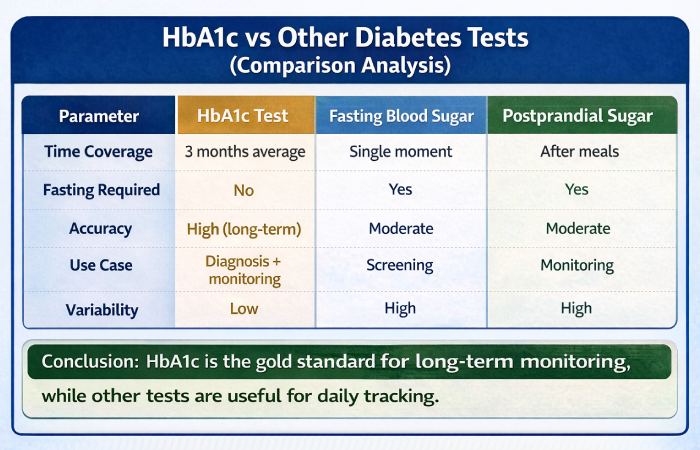
| Parameter | HbA1c Test | Fasting Blood Sugar | Postprandial Sugar |
| Time Coverage | 3 months average | Single moment | After meals |
| Fasting Required | No | Yes | Yes |
| Accuracy | High (long-term) | Moderate | Moderate |
| Use Case | Diagnosis + monitoring | Screening | Monitoring |
| Variability | Low | High | High |
Patient Reviews & Expert Opinions
Patient Feedback Trends (2025–2026)
- Most patients prefer HbA1c due to no fasting requirement
- Home sample collection has improved convenience
- Increased awareness among urban populations
Expert Insights
- Doctors recommend testing every 3–6 months depending on condition
- Lifestyle changes (diet + exercise) significantly reduce HbA1c levels
Common Pros & Cons
Pros:
- Long-term accuracy
- No fasting needed
- Helps predict complications
Cons:
- May be affected by anemia (especially in India)
- Not sufficient alone for diagnosis
Case Study: HbA1c Trends (2025–2026)
Scenario:
A 45-year-old patient with prediabetes monitored HbA1c over two years.
Data Table
| Year | HbA1c (%) | Intervention |
| Early 2025 | 6.2% | No lifestyle change |
| Mid 2025 | 6.5% | Started diet control |
| Late 2025 | 6.0% | Added exercise |
| Early 2026 | 5.7% | Weight reduction |
| Mid 2026 | 5.5% | Stable lifestyle |
Graph Representation
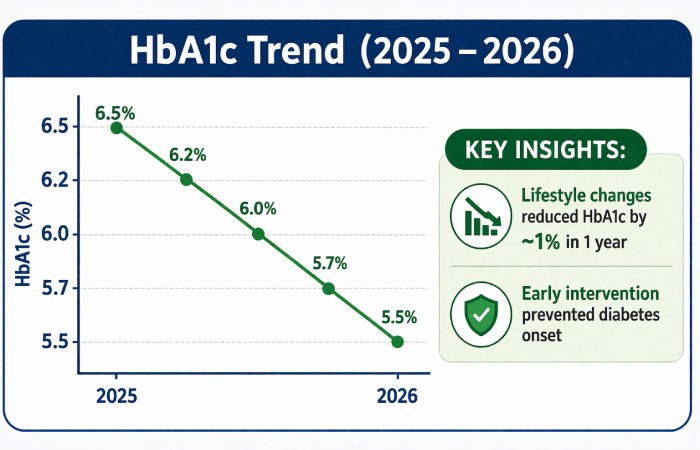
Key Insights: Lifestyle changes reduced HbA1c by ~1% in 1 year
Early intervention prevented diabetes onset
New Updates & Research (2025–2026)
Key Medical Updates
- Accuracy Concerns in India (2026)
- Studies show HbA1c may be affected by anemia
- Risk of misdiagnosis in certain populations
- Integrated Diagnosis Approach
- Experts recommend combining HbA1c with fasting glucose tests
- AI-Based Diabetes Monitoring
- Labs now integrating AI tools for predictive analytics
- Home Testing Growth
- Rise in doorstep diagnostics post-2025
- Preventive Healthcare Trend
- HbA1c increasingly used in annual health checkups
Conclusion
HbA1c has become the cornerstone of diabetes diagnosis and management in modern healthcare. Its ability to provide a long-term overview of blood sugar levels makes it far more reliable than traditional glucose tests.
However, emerging research highlights the importance of combining HbA1c with other diagnostic tools, especially in countries like India where factors like anemia can affect accuracy.
From affordability (₹300–₹800) to widespread availability, HbA1c testing is now accessible to most individuals, making it a vital tool for preventive healthcare in 2025–2026.
Frequently Asked Questions (FAQ)
Q1. What is HbA1c in simple terms?
It measures your average blood sugar levels over the past 3 months.
Q2. Is fasting required for HbA1c?
No, fasting is not required.
Q3. How often should I take the test?
Every 3–6 months for diabetic patients.
Q4. What is a dangerous HbA1c level?
Above 6.5% indicates diabetes.
Q5. Can HbA1c be wrong?
Yes, conditions like anemia can affect results.
Q6. Is HbA1c enough to diagnose diabetes?
No, doctors often combine it with other tests.
Also read: Alps Goodness Rosemary Water