
Last Updated: May 21, 2026
Tai Chi walking is gaining popularity across the United States as a gentle yet highly effective mind-body exercise. Often described as “meditation in motion,” it combines slow, deliberate walking with controlled breathing, posture alignment, and mindfulness. While rooted in ancient Chinese martial arts, Tai Chi walking has been widely studied and adopted in U.S. healthcare, fitness, and rehabilitation programs.
This in-depth guide explains everything you need to know about Tai Chi walking—its meaning, benefits, techniques, scientific backing, and how it is practiced in the United States.
What Is Tai Chi Walking?
Tai Chi walking is a slow, controlled form of walking based on Tai Chi principles. Unlike normal walking, where speed and distance are the focus, Tai Chi walking emphasizes:
- Balance and weight shifting
- Body awareness and posture
- Deep breathing
- Mindful movement
Each step is performed deliberately, with full attention to how the foot touches the ground and how weight transfers between legs.
According to research-backed explanations, Tai Chi is a low-impact exercise involving slow, continuous movements combined with breathing and focus, making it suitable for all ages and fitness levels
Tai Chi Walking vs Normal Walking
| Feature | Tai Chi Walking | Normal Walking |
| Speed | Slow and controlled | Moderate to fast |
| Focus | Mindfulness and balance | Distance and pace |
| Breathing | Deep, synchronized | Natural, often unnoticed |
| Impact | Very low (joint-friendly) | Moderate impact |
| Purpose | Mind-body connection | Physical activity |
Origins and Evolution in the United States
Tai Chi originated in China over 1,000 years ago as a martial art, but in the United States, it has evolved into a wellness and therapeutic practice.
Today, Tai Chi walking is used in:
- Senior fitness programs
- Physical therapy clinics
- Rehabilitation centers
- Community wellness programs
Organizations like the National Center for Complementary and Integrative Health have supported research on Tai Chi, showing its effectiveness in improving mobility and overall health.
Scientific Evidence and Research (U.S.)
Research in the U.S. strongly supports Tai Chi walking and related practices.
Key Findings
| Study Area | Findings |
| Balance & Fall Prevention | Improves stability and reduces fall risk in older adults |
| Walking Ability | Enhances gait and coordination after training |
| Chronic Disease | Helps manage diabetes, COPD, and heart conditions |
| Mental Health | Reduces stress, anxiety, and improves sleep |
Tai Chi is often referred to as “medication in motion” due to its broad health benefits
Key Principles of Tai Chi Walking
Tai Chi walking is based on fundamental principles that differentiate it from ordinary walking.
1. Weight Transfer
Each step involves shifting weight slowly from one leg to another.
2. Upright Posture
The spine remains straight and relaxed.
3. Controlled Breathing
Breathing is synchronized with movement.
4. Mindfulness
Attention is focused on each movement.
5. Slow Movement
Speed is intentionally reduced to improve control.
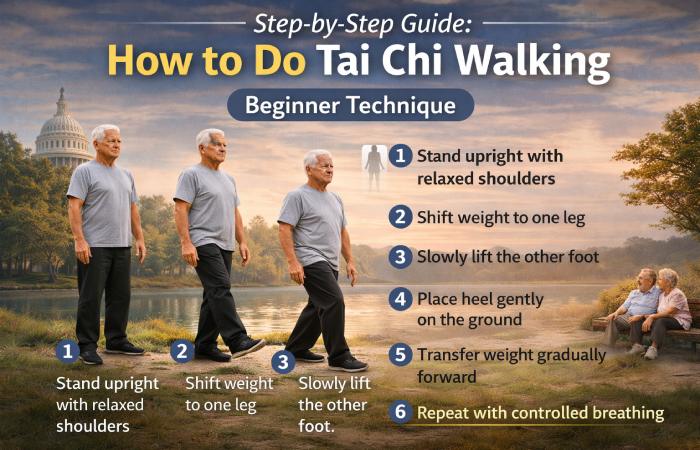
Step-by-Step Guide: How to Do Tai Chi Walking
Beginner Technique
| Step | Action: |
| 1 | Stand upright with relaxed shoulders |
| 2 | Shift weight to one leg |
| 3 | Slowly lift the other foot |
| 4 | Place heel gently on the ground |
| 5 | Transfer weight gradually forward |
| 6 | Repeat with controlled breathing |
Tip: Move as slowly as possible without losing balance.
Benefits of Tai Chi Walking
Physical Benefits
| Benefit | Explanation |
| Improves balance | Reduces fall risk in older adults |
| Strengthens muscles | Builds core and leg strength |
| Enhances flexibility | Gentle joint movements improve mobility |
| Low-impact exercise | Safe for arthritis and injuries |
| Supports heart health | Improves circulation |
Mental Benefits
| Benefit | Explanation |
| Reduces stress | Deep breathing calms the nervous system |
| Improves focus | Mindfulness enhances concentration |
| Better sleep | Promotes relaxation and mental clarity |
| Emotional balance | Reduces anxiety and depression |
Recent wellness insights highlight that Tai Chi walking lowers stress and improves mood through mindful breathing and movement
Tai Chi Walking for Different Age Groups
Seniors
- Improves balance and prevents falls
- Enhances mobility
- Supports independence
Adults
- Reduces stress from work
- Improves posture
- Helps maintain fitness
Beginners
- Easy to learn
- No equipment required
- Suitable for all fitness levels
Tai Chi Walking and Weight Loss
Tai Chi walking is not a high-calorie-burning exercise, but it supports weight management indirectly.
| Factor | Impact |
| Calorie Burn | Moderate (~280–350 kcal/hour) |
| Stress Reduction | Helps reduce emotional eating |
| Consistency | Easy to maintain long-term |
| Metabolism | Improves overall body function |
Tai Chi Walking vs Yoga vs Meditation
| Feature | Tai Chi Walking | Yoga | Meditation |
| Movement | Yes | Yes | No |
| Breathing | Yes | Yes | Yes |
| Focus | Mind-body | Flexibility | Mind |
| Difficulty | Easy | Moderate | Easy |
| Equipment | None | Mat | None |
Tai Chi Walking in U.S. Healthcare
In the United States, Tai Chi walking is widely used in:
- Physical therapy programs
- Fall prevention programs
- Cardiac rehabilitation
- Mental health therapy
Doctors often recommend it as a safe complementary therapy alongside standard treatments
Common Mistakes to Avoid
| Mistake | Correction |
| Walking too fast | Slow down movement |
| Poor posture | Keep spine straight |
| Ignoring breathing | Sync breath with steps |
| Lack of focus | Stay mindful |
| Overexertion | Keep movements gentle |
Who Should Practice Tai Chi Walking?
Tai Chi walking is ideal for:
- Older adults
- People with joint pain
- Beginners in fitness
- Individuals recovering from injury
- Anyone seeking stress relief
Safety Tips
- Start slowly
- Practice on flat surfaces
- Wear comfortable shoes
- Consult a doctor if you have medical conditions
- Learn from a trained instructor if possible
Future Trends in the United States
Tai Chi walking is becoming increasingly popular due to:
- Aging population
- Demand for low-impact exercise
- Mental health awareness
- Integration into digital fitness apps
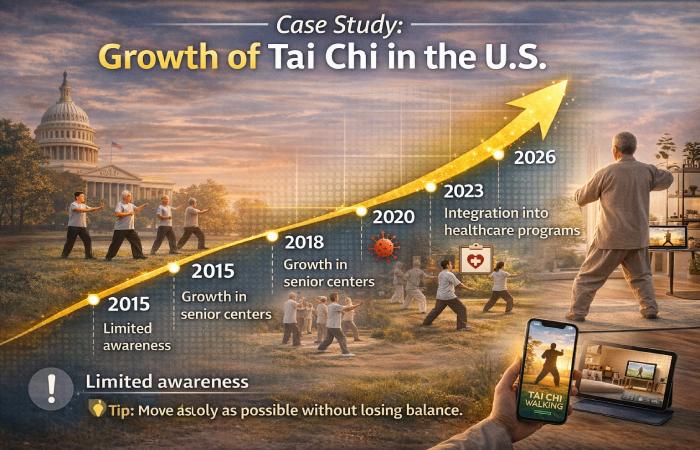
Case Study: Growth of Tai Chi in the U.S.
| Year | Trend |
| 2015 | Limited awareness |
| 2018 | Growth in senior centers |
| 2020 | Increased adoption during COVID-19 |
| 2023 | Integration into healthcare programs |
| 2026 | Digital and home-based Tai Chi walking rising |
External High-Authority Resources
- Harvard Health Publishing – Tai Chi benefits and research
- National Center for Complementary and Integrative Health – Clinical studies and health insights
Conclusion
Tai Chi walking is a powerful yet simple practice that combines physical movement with mental focus. In the United States, it is increasingly recognized as a scientifically supported, low-impact exercise that improves balance, reduces stress, and enhances overall well-being.
Unlike traditional workouts, Tai Chi walking is not about intensity—it’s about awareness, control, and consistency. Whether you are a beginner, senior, or someone looking for a holistic fitness approach, Tai Chi walking offers a sustainable path to better health.
Also read: Well Health Organic Best Health Care