
Last Updated: July 23, 2026
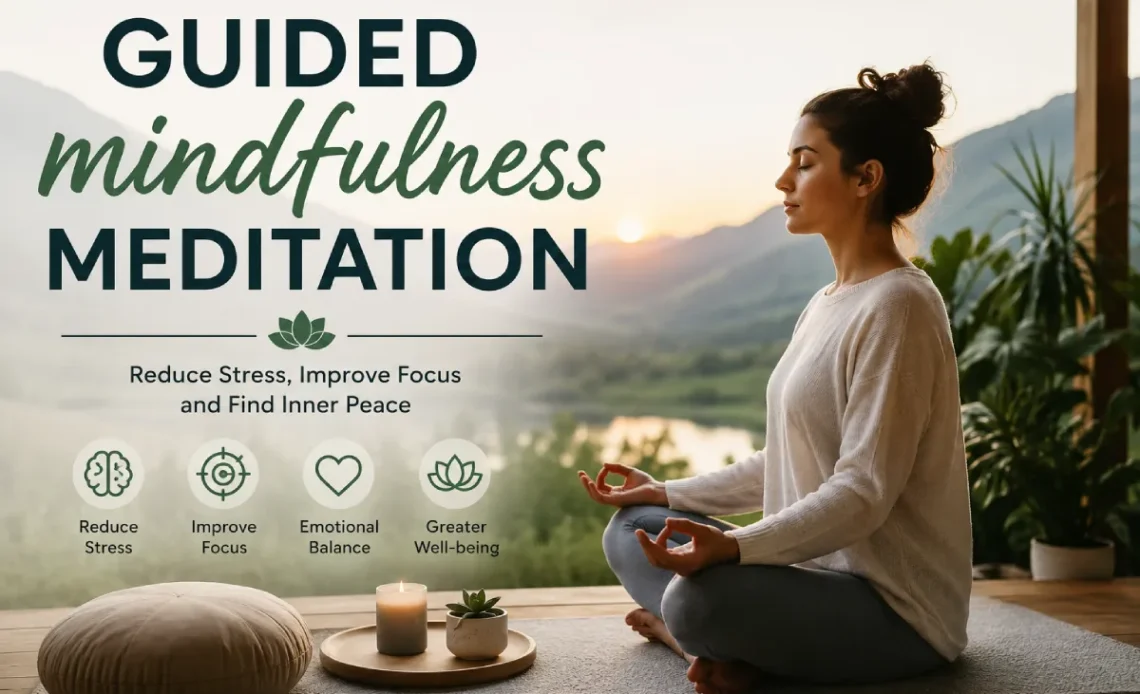
In today’s society of constant notifications, endless tasks, and hectic schedules, life can feel quite overwhelming. Guided mindfulness meditation is one of the easiest, simplest ways to learn how to press the “pause” button, reduce stress, and learn how to live more fully in the here and now. From boosting your focus and enhancing sleep to managing anxiety and gaining peace of mind, this beginners’ guide to guided mindfulness meditation can lead you to a lifelong habit.
This Article is the Part of Mindfulness
Within this article, we will cover: What guided mindfulness meditation is What guided meditation is The many benefits of guided mindfulness meditation How to start a guided mindfulness meditation practice
What Is Guided Mindfulness Meditation?
Guided mindfulness meditation is a type of meditation you do with an instructor or an audio recording or mobile application that will take you step-by-step through a structured mindfulness exercise. In place of sitting meditating quietly, you’ll be receiving direction via spoken words that will allow you to concentrate on such things as your breath, the way your body feels, or the objects you perceive around you – without your being judgmental about them. Guided meditation exercises also are ideal for meditation novices.
If you have someone talking you through the session you have less time to space out and be unable to remember where you are. Guided meditation sessions can vary in length of 5-30 minutes.
What’s the Point of guided meditation?
In search of better mental and physical wellness ,guided mindfulness meditation could possibly be the answer. Research has shown that consistent meditation may aid your emotional health. There are many benefits that Guided Mindfulness Meditation can provide including:
Some key benefits include:
- Decrease the stress and anxiety you experience daily
- Increase focus and clarity
- Increase your sense of emotional balance and well-being
- Provide improved sleep quality
- Combat negative thought patterns
- Offer healthier coping skills to deal with everyday problems
- Help increase self-awareness
- Offer a sense of relaxation and calm
Most people who use Guided Mindfulness Meditations notice some changes within weeks of consistent meditation.
Why Meditation is Perfect For Beginners
Newcomers will often become frustrated by thinking they’re ‘doing meditation wrong’ and distracted by the train of thought passing through their minds. Learning how to mediate can, fortunately, be broken down and simple meditation will be taught through guided meditation in steps. Your guided meditations will give structure by:
A beginner meditation guide provides structure by:
- Explaining simple breathings techniques
- Helping maintain focus
- Supporting you when your mind begins to wander
- Giving you nudges to stay present
- Making meditation less intimidating
Introducing you to meditation gradually There’s no right or wrong, only practice
How to Start a Mindfulness Meditation Practice
Building up a sustainable mindfulness meditation practice doesn‘t require any special equipment or even experience.
- Follow these simple steps:
Find a Quiet Space
Select a comfortable place with few distractions. - Sit Comfortably
Sitting on a comfortable hold-a Chair or cushion that is comfortable Sit in something comfortable, such as a chair or on a cushion with your back in a natural position - Close Your Eyes (Optional)
If at ease, softly close, or soften, your eyes. - Focus on Your Breath
Observe every breath that you take in and breathe out without any effort to manipulate the process. - Follow the Guide
Pay close attention to the voice of the instructor. Use it to guide your focus. - Accept Wandering Thoughts
Thoughts wandering off happen all the time. When it happens, just think, we… and go back to the instruction. - Finish Slowly
Before opening your eyes and moving on with your day, take a few deep breaths.
A little everyday can add up over time. Even five minutes.
Daily Mindfulness Exercises You Can Practice
Meditation doesn‘t have to be done while sitting quietly. Integrate daily mind exercising into your life‘s daily activities.
- Try these simple exercises:
Breathing Mindfully Find a quiet moment to just think about your breath for one minute (you can even set a timer). Just one minute of focusing your thoughts, with eyes shut, just thinking of nothing except the way you’re breathing in and out. - Body Scan
Point out each part of your body to yourself, feeling for what is coming up tight and what is feeling free. - Mindful Walking
Slow down and hear each step, and notice everything around you. Mindful eating. - Mindful Eating
Eat one meal completely distraction free with the taste, texture, and smell being fully aware of. - Gratitude Reflection
Reflection Gratitude “Every evening time reflection upon three great things occurred to thee that day.
These subtle exercises nourish mindfulness outside of formal practice, as well.
Choosing the Right Guided Meditation
Not every meditation session fits every goal. Consider what you want to achieve before selecting one.
| Goal | Recommended Session Length |
| Stress relief | 10–15 minutes |
| Better focus | 10 minutes |
| Improved sleep | 20–30 minutes |
| Morning mindfulness | 5–10 minutes |
| Relaxation after work | 15–20 minutes |
Experiment with different session lengths to discover what works best for your lifestyle.
Common Challenges for Meditation Beginners
The fact is, at least everybody runs into problems at the beginning. The way to go is persitence not a permanent handstand.
Common challenges include:
Restlessness
Lack of concentration
Sleepiness
Impatience
Self-judgment
Expecting immediate results
Remember, mindfulness involves acceptance without evaluation. Every session adds to your journey of progress, even when that journey seems tough.
Helpful Apps and Resources
These are some excellent reliable apps that offer great guided meditations for beginning, intermediate and advanced practitioners.
Popular options include:
Headspace This provides a comprehensive yet easy-to use structuralized program for beginners
Calm –Sleep stories and relaxation sessions
Insight Timer free guided meditations from a community of thousands
Healthy Minds Program Science based Mindfulness training
Most sites have free material, while moving onto paid (premium) subscriptions.
Tips for Building a Lasting Meditation Habit
Duration is not as important as the consistency of sessions.
Here are a few practical tips:
Begin with only five minutes per day.
Same time Every day.
Set alarms or calendar reminders.
Establish a quiet place for meditation.
Log your progress in a journal.. Be patient.
A routine also becomes more manageable when it easily integrates into your everyday life.
Frequently Asked Questions
Medtiate for how long as they are comfortable.
Begin by dedicating 5 to 10 minutes a day. Expand your practice as meditation becomes easier.
Is guided meditation more effective than silent meditation?
Guided meditation is generally more user-friendly to beginners, as it offers more explicit guidance and aids concentration. A lot of further…
. Most advanced users also continue using guided sessions.
Is it possible that guided meditation will aid stress?
Yes. Mindfulness meditation designed to be guided often leads to a feeling of relaxation and awareness of the present moment, which most people find useful when dealing with daily stress.
Sleeping or lying down while meditating. In fact, you don‘t even have to be sitting in meditation; you‘ll be surprised with some cases of no keep to stand up. For example, if you find you lie down to meditate, then give to Meditation to lie down.
Yes, particularly for sleep related meditation. The sitting upright may be helpful at keeping you alert during your daytime practice.
Final Thoughts
Guided mindfulness meditation is the easiest way to start cultivating mindfulness as a lifelong practice. Having hands-on instructions that follow simple strategies and are adaptable to go as long or as short as you want takes most of the guesswork out of beginning.
Through continued daily practice with simple meditation exercises, bringing more focused mindfulness into your life, and approaching meditation with patience instead of expecting perfection, you will begin to form the habits that will enhance your focus, emotional balance and well-being in the end.
No matter if your intentions are to relax, enhance focus or sleep better, taking a few minutes every day to try guided meditation is a very practical first step in healthier thinking.