
 Sameena Fatima
Health & Wellness Content Writer
in
Sameena Fatima writes reader-focused
health and wellness content for
HealthBloomWeb, covering fitness,
nutrition, healthy lifestyle and
everyday wellness topics.
Sameena Fatima
Health & Wellness Content Writer
in
Sameena Fatima writes reader-focused
health and wellness content for
HealthBloomWeb, covering fitness,
nutrition, healthy lifestyle and
everyday wellness topics.
 Mirza Ibrahim Ali Khan
Editorial & Content Reviewer
in
Mirza Ibrahim Ali Khan contributes to
HealthBloomWeb's editorial review process,
with a focus on content structure,
readability, search intent and overall
editorial quality.
Mirza Ibrahim Ali Khan
Editorial & Content Reviewer
in
Mirza Ibrahim Ali Khan contributes to
HealthBloomWeb's editorial review process,
with a focus on content structure,
readability, search intent and overall
editorial quality.
 Reyansh Sethi
Medical Reviewer
in
Reyansh Sethi contributes to the medical
review process at HealthBloomWeb, focusing
on clarity, responsible health context and
reader-friendly presentation of health
information.
Reyansh Sethi
Medical Reviewer
in
Reyansh Sethi contributes to the medical
review process at HealthBloomWeb, focusing
on clarity, responsible health context and
reader-friendly presentation of health
information.
What Is Mindfulness for Stress?
Mindfulness, which involves paying attention in a particular way, on purpose, in the present moment, non-judge mentally (Kabat-Zinn, 1990).
When you‘re stressed, the mind tends to flip between being preoccupied with the future and nostalgic in the past. Consciousness calmly re-focuses the mind to the present, so you can helpfully rather than instinctively.
Rather than trying to get rid of stress, mindfulness alters your perception of it. The more you practice, the better you become at staying calm, on task, and composed while under strain.
This Article is the Part of Mindfulness
Effects of stress on the mind and body
Stress is how your body prepares to meet challenges. Chronic stress can affect just about every system in your body.
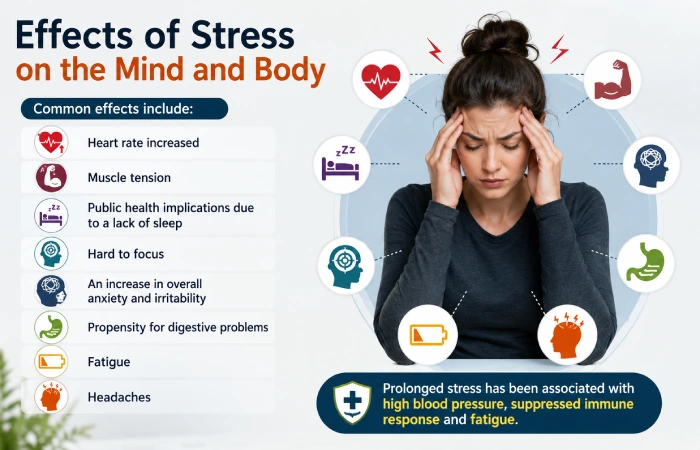
Common effects include:
- Heart rate increased
- Muscle tension
- Public health implications due to a lack of sleep
- Hard to focus
- An increase in overall anxiety and irritability
- Propensity for digestive problems
- Fatigue
- Headaches
Prolonged stress has been associated with high blood pressure, suppressed immune response and fatigue.
The practice of Mindfulness can break this chain because it stimulates the Relaxation Response in the body and cuts down on the state of being constantly stressed.
Comparison: Stress Response vs Mindful Response
| Situation | Typical Stress Response | Mindful Response |
| Work too hard Panic | over whelmed Learn | Work too hard Panic |
| Family conflict | Emotional response | Momentary interruption prior to answer |
| Traffic delays | Frustration | Practice breathing consciously |
| Exam pressure | Catastrophic thinking | Focus on the next step in study |
| Lack of sleep | Increased anxiety | Calm yourself and get back to your normal pattern. |
This change in perspective is probably the most convincing argument for recommending mindfulness as part of a wider stress management program.
The Science Behind Mindfulness and Stress
Scientists are still researching mindfulness and its effects on mental and physical health.
Recent research suggests that regular mindfulness practice can:
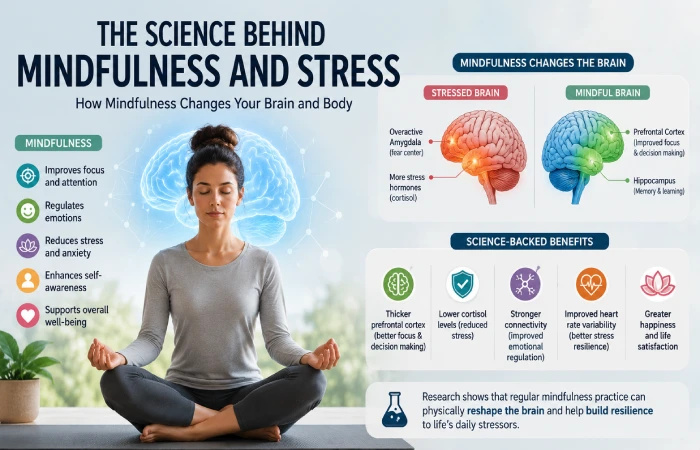
| Research Finding | Potential Benefit |
| Improves emotional regulation | Provides more effective ways of dealing with stress reactions. |
| Decreased perceived stress | Feeling more relaxed when facing everyday difficulties |
| Builds higher levels of attention | Increased concentration and efficiency. |
| Supports sleep quality | Better recovery and less fatigue |
| Fosters healthier coping strategies | Less emotional reactivity |
Research carried out in this area on(MBSR) programs have demonstrated reductions in stress, anxiety and general well-being for many participants, but results have been varied according to the individual concerned and how consistent they are in practicing the program.
Benefits of Mindfulness for Stress
1. Reduces Mental Overload
Mindfulness helps slow obsessive thinking, and creates a space between a stressor and your response.
2. Improves Emotional Resilience
Instead of trying to push away difficult feelings, mindfulness actually helps you to become more aware of and more comfortable with them.
3. Enhances Focus
Practice on a daily basis and your focus will grow stronger as you repeatedly train your mind to bring itself back to the present when it goes astray.
4. Supports Better Sleep
For many, practicing mindfulness exercises before sleep is a way to relax and calm their nervous system.
5. Encourages Healthier Habits
Mindful practitioners also tend to pay more attention to eating habits, screen time, exercising and other lifestyle factors that affects their stress level.
Mindful Breathing: The Simplest Way to Reduce Stress
Of all the mindfulness techniques, mindful breathing is one of the best and simplest to learn and to do almost anywhere.
Just watch each inhale and exhale with fascination, rather than trying to force them to change.
Basic Mindful Breathing Exercise
- Get comfortable.
- Relax your shoulders.
- Close your eyes if you wish.
- Breathe naturally.
- And feel each breath.
- Bring your attention back to your breathing if you find that your mind has wandered.
Begin with just 5 minutes a day.
Four Easy Stress Relief Exercises
1. Body Scan Meditation
Show different areas of your for body scan from head to foot, telling yourself if they are tight and without any expectation of relax them.
Best for:
- Tight muscles
- Relaxing in the evening.
- Sleep more well
2. Mindful Walking
Walk more slowly than usual for ten minutes, being aware of you body, your surroundings and all that you see, hear, feel and smell.
This exercises is really beneficial when you are in a work break or you stay in a sit position for a long time.
3. Five Senses Exercise
Pause and identify:
- 5 things you see
- Four thing you feel
- Three things that learn to hear you; its potential by and to you; and by eve. In a larger sense: three forms learning to hear you.
- Two things you Smell
- One thing you taste
This exercise shuts down anxious thinking and draws the mind towards the present.
4. Gratitude Reflection
Each night before you go to sleep, write down three thing you apreciate.
This exercise, practiced on a regular basis, will over time, develop more ratio voice, and lead to not over attending to stressful life events.
Building Daily Mindfulness Habits
It is better to build small, regular routines rather than try to do things in big sessions now and then.
Consider these beginner-friendly mindfulness habits:
| Habit | Time Needed | Benefit |
| Morning mindful breathing | 5 minutes | Begin the day relaxed |
| Mindful tea or coffee break | 5 minutes | Less multitasking |
| Mindful eating | 1 meal | Enhance the ability to tune into hunger and fullness. |
| Evening gratitude journal | 5 minutes | Encourages positive reflection |
| Screen-free mindful walk | 10–15 minutes | Lessen mental tiredness |
Conclusion
The Wrap-Up Life doesn’t have to be one continuous struggle with stress. Developing effective stress-relief techniques and maintaining stress-reduction routines like daily meditation is within anyone’s reach – no expensive equipment required and definitely no need for long stints of meditation. All you need is a little time for each aspect, whether you incorporate them one at a time or as part of your day.
Capitalise on the benefits of this approach with a few simple stress relief breathing exercises, incorporating them into your daily routine. Don’t forget to recognise, like meditation for stress and relaxation, that it is a practice, not an instant remedy.