
 Sameena Fatima
Health & Wellness Content Writer
in
Sameena Fatima writes reader-focused
health and wellness content for
HealthBloomWeb, covering fitness,
nutrition, healthy lifestyle and
everyday wellness topics.
Sameena Fatima
Health & Wellness Content Writer
in
Sameena Fatima writes reader-focused
health and wellness content for
HealthBloomWeb, covering fitness,
nutrition, healthy lifestyle and
everyday wellness topics.
 Mirza Ibrahim Ali Khan
Editorial & Content Reviewer
in
Mirza Ibrahim Ali Khan contributes to
HealthBloomWeb's editorial review process,
with a focus on content structure,
readability, search intent and overall
editorial quality.
Mirza Ibrahim Ali Khan
Editorial & Content Reviewer
in
Mirza Ibrahim Ali Khan contributes to
HealthBloomWeb's editorial review process,
with a focus on content structure,
readability, search intent and overall
editorial quality.
 Reyansh Sethi
Medical Reviewer
in
Reyansh Sethi contributes to the medical
review process at HealthBloomWeb, focusing
on clarity, responsible health context and
reader-friendly presentation of health
information.
Reyansh Sethi
Medical Reviewer
in
Reyansh Sethi contributes to the medical
review process at HealthBloomWeb, focusing
on clarity, responsible health context and
reader-friendly presentation of health
information.
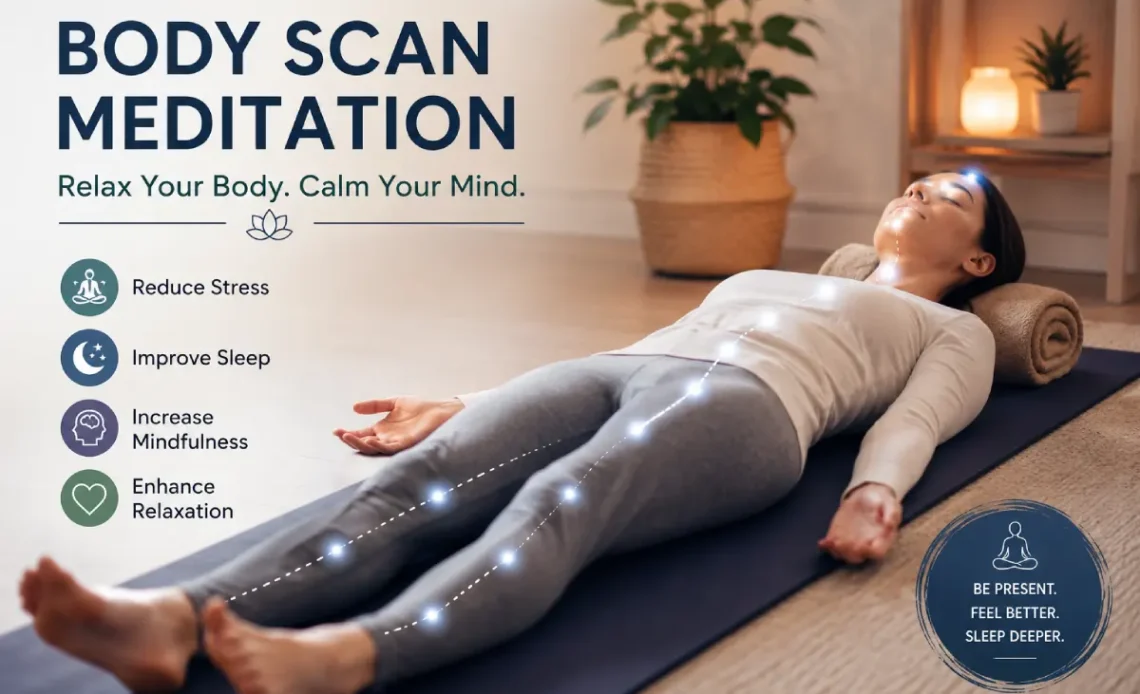
Body scan Meditation is one of the most simple methods of the numerous mindfulness techniques to help relieve the stress, calm yourself down and regain contact with your own body. It is effective in dealing with everything from day-to-day stress and body tension to sleeping problems.
The body scan is different than other meditation techniques that are centered on breathing, such as Kinhin, since it, instead, takes your awareness to various areas of your body. It is designed for noticing physical sensations in your body with compassion. Several individuals also use this as a sleep meditation because a body scan creates relaxation when it is time to go to bed and has shown benefits for sleeping when practiced daily.
This Article is the Part of Meditation
In this guide you will discover what body scan meditation is and how it works, the advantages of practicing body scan meditation and how to practice guided body scan meditation at home.
About Body Scan Meditation What Is Body Scan Meditation?
Body scan meditation. Involves focusing your attention on various parts of your body from your toes to your head or in the opposite direction.
Rather than trying to change how your body feels, you simply observe sensations such as:
- How warm is it
- Tingling
- Tautness
- Pressure
- Relaxation
- Tone of the muscle
How Does Body Scan Meditation Function?
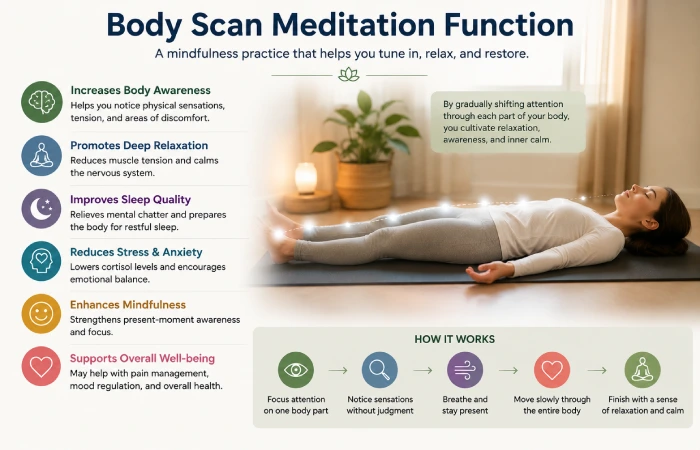
As you are guided to focus your mind body-by-body, you move your attention gradually from one area to the next while breathing in your natural rhythm.
A typical session includes:
- Find a comfortable sitting or lying position.
- Close your eyes if comfortable.
- Take several slow, deep breaths.
- Focus on your feet and notice any sensations.
- Gradually move upward through your legs, hips, abdomen, chest, arms, shoulders, neck, and face.
- Observe sensations without judging them.
- Finish with a few deep breaths before opening your eyes.
Practicing even just for 10 minutes can help you relax and restore balance.
Benefits of Body Scan Meditation
Regular application of body scan meditation can result in the following physical and mental wellness benefits:
Reduces Stress
Muscles can become tense under stress and we remain unaware. When body scanned, increasing awareness of tension makes it easier to consciously release the muscles.
Supports Better Sleep
Most people do a body scan meditation meditation prior to going to sleep. Calms racing thoughts and relaxes the body. As a meditation for insomnia, this can be used as part of a healthy nighttime routine.
Improves Mindfulness
No need to be anxious about what will or what was body scan meditation encourages you to be comfortable with where you are.
Enhances Emotional Awareness
Physical feelings are often associated with emotions. Paying attention to your body can help you notice emotional distress sooner.
Encourages Relaxation
Of all the Relaxation Skills, the Body Scan Meditation is the softest, simplest, most accessible relaxation skill; it does not involve any equipment or expertise.
How to Practice a Guided Body Scan Meditation
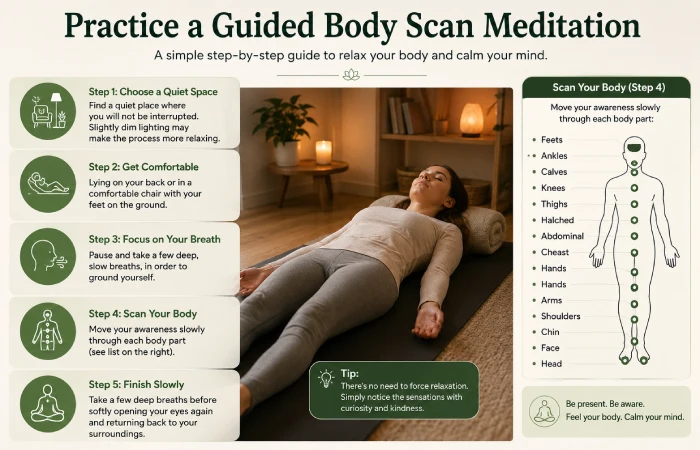
If this is your first time practicing meditation, begin with a meditation session of just five to ten minutes.
Step 1: Choose a Quiet Space
Find a quiet place where you will not be interrupted. Slightly dim lighting may make the process more relaxing.
Step 2: Get Comfortable
Lying on your back or in a comfortable chair with your feet on the ground.
Step 3: Focus on Your Breath
Pause and take a few deep, slow breaths, in order to ground yourself.
Step 4: Scan Your Body
Move your awareness slowly through each body part:
- Feets
- Ankles
- Calves
- Knees
- Thighs
- Halched
- Abdominal
- Cheast
- Hands
- Hands
- Arms
- Shoulders
- Chin
- Face
- Head
Step 5: Finish Slowly
Take a few deep breaths before softly opening your eyes again and returning back to your surroundings.
Body Scan Meditation for Sleep
Numerous person added this body scan meditation to their normal in-bed routine because it helps calm one’s mind and body, preparing for sleep now.
A relaxing nighttime practice may help:
- Relieving muscle tension
- Reduced mental alertness
- Assist in promoting respiration.
- Establish a relaxed bedtime routine.
- Encourage healthier sleep patterns
It‘s common to find yourself falling asleep when meditating, if that is before bed.
Tips for Beginners
Getting into the meditation habit doesn‘t have to be complex.
Here are a few tips to make your practice easier:
- Begin with a 5–10 minute session.
- Consistency by practicing at same time every day.
- If your thoughts start to stray, don‘t panic.
- 11 Back your awareness away slowly toward your body.
- Don La la ropa está cómoda.
- Give yourself time.
Duration the time spent in a single session doesn‘t matter as much as consistency between sessions.
Common Challenges
All of us get disturbed when meditating.
My Mind Keeps Wandering
Just observe the distraction and re-focus on the body part you are dealing with.
I Don‘t Feel Anything
This is normal. You may be sensitive in some parts of your body. Noticing that is part of the process.
I Fall Asleep
If you‘re aiming to improve your sleep, this may not be an issue. If ‘reusing’ for the purposes of sat may wish to sit rather than lie.
Body Scan Meditation vs Other Relaxation Techniques
Technique Primary Focus Best For
Body Scan Meditation Body awareness Stress, sleep, mindfulness
Deep Breathing Breath control Quick relaxation
Progressive Muscle Relaxation Tensing and relaxing muscles Physical tension
Guided Visualization Mental imagery Stress reduction
Mindfulness Meditation awareness of the present moment Daily practice of mindfulness
Each have their own benefits and many people combine 3. of them to form a more holistic health routine.
Who can use Body Scan Meditation?
Body scan meditation is suitable for almost anyone, including:
* Learners new to mindfulness
* Challenged-based hard worker, stressed out By the nature of the profession, was under stress 9. References: Zaltus D, 2002. The stress level and the pre and post stress tolerance database Md. Z.,
I am regularly faced with extreme work overload barriers,. My response to the high workload level, was positive as I exhibited significantlyhigh genuine enthusiasm for work.
*students study for exams
*For individuals who have troubles sleeping one or more nights a week
*Adults over 45 interested in soft relaxation
* Those who are simply searching for low-maintenance daily self management techniques
If you are experiencing a lot of trauma symptoms or current mental health issues, you may benefit from working with a healthcare or mental health professional.
Frequently Asked Questions
How long should the meditation should be for body scan?
Must be performed daily. Beginners can start at 5–10 minutes and sa s for 20–30 minutes.
Is body scan meditation effective for insomnia?
Body scan meditation: This is one of several types of meditation for insomnia. It is used because it relaxes the subject before bed and sleep onset. It is not considered a treatment for insomnia, but may be beneficial in preparing for sleep.
Is a guided body scan necessary?
No. Feel free to do your own practice by yourself once you‘ve learned the procedures, but for most beginners the sample guided body scan recording that was created is a better alternative to go through.
Frequency of practice
Practicing regularly is much more efficient and will benefit you more than practicing a few hours every week.
Final Thoughts
Body scan meditation is a simple mindfulness practice that is suitable for beginners. It is effective for learning to connect with your body by relaxing, and de-stressing. This meditation is a wonderful way to unwind. It works well as a sleep meditation, and it‘s a very gentle guided body scan that can be incorporated into most daily activities.
With only a few minutes a day of observations of your bodily sensations with gentle curiosity and kindness, you can develop increased awareness, induce more positive responses to stress, and help facilitate sleep. It is the regular practice that will help you achieve its long-term effects.