
 Sameena Fatima
Health & Wellness Content Writer
in
Sameena Fatima writes reader-focused
health and wellness content for
HealthBloomWeb, covering fitness,
nutrition, healthy lifestyle and
everyday wellness topics.
Sameena Fatima
Health & Wellness Content Writer
in
Sameena Fatima writes reader-focused
health and wellness content for
HealthBloomWeb, covering fitness,
nutrition, healthy lifestyle and
everyday wellness topics.
 Mirza Ibrahim Ali Khan
Editorial & Content Reviewer
in
Mirza Ibrahim Ali Khan contributes to
HealthBloomWeb's editorial review process,
with a focus on content structure,
readability, search intent and overall
editorial quality.
Mirza Ibrahim Ali Khan
Editorial & Content Reviewer
in
Mirza Ibrahim Ali Khan contributes to
HealthBloomWeb's editorial review process,
with a focus on content structure,
readability, search intent and overall
editorial quality.
 Reyansh Sethi
Medical Reviewer
in
Reyansh Sethi contributes to the medical
review process at HealthBloomWeb, focusing
on clarity, responsible health context and
reader-friendly presentation of health
information.
Reyansh Sethi
Medical Reviewer
in
Reyansh Sethi contributes to the medical
review process at HealthBloomWeb, focusing
on clarity, responsible health context and
reader-friendly presentation of health
information.
The way forward! Healthy work/station lunch ideas for weight loss that are easy to make and carry
Office lunches are where a lot of weight-loss plans quietly go off the rails. The microwave line is cursed with a longer line, the smell of something delicious from someone else‘s Tupperware is already making it hard to resist, the offerings in the cafeteria are limited or the time is just too tight to get out of the office for long enough to sit down and eat. The answer is not a perfect solution. It‘s having a list of a handful of lunches that are easy to transport, can stay out of the fridge without incident, need very little or no reheating, and pack enough of a protein and volume punch to carry you through to your longed-for seven o‘clock.
In this article, I will show you work and office lunches that are practical for weight loss. There are no-heat ideas, multi-packed and easy-to-prepare suggestions, protein-based boxes, advice for proper containers and storage, and tricks to overcome typical office limitations. I will try to keep the meal choices as normal as possible when eating in an office environment.
What Makes a Lunch Work at the Office
A good office lunch for weight loss usually meets most of these criteria:
- Little packs in a standard package or lunch bag with no leaks
- Tastes good cold or just a quick zap needed to reheat
- Provides at least 25–35grams of protein to keep up with the afternoon cravings
- Has a vegetable or fiber source to increase the total in the meal
- Do not generate overpowering cooking odors that make your work colleagues uncomfortable
- Can be ready the night before or in just a few minutes in the morning.
It is not difficult to find a calorie range for most individual looking to lose weight that sit between 350 and 500 calories for an lunch. Having higher protein at meal time to avoid later snacking is well known.
No-Reheat Lunch Ideas (Ideal for Shared Kitchens or No Microwave)
These products are meant to be consumed directly from the package
1. Greek Yogurt Chicken Salad
Shredded cooked chicken combined with some plain Greek yogurt, celery, a touch of mustard or herbs and a squeeze of lemon. Make up into ‘club filler’ and roll up in a slice of cucumber, a cherry tomato or a lettuce leaf.
900–1000 calories, usually 35–40+grams of proteins. It will stay in the fridge for a couple of days.
2. Tuna and White Bean Salad
One can of water-packed tuna, rinsed white beans or chickpeas, chopped onion or celery, lemon juice, and 1 teaspoon olive oil or mustard. With raw vegetables or over greens.
Approximately 350–400 calories and very high protein. Absolutely no cooking after opening the cans.
3. Cottage Cheese Power Box
50g low fat cottage cheese with cucumber slices, cherry tomatoes or a handful of berries or chopped carrot sticks and if you‘re feeling energetic, a few roasted chickpeas or nuts.
300–400 kilojoules with 25–30 plus grams of proteins. Only needs a spoon.
4. Turkey or Chicken Roll-Ups
Slices of turkey or chicken breast rolled with spinach leaves. Add a very thin smear of hummus or mustard and strips of cucumber. An additional variety of veg sticks can be added to the side.
Light, portable, generally 300–380 calories by weight.
5. Hard-Boiled Egg Protein Box
Two hardboiled eggs, one small serving of cheese or turkey, raw vegetables, and small portion of fruit or whole-grain crackers.
Simple, spatha, and freindly, and can easy to slip together the night before.
6. Chickpea or Lentil Salad
Prepared cooked or tinned chickpeas/lentils and combine with diced veg, herbs, lemon and measurement dressing. If more protein is needed, include a spoonful of cottage cheese or a soft cooked egg.
Dilution is taken from the fiber and works well when cold.
Quick Comparison of No-Reheat Options
Lunch Idea Approx. Calories Protein (g) Utensils Needed Best Feature
Greek yogurt chicken salad 350–400 35–40+ Fork/spoon High protein, creamy
Tuna + white bean salad 350–400 30–35 Fork Panntry friendly, no cook.
Cottage cheese power box 300–400 25–30+ Spoon Fastest to build
Turkey/chicken roll-ups 300–380 25–30 None One-handed eating possible
Hard-boiled eggs or egg sandwiches 350–420 25–30 None or minimal Hard to eat; seen as an upper grade food; Carry across campus
Chickpea/lentil salad; 350–450kcal; 20– 30g; fork; high fiber, plant based
Easy Reheat Options (When a Microwave Is Available)
Using the microwave if you have one. They still remain fairly practical and mess free.
- Portioned chili or lentil (turkey, bean or veg) soup.
- Pre-cooked chicken or tofu with roasted vegetables’
- Egg muffins or frittata squares
- Grain bowls quinoa or brown rice with protein and vegetables that have already been cooked/measured.
Keep sauces separate where possible so textures stay more consistent. Reheat in short bursts and stir.
Protein Boxes and Bento-Style Lunches
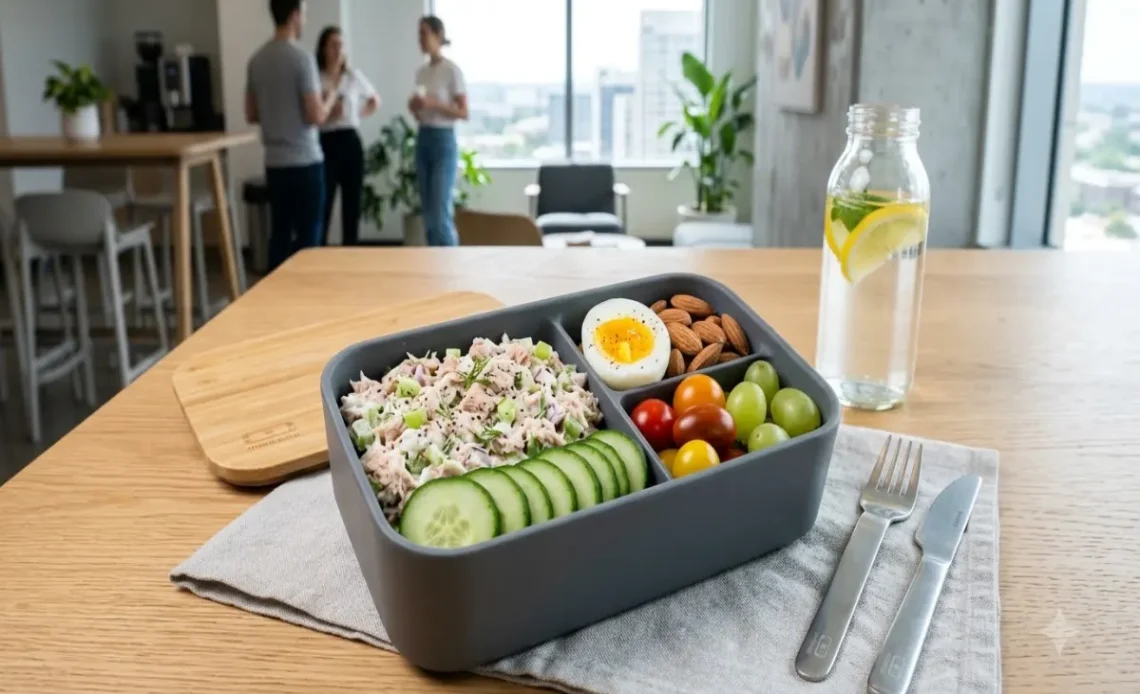
Most people tend to like the dishes separately. A divided container would be perfect for this.
Example combinations:
- Sliced turkey or chicken + boiled egg + cucumber + cherry tomatoes + small handful of almonds or some crackers.
- Cottage cheese + fruit + carrot sticks + one serving of edamame
- Greek yogurt, turkey roll-ups, apple slices, raw vegetables
- Tuna with yogurt or mustard + vegetable sticks + a small piece of fruit
These, like all the others, seem to be an improved version of an adult lunchable. They provide a different treat in each handful.
Packing and Storage Tips That Matter
Use an insulated lunch bag with a frozen ice pack if the office refrigerator is poor or shared.
- Glass or strong plastic containers with close fitting lids will avoid leakage.
- Leave dressing, sauces and other wet ingredients in small separate containers keep salads and wraps crisp.
- Pack greens and firm vegetables dry, add the dressing just before you are ready to eat.
- Label any containers of yours if sharing fridge space.
- All of the no-reheat choices listed last 3–4 days if kept properly refrigerated.
Handling Common Office Challenges
No refrigerator or not much refrigerator space:
Consider how much space you may need. If you decide to go shopping for the semester on the same day that your food arrives, then remember to buy a whole lot of beer.
Consider selecting more stable, shelf-stable foods for the morning (used nuts, fruit, crackers) and transporting the perishable protein in an insulated bag with ice. Or, depending on time, rely on canned tuna, pre-cooked chicken pouches, and hard-boiled eggs that will stay cold for a few hours with an ice pack.
The potent smell of food.
For colleagues who dislike strong tasting foods, don‘t go for heavily spiced foods or fishy flavors. Safer options are chicken, turkey, eggs, cottage cheese, salads based on yogurt, light bean salads.
Short rest to eat
the time available between the end of the feeding period and dewatering stages to consume it.
All other one handed options (roll-ups, protein boxes) or foods that only require a fork or spoon will be helpful. Pre-cut at home.
Social pressure/food in the office
If you have your own lunch prepared its easier to get involved in discussion without falling into the trap of pizza or cake. You can allow yourself the odd shared treat if you plan the remainder of your day accordingly.
Sample Weekly Office Lunch Rotation
- Monday: chicken salad with Greek yogurt and vegetables (would also use this chicken salad on a sandwich or wrap)
- Tuesday: cottage cheese power box.
- Wednesday: White bean and tuna salad.
- Thursday: Turkey roll-ups with additional vegetable sticks
- Friday: Chopped chickpea salad or protein box with hardboiled egg.
Repeat the vegetables and spices so they don‘t get monotonous. Prepare two or three versions in the weekend and incorporate them in all the dishes during the week.
Making It Sustainable
Begin with the simple no-reheat ideas that rely on products you‘re already purchasing. These fit within several of the ideas above: Greek yogurt, canned tuna, cottage cheese, deli turkey, eggs, and pre-washed fresh vegetables. When packing lunch becomes habitual, then increase the diversity.
The real benefit of a solid office lunch system is eliminating the decision about what to eat during the critical part of the workday. Having a power-packed, well-proportioned meal in your bag means that you’re much less likely to settle into on-the-fly, higher calorie options that sabotage your weightloss efforts. Keep it simple plan the system around protein and vegetables, pick foods that you enjoy cold or can be easily reheated, and you’ll turn the workday lunch into one of the most dependable aspects of your strategy.