
 Sameena Fatima
Health & Wellness Content Writer
in
Sameena Fatima writes reader-focused
health and wellness content for
HealthBloomWeb, covering fitness,
nutrition, healthy lifestyle and
everyday wellness topics.
Sameena Fatima
Health & Wellness Content Writer
in
Sameena Fatima writes reader-focused
health and wellness content for
HealthBloomWeb, covering fitness,
nutrition, healthy lifestyle and
everyday wellness topics.
 Mirza Ibrahim Ali Khan
Editorial & Content Reviewer
in
Mirza Ibrahim Ali Khan contributes to
HealthBloomWeb's editorial review process,
with a focus on content structure,
readability, search intent and overall
editorial quality.
Mirza Ibrahim Ali Khan
Editorial & Content Reviewer
in
Mirza Ibrahim Ali Khan contributes to
HealthBloomWeb's editorial review process,
with a focus on content structure,
readability, search intent and overall
editorial quality.
 Reyansh Sethi
Medical Reviewer
in
Reyansh Sethi contributes to the medical
review process at HealthBloomWeb, focusing
on clarity, responsible health context and
reader-friendly presentation of health
information.
Reyansh Sethi
Medical Reviewer
in
Reyansh Sethi contributes to the medical
review process at HealthBloomWeb, focusing
on clarity, responsible health context and
reader-friendly presentation of health
information.
If most of your day is spent sitting, the idea of becoming “active” can feel overwhelming. Gym memberships, long workouts, or strict schedules often seem out of reach. The good news is that you do not need any of those things to start. Research and public-health guidelines are clear: any movement is better than none, small amounts add up, and the biggest gains often come from simply interrupting long stretches of sitting and building more everyday movement into the life you already have.
This article focuses on realistic ways to become more active when you are starting from a sedentary place. It covers the official recommendations, practical starting points, how to break up sitting, easy ways to add movement at home and work, and how to keep going without burning out. Everything is kept simple and doable.
What the Guidelines Actually Say
For adults the World Health Organization recommends at least 150 to 300 minutes of moderate-intensity aerobic activity a week, or 75 to 150 minutes of vigorous activity, or a mix of the two. Muscle-strengthening activities that work the major muscle groups should be done on two or more days a week. Older adults are also encouraged to include balance and functional strength work.
The most important part of the guidelines for someone who is currently inactive is this: some activity is better than none. Start small and build gradually. You do not have to reach the full recommendation in the first week or even the first month. Reducing long periods of sitting is also recommended for everyone.
Start Where You Are
The most common reason people give up is starting too hard. A better approach is to begin with amounts that feel almost too easy.
- Aim for 5 or 10 minutes of movement a day at first.
- Spread it out. Three 10-minute walks are as valuable as one 30-minute walk for many health benefits.
- Choose something you already somewhat enjoy or at least do not dislike. Walking is the most accessible option for most people.
- Track it in a simple way — a note on your phone, a calendar, or a basic step counter — so you can see progress.
Many people find that once 10 minutes becomes normal, adding another 5 or 10 minutes feels manageable. Over a few weeks you can work toward 30 minutes most days.
Break Up Long Sitting First
One of the highest-impact changes you can make is interrupting prolonged sitting. You do not even need formal exercise for this.
Set a reminder to stand and move for 1 to 5 minutes every 30 to 60 minutes. Walk to the kitchen, do a few marches in place, stretch, or simply stand while you take a short phone call. Laboratory studies show that these short breaks improve blood sugar responses, help blood pressure, and keep circulation moving in the legs.
In real-world settings, hourly movement breaks have been shown to reduce fatigue and improve mood while remaining realistic for most people to keep doing. The exact timing can flex around your day — the key is avoiding multi-hour stretches of unbroken sitting.
Easy Ways to Add Movement Without “Working Out”
These small changes require almost no extra time and still increase daily activity:
- Park farther from the entrance when you drive.
- Get off the bus or train one stop early and walk the rest of the way.
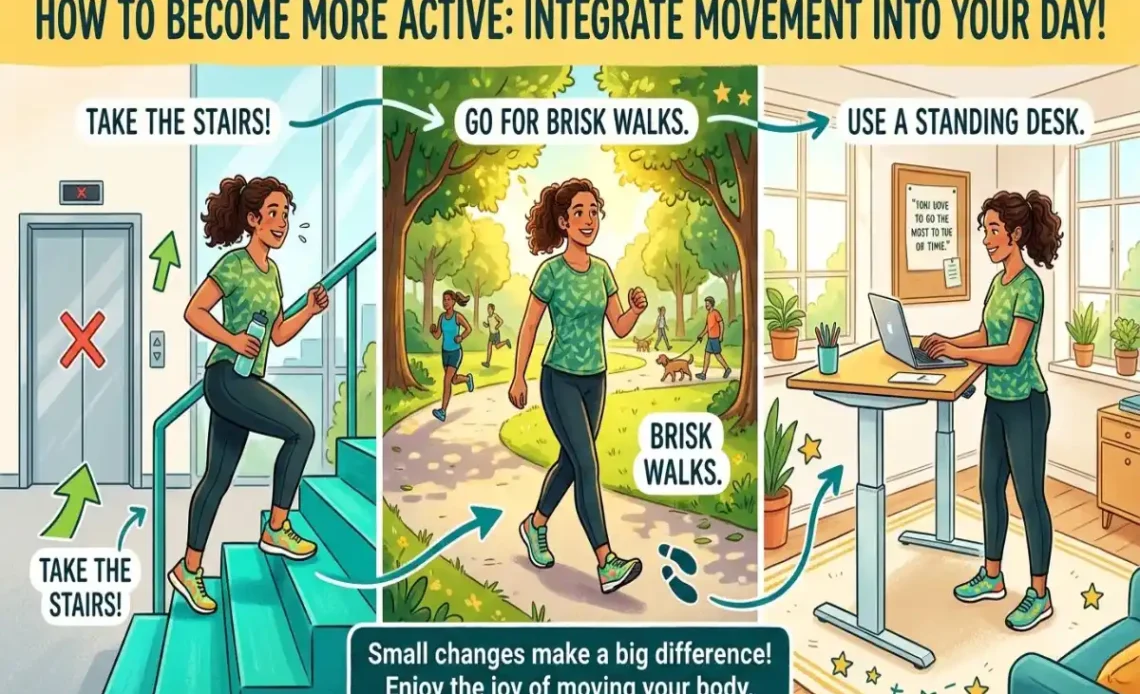
- Take the stairs instead of the lift or escalator whenever it is practical.
- Walk while talking on the phone.
- Stand during parts of online meetings or while watching television.
- Do light chores (washing dishes, folding laundry, wiping counters) with a bit more energy or while moving around more.
- Carry shopping bags instead of using a trolley for short distances when safe.
- Walk to a colleague’s desk instead of sending a message.
Over a full day these “incidental” movements can add up to meaningful extra steps and muscle use.
Building a Simple Weekly Pattern
Once short daily movement feels normal, you can layer in a bit more structure:
Week 1–2 focus
- Stand and move every 30–60 minutes during the day.
- Add one or two 10-minute walks.
Week 3–4 focus
- Increase walks to 15–20 minutes on most days.
- Add simple strength moves twice a week (see below).
Ongoing
- Aim for a total of 150 minutes of moderate activity across the week (brisk walking counts).
- Keep the sitting breaks as a permanent habit.
Moderate intensity means you can still talk but not sing comfortably. You should feel warmer and breathe a bit harder.
Simple Strength Activities for Beginners
You do not need equipment. Two short sessions a week help maintain muscle and bone.
Examples you can do at home:
- Sit-to-stand from a chair (10–15 times).
- Wall push-ups or kitchen-counter push-ups.
- Standing calf raises while holding a chair for balance.
- Gentle marching in place or step-touches.
- Seated or standing leg lifts.
Start with one set of each and add a second set when it feels easy. Focus on controlled movement rather than speed.
Making It Stick
Habits form more easily when they are attached to something you already do. Examples:
- After you pour your morning coffee, do two minutes of marching or stretching.
- During the evening news or a favourite show, stand or walk during the breaks.
- When you finish a work task, take a short movement break before starting the next one.
Prepare the night before if it helps — leave walking shoes by the door or set a reminder on your phone. Celebrate small wins. Noticing that you stood up more often or walked an extra five minutes reinforces the behaviour.
Social support also helps. Walking with a friend, family member, or neighbour makes the time pass more easily and creates accountability. If you prefer solitude, podcasts or music can make walks more enjoyable.
Special Situations
If you have joint pain, balance concerns, or a health condition, start with seated or supported movements and check with a health professional if needed. Chair-based exercises, water activities, or short walks on flat ground are often good options.
If motivation is low, focus only on the sitting breaks for the first couple of weeks. Once those feel automatic, adding a short walk becomes easier.
Weather, time pressure, and energy levels will vary. Have indoor backups ready — marching in place, online beginner videos, or simple household tasks that get you moving.
What Success Looks Like
Progress is not only about reaching 150 minutes. Success includes:
- Fewer long unbroken sitting periods.
- Feeling less stiff at the end of the day.
- Having a bit more energy in the afternoon.
- Noticing that short walks or stairs feel easier than they did a month ago.
- Building a pattern you can keep for months rather than weeks.
Many people who were previously inactive report that after 6–8 weeks of consistent small movement the body starts to feel different — less creaky, more capable, and more willing to do a little more.
A Simple Starting Plan
| Day | Focus | Example |
| Every day | Break up sitting | Stand/move 1–5 min every 30–60 min |
| Most days | Short walk | 10–15 minutes at a comfortable pace |
| 2 days | Strength | 10–15 minutes of chair stands, wall push-ups, calf raises |
| Optional | Extra movement | Stairs, parking farther, walking meetings |
Adjust the times upward only when the current level feels easy and sustainable.
Final Thoughts
Becoming more active after a long period of sitting is less about dramatic change and more about consistent small decisions. Interrupt the long sits. Add short walks. Use the movement that is already available in daily life. Build from there at a pace that fits your energy and schedule.
The research is consistent: people who start small and keep going see real improvements in how they feel and in longer-term health markers. You do not have to become an athlete. You only have to move a little more, a little more often, than you do right now. That is enough to begin reversing the effects of a sedentary lifestyle and to build a foundation that can grow over time.