

 Sameena Fatima
Health & Wellness Content Writer
in
Sameena Fatima writes reader-focused
health and wellness content for
HealthBloomWeb, covering fitness,
nutrition, healthy lifestyle and
everyday wellness topics.
Sameena Fatima
Health & Wellness Content Writer
in
Sameena Fatima writes reader-focused
health and wellness content for
HealthBloomWeb, covering fitness,
nutrition, healthy lifestyle and
everyday wellness topics.
 Mirza Ibrahim Ali Khan
Editorial & Content Reviewer
in
Mirza Ibrahim Ali Khan contributes to
HealthBloomWeb's editorial review process,
with a focus on content structure,
readability, search intent and overall
editorial quality.
Mirza Ibrahim Ali Khan
Editorial & Content Reviewer
in
Mirza Ibrahim Ali Khan contributes to
HealthBloomWeb's editorial review process,
with a focus on content structure,
readability, search intent and overall
editorial quality.
 Reyansh Sethi
Medical Reviewer
in
Reyansh Sethi contributes to the medical
review process at HealthBloomWeb, focusing
on clarity, responsible health context and
reader-friendly presentation of health
information.
Reyansh Sethi
Medical Reviewer
in
Reyansh Sethi contributes to the medical
review process at HealthBloomWeb, focusing
on clarity, responsible health context and
reader-friendly presentation of health
information.
A sedentary lifestyle has become one of the most common patterns of modern living. Millions of people spend the majority of their waking hours sitting — at desks, in cars, on sofas, or in front of screens. While rest is necessary, long periods of physical inactivity change how the body functions and raise the risk of multiple health problems over time. Understanding what a sedentary lifestyle actually means, why it has become so widespread, what it does to the body, and how to shift toward more movement is the first step toward protecting long-term health.
This pillar page brings together the core information on the topic. It explains the meaning of a sedentary lifestyle, gives clear examples, explores the main causes, outlines the major health risks, and provides practical guidance on becoming more active. The goal is to give a complete, easy-to-follow overview that helps anyone recognise the pattern in their own life and take realistic steps to change it.
What Is a Sedentary Lifestyle?
A sedentary lifestyle refers to a way of living in which a person spends most of their waking time sitting or lying down with very little physical movement. The word “sedentary” comes from the Latin for “to sit.” In practical terms it means that daily energy expenditure stays low because large muscle groups, especially in the legs and core, remain largely inactive for hours at a time.
Health organisations distinguish sedentary behaviour from simply not meeting exercise guidelines. You can go for a 30-minute walk or attend a gym class and still be considered sedentary if the rest of the day involves long, unbroken periods of sitting. Sedentary behaviour is any waking activity that involves sitting or reclining and uses very little energy — typically 1.5 metabolic equivalents or less.
Physical inactivity is a related but broader term. It means not achieving the recommended levels of moderate-to-vigorous physical activity (at least 150 minutes per week for most adults). Many people are both inactive and highly sedentary; others exercise regularly yet still sit for most of the remaining hours.
Clear Examples of Sedentary Behaviour
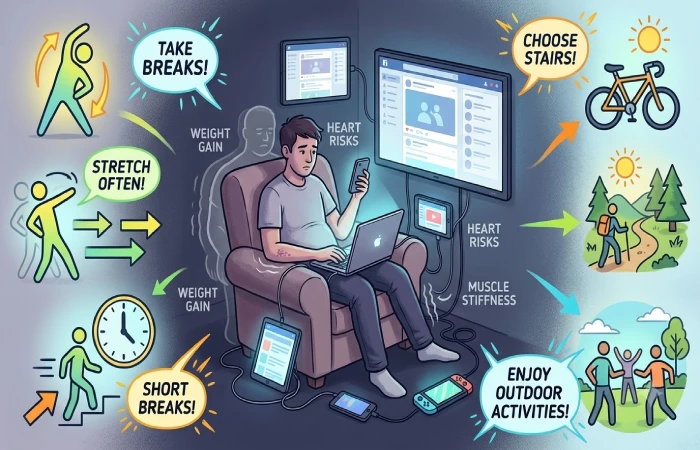
Everyday situations that count as sedentary include:
- Working at a computer or desk for several hours without standing or walking breaks
- Driving or commuting by car or public transport while remaining seated
- Watching television, streaming shows, or playing video games for long stretches
- Scrolling on a phone or tablet while sitting or lying down
- Reading, studying, or doing paperwork in a seated position for extended periods
- Sitting through long meetings, lectures, or online calls
- Spending evenings on the sofa after a full day of seated work
Even activities that feel productive, such as answering emails or attending virtual meetings, fall into the sedentary category if the body stays still. The common thread is the absence of meaningful muscle activity and the accumulation of long bouts of stillness.
Why Sedentary Lifestyles Have Become So Common
Several overlapping factors explain the rise of sedentary living across the world.
Changes in work
Many jobs have shifted from physical labour to desk-based or screen-based roles. Office work, remote work, customer service, programming, administration, and professional services all involve prolonged sitting. Even jobs that once required movement, such as retail or factory work, have become more automated and stationary in many places.
Transport patterns
Car ownership and reliance on motorised transport have reduced daily walking and cycling for many people. Commutes that once involved walking to a bus stop or train station now often mean door-to-door driving or long seated journeys.
Technology and leisure
Screens dominate free time. Television, streaming platforms, social media, online gaming, and smartphones make it easy to spend hours seated or reclining. Leisure that once involved outdoor play, hobbies requiring movement, or social activities on foot has increasingly moved indoors and onto devices.
Urban design and environment
Many neighbourhoods are built around cars rather than walking or cycling. Long distances between homes, shops, and workplaces, combined with limited safe walking paths or green spaces, discourage incidental movement. In some cities, safety concerns or extreme weather further reduce outdoor activity.
Cultural and social norms
Sitting is often seen as the default for work, learning, and rest. Standing meetings, walking conversations, or active breaks are still exceptions rather than norms in many workplaces and schools. Social gatherings frequently centre around seated activities.
Age and life stage factors
As people age, mobility limitations, chronic conditions, or retirement can reduce daily movement. Younger people face heavy academic or screen-based demands that limit free play and outdoor time. Parents of young children or carers may find their own activity levels drop because of time and energy constraints.
These factors interact. A desk job plus a car commute plus evening screen time creates a full day of low movement for many adults. The pattern has spread globally as economies develop and technology becomes more widespread.
Global Scale of the Problem
Nearly one-third of adults worldwide — about 1.8 billion people — do not meet recommended physical activity levels. Rates of insufficient activity have risen in recent decades. Women are less active than men on average, and inactivity increases markedly after age 60. Some regions, including parts of the Middle East, South Asia, and high-income Asia Pacific, show particularly high rates. In certain countries more than half of adults fall short of activity guidelines.
The economic cost is substantial. Physical inactivity contributes to higher healthcare spending on heart disease, diabetes, certain cancers, and other conditions. If trends continue, the cumulative cost to health systems is projected to reach hundreds of billions of dollars over a decade.
Major Health Risks of a Sedentary Lifestyle
Prolonged low movement affects almost every major system in the body. The risks build gradually and are often independent of whether a person also does formal exercise.
Metabolic and weight-related effects
Muscles that stay inactive become less sensitive to insulin. Blood sugar stays higher after meals. Fat-clearing enzymes in the muscles work less efficiently. Over time these changes promote weight gain, especially around the abdomen, and raise the risk of type 2 diabetes and metabolic syndrome (the combination of high blood pressure, high blood sugar, excess belly fat, and unhealthy cholesterol levels).
Heart and blood vessel health
Sitting for long periods slows blood flow in the legs, reduces the flexibility of arteries, and can contribute to higher blood pressure. Large studies using activity trackers show that people who accumulate more than about 10.5 hours of sedentary time per day face clearly higher risks of heart failure and death from cardiovascular causes — even if they meet weekly exercise guidelines. After a heart-related hospital stay, high sedentary time strongly predicts further events.
Cancer risk
Higher sedentary time is associated with increased incidence and mortality for several cancers, particularly those linked to obesity and metabolic disruption. The pattern of sitting matters: long, uninterrupted bouts appear more harmful than the same total sitting time broken into shorter periods. Replacing prolonged sitting with even light activity is linked to lower cancer mortality risk in large cohort studies.
Musculoskeletal problems
Constant sitting shortens the hip flexors, weakens the glutes and core, and places extra load on the lower back and neck. Chronic stiffness, low-back pain, tight hamstrings, and rounded shoulders are common results. Bone density can also decline without regular weight-bearing movement.
Mental health and brain function
Low movement is linked to higher rates of low mood, anxiety symptoms, and reduced cognitive performance over time. Blood flow to the brain and the release of beneficial growth factors are reduced when the body stays still for long periods. People often report afternoon fatigue and mental flatness after extended sitting.
Overall mortality
People who sit the most and move the least have higher risks of dying earlier from various causes. Some analyses have found that very high sitting time combined with low activity carries a risk comparable to other major lifestyle risks. Regular movement, even at light intensity, helps offset much of this elevated risk.
These effects do not appear overnight. They develop through the daily accumulation of stillness. The positive side is that many of the changes are reversible when movement increases and long sitting bouts are interrupted.
How Sitting Affects the Body in Real Time
Even a single long stretch of sitting produces measurable changes. After 30–60 minutes of uninterrupted sitting, blood flow in the legs declines, artery function in the lower body worsens, and post-meal blood sugar rises more than it would if the person had moved. Short walking or standing breaks reverse many of these acute effects. This is why the pattern of sitting — how long the unbroken periods last — is as important as total daily sitting time.
Becoming More Active: A Practical Path
Moving from a sedentary pattern to a more active one does not require dramatic lifestyle overhauls. The most effective approaches start small, focus on consistency, and fit into existing routines.
Step 1: Interrupt long sitting periods
Set a simple reminder to stand and move for one to five minutes every 30 to 60 minutes. Walk to get water, march in place, stretch, or stand during phone calls. These micro-breaks improve circulation, blood sugar handling, and energy levels. They are one of the highest-impact changes a sedentary person can make.
Step 2: Add short walks
Begin with 10 minutes of comfortable walking most days. Three short walks can be as beneficial as one longer session for many health markers. Walking after meals is especially useful. Gradually increase the time as it becomes easier.
Step 3: Build basic strength
Two short sessions a week of simple bodyweight movements help rebuild muscles that weaken with sitting. Chair sit-to-stands, wall push-ups, glute bridges, calf raises, and gentle core work (such as bird-dog) are effective starting points. No equipment is needed.
Step 4: Use everyday opportunities
Park farther away, take the stairs, walk part of the commute, stand during parts of meetings, or do light chores with more movement. These incidental activities add up without requiring extra scheduled time.
Step 5: Progress gradually
Once 10-minute walks feel easy, extend them. Once basic strength moves feel comfortable, add a second set or a few more repetitions. The aim is sustainable progress rather than rapid transformation.
Official guidelines recommend working toward 150–300 minutes of moderate activity per week plus muscle-strengthening on two or more days. For someone starting from a sedentary baseline, reaching that level can take weeks or months. Any increase is beneficial, and the early gains in energy, stiffness reduction, and metabolic health often appear within the first few weeks of consistent small changes.
Sample Weekly Framework for Beginners
| Focus Area | Frequency | Example Activities |
| Sitting breaks | Every 30–60 minutes | Stand, march, stretch, short walk |
| Walking | Most days | 10–20 minutes at comfortable pace |
| Strength | 2 days | Chair stands, wall push-ups, bridges, calves |
| Incidental movement | Daily | Stairs, parking farther, walking meetings |
Adjust the times upward only when the current level feels sustainable.
Immune Function and Inflammation
Chronic low-grade inflammation rises with prolonged sitting. Markers such as C-reactive protein tend to be higher. Over years this background inflammation contributes to heart disease, diabetes, and other conditions. Muscle activity helps regulate inflammatory signals; without it the balance shifts.
How Much Sitting Is Too Much?
There is no single magic number that applies to everyone, but several thresholds appear repeatedly in research:
- More than 8 hours of total sitting per day starts to show clear associations with higher mortality in many studies.
- Around 10.6 hours of sedentary time (measured by devices) marks a sharper rise in heart failure and cardiovascular death risk.
- Uninterrupted bouts longer than 30 minutes are more strongly linked to cancer risk than broken-up sitting.
- Sitting less than about 4 hours a day is associated with the lowest risk in some analyses of highly active people, but very low sitting combined with high activity is uncommon in modern life.
The takeaway is not that sitting is poison. It is that long, unbroken stretches without movement are the bigger problem, and total daily sitting time compounds the issue.
Country and Regional Patterns
Global data reveal clear geographic differences. High rates of physical inactivity cluster in parts of the Middle East, South Asia, and high-income Asia Pacific. Gulf countries often exceed 50 percent inactivity. South Korea and Japan also report high figures. In Europe the range is wide: some northern countries do better, while southern and eastern countries show higher inactivity. Latin America has mixed results, with several countries above 40 percent. Africa generally shows lower inactivity, though urbanisation is changing patterns.
These differences reflect work culture, transport, climate, safety of outdoor spaces, and leisure habits. In places where cars dominate and office jobs are common, sitting time climbs. In places where walking or cycling is still normal for daily errands, sitting time stays lower. The health systems in higher-income countries often see more of the long-term consequences (heart disease, diabetes, certain cancers) even if absolute inactivity rates vary.
Comparison Table: Sedentary Time and Key Health Risks
| Daily Sedentary Time | Approximate Relative Risk Increase | Main Outcomes Noted |
| < 6–7 hours | Baseline / lower risk | Reference group |
| 8+ hours | Elevated mortality, metabolic risk | Similar to smoking/obesity in some analyses when combined with low activity |
| ≥ 10.6 hours | +40% heart failure, +54% CVD death | Even among people who exercise regularly |
| Prolonged bouts ≥ 30 min each extra hour | +9% cancer mortality | Interrupted sitting linked to lower risk |
These are approximate figures drawn from large cohort and meta-analytic work. Exact risks vary by age, fitness, and other lifestyle factors.
Another Comparison: Replacing Sitting with Movement
| What You Replace 30–60 min of Sitting With | Approximate Risk Reduction |
| Light activity (standing, slow walking) | 8–12% lower cancer mortality risk; improved blood sugar and lipids |
| Moderate activity | Noticeable drop in heart failure and CVD risk |
| Vigorous activity (even short bursts) | Larger reductions in mortality markers |
| Simply standing and moving every 30–60 min | Better endothelial function, lower post-meal glucose spikes |
Small, frequent interruptions often deliver outsized benefits because they prevent the longest, most harmful bouts.
Why Exercise Alone Is Not Always Enough
Many people believe a morning run or evening gym session cancels out a day of sitting. Research shows partial protection but not complete. Meeting activity guidelines reduces risk for atrial fibrillation and heart attacks more effectively than for heart failure and cardiovascular death. The sitting effect remains visible even in active people once daily sedentary time exceeds roughly 10.5 hours. The body appears to need both regular exercise and less unbroken sitting.
Latest Research Highlights (2024–2026)
- Device-measured sedentary time above 10.6 hours is consistently linked to higher cardiovascular-kidney-metabolic disease risk, independent of moderate-to-vigorous activity.
- Prolonged (uninterrupted) sedentary behaviour specifically raises cancer mortality; interrupted sitting does not show the same pattern.
- Genetic predisposition to higher sedentary behaviour is associated with up to 20 percent higher cardiovascular disease risk.
- After hospitalisation for heart symptoms, high sedentary time in the following month strongly predicts further events or death within a year.
- Replacing prolonged sitting with even light activity produces measurable risk reductions.
These findings come from accelerometer studies, Mendelian randomisation analyses, and large prospective cohorts. They strengthen the case that both total sitting time and how it is accumulated matter.
Special Considerations
People with joint pain, balance concerns, or chronic conditions can still increase activity safely by choosing supported or seated options and progressing more slowly. Chair-based movements, water activities, or short flat walks are often suitable starting points. Anyone with significant health issues should check with a healthcare professional before beginning new activity.
Older adults benefit particularly from balance and strength work in addition to walking. Children and adolescents need regular opportunities for active play and limits on prolonged recreational screen time.
The Bigger Picture
A sedentary lifestyle is not an individual failing; it is the predictable result of how work, transport, technology, and environments have evolved. At the same time, individuals retain significant ability to change their own daily patterns. Reducing long sitting bouts, adding short walks, rebuilding basic strength, and using everyday movement opportunities produce measurable improvements in how the body functions and in longer-term health risks.
The shift does not require perfection or athletic performance. It requires regular interruption of stillness and gradual addition of movement that fits real life. Over weeks and months those changes accumulate into better circulation, stronger muscles, improved metabolic health, greater daily energy, and lower risk of the major conditions linked to prolonged inactivity.
Understanding the meaning, causes, and risks of a sedentary lifestyle makes the problem visible. Taking the first small steps — standing more often, walking a little, and using the muscles that sitting neglects — begins the process of reversing its effects. The body responds to consistent movement at any age and almost any starting point. The earlier and more steadily that movement is reintroduced, the greater the long-term benefit.