
 Sameena Fatima
Health & Wellness Content Writer
in
Sameena Fatima writes reader-focused
health and wellness content for
HealthBloomWeb, covering fitness,
nutrition, healthy lifestyle and
everyday wellness topics.
Sameena Fatima
Health & Wellness Content Writer
in
Sameena Fatima writes reader-focused
health and wellness content for
HealthBloomWeb, covering fitness,
nutrition, healthy lifestyle and
everyday wellness topics.
 Mirza Ibrahim Ali Khan
Editorial & Content Reviewer
in
Mirza Ibrahim Ali Khan contributes to
HealthBloomWeb's editorial review process,
with a focus on content structure,
readability, search intent and overall
editorial quality.
Mirza Ibrahim Ali Khan
Editorial & Content Reviewer
in
Mirza Ibrahim Ali Khan contributes to
HealthBloomWeb's editorial review process,
with a focus on content structure,
readability, search intent and overall
editorial quality.
 Reyansh Sethi
Medical Reviewer
in
Reyansh Sethi contributes to the medical
review process at HealthBloomWeb, focusing
on clarity, responsible health context and
reader-friendly presentation of health
information.
Reyansh Sethi
Medical Reviewer
in
Reyansh Sethi contributes to the medical
review process at HealthBloomWeb, focusing
on clarity, responsible health context and
reader-friendly presentation of health
information.
Finding the right workout equipment for home can feel overwhelming. There are endless options—dumbbells, bands, machines, cardio gear, smart systems—and every brand claims to be the best. The truth is simpler. The best at-home workout equipment is the gear that matches your goals, space, budget, and fitness level, and that you will actually use consistently.
This complete guide covers the full picture: what works for beginners versus more experienced lifters, strength tools versus cardio options, compact solutions for small spaces, budget-friendly choices, and how to put it all together. You will find clear comparisons, practical recommendations, and decision frameworks so you can build a setup that delivers results without wasted money or floor space.
Why Home Workout Equipment Matters More Than Ever
Training at home removes the biggest barriers most people face: travel time, crowded gyms, fixed schedules, and monthly fees. When the equipment is right, consistency becomes easier. Strength training improves muscle, bone density, and metabolism. Cardio supports heart health and recovery. Mobility and core work keep you moving well long-term.
Modern options have improved dramatically. Adjustable weights save space. Foldable designs fit apartments. Quiet machines respect neighbors. Connected systems offer coaching without leaving home. Yet the fundamentals have not changed—progressive resistance, good form, and regular practice still drive progress.
How to Choose the Right Equipment for You
Start with four factors.
Goals
General fitness and health need versatile, moderate tools. Muscle building favors free weights and progressive loading. Fat loss benefits from a mix of strength and conditioning. Sport or skill training may need more specific gear.
Fitness Level
Beginners thrive with simple, forgiving tools that teach movement patterns. Intermediate users need more loading options and variety. Advanced trainees often require higher weight capacity, safety features, and specialized implements.
Space
A living room corner demands compact, foldable, or wall-mounted gear. A spare room allows a bench and dumbbells. A garage supports a full rack and plates.
Budget
You can start effective training for under a few hundred dollars. A complete, long-lasting setup often lands between $500 and $2,000 depending on priorities. Buy in stages so each purchase gets used.
Strength Training Equipment: The Foundation
Strength tools form the core of most effective home setups because they allow progressive overload—the gradual increase in challenge that builds muscle and strength.
Adjustable Dumbbells
One of the highest-value purchases for nearly every home gym. A single pair replaces an entire rack of fixed weights, covers presses, rows, squats, lunges, and isolation work, and stores in a small footprint. Dial, twist, or pin systems let you change load quickly. Ranges commonly go from 5 to 50+ pounds per hand. They suit beginners learning form and intermediates progressing in weight. Advanced users may eventually outgrow the top end and add a barbell.
Resistance Bands
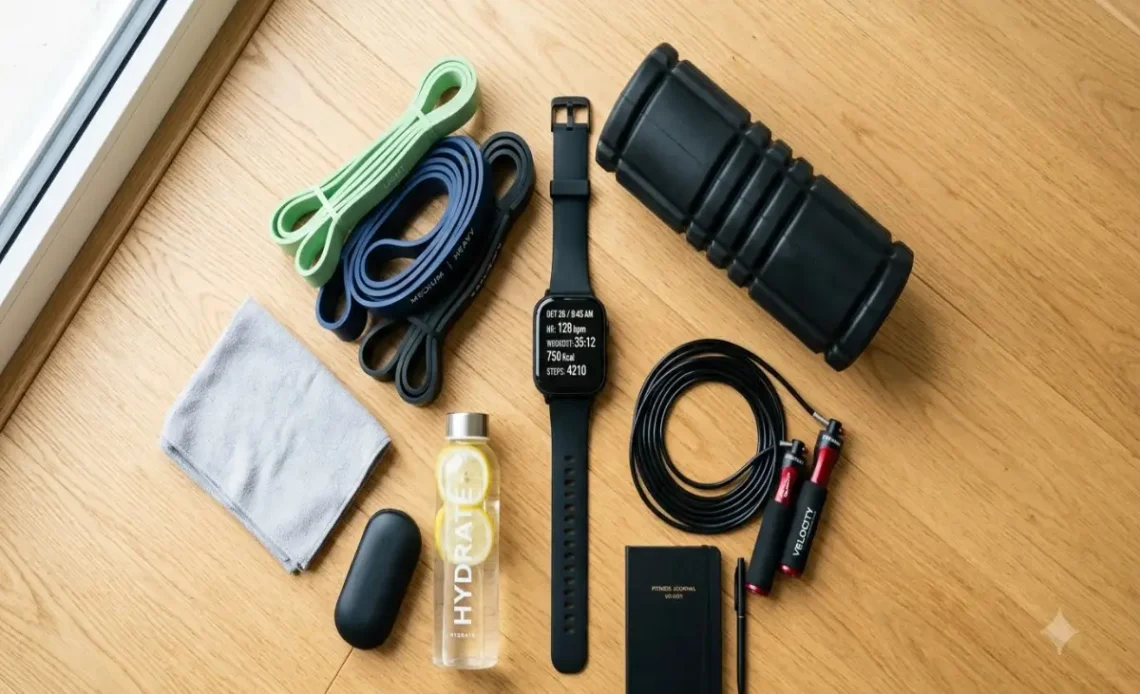
Nearly zero space, very low cost, and surprisingly versatile. Loop bands, tube sets with handles, and fabric bands handle activation, full-body strength, assisted pull-ups, mobility, and travel workouts. Variable resistance (harder at the end of the range) differs from free weights, so they complement rather than fully replace them. Excellent starter or add-on tool for every level.
Barbell and Plates
The classic progressive tool for heavier compound lifts—squats, deadlifts, bench press, overhead press, rows. A basic Olympic bar plus 200–300 pounds of plates opens serious strength development. Safer when paired with a rack or stand that has safety bars. Best for intermediate and advanced users with adequate space and ceiling height. Beginners can start with dumbbells and move up later.
Adjustable Bench
Turns dumbbells or a barbell into a full pressing and supported-row station. Flat, incline, and decline positions expand exercise options dramatically. Foldable models store vertically and suit small spaces. Look for solid weight capacity and stable construction.
Power Rack or Squat Stand
Provides a safe place for heavy barbell work alone. Safety pins or arms catch the bar if you fail a lift. Many include pull-up bars. Folding or wall-mounted versions exist for tighter rooms. This becomes valuable once you train with meaningful loads and want independence from a spotter.
Kettlebells and Other Free Weights
Kettlebells excel at swings, goblet squats, carries, and dynamic movements. One or two solid weights cover a lot. Medicine balls, sandbags, and weighted vests add conditioning variety.
Cardio Equipment Options
Cardio tools support heart health, recovery between strength sessions, and overall energy expenditure. Choose based on impact preference, noise tolerance, and storage needs.
Walking Pads and Foldable Treadmills
Quiet, low-impact, and easy to store under a bed or against a wall. Ideal for daily steps, walking meetings, or light jogging. Full treadmills offer higher speeds and incline but take more space and cost more.
Exercise Bikes
Upright, spin-style, or recumbent. Magnetic resistance is quiet. Many fold or have narrow footprints. Connected models offer classes and metrics. Low joint impact makes them beginner-friendly and suitable for longer sessions.
Rowing Machines
Full-body conditioning that works legs, back, and core. Air or magnetic models. Many fold or stand vertically. Excellent calorie burn and low impact when form is solid. Concept2-style mechanical rowers are known for durability.
Ellipticals and Steppers
Low-impact continuous motion. Full ellipticals need more space; mini steppers or under-desk units fit tight areas. Good for recovery days or shared spaces.
Air Bikes and Climbers
High-intensity options that drive heart rate up quickly. Can be louder. Useful for short, hard conditioning sessions.
Equipment by Fitness Level
Beginners
Focus on learning movement patterns and building the habit. Resistance bands, a mat, a doorway pull-up bar, light-to-moderate adjustable dumbbells, and a simple bench cover almost everything. Bodyweight exercises plus bands teach control before heavy loading. Keep the setup inviting and easy to start.
Intermediate
Add progressive loading capacity. Higher-range adjustable dumbbells or a barbell with plates, a sturdy bench, and a basic rack or stand. Introduce a compact cardio option if desired. Track weights and reps to ensure continued progress.
Advanced
Higher weight capacity, safety features for solo heavy work, specialty bars if needed, and more conditioning variety. Power racks, full plate sets, advanced adjustable systems, or smart digital resistance machines become relevant. Form and recovery management matter more at this stage.
Best Options for Small Spaces and Apartments
Space constraints favor multi-use, foldable, or vertical-storage gear.
Top performers include adjustable dumbbells (one pair replaces many), foldable benches, resistance bands, doorway or freestanding pull-up options, walking pads, foldable rowers, and wall-mounted or fold-back racks. Suspension trainers (TRX-style) use bodyweight and an anchor point with almost no floor footprint.
Layout tip: Create a clear 6–8 foot training zone. Store everything against walls or vertically when finished. Protect floors with mats to control noise and damage.
Affordable Home Workout Equipment Strategies
You do not need premium everything. Prioritize:
- Adjustable dumbbells or a solid band set as the first strength tool
- A stable foldable bench
- Basic flooring or mats
- A pull-up option
Used markets, sales, and staged buying stretch budgets. A functional starter setup often lands under $500. Avoid the cheapest no-name gear that feels unstable under load—safety and durability matter more than the absolute lowest price.
Smart and Connected Equipment Trends
Digital resistance systems, connected bikes and rowers, and app-guided platforms have grown. They offer form feedback, programmed workouts, and progressive resistance without traditional plates. Subscription costs and reliance on screens are trade-offs. Mechanical free weights still deliver excellent results without ongoing fees and remain preferred by many for pure strength work.
Comparison Overview of Major Categories
| Category | Space Needed | Noise Level | Progressive Overload | Best Fitness Levels | Typical Starting Cost |
| Adjustable Dumbbells | Very low | Low | Excellent | All | $150–$600 |
| Resistance Bands | Almost none | Silent | Good (variable) | Beginners–Intermediate | $15–$80 |
| Barbell + Plates | Medium | Moderate | Excellent | Intermediate–Advanced | $300–$800+ |
| Foldable Bench | Low when stored | Low | Supports others | All | $80–$250 |
| Power Rack / Stand | Medium–High | Low | Enables heavy work | Intermediate–Advanced | $200–$800+ |
| Walking Pad / Fold Tread | Low stored | Low–Moderate | Limited | All | $200–$800 |
| Exercise Bike | Low–Medium | Low (magnetic) | Resistance levels | All | $200–$1,500+ |
| Rower | Medium, folds | Low–Moderate | High | Intermediate–Advanced | $300–$1,200+ |
Putting It Together: Sample Setups
Minimal Apartment Starter
Adjustable dumbbells (or bands), foldable bench, mat, doorway pull-up bar. Covers full-body strength and basic conditioning.
Balanced Home Gym
Add a basic rack or stand, more weight capacity, and a quiet cardio option (bike or rower). Supports long-term progressive training.
Garage Strength Focus
Power rack, Olympic bar and plates, adjustable bench, flooring, plus optional cardio. Handles heavy compounds safely.
Always measure first, protect floors, and leave clearance for safe movement.
Practical Tips for Success
Measure space and ceiling height before buying. Prioritize versatile tools over single-use machines. Start training with what you have while upgrading gradually. Focus on form—videos or occasional coaching help. Track progress simply so you know when to increase challenge. Maintain equipment (wipe down, check bolts, store properly). Address noise and floor protection early, especially in shared living situations.
Country and Regional Notes
Availability and pricing differ. In the US, brands like REP, Rogue, PowerBlock, Bowflex, and Amazon options dominate online, with strong competition and frequent sales. Shipping is usually straightforward.
In the UK and Europe, look for Jordan Fitness, Eleiko (premium), local hex options, or imports. Prices often appear in GBP/EUR and may include different coatings preferred for commercial feel.
In India, budget PVC or rubber fixed sets start very affordable (under ₹2,000 for light starter pairs). Brands like Kore, Boldfit, Aurion, and local rubber-coated options are common. Adjustables range from ₹8,000–40,000+ depending on quality and max weight. Rubber coating is especially useful on marble or hard floors common in many homes. Local warranties and COD shipping matter more here. Full fixed sets can get expensive quickly, so adjustables often make financial sense for apartments.
Wherever you are, prioritize local reviews for shipping damage, floor protection, and after-sales support. Online marketplaces make comparison easy, but read recent buyer feedback on durability.
Safety and Smart Training Habits
Start lighter than you think you need. Master form before adding weight. Warm up with light movement or bodyweight versions. Keep the training area clear—no loose dumbbells on the floor. Bend at the knees when picking heavy ones up. For adjustables, double-check the locking mechanism every session.
Rest adequately. Strength gains happen during recovery. Listen to your body—muscle burn is normal; joint pain or sharp discomfort is a stop signal. Consider a couple of sessions with a trainer or good video tutorials if you’re brand new. Wear stable shoes, not socks or barefoot, especially with heavier weights.
Proper storage keeps things safe and extends equipment life. Don’t leave weights where kids or pets can get to them, and avoid outdoor storage in wet or extreme conditions.
Common Questions
Do I need a full set right away? No. Start with weights that challenge you now and add as you progress.
Can dumbbells replace a gym membership? For many strength and general fitness goals, yes. They won’t cover every machine variation, but they cover the essentials extremely well.
How often should I train? 2–4 times per week full-body or upper/lower splits works for most people. Consistency beats perfection.
What about smart or connected dumbbells? Some newer models link to apps for tracking. Useful if you like data, but not necessary for results.
Will they damage my floor? Rubber-coated or used with mats greatly reduce risk. Cast iron or bare metal needs more care.
Dumbbells give you a high return on a relatively simple investment. Choose based on your space, budget, and how seriously you plan to train. Start with good form and progressive challenges, and you’ll see strength and confidence improve steadily. Pick a pair that fits your situation, clear a bit of floor space, and begin. The best equipment is the one you’ll actually use consistently.
Final Thoughts
The best at-home workout equipment is the combination that fits your life and keeps you training. Free weights and bands deliver outstanding results for most people across fitness levels. Cardio machines add conditioning options when space and budget allow. Compact and foldable designs solve apartment challenges. Smart systems offer convenience and guidance at a higher price.
Begin with clear goals and a realistic assessment of space and money. Choose tools that allow progressive challenge. Build the habit first, then expand the setup. A thoughtful, used regularly home gym outperforms a fancy unused one every time.