
 Sameena Fatima
Health & Wellness Content Writer
in
Sameena Fatima writes reader-focused
health and wellness content for
HealthBloomWeb, covering fitness,
nutrition, healthy lifestyle and
everyday wellness topics.
Sameena Fatima
Health & Wellness Content Writer
in
Sameena Fatima writes reader-focused
health and wellness content for
HealthBloomWeb, covering fitness,
nutrition, healthy lifestyle and
everyday wellness topics.
 Mirza Ibrahim Ali Khan
Editorial & Content Reviewer
in
Mirza Ibrahim Ali Khan contributes to
HealthBloomWeb's editorial review process,
with a focus on content structure,
readability, search intent and overall
editorial quality.
Mirza Ibrahim Ali Khan
Editorial & Content Reviewer
in
Mirza Ibrahim Ali Khan contributes to
HealthBloomWeb's editorial review process,
with a focus on content structure,
readability, search intent and overall
editorial quality.
 Reyansh Sethi
Medical Reviewer
in
Reyansh Sethi contributes to the medical
review process at HealthBloomWeb, focusing
on clarity, responsible health context and
reader-friendly presentation of health
information.
Reyansh Sethi
Medical Reviewer
in
Reyansh Sethi contributes to the medical
review process at HealthBloomWeb, focusing
on clarity, responsible health context and
reader-friendly presentation of health
information.
You finish a meal. An hour later you feel that familiar dip or the restless energy that comes when blood sugar rises and then falls. For many people the biggest swings happen after eating, especially after a carb-heavy lunch or dinner. The good news is that one of the simplest tools for flattening those spikes is already available: a short walk.
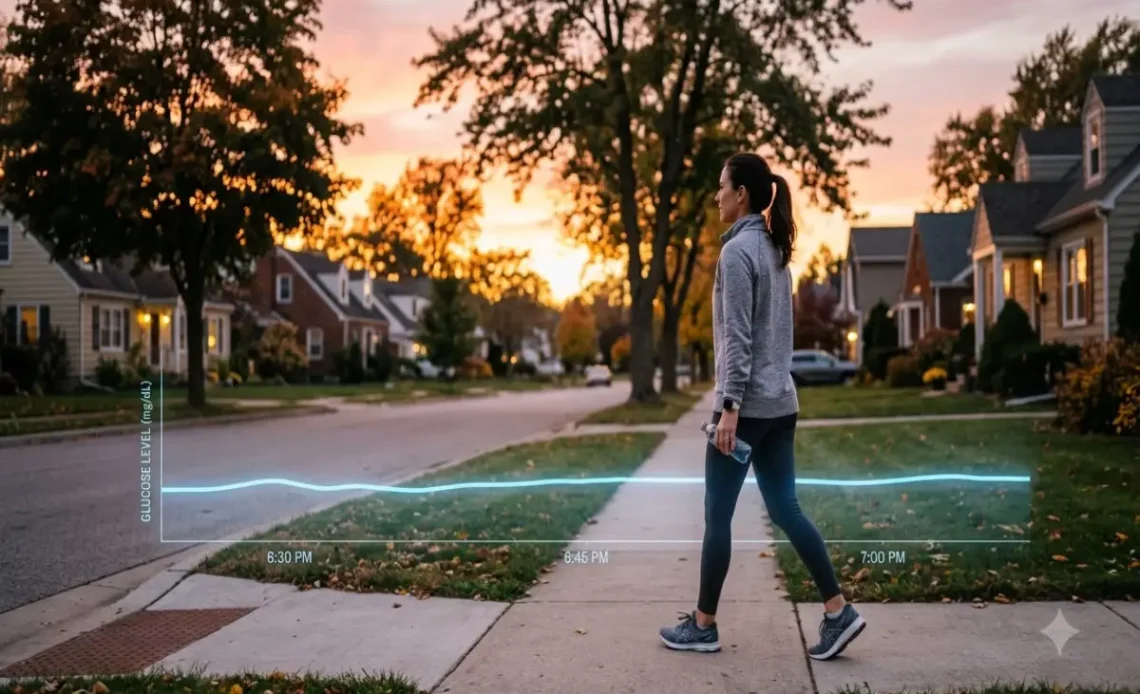
This is not about burning a huge number of calories or training for a race. It is about giving your muscles a chance to pull glucose out of the blood while levels are climbing. Research over the past decade, including studies from 2023 to 2025, shows that walking soon after meals reliably lowers post-meal blood sugar more effectively than walking at other times of the day. The effect shows up in healthy people, those with prediabetes, and people living with type 2 diabetes.
This article stays focused on blood sugar and insulin response. We will cover what happens after you eat, how walking changes the picture, the strongest evidence, practical timing and duration, comparisons, and how to fit the habit into real life.
What Happens to Blood Sugar After You Eat
When you eat, especially carbohydrates, your digestive system breaks the food down into glucose. That glucose enters the bloodstream. Blood sugar starts rising within about 15–30 minutes and often peaks between 30 and 90 minutes after the meal, depending on what and how much you ate.
Your pancreas releases insulin to help move that glucose into muscle and other cells. In people with good insulin sensitivity the process works smoothly. In people with insulin resistance or type 2 diabetes the same amount of glucose produces a higher and longer spike. Even in healthy people repeated large spikes add up over time and can contribute to higher average blood sugar and greater demand on the pancreas.
Sitting still after a meal keeps more of that glucose circulating longer. Moving your large muscle groups, particularly the legs, opens an extra pathway for glucose to leave the blood. Muscle contractions can move glucose into cells partly independently of insulin. That is one reason even light activity works.
How Walking After Meals Helps
Walking does three useful things for blood sugar:
- Muscles take up glucose while they are working.
- Insulin sensitivity improves for hours afterward.
- The overall size of the post-meal rise (often measured as the area under the curve) gets smaller.
A 2025 study in Scientific Reports compared a 10-minute walk started immediately after a glucose drink with a 30-minute walk started 30 minutes later. Both lowered average blood sugar over two hours compared with sitting, but only the immediate 10-minute walk significantly reduced the peak. Starting sooner mattered more than walking longer later.
Earlier work by researchers such as Loretta DiPietro showed that three short walks after meals improved 24-hour glucose control better than one longer walk of the same total time in older adults at risk for impaired glucose tolerance. A well-known 2016 randomized crossover trial in people with type 2 diabetes found that walking 10 minutes after each main meal lowered the overall post-meal glucose response more than a single 30-minute walk at any other time of day. The biggest difference appeared after the evening meal, when people are often most sedentary and meals tend to be larger.
Meta-analyses confirm the pattern. Exercise done after a meal reduces the post-meal glucose rise more than the same exercise done before the meal. The closer you start to the end of the meal (ideally within the first 30 minutes), the stronger the effect on the peak and the total exposure.
What the Numbers Look Like in Practice
Exact numbers vary by meal size, fitness level, and individual metabolism, but the direction is consistent across studies:
- Short walks of 2–5 minutes already produce measurable reductions compared with uninterrupted sitting.
- 10–15 minutes after each meal is the range used in many successful trials.
- In people with type 2 diabetes, three 10-minute post-meal walks have produced roughly 12 % lower overall post-meal glucose exposure than one 30-minute walk.
- Some trials report reductions in the evening post-meal rise on the order of 20 % or more when walking is timed after dinner.
These improvements happen without needing high intensity. A comfortable pace where you can still talk is enough for most of the benefit.
Recommended Approach: Timing, Duration, and Pace
| Situation | When to Start Walking | Suggested Duration | Pace | Why This Works Well |
| Regular mixed meal | Within 10–30 minutes | 10–15 minutes | Easy conversational | Catches the rising phase of glucose |
| Carbohydrate-heavy meal | As soon as comfortable | 15–20 minutes | Steady, still able to talk | Larger expected spike |
| Dinner or largest meal of day | Within 15–30 minutes | 10–20 minutes | Gentle to moderate | Evening is often the highest-impact window |
| Small snack | 5–15 minutes later | 5–10 minutes | Very light | Still useful, low effort |
| If you feel too full | Wait 20–30 minutes | Start with 8–10 minutes | Slow and flat ground | Comfort first |
You do not need special shoes or a track. Indoor pacing, a short neighborhood loop, or walking while on a phone call all count. Consistency across most days matters more than perfect length on any single day.
Post-Meal Walking vs Other Options
Three short post-meal walks vs one longer walk
Multiple studies show the three short walks after meals produce better post-meal and sometimes better 24-hour control than the same total minutes done in one block at another time. The reason is simple: you are intervening when glucose is actually rising.
Walking after meals vs walking before meals
Pre-meal walking has benefits for overall fitness and insulin sensitivity over time, but it does little to blunt the immediate spike from the meal that follows. Post-meal walking targets that spike directly.
Walking vs just standing
Standing is better than sitting, but light walking produces larger reductions in both glucose and insulin responses in most comparisons.
Walking vs other light movements
Simple alternatives such as marching in place, stair climbing, or even repeated sit-to-stand movements also help. Walking has the most research behind it and is usually the easiest to sustain.
Who Benefits Most
People with type 2 diabetes and those with prediabetes or insulin resistance tend to see the clearest improvements in post-meal numbers. Healthy people still benefit, especially if their meals are large or high in refined carbohydrates. Older adults, who often have more sedentary evenings, also respond well.
In countries with high rates of type 2 diabetes and traditionally carbohydrate-rich diets (parts of South Asia, for example), post-meal walking has practical appeal. Indian research and clinical guidance often highlight short walks after meals as a feasible way to reduce post-lunch and post-dinner spikes. The American Diabetes Association notes that interrupting prolonged sitting with light activity, including short post-meal walks, improves glycemic control.
Practical Tips for Everyday Life
Start with one meal. Dinner is often the easiest because the evening offers more flexibility. After a week or two, add lunch or breakfast if it fits.
Keep the bar low. Ten minutes is enough to matter. If you only have five minutes, take them.
Pair the walk with something you already do—clearing the table, listening to a short podcast, calling a family member, or walking the dog.
If you use continuous glucose monitoring or finger-stick checks, try the same meal with and without the walk on different days. Seeing your own numbers drop is often the strongest motivator.
For people on insulin or medications that can lower blood sugar, check levels before longer walks and carry a quick source of carbohydrate if needed. Short, light post-meal walks are generally low risk, but individual responses vary. Talk with your doctor or diabetes educator about how the habit fits with your medication plan.
Weather or schedule problems? Walk indoors, use a hallway, or do a few minutes of marching in place. Something is almost always better than nothing.
Building the Habit Without Overwhelm
Treat it like brushing your teeth after a meal rather than a formal workout. The goal is automatic, not ambitious. Many people find that once the first week is done, the walk feels like the natural next step instead of an extra task.
Track comfort and energy as well as numbers. Steadier blood sugar often means fewer afternoon slumps and better evening energy. Those day-to-day feelings help the habit stick even when motivation dips.
A Few Realistic Expectations
Walking after meals is a helpful tool, not a complete solution. It works best alongside balanced meals, overall movement, sleep, and any medications prescribed for you. It will not erase the effect of a very large or sugary meal, but it reliably softens the rise.
Results appear quickly for the post-meal window. Longer-term improvements in average blood sugar (such as HbA1c) require consistency over weeks and months, the same as any other lifestyle change.
If you have type 1 diabetes, recent changes in medication, or any condition that affects balance or heart rate, get personalized advice before making big changes. For most others the risk is low and the potential upside is clear.
Closing Thoughts
Blood sugar after meals does not have to spike as high as it often does. A 10- to 15-minute walk started soon after you finish eating gives your muscles a chance to help clear the glucose while it is still rising. The research, including recent trials comparing short immediate walks with longer delayed ones, consistently supports this simple timing.
You do not need special equipment, a perfect schedule, or high intensity. You mainly need the willingness to stand up and move for a few minutes instead of sitting still. Start with one meal a day, keep the pace easy, and notice how you feel. For many people the difference in energy and the steadier numbers become their own best reason to keep going.
This is practical information based on available studies, not medical advice. Individual results vary. Work with your healthcare team for guidance tailored to your situation, especially if you take diabetes medications. A short walk after meals remains one of the most accessible and evidence-supported habits for better day-to-day blood sugar control.