
 Sameena Fatima
Health & Wellness Content Writer
in
Sameena Fatima writes reader-focused
health and wellness content for
HealthBloomWeb, covering fitness,
nutrition, healthy lifestyle and
everyday wellness topics.
Sameena Fatima
Health & Wellness Content Writer
in
Sameena Fatima writes reader-focused
health and wellness content for
HealthBloomWeb, covering fitness,
nutrition, healthy lifestyle and
everyday wellness topics.
 Mirza Ibrahim Ali Khan
Editorial & Content Reviewer
in
Mirza Ibrahim Ali Khan contributes to
HealthBloomWeb's editorial review process,
with a focus on content structure,
readability, search intent and overall
editorial quality.
Mirza Ibrahim Ali Khan
Editorial & Content Reviewer
in
Mirza Ibrahim Ali Khan contributes to
HealthBloomWeb's editorial review process,
with a focus on content structure,
readability, search intent and overall
editorial quality.
 Reyansh Sethi
Medical Reviewer
in
Reyansh Sethi contributes to the medical
review process at HealthBloomWeb, focusing
on clarity, responsible health context and
reader-friendly presentation of health
information.
Reyansh Sethi
Medical Reviewer
in
Reyansh Sethi contributes to the medical
review process at HealthBloomWeb, focusing
on clarity, responsible health context and
reader-friendly presentation of health
information.
High protein meals form the backbone of any sustainable eating pattern that supports muscle maintenance, steady energy, and better satiety. Whether you want to build strength, manage weight, or simply feel fuller longer, centering your plate around quality protein sources makes a measurable difference. This complete guide covers practical high protein meal ideas for every part of the day, clear comparisons of top protein foods using current 2026 data, straightforward meal-prep systems, and answers to the questions people ask most often.
Why High Protein Meals Matter in 2026
The 2025–2030 Dietary Guidelines for Americans raised practical protein targets for most healthy adults to roughly 1.2–1.6 g per kilogram of body weight per day. That is a clear step up from the older 0.8 g/kg minimum that was designed only to prevent deficiency. Active people, adults over 65, and those in a calorie deficit often benefit from the higher end of that range or slightly above.
Protein helps preserve lean mass during weight loss, supports recovery after training, and improves feelings of fullness compared with lower-protein meals of equal calories. Spreading intake across the day—aiming for 25–40 g at most meals—appears more effective for muscle protein synthesis than loading everything into one large dinner.
How Much Protein Do You Actually Need?
Use these 2026-aligned ranges as a starting point (adjust for individual health conditions with a professional):
| Group | Protein Target (g/kg body weight) | Example for 70 kg (154 lb) Person |
| Sedentary adults | 1.2–1.4 | 84–98 g |
| Active adults (3+ workouts/week) | 1.4–1.6 | 98–112 g |
| Adults 65+ | 1.4–1.6 | 98–112 g |
| Strength athletes / muscle gain | 1.6–2.2 | 112–154 g |
| Weight loss (preserve muscle) | 1.6–2.0 | 112–140 g |
Divide your daily target across three or four meals so each one delivers a meaningful dose.
Top High-Protein Foods Compared (2026 Data)
Here is a practical comparison of common high-protein foods based on recent USDA-aligned values. Numbers are approximate for cooked or ready-to-eat portions.
| Food | Serving Size | Protein (g) | Calories (approx.) | Notes / Best Use |
| Chicken breast (skinless) | 100 g cooked | 31 | 165 | Meal-prep staple, very lean |
| Turkey breast | 100 g cooked | 29–30 | 135–150 | Excellent low-fat option |
| Canned tuna in water | 1 can (drained) | 25–33 | 90–120 | Zero-cook lunch hero |
| Salmon | 100 g cooked | 22–25 | 180–210 | Protein + omega-3s |
| Lean beef (sirloin/round) | 100 g cooked | 25–27 | 170–200 | Iron and B12 boost |
| Cottage cheese (low-fat) | 1 cup (226 g) | 25–28 | 160–180 | Versatile for sweet or savory |
| Greek yogurt / skyr (plain) | 170–200 g | 15–20 | 90–120 | Breakfast or snack base |
| Eggs (large) | 2 whole | 12–13 | 140 | Cheap, complete protein |
| Firm tofu | 100 g | 12–17 | 140–160 | Plant-based, absorbs flavors |
| Lentils (cooked) | 1 cup | 18 | 230 | Fiber + plant protein |
| Tempeh | 100 g | 19–20 | 190–200 | Higher protein than most tofu |
| Edamame (cooked) | 1 cup | 17–18 | 180–190 | Great snack or bowl topper |
Chicken breast, turkey, and tuna remain the most protein-dense everyday choices. Plant sources like lentils, tofu, and tempeh pair well with grains or seeds for complete amino acid profiles.
Easy High Protein Breakfast Ideas
Breakfast sets the tone. Aim for 25–40 g protein without complicated recipes.
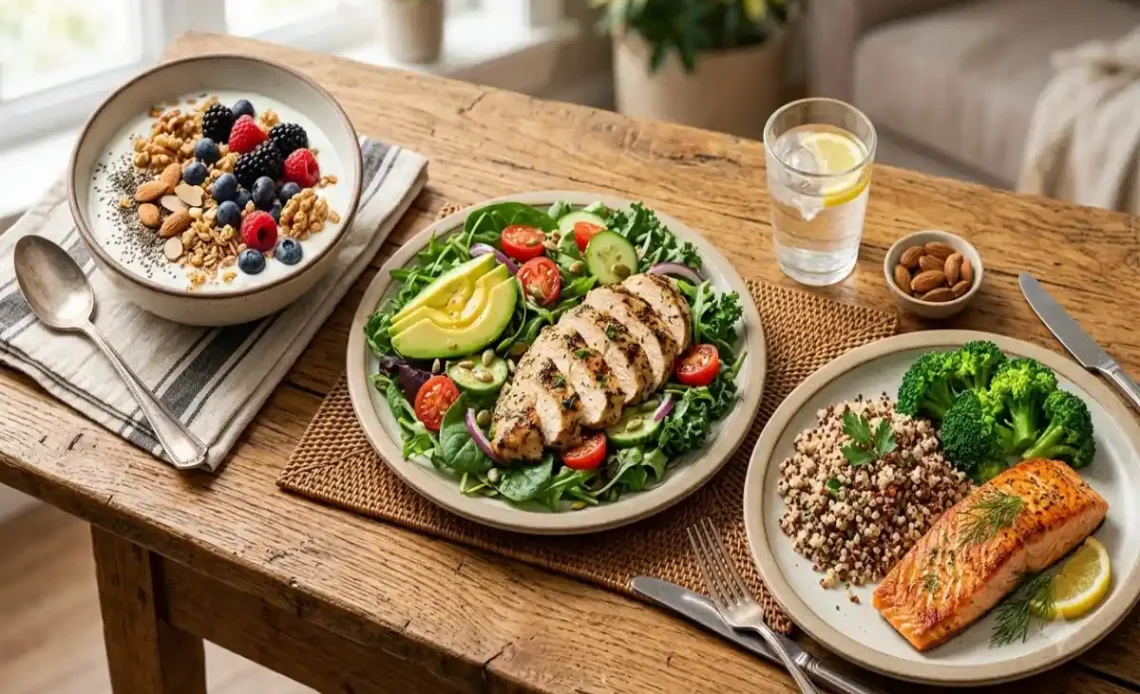
- Greek yogurt power bowl: 200 g plain Greek yogurt or skyr + berries + 1 tbsp nuts or seeds + optional scoop of protein powder. ~30–40 g protein. Ready in 2 minutes.
- Cottage cheese scramble or toast: ½–1 cup low-fat cottage cheese mixed with scrambled eggs or spread on whole-grain toast with tomato. 25–35 g protein.
- Egg and turkey breakfast plate: 2–3 eggs + turkey sausage or leftover chicken + spinach. 25–35 g protein.
- Overnight oats with protein boost: Oats cooked or soaked in milk + Greek yogurt + peanut butter or protein powder. 25–35 g protein. Prep the night before.
- Smoked salmon and cottage cheese bagel or open sandwich: ~30–35 g protein in under 5 minutes.
These options use everyday ingredients and scale easily for meal prep.
High Protein Lunch Ideas That Travel Well
Lunch often fails because it is rushed. Build around a clear protein anchor.
- Chicken and quinoa bowl: 120–150 g cooked chicken + quinoa + roasted vegetables + simple dressing. ~35–45 g protein. Batch-cook on Sunday.
- Tuna or white-bean salad: Canned tuna + white beans or chickpeas + cucumber, lemon, olive oil. ~30–40 g protein. No cooking required.
- Turkey or chicken wrap: Whole-grain or high-protein wrap + turkey/chicken + hummus or Greek yogurt sauce + lots of greens. ~30 g protein.
- Leftover steak or beef rice bowl: Cooked lean beef + rice or cauliflower rice + greens. ~35–40 g protein.
- Mason-jar salads with double protein: Layer dressing, beans or lentils, chicken or tuna, then greens. Shake when ready to eat. 30+ g protein.
These hold up well in the fridge for 3–4 days.
High Protein Dinner Ideas for Busy Nights
Dinner should feel satisfying, not like another chore.
- Grilled or baked salmon with lentils and greens: Salmon fillet + pre-cooked lentils + asparagus or broccoli. ~35–45 g protein.
- Chicken and edamame stir-fry: Chicken + frozen edamame + mixed vegetables + simple soy-ginger sauce over rice. ~40 g protein. One-pan.
- Slow-cooker or Instant Pot beef chili: Lean ground beef or turkey + beans + tomatoes + spices. ~35–40 g protein per serving. Freezes beautifully.
- Sheet-pan chicken thighs with vegetables: Seasoned thighs + sweet potato + broccoli. Hands-off cooking, ~35–45 g protein.
- Steak with beans and greens: Lean steak + black beans or chickpeas + large salad. Highest-protein option on many lists (~40–50 g).
The consistent pattern: choose one solid protein source and build the rest of the plate around it. Vegetables and a modest portion of starch or legumes keep the meal balanced and filling.
High Protein Meal Prep Systems That Actually Work
Meal prep succeeds when it is simple and flexible rather than rigid.
Sunday batch method (60–90 minutes):
- Cook 1–1.5 kg chicken breast or thighs (or a mix of chicken and turkey).
- Cook a large pot of quinoa, rice, or lentils.
- Roast two sheet pans of mixed vegetables.
- Portion into containers: protein + grain/legume + vegetables.
- Keep sauces and fresh toppings (yogurt, avocado, herbs) separate.
Zero-cook or low-cook options for busy weeks:
- Rotisserie chicken + pre-washed salad greens + canned beans.
- Hard-boiled eggs (make a dozen) + cottage cheese + fruit or veggie sticks.
- Canned tuna or salmon packets + microwaveable grains + frozen vegetables.
Storage tips:
- Cooked chicken, turkey, and beef keep 3–4 days in the fridge.
- Chili, soups, and cooked grains freeze well for 1–2 months.
- Label containers with the date and approximate protein content.
Sample One-Day High Protein Meal Plan (~150–170 g protein)
- Breakfast: Greek yogurt bowl with berries and seeds – 35 g
- Lunch: Chicken quinoa bowl with vegetables – 40 g
- Snack: Cottage cheese + apple or hard-boiled eggs – 20–25 g
- Dinner: Salmon with lentils and greens – 40–45 g
- Optional evening: Casein-rich snack or leftover protein if needed
Adjust portions up or down to match your personal target.
Common Troubleshooting for High Protein Eating
“I get bored quickly.”
Rotate sauces and seasonings aggressively: lemon-herb one day, taco spice the next, Asian-inspired the day after. The protein stays the same; the flavor changes.
“Plant-based versions feel lower in protein.”
Combine sources—lentils + quinoa, tofu + edamame, tempeh + beans—or add Greek yogurt-style plant alternatives and seeds. Tempeh and seitan are denser options when available.
“Meal prep takes too long.”
Start with just protein and one vegetable. Add grains later. Or use store-bought rotisserie chicken and frozen vegetables for the first two weeks while the habit forms.
“I’m always hungry even on high protein.”
Check total calories and fiber. Pair protein with volume (non-starchy vegetables) and some healthy fat or complex carbs for sustained energy.
“Digestive discomfort.”
Increase fiber and fluid gradually. Spread protein across meals rather than large single doses. Some people tolerate dairy or legumes better when introduced slowly.
Country and Regional Protein Context
Daily protein availability and habits differ. Higher-income regions often get more protein from animal sources (meat, dairy, eggs), while many Asian and African diets rely more on plant proteins. User data and supply figures show countries like the US, Australia, and parts of Europe trending higher in protein percentage of calories (often 25%+ in tracking data), while some places remain lower. China has increased protein supply notably in recent years. India and several developing regions still show lower average availability per person.
For practical purposes, the goal is the same: get a meaningful portion at breakfast using foods that fit your local availability and budget. Eggs, dairy, legumes, and soy products appear in many food cultures and travel well across borders.
Recent Trends (2025–2026)
Cottage cheese has surged in popularity for its high protein and mild flavor—people blend it into pancakes, smoothies, and bowls. Greek and Icelandic yogurts (skyr) continue to lead dairy options. High-protein cereals, oats, and ready items with 10–20+ grams per serving are more common. “Proffee” (protein powder in coffee) and protein-enhanced milks appear frequently. Plant-based options and fiber-plus-protein combinations are also growing as people seek satiety without excess sugar.
Convenience remains key: overnight prep, batch cooking, and portable items dominate busy lifestyles.
Practical Tips to Boost Any Breakfast
- Stir Greek yogurt or cottage cheese into oatmeal or scrambled eggs.
- Choose higher-protein milks (cow’s, soy, or fortified ultra-filtered).
- Add seeds (chia, hemp, pumpkin) or a spoon of nut butter.
- Keep hard-boiled eggs or pre-portioned yogurt cups ready.
- Batch-cook egg muffins, overnight oats, or tofu scramble for several days.
- Pair protein with fiber (fruit, veggies, whole grains) and some fat for better satisfaction.
- Start simple: one solid protein source + one add-on is enough most days.
Sample Weekly Rotation (Mix and Match)
Monday: Greek yogurt bowl
Tuesday: Egg scramble with veggies
Wednesday: Overnight oats
Thursday: Cottage cheese savory or sweet
Friday: Smoothie
Saturday: Tofu or bean-based option
Sunday: Something special like smoked salmon toast or a bigger plate
Adjust portions to hit your target. Track roughly for a week if you want to learn what works for your hunger levels.
Common Questions
Is 30 grams necessary every day?
No. Consistency over perfection matters more. 20+ grams is already a big improvement for many people.
What about cost?
Eggs, cottage cheese, Greek yogurt, oats, peanut butter, and beans are usually affordable protein sources. Buy plain versions and add your own flavor.
Can I use protein powder?
Yes, as a convenient tool. Whole foods first is ideal, but powder helps on rushed days.
What if I am not hungry in the morning?
Start small with a yogurt cup or smoothie and build the habit. Some people prefer a later substantial breakfast.
A high-protein breakfast does not need to be fancy or time-consuming. Choose a few staples you enjoy, keep them stocked, and rotate simple combinations. Over time you will notice steadier energy and fewer mid-morning crashes. Experiment with the ideas above, note what keeps you full until lunch, and build from there. Your mornings—and the rest of the day—will thank you.
FAQ: High Protein Meals
What counts as a high-protein meal?
Most practical definitions put a high-protein meal in the 25–45 g range. That is enough to support muscle protein synthesis for most adults in one sitting.
Can I hit high protein targets without meat?
Yes. Rely on eggs, dairy or fortified plant yogurts, tofu, tempeh, seitan, lentils, beans, edamame, and protein-enriched products. Combining plant sources improves the amino acid profile.
Is too much protein harmful?
For healthy adults, intakes up to about 2 g/kg appear safe according to current evidence. People with kidney disease should follow medical advice. Quality and overall diet balance still matter more than extreme quantity.
Do I need protein powder?
No. Whole foods can easily meet targets. Powder is a convenient tool when appetite is low or time is short, not a requirement.
How do I make high-protein meals budget-friendly?
Eggs, canned tuna, chicken thighs, lentils, dried beans, and cottage cheese deliver the most protein per dollar. Buy larger packs of chicken or turkey when on sale and freeze portions.
Putting It All Together
High protein meals do not require complicated recipes or expensive ingredients. Choose a reliable protein anchor for each meal, add vegetables and a modest amount of carbohydrate or healthy fat, and repeat with enough variety that you look forward to eating. Use the comparison tables above to select foods that fit your preferences and budget. Batch-cook once or twice a week, keep a few zero-cook options on hand, and adjust portions to match your calculated daily target.
Start with one solid breakfast and one solid lunch this week. Once those feel automatic, expand to dinners and snacks. Consistent, enjoyable high protein meals become the easiest nutrition habit you keep.