
 Sameena Fatima
Health & Wellness Content Writer
in
Sameena Fatima writes reader-focused
health and wellness content for
HealthBloomWeb, covering fitness,
nutrition, healthy lifestyle and
everyday wellness topics.
Sameena Fatima
Health & Wellness Content Writer
in
Sameena Fatima writes reader-focused
health and wellness content for
HealthBloomWeb, covering fitness,
nutrition, healthy lifestyle and
everyday wellness topics.
 Mirza Ibrahim Ali Khan
Editorial & Content Reviewer
in
Mirza Ibrahim Ali Khan contributes to
HealthBloomWeb's editorial review process,
with a focus on content structure,
readability, search intent and overall
editorial quality.
Mirza Ibrahim Ali Khan
Editorial & Content Reviewer
in
Mirza Ibrahim Ali Khan contributes to
HealthBloomWeb's editorial review process,
with a focus on content structure,
readability, search intent and overall
editorial quality.
 Reyansh Sethi
Medical Reviewer
in
Reyansh Sethi contributes to the medical
review process at HealthBloomWeb, focusing
on clarity, responsible health context and
reader-friendly presentation of health
information.
Reyansh Sethi
Medical Reviewer
in
Reyansh Sethi contributes to the medical
review process at HealthBloomWeb, focusing
on clarity, responsible health context and
reader-friendly presentation of health
information.
Stretching the hamstrings only works if you do it consistently and safely. Too little and nothing changes. Too much intensity or the wrong timing and you can irritate the tissue or the lower back. This final guide pulls the practical pieces together: clear recommendations on frequency and hold times, sample routines you can actually stick with, safety rules that prevent common mistakes, and what the research says about effective dosing.
The focus here is building a sustainable habit rather than chasing extreme flexibility in one session.
How Long to Hold a Hamstring Stretch
For most static stretches the evidence-based sweet spot is 20–60 seconds per hold. Many practical guides and studies settle around 30 seconds as a reliable starting point.
A large 2024 meta-analysis looking at hundreds of studies found that flexibility gains from static stretching are maximised at roughly 4 minutes of total stretching per muscle group in a single session and about 10 minutes per week overall. Beyond those volumes, extra time added little extra benefit for most adults. In practical terms that often looks like three or four 30-second holds per leg, done most days or at least several times a week.
Shorter holds (15–20 seconds) still help, especially if you are new or short on time. Longer holds (45–60 seconds) can be useful for stubborn tightness once the tissue is warm and comfortable with the movement. There is rarely a need to sit in a stretch for several minutes at a time.
Dynamic moves (leg swings, walking reaches) are different: they are usually done for 8–15 controlled repetitions rather than long holds.
How Often to Stretch
Daily gentle stretching is safe and often produces the steadiest gains, especially if you sit a lot. If daily feels unrealistic, aim for at least 3–5 days per week. Research shows that stretching six or more times per week can produce larger improvements than three times per week, but even moderate frequency works when the total weekly volume is reasonable.
Gains in range of motion typically become noticeable in 4–8 weeks of consistent practice. Some of the improvement fades if you stop completely, so maintenance sessions a few times a week help keep the progress.
For people with lower-back involvement linked to tight hamstrings, some clinicians suggest two short sessions a day (morning and evening) because prolonged sitting can reset the length fairly quickly. For general flexibility, one well-done session most days is usually enough.
Safety Rules That Prevent Problems
- Warm up first. Even 1–2 minutes of walking, marching, or easy leg swings makes the tissue more receptive and lowers risk.
- Stay in the mild-to-moderate zone. You should feel a clear stretch or pulling sensation in the back of the thigh. Sharp pain, burning, tingling that travels down the leg, or increased back pain means stop or reduce the intensity.
- Hinge from the hips. Rounding the lower back hard to reach farther loads the spine more than the hamstrings. Keep a relatively long spine.
- Soft knees are fine. Fully locking the knees can stress the joint and tendons. A slight bend is often more effective and comfortable.
- No bouncing. Controlled static holds or smooth dynamic movement are safer than aggressive bouncing.
- Breathe. Holding the breath increases overall tension.
- Respect existing issues. Recent strains, tendon pain near the sitting bone, or significant nerve symptoms usually need a different approach (often progressive loading rather than aggressive stretching). When in doubt, get professional guidance.
- Balance both sides. Give equal time to each leg even if one feels tighter.
Overstretching is more common than people realise. Pushing into pain does not produce better long-term results and can trigger protective tightening or minor tissue irritation. Consistency at a comfortable intensity beats occasional aggressive sessions.
Sample Routines
Beginner Daily Routine (8–12 minutes)
Do this most days, ideally when the muscles are already a bit warm (after a walk or later in the day).
- Light marching or walking in place – 1 minute
- Lying strap or towel hamstring stretch – 3 × 30 seconds each leg
- Standing elevated-heel stretch or chair seated stretch – 2 × 25–30 seconds each leg
- Optional: Legs up the wall – 45–60 seconds
Total stretching volume stays well within the effective range.
Intermediate Routine (12–15 minutes)
Add a bit more variety once the basic positions feel easy.
- Short dynamic warm-up: leg swings 10 each direction per leg
- Lying strap stretch – 3 × 30–40 seconds each
- One-leg seated floor stretch – 2 × 30 seconds each
- Standing elevated or forward-fold variation – 2 × 30 seconds
- Gentle hip-flexor stretch (kneeling) – 20–30 seconds each side to keep the chain balanced
Pre-Activity Dynamic Version (5–7 minutes)
Use before walking, running, or leg training.
- Easy marching – 30–60 seconds
- Front-to-back leg swings – 12 each leg
- Side-to-side swings or walking toe reaches – 8–10 each
- Bodyweight hip hinges – 8–10 controlled reps
Save longer static holds for after the activity or later in the day.
Desk-Friendly Mini Session (3–5 minutes)
- Chair seated hamstring stretch – 2 × 25 seconds each leg
- Standing elevated heel if a step or low surface is available – 20–25 seconds each
- A few easy marches or leg swings
Do this once or twice during long sitting periods.
Quick Reference Table
| Goal | Frequency | Hold / Volume per Session | Best Timing | Notes |
| General flexibility | 3–7 days/week | 60–120 sec total per leg (e.g. 3–4 × 30 sec) | After activity or evening | Daily is fine if gentle |
| Desk-related tightness | 1–2 short sessions/day | 20–30 sec holds, 2–3 per stretch | Morning + after long sitting | Prevents daily reset from sitting |
| Pre-workout preparation | Before activity | Dynamic: 8–15 controlled reps | Immediately before | Avoid long static holds beforehand |
| Post-workout or recovery | After activity | 30–45 sec static holds | When muscles are warm | Good time for deeper work |
| Maintenance after gains | 2–4 days/week | Similar to general | Flexible | Prevents loss of range |
What Progress Usually Looks Like
Week 1–2: Reduced morning stiffness and easier everyday bending.
Week 4–6: Clearer improvement in how far the leg can straighten or how deep a hinge feels.
Week 8+: More lasting range if you continue with some maintenance work.
Progress is rarely linear. Some days feel tighter because of sleep, stress, or sitting time. Track simple real-life markers (tying shoes, picking things up, sitting on the floor) rather than chasing perfect form photos.
Extra Practical Tips
- Pair stretching with movement. Standing up every 30–45 minutes and taking short walks supports the gains.
- Strength helps. Once basic mobility improves, simple hinge patterns or glute work make the new range more usable and resilient.
- Listen to sensation location. A pure muscle stretch stays in the back of the thigh. Sensation that travels into the foot or intensifies with certain neck or ankle positions may involve the nerve and needs a gentler or different approach.
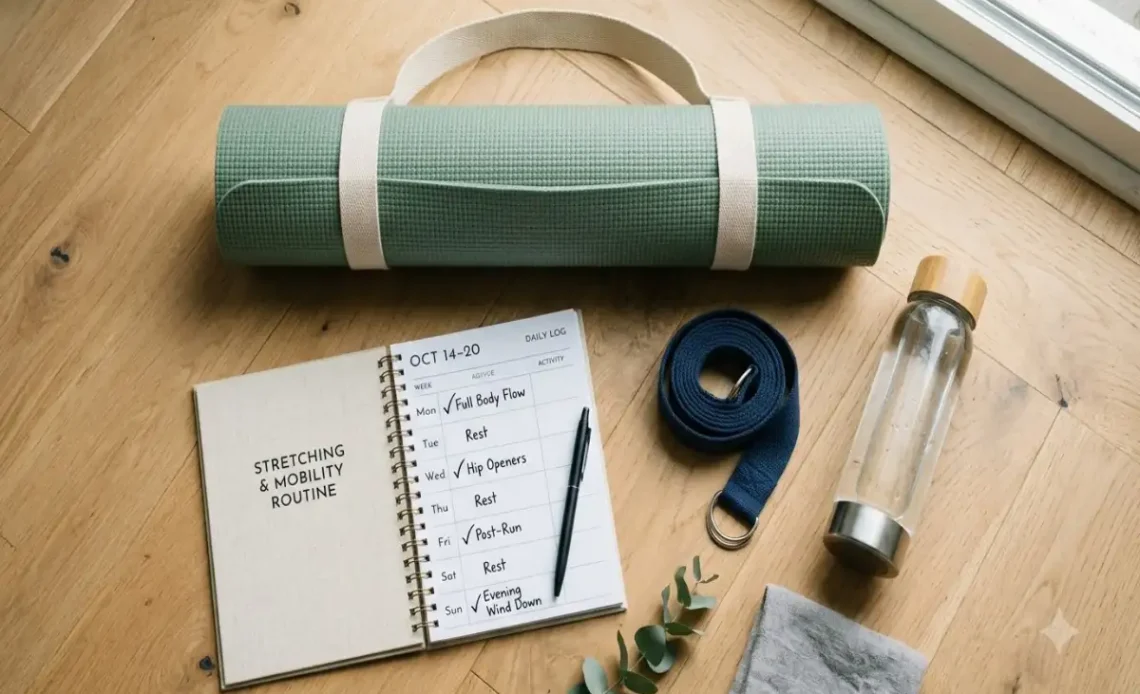
- Equipment is optional. A towel, belt, strap, chair, or wall is enough for almost every useful variation.
Final Safety Reminder
Stretching should feel productive, not punishing. If a routine consistently increases pain, causes lingering soreness beyond normal muscle awareness, or produces new symptoms, scale it back and consider professional input. Acute strains, tendon issues near the sit bone, or significant nerve symptoms are usually better managed with progressive loading and guided rehabilitation than with aggressive stretching.
A simple, repeatable routine done most days—with 30-second holds, good form, and respect for the mild-to-moderate zone—produces reliable improvements for the majority of people. Start with the beginner version, stay consistent for several weeks, and adjust based on how your body responds. That steady approach is what turns tight hamstrings into freer, more comfortable movement over time.
This information is general education. Individual needs vary, especially with existing injuries or medical conditions. Consult a qualified professional for personalised advice when needed.