
Influenza, commonly called the flu, is a contagious respiratory illness that affects millions of people in the United States every year. According to the Centers for Disease Control and Prevention, seasonal flu activity typically peaks between October and April, causing significant illness, hospitalizations, and deaths.
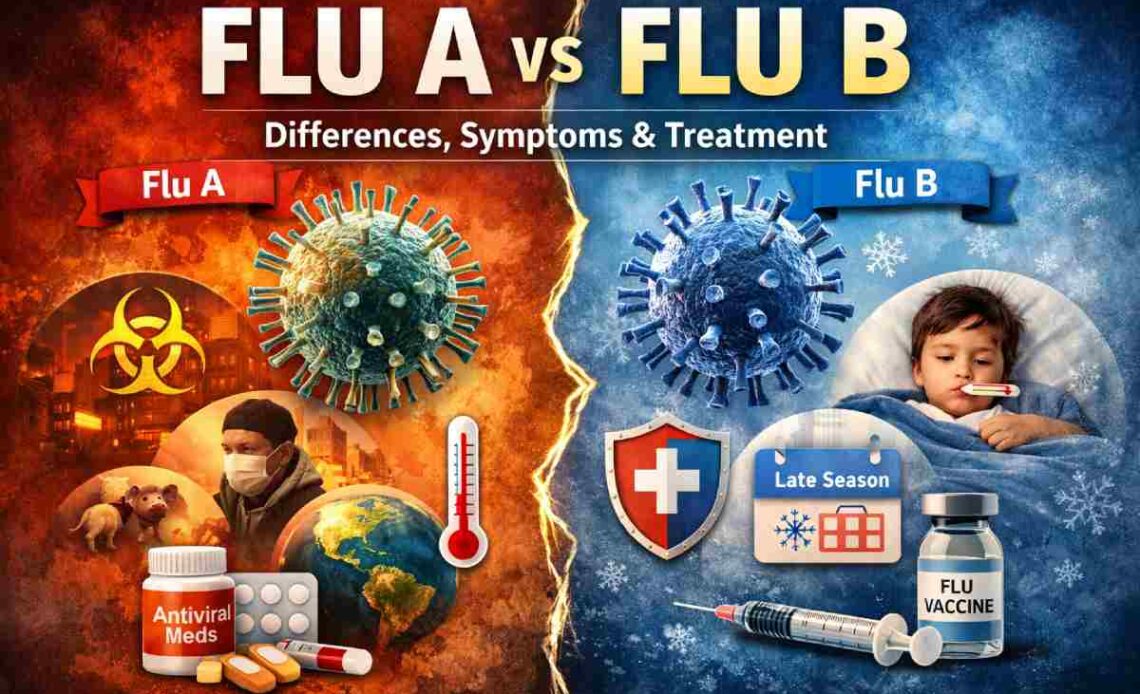
Among the different types of influenza viruses, Influenza A (Flu A) and Influenza B (Flu B) are the most common strains responsible for seasonal flu epidemics in the U.S.
Although both types share many similarities, they differ in severity, spread, mutation patterns, and public health impact. Understanding these differences is crucial for prevention, diagnosis, and treatment.
What Is Influenza (Flu)?
Influenza is a viral infection that primarily affects the nose, throat, and lungs. It spreads through respiratory droplets when an infected person coughs, sneezes, or talks.
In the United States:
- Millions get infected annually
- Hundreds of thousands are hospitalized
- High-risk groups include elderly individuals, children, and people with chronic conditions