
Last Updated: May 21, 2026
Influenza, commonly called the flu, is a contagious respiratory illness that affects millions of people in the United States every year. According to the Centers for Disease Control and Prevention, seasonal flu activity typically peaks between October and April, causing significant illness, hospitalizations, and deaths.
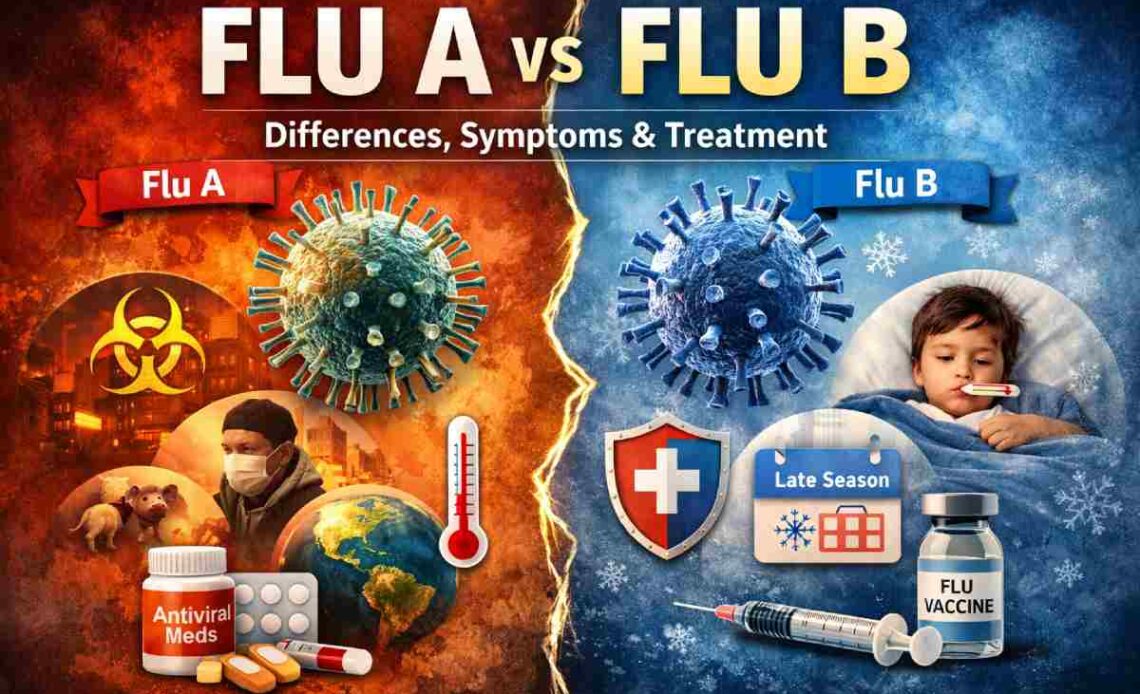
Among the different types of influenza viruses, Influenza A (Flu A) and Influenza B (Flu B) are the most common strains responsible for seasonal flu epidemics in the U.S.
Although both types share many similarities, they differ in severity, spread, mutation patterns, and public health impact. Understanding these differences is crucial for prevention, diagnosis, and treatment.
What Is Influenza (Flu)?
Influenza is a viral infection that primarily affects the nose, throat, and lungs. It spreads through respiratory droplets when an infected person coughs, sneezes, or talks.
In the United States:
- Millions get infected annually
- Hundreds of thousands are hospitalized
- High-risk groups include elderly individuals, children, and people with chronic conditions
Types of Influenza Viruses
There are four main types of influenza viruses:
| Type | Affects Humans? | Severity | Epidemic/Pandemic Risk |
|---|---|---|---|
| Influenza A | Yes | High | Can cause pandemics |
| Influenza B | Yes | Moderate | Causes seasonal epidemics |
| Influenza C | Yes | Mild | No major outbreaks |
| Influenza D | No (mainly cattle) | — | Not relevant to humans |
Key Insight:
Only Flu A and Flu B are responsible for seasonal flu outbreaks in the U.S.
Flu A vs Flu B: Overview Comparison
| Feature | Flu A | Flu B |
| Prevalence in U.S. | More common | Less common |
| Severity | Typically more severe | Usually milder |
| Hosts | Humans + animals | Humans only |
| Mutation rate | High | Lower |
| Pandemic potential | Yes | No |
| Season timing | Early season peak | Later season peak |
Flu A often dominates early in the U.S. flu season, while Flu B tends to appear later.
Flu A: Detailed Explanation
Influenza A is the most dominant and dangerous type of flu virus in the United States.
Key Characteristics
- Causes the majority of flu cases
- Can infect animals (birds, pigs, etc.)
- Responsible for pandemics
- Mutates rapidly
Because Flu A can infect multiple species, it can undergo antigenic shift, leading to new strains that humans have little immunity against.
Example in the U.S.
The 2009 H1N1 pandemic was caused by an Influenza A virus that spread globally.
Flu B: Detailed Explanation
Influenza B is generally considered less severe but still significant.
- Key Characteristics
- Infects only humans
- Mutates more slowly
- Causes seasonal outbreaks
- Often affects children more
Unlike Flu A, Flu B does not cause pandemics because it lacks the ability to infect animals and undergo major genetic shifts.
Symptoms: Flu A vs Flu B
Both Flu A and Flu B produce similar symptoms, making it difficult to distinguish without testing.
Common Symptoms (Both Types)
| Symptom | Flu A | Flu B |
| Fever | High | High |
| Chills | Common | Common |
| Body aches | Severe | Moderate |
| Fatigue | Severe | Moderate |
| Cough | Dry | Dry |
| Sore throat | Common | Common
|
Differences in Symptoms
| Symptom Variation | Flu A | Flu B |
| Severity | More intense | Slightly milder |
| Gastrointestinal symptoms | Less common | More common in children |
Complications More frequent Less frequent
Both types can lead to serious complications like pneumonia, especially in vulnerable populations.
Transmission and Spread
Flu A and Flu B spread in similar ways:
- Respiratory droplets
- Close contact
- Contaminated surfaces
Contagious Period
| Stage | Duration |
| Incubation | 1–4 days |
| Contagious period | 5–7 days |
| Peak transmission | First 3–4 days |
Flu viruses are highly contagious, especially in crowded environments like schools, offices, and public transport.
Severity and Risk Factors in the U.S.
High-Risk Groups
- Adults aged 65+
- Children under 5
- Pregnant women
People with chronic diseases (asthma, diabetes, heart disease)
Flu A tends to cause more severe outbreaks and hospitalizations, while Flu B can still be dangerous in children and immunocompromised individuals.
Diagnosis: Flu A vs Flu B
It is impossible to distinguish Flu A and Flu B based on symptoms alone.
Diagnostic Methods
| Test Type | Description | Accuracy |
| Rapid flu test | Results in 15–30 minutes | Moderate |
| PCR test | Detects viral RNA | High |
| Viral culture | Lab-based testing | Very high |
Healthcare providers in the U.S. use these tests to confirm the flu type.
Treatment: Flu A vs Flu B
Treatment for both types is nearly identical.
Common Treatments
| Treatment | Purpose |
| Antiviral drugs (e.g., oseltamivir) | Reduce severity |
| Rest | Recovery |
| Fluids | Prevent dehydration |
| Fever reducers | Symptom relief |
According to the Centers for Disease Control and Prevention, antiviral medications work best when taken within 48 hours of symptom onset.
Prevention Strategies (U.S. Guidelines)
1. Annual Flu Vaccine
The most effective way to prevent both Flu A and Flu B.
2. Hygiene Practices
- Handwashing
- Mask usage during outbreaks
Avoid close contact
3. Lifestyle Measures
- Healthy diet
- Regular exercise
- Adequate sleep
Prevention Comparison
| Method | Effectiveness |
| Vaccination | High |
| Hand hygiene | Moderate |
| Masks | Moderate |
| Antivirals (preventive use) | High for high-risk groups |
U.S. Flu Season Trends (Case Study)
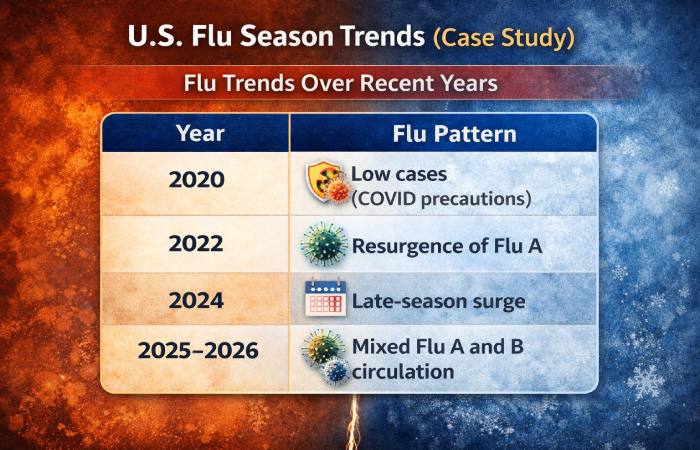
Flu Trends Over Recent Years
| Year | Flu Pattern |
| 2020 | Low cases (COVID precautions) |
| 2022 | Resurgence of Flu A |
| 2024 | Late-season surge |
| 2025–2026 | Mixed Flu A and B circulation |
Observations
- Flu A dominates early season
- Flu B increases later
- Vaccination rates influence severity
Key Differences Explained Simply
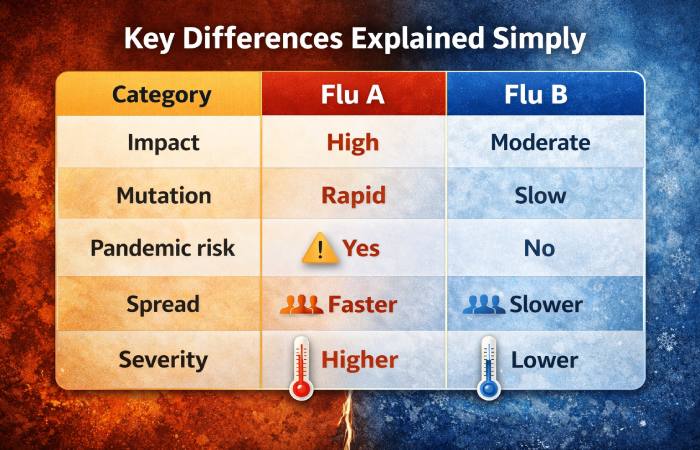
| Category | Flu A | Flu B |
| Impact | High | Moderate |
| Mutation | Rapid | Slow |
| Pandemic risk | Yes | No |
| Spread | Faster | Slower |
| Severity | Higher | Lower |
Flu A vs Flu B: Which Is Worse?
In general:
- Flu A is considered more severe and widespread
- Flu B is usually milder but still dangerous
However, both types can cause serious complications, especially in high-risk individuals.
When to See a Doctor
Seek medical help if you experience:
- Difficulty breathing
- Chest pain
- Persistent fever
- Severe dehydration
- Confusion or dizziness
Early treatment can significantly reduce complications.
External High-Authority Sources
Conclusion
Understanding the differences between Flu A vs Flu B is essential for managing seasonal influenza in the United States. While both viruses share similar symptoms and treatment approaches, Flu A is more severe and capable of causing pandemics, whereas Flu B is generally milder and limited to human transmission.
The best defense remains annual vaccination, early diagnosis, and proper hygiene practices. Regardless of the type, timely care can significantly reduce the risk of complications and improve recovery outcomes.
Also read: Pink Salt Weight Loss Recipe (USA Guide)