
 Sameena Fatima
Health & Wellness Content Writer
in
Sameena Fatima writes reader-focused
health and wellness content for
HealthBloomWeb, covering fitness,
nutrition, healthy lifestyle and
everyday wellness topics.
Sameena Fatima
Health & Wellness Content Writer
in
Sameena Fatima writes reader-focused
health and wellness content for
HealthBloomWeb, covering fitness,
nutrition, healthy lifestyle and
everyday wellness topics.
 Mirza Ibrahim Ali Khan
Editorial & Content Reviewer
in
Mirza Ibrahim Ali Khan contributes to
HealthBloomWeb's editorial review process,
with a focus on content structure,
readability, search intent and overall
editorial quality.
Mirza Ibrahim Ali Khan
Editorial & Content Reviewer
in
Mirza Ibrahim Ali Khan contributes to
HealthBloomWeb's editorial review process,
with a focus on content structure,
readability, search intent and overall
editorial quality.
 Reyansh Sethi
Medical Reviewer
in
Reyansh Sethi contributes to the medical
review process at HealthBloomWeb, focusing
on clarity, responsible health context and
reader-friendly presentation of health
information.
Reyansh Sethi
Medical Reviewer
in
Reyansh Sethi contributes to the medical
review process at HealthBloomWeb, focusing
on clarity, responsible health context and
reader-friendly presentation of health
information.
Tight hamstrings rarely stay isolated in the backs of the thighs. Because these muscles attach near the sitting bones, they influence the position of the pelvis. When they are short or guarded, they can tug the pelvis backward, flatten the natural curve of the lower back, and change how the hips move. The result is often stiffness or discomfort that shows up in the low back or hips even if the original tightness started in the legs.
This article focuses on stretches and simple mobility work that address the hamstrings while also considering the lower back and hips. The goal is practical relief and better movement, not aggressive forcing. You’ll find clear explanations of the connection, safe stretch options that protect the spine, a few hip-inclusive moves, form tips, a comparison table, and notes from research so you understand what tends to help.
How Hamstrings, Hips, and Lower Back Talk to Each Other
The hamstrings cross the hip and the knee. When they are tight, they limit the ability of the pelvis to tilt forward during bending. The lumbar spine often compensates by flexing more, which can increase stress on the discs and surrounding tissues. Over time this altered pattern may contribute to low-back discomfort.
Hip flexors on the front of the hips frequently tighten from sitting as well. When both the hamstrings and hip flexors are restricted, the pelvis can get stuck in a less optimal position and the lower back ends up doing extra work. Glutes that are underactive compound the problem because the hamstrings and spinal muscles try to pick up the slack.
A 2024 meta-analysis of randomized trials found that hamstring stretching reduced pain scores across different categories of low back pain and improved disability measures compared with usual care. Subgroup results were especially clear for people who also had radiating symptoms—the straight-leg-raise range improved notably. Other studies continue to show associations between hamstring tightness, altered pelvic tilt, and low-back symptoms, though the relationship is often two-way: back pain can also make the hamstrings feel tighter as a protective response.
The practical takeaway is that gentle, consistent work on the hamstrings (and nearby hips) can reduce the mechanical pull on the lower back for many people. Stretching alone is rarely the complete answer if strength, movement patterns, or nerve tension are also involved, but it is a useful and accessible starting point.
Safety Notes When the Lower Back Is Involved
If your back is currently sore, choose positions that keep the spine supported and avoid deep rounding under load.
- Prefer lying or carefully controlled seated versions first.
- Hinge from the hips rather than collapsing the lower back.
- Stop at a mild-to-moderate stretch sensation. Sharp pain, increased leg symptoms, or worsening back pain means ease off or change the move.
- Breathe steadily. Holding the breath increases tension.
- Warm up with light walking or marching before stretching.
- If symptoms include numbness, significant weakness, or pain that travels below the knee, get a professional assessment before continuing.
Hold most static stretches 20–40 seconds, two to three times per side. Consistency over days and weeks matters more than intensity on any single day.
Effective Stretches That Respect the Lower Back and Hips
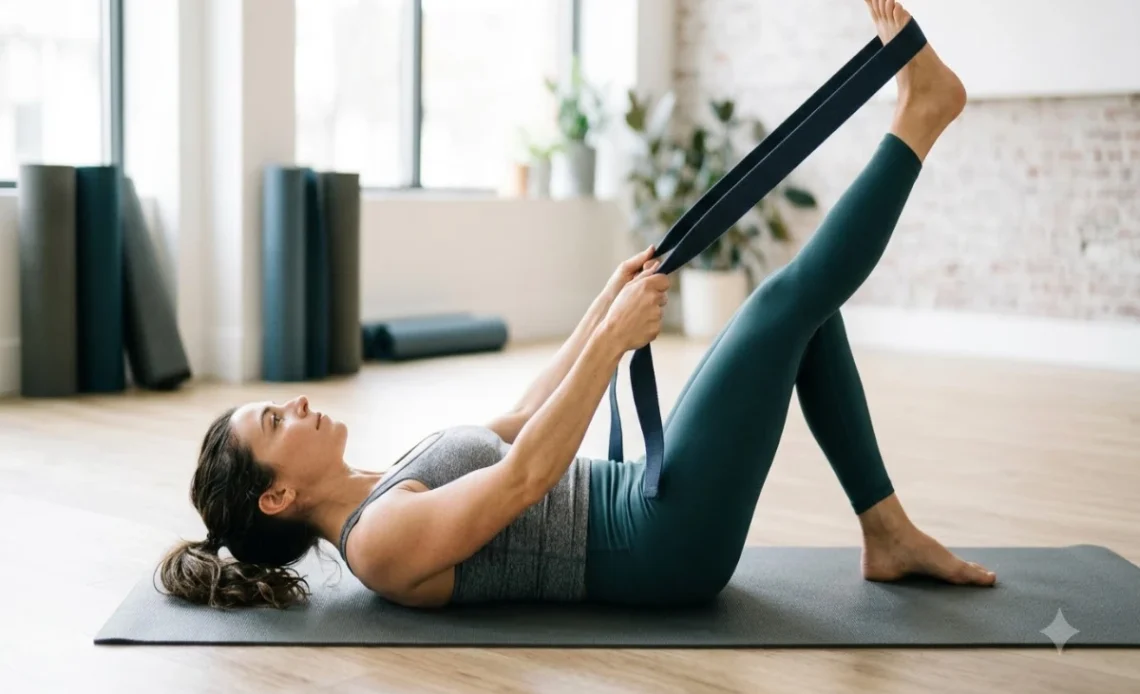
1. Supine (Lying) Hamstring Stretch with Strap or Towel
This is often the safest starting point when the back is sensitive because the floor supports the spine.
How to do it: Lie on your back. Bend one knee and keep that foot flat, or straighten it if comfortable. Loop a towel, strap, or belt around the ball of the other foot. Gently raise and straighten that leg toward the ceiling until you feel a clear stretch in the back of the thigh. Keep the hips and lower back heavy on the floor—do not let the pelvis lift. Hold 25–40 seconds, then switch. Repeat 2–3 times each leg.
Why it helps the back: Minimal spinal load. You control the intensity precisely. It reduces the pull on the pelvis without forcing lumbar flexion.
2. Standing Elevated-Heel Hamstring Stretch
A practical upright option that still emphasizes the hip hinge.
How to do it: Place one heel on a low step, curb, or sturdy chair. Keep the elevated knee soft rather than locked. Hinge forward from the hips with a long spine until the stretch appears in the raised hamstring. Hands can rest on the thigh. Hold 20–30 seconds per side.
Key cue: Lead with the chest, not the forehead. Soften the standing knee if balance or back comfort needs it.
3. Seated One-Leg Hamstring Stretch (Floor or Chair)
Floor version: Sit with one leg extended and the other bent, sole against the inner thigh. Sit on a folded towel or cushion if it helps keep the pelvis upright. Hinge from the hips toward the straight leg, keeping the spine as long as possible. Hold 20–30 seconds and switch.
Chair version: Sit on the edge of a chair, extend one leg with the heel on the floor, and hinge forward gently. This is useful at a desk.
These versions let you stretch the hamstring while monitoring how the lower back feels.
4. Gentle Seated or Standing Forward Fold with Bent Knees
If a full straight-leg fold feels too aggressive on the back, bend the knees generously so the belly can rest closer to the thighs. The hamstrings still get length, but spinal load drops. Gradually straighten the legs only as comfort allows.
5. Kneeling Hip-Flexor Stretch (to Balance the Chain)
Because tight hip flexors often travel with tight hamstrings, include this.
How to do it: Kneel on one knee with the other foot forward, knee over ankle. Keep the torso upright and gently shift the hips forward until you feel a stretch in the front of the back hip. Squeeze the glute on the kneeling side for a stronger effect. Hold 20–30 seconds each side.
This helps restore more balanced pelvic position so the hamstrings and lower back are not fighting each other.
6. Figure-Four or Modified Pigeon for Hip and Outer Hip
From hands and knees, bring one knee forward and angle the shin, then extend the other leg back. Keep the hips square and lower only as far as comfortable. This targets the outer hip and can ease compensatory tightness that affects the lower back. Hold briefly or move gently in and out.
7. Legs-Up-the-Wall (Restorative Posterior Chain)
Lie with hips close to a wall and legs extended up. Soften the knees if needed. Stay 45–90 seconds. Gravity provides a gentle, even lengthening with full spinal support. Many people find this calming for both the hamstrings and the low back.
Comparison Table: Stretches for Hamstrings + Lower Back/Hips
| Stretch | Spinal Support | Hip Involvement | Best When Back Is Sensitive | Hold / Reps | Notes |
| Lying strap hamstring | Highest | Moderate | Yes | 25–40 sec × 2–3 | Safest starting point |
| Standing elevated heel | Medium | High | Moderate | 20–30 sec × 2–3 | Emphasizes hip hinge |
| Seated one-leg (floor/chair) | Medium–High | Moderate | Yes (chair especially) | 20–30 sec × 2–3 | Easy to control |
| Bent-knee forward fold | Medium | High | Yes | 20–30 sec | Reduces lumbar stress |
| Kneeling hip-flexor | Medium | High | Usually yes | 20–30 sec each | Balances front of hip |
| Modified pigeon / figure-four | Medium | High | Caution if very sore | 20–30 sec or gentle movement | Outer hip focus |
| Legs up the wall | Highest | Low–Moderate | Yes | 45–90 sec | Restorative |
Choose two or three that feel comfortable and rotate them.
Sample Routine for Hamstrings, Hips, and Lower Back (10–15 minutes)
- Light walking or marching – 1–2 minutes
- Lying strap hamstring stretch – 3 holds each leg
- Kneeling hip-flexor stretch – 2 holds each side
- Seated or standing elevated hamstring – 2 holds each
- Legs up the wall or gentle bent-knee fold – 45–60 seconds
Do this most days, especially after prolonged sitting. On days the back feels more irritated, stick mainly to the lying and wall versions.
What Research and Clinical Experience Suggest
Hamstring stretching has been shown to reduce pain intensity and improve function scores in people with low back pain. Gains in straight-leg-raise range are particularly noticeable when radiating symptoms are present. Improving hamstring length can increase anterior pelvic tilt slightly and support a more natural lumbar curve in some individuals. At the same time, strength in the hamstrings and hips, plus overall movement control, also matter—flexibility alone does not fix every case.
If stretching consistently makes symptoms worse, the “tightness” may involve nerve tension or protective guarding rather than pure muscle shortness. In those situations a different approach (often guided by a physical therapist) is wiser.
Common Mistakes When Targeting the Back and Hips
- Rounding the lower back hard to reach farther. This loads the spine more than the hamstrings. Fix: Hinge at the hips and stop when the stretch is felt in the thigh.
- Ignoring the hip flexors. The front and back of the hips need balance. Include at least one hip-flexor stretch.
- Stretching aggressively when the back is flared up. Fix: Choose supported positions and shorter holds.
- Expecting overnight resolution. Pelvic and spinal patterns change gradually with consistent work.
- Skipping strength. Once mobility improves, simple glute bridges, bird-dogs, or light hinge patterns help keep the gains.
Putting It Together
Tight hamstrings can contribute to lower-back and hip discomfort by altering pelvic position and forcing the spine to compensate. Gentle, well-chosen stretches—especially supported lying versions, careful hip hinges, and balancing hip-flexor work—reduce that mechanical pull for many people. Pair the stretches with everyday movement (standing breaks, short walks) and, when ready, basic strengthening of the glutes and core.
Start with the lying strap stretch and a kneeling hip-flexor stretch if your back is sensitive. Add the standing or seated options as comfort allows. Breathe, stay within a mild-to-moderate sensation, and give the body a few weeks of consistent practice. The combination of freer hamstrings, more balanced hips, and less compensatory stress on the lower back is what most people notice first.
This information is general education only. Persistent or worsening back pain, radiating symptoms, or any concerning signs should be evaluated by a qualified healthcare professional.