
 Sameena Fatima
Health & Wellness Content Writer
in
Sameena Fatima writes reader-focused
health and wellness content for
HealthBloomWeb, covering fitness,
nutrition, healthy lifestyle and
everyday wellness topics.
Sameena Fatima
Health & Wellness Content Writer
in
Sameena Fatima writes reader-focused
health and wellness content for
HealthBloomWeb, covering fitness,
nutrition, healthy lifestyle and
everyday wellness topics.
 Mirza Ibrahim Ali Khan
Editorial & Content Reviewer
in
Mirza Ibrahim Ali Khan contributes to
HealthBloomWeb's editorial review process,
with a focus on content structure,
readability, search intent and overall
editorial quality.
Mirza Ibrahim Ali Khan
Editorial & Content Reviewer
in
Mirza Ibrahim Ali Khan contributes to
HealthBloomWeb's editorial review process,
with a focus on content structure,
readability, search intent and overall
editorial quality.
 Reyansh Sethi
Medical Reviewer
in
Reyansh Sethi contributes to the medical
review process at HealthBloomWeb, focusing
on clarity, responsible health context and
reader-friendly presentation of health
information.
Reyansh Sethi
Medical Reviewer
in
Reyansh Sethi contributes to the medical
review process at HealthBloomWeb, focusing
on clarity, responsible health context and
reader-friendly presentation of health
information.
Healthy eating habits & lifestyle choices can have a meaningful impact on overall health, energy, weight management, and long-term well-being. Healthy eating is not about following a perfect diet or eliminating all of your favorite foods. Instead, it means developing sustainable habits that help you regularly choose nutritious foods, stay hydrated, manage portions, and enjoy meals mindfully.
A healthy eating pattern generally emphasizes vegetables, fruits, whole grains, protein foods, healthy fats, and other nutrient-dense foods while limiting excess added sugars, sodium, saturated fat, and highly processed foods.
What Are Healthy Eating Habits?
Healthy eating habits are everyday behaviors that help you maintain a balanced and nutritious diet.
They can include:
- Eating a variety of vegetables and fruits
- Including protein in meals
- Choosing whole grains and fiber-rich foods
- Drinking enough water
- Practicing mindful eating
- Paying attention to portions
- Reading food labels
- Planning meals ahead
- Limiting added sugars
- Cooking more meals at home
The goal is consistency rather than perfection. A healthy eating pattern can also be adapted to your personal preferences, culture, lifestyle, and budget.
1. Build Meals Around Nutrient-Dense Foods
One of the easiest ways to improve your diet is to focus on foods that provide important nutrients without relying heavily on highly processed ingredients.
Try including:
- Leafy green vegetables
- Broccoli and other vegetables
- Whole fruits
- Beans and lentils
- Eggs, fish, poultry, or other protein foods
- Oats and other whole grains
- Nuts and seeds
- Plain yogurt or suitable dairy alternatives
A useful approach is to add more nutritious foods rather than simply focusing on what you need to remove.
For example, add vegetables to an omelet, fruit to plain yogurt, or beans and lentils to soups and salads.
2. Practice Mindful Eating
Mindful eating means paying attention to what and how you eat rather than eating automatically or while distracted.
Try these habits:
- Eat slowly.
- Put your phone away during meals.
- Notice the taste and texture of your food.
- Pay attention to hunger and fullness.
- Avoid eating directly from large packages.
- Pause before getting another serving.
Mindful eating does not mean following strict rules. It is simply a way to become more aware of your eating patterns and make deliberate choices.
The American Heart Association also recommends choosing mindfully, reading labels, and paying attention to reasonable portions.
3. Make Healthy Hydration a Daily Habit
Healthy hydration is another important part of a healthy lifestyle.
Water is a simple everyday choice because it contains no added sugar or calories. If plain water feels boring, add slices of lemon, lime, cucumber, or berries for flavor.
Try these practical habits:
- Keep a reusable water bottle nearby.
- Drink water with meals.
- Choose water instead of sugary drinks when possible.
- Carry water when traveling or exercising.
- Choose unsweetened tea or coffee more often than sugary beverages.
The CDC recommends replacing sugary drinks with water as one way to reduce added sugar intake.
Your individual fluid needs can vary depending on factors such as activity, climate, age, and health status, so there is no single amount that everyone must drink.
4. Reduce Added Sugar
Reduce added sugar rather than worrying about eliminating naturally occurring sugars from nutritious foods.
Added sugars are sugars or syrups added during food processing or preparation. They are different from naturally occurring sugars found in foods such as whole fruits and milk.
Common sources include:
- Soft drinks
- Sweetened tea and coffee
- Candy
- Desserts
- Sweetened breakfast cereals
- Sweet snacks
- Some flavored dairy products
Easy Sugar Swaps
| Instead of | Try |
|---|---|
| Sugary soda | Water or sparkling water |
| Sweetened tea | Unsweetened tea |
| Sugary cereal | Oatmeal + fruit |
| Candy | Fresh fruit or nuts |
| Sweetened yogurt | Plain yogurt + fruit |
| Flavored coffee syrups | Cinnamon or unsweetened coffee |
The CDC notes that excessive added sugar intake can contribute to health problems including weight gain, type 2 diabetes, and heart disease.
You do not need to avoid every food containing added sugar. Focus on reducing frequent and large sources.
5. Choose Whole Grains and Fiber-Rich Foods
Fiber is an important part of a healthy eating pattern.
Good sources include:
- Oats
- Brown rice
- Whole-wheat roti
- Barley
- Beans
- Lentils
- Chickpeas
- Vegetables
- Whole fruits
- Nuts and seeds
The CDC notes that fiber can support digestive health, help with fullness, and contribute to healthy blood sugar and cholesterol levels.
When increasing fiber, do so gradually and drink adequate fluids.
6. Include Protein in Your Meals
Protein can come from both animal and plant foods.
Animal sources
- Eggs
- Fish
- Chicken
- Seafood
- Yogurt
- Milk
Plant sources
- Lentils
- Beans
- Chickpeas
- Tofu
- Soy foods
- Nuts
- Seeds
The CDC recommends eating a variety of protein foods rather than relying on only one source.
A simple rule is to include a protein source at breakfast, lunch, and dinner when appropriate for your individual needs.
7. Practice Portion Awareness
Healthy foods can still contribute more calories than you need when portions are consistently very large.
Instead of weighing everything, start with simple visual habits:
- Fill much of your plate with vegetables.
- Include an appropriate protein portion.
- Choose a moderate portion of grains or other carbohydrates.
- Add a reasonable amount of healthy fat.
- Eat slowly and reassess your hunger before taking more.
Remember that serving size and portion size are not always the same thing. Nutrition labels can help you understand the amount of nutrients in a packaged food.
8. Plan Meals Before You Get Hungry
Meal planning can make healthy eating easier because you are less likely to rely on last-minute convenience foods.
Before the week begins:
- Choose several breakfasts.
- Plan lunches and dinners.
- Make a grocery list.
- Prepare a few ingredients ahead.
- Keep healthy snacks available.
The CDC recommends planning meals at home and preparing nutritious foods in advance to make healthier choices easier.
This is also a natural place to connect your Healthy Meal Planning & Recipes article.
9. Cook More Meals at Home
Cooking at home gives you more control over:
- Ingredients
- Portion sizes
- Added sugar
- Sodium
- Cooking methods
- Type of fat used
You do not need to cook elaborate meals. Simple dishes such as dal with vegetables, grilled fish with rice, vegetable omelets, chickpea salads, or tofu stir-fries can be nutritious and practical.
The American Heart Association similarly recommends cooking and eating at home because it provides greater control over ingredients and preparation methods.
10. Build Sustainable Healthy Eating Habits
Sustainable healthy eating means creating habits that you can realistically maintain for months and years.
Avoid an all-or-nothing approach.
Instead of: “I can never eat dessert again.”
Try: “I’ll enjoy dessert occasionally while making nutritious foods the foundation of my diet.”
Instead of completely eliminating carbohydrates, choose more nutritious carbohydrate sources such as whole grains, beans, vegetables, and whole fruits. The CDC notes that eating a variety of healthy foods is generally preferable to eliminating an entire food group.
Healthy Lifestyle Habits Beyond Food

Healthy eating is only one part of a healthy lifestyle.
Other healthy lifestyle habits include:
| Habit | Practical approach |
|---|---|
| Physical activity | Move regularly and exercise according to your abilities |
| Sleep | Maintain a consistent sleep routine |
| Hydration | Choose water and unsweetened beverages |
| Stress management | Use relaxation, social connection, or enjoyable activities |
| Meal planning | Plan meals and groceries ahead |
| Mindful eating | Pay attention while eating |
| Food quality | Prioritize nutrient-dense foods |
The CDC identifies healthy eating, physical activity, sleep, and other lifestyle factors as important components of overall health and healthy weight management.
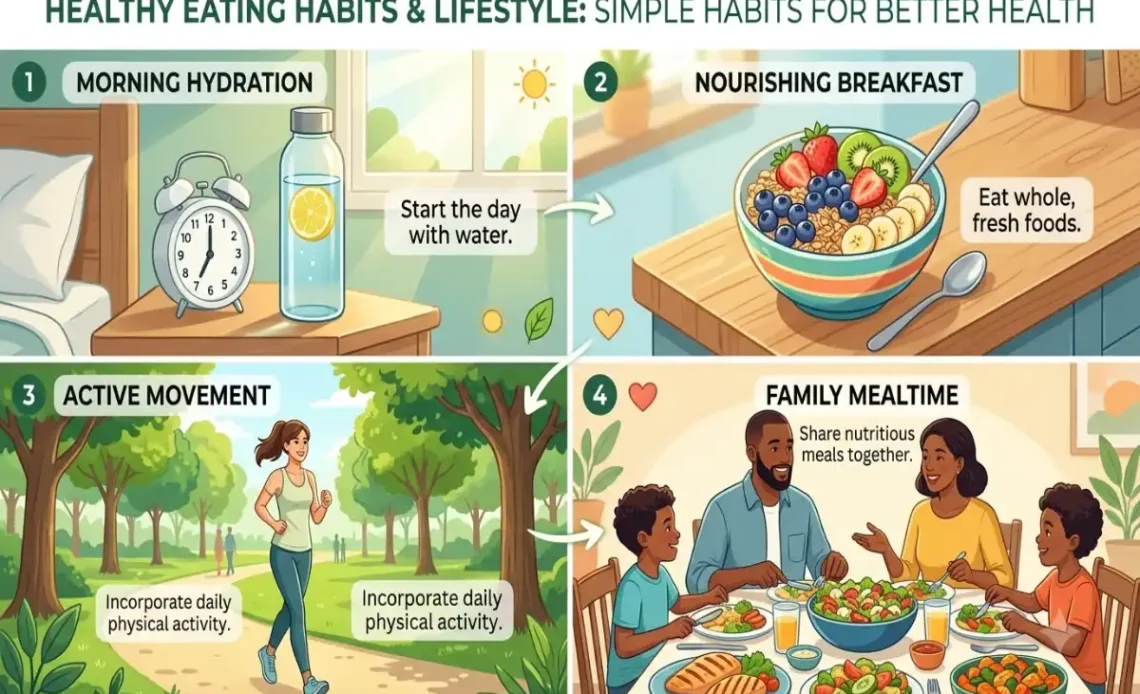
A Simple Healthy Eating Daily Routine
You do not need a complicated routine.
Morning
- Drink water.
- Eat a balanced breakfast.
- Include protein and fiber.
Afternoon
- Eat a balanced lunch.
- Include vegetables or fruit.
- Choose water instead of a sugary drink.
Evening
- Eat a balanced dinner.
- Practice portion awareness.
- Limit mindless snacking.
Before Bed
- Avoid making food the focus of your evening.
- Follow a consistent sleep routine.
- Prepare for the next day’s meals if helpful.
How to Start Healthy Eating Habits
Trying to change everything at once can make healthy eating difficult to maintain.
Instead, start with one habit at a time.
Week 1
Add one extra serving of vegetables or fruit each day.
Week 2
Replace one sugary beverage with water.
Week 3
Add a protein source to breakfast.
Week 4
Plan several meals before your weekly grocery trip.
Once a habit becomes easier, add another.
This approach makes sustainable healthy eating more realistic than following an extreme diet for a short period.
Common Healthy Eating Mistakes
Avoid these common mistakes:
- Trying to follow a perfect diet
- Eliminating entire food groups unnecessarily
- Drinking too many sugary beverages
- Ignoring portion sizes
- Eating while distracted
- Relying heavily on highly processed foods
- Making drastic changes that cannot be maintained
- Focusing only on food while ignoring sleep and physical activity
The 2026 American Heart Association dietary guidance similarly emphasizes whole or minimally processed foods, vegetables and fruits, healthy protein, unsaturated fats, and minimizing added sugars and sodium.
Frequently Asked Questions
What are the best healthy eating habits?
Some useful habits include eating a variety of nutrient-dense foods, including vegetables and fruits, choosing healthy protein sources, drinking water, practicing mindful eating, planning meals, and limiting excess added sugar.
How can I start healthy eating habits?
Start with one or two manageable changes. For example, add vegetables to one meal and replace one sugary drink with water. Gradually build additional habits.
What is mindful eating?
Mindful eating means paying attention to your food, hunger, fullness, and eating environment rather than eating automatically or while distracted.
How can I reduce added sugar?
Start by reducing sugary drinks, desserts, sweetened coffee and tea, and other frequently consumed sweet foods. Check nutrition labels for added sugars and use whole fruit when you want something sweet.
How much water should I drink each day?
Fluid needs vary from person to person. Activity, climate, age, diet, and health conditions can affect hydration needs, so there is no single amount appropriate for everyone.
Can healthy eating be sustainable?
Yes. Sustainable healthy eating focuses on realistic food choices that fit your preferences, budget, culture, schedule, and long-term lifestyle rather than extreme restrictions.
Bottom Line
Healthy eating habits & lifestyle are built through small, repeatable choices rather than short-term dieting. Focus on nutrient-dense foods, include a variety of protein and fiber-rich foods, practice mindful eating, stay hydrated, reduce added sugar, plan meals, and cook at home when practical.
Most importantly, make your eating pattern realistic. A healthy lifestyle is not about being perfect every day; it is about creating habits that you can continue over time.