
 Sameena Fatima
Health & Wellness Content Writer
in
Sameena Fatima writes reader-focused
health and wellness content for
HealthBloomWeb, covering fitness,
nutrition, healthy lifestyle and
everyday wellness topics.
Sameena Fatima
Health & Wellness Content Writer
in
Sameena Fatima writes reader-focused
health and wellness content for
HealthBloomWeb, covering fitness,
nutrition, healthy lifestyle and
everyday wellness topics.
 Mirza Ibrahim Ali Khan
Editorial & Content Reviewer
in
Mirza Ibrahim Ali Khan contributes to
HealthBloomWeb's editorial review process,
with a focus on content structure,
readability, search intent and overall
editorial quality.
Mirza Ibrahim Ali Khan
Editorial & Content Reviewer
in
Mirza Ibrahim Ali Khan contributes to
HealthBloomWeb's editorial review process,
with a focus on content structure,
readability, search intent and overall
editorial quality.
 Reyansh Sethi
Medical Reviewer
in
Reyansh Sethi contributes to the medical
review process at HealthBloomWeb, focusing
on clarity, responsible health context and
reader-friendly presentation of health
information.
Reyansh Sethi
Medical Reviewer
in
Reyansh Sethi contributes to the medical
review process at HealthBloomWeb, focusing
on clarity, responsible health context and
reader-friendly presentation of health
information.
Lunch determines the course of your whole afternoon. If you eat too little or something unbalanced, you‘ll be searching for sweets by around 3 o‘clock. If you eat too much of something heavy or highly processed, you‘ll hit a slump at precisely the time you need to stay alert. A good lunch balances just the right amount of protein and fiber in order to stay full, the right amount of volume to make your plate feel full, and the right number of calories to fit well into your daily deficit.
This pillar page comprises the basic building blocks of creating better lunches for fat loss. The simple formula for success that most people will be able to follow, why certain foods stave off hunger for longer, practical categories of lunch ideas that work, comparison tables, advice for real life situations, and advice on taking these ideas and creating a sustainable habit. This is not about restriction. It is about creating mid day meals that will maintain fat loss but still feel like real food.
Why Lunch Matters So Much for Weight Loss
A committed calorie deficiency is still the key to weight loss. Lunch can be a powerful time to trim that calorie budget as it is frequently the largest or most inconsistent meal, and by making lunch a high protein and fiber meal and combining it mainly with low energy density foods (foods that give a lot of volume and few calories), there are two things that can happen:
Satiety hormones remain high for a longer period of time. Proteins and fibers slow digestion and control the appetite response. The overall calorie count of the meal remains moderate, even when the food appears to fill the plate. Patterns of research of energy density indicate that individuals will eat less by choosing foods relatively high in water and fiber content, including vegetables, broth based soups, and lean meats, without sacrificing fullness.
It‘s great to target around 350-500 kcal at lunch for most adults in a moderate deficit, though total needs vary substantially according to body size, activity level, and food consumption throughout the rest of the day. Aside from total kcal, avoiding excess amounts of calories, to eat more protein (25-40 grams if in a deficit), eat a portion of whole-food carbs, and eat enough non-starchy vegetables (half or more of plate), and a small amount of healthy fat, is ideal.
The Core Formula for a Weight-Loss Lunch
A reliable template looks like this:
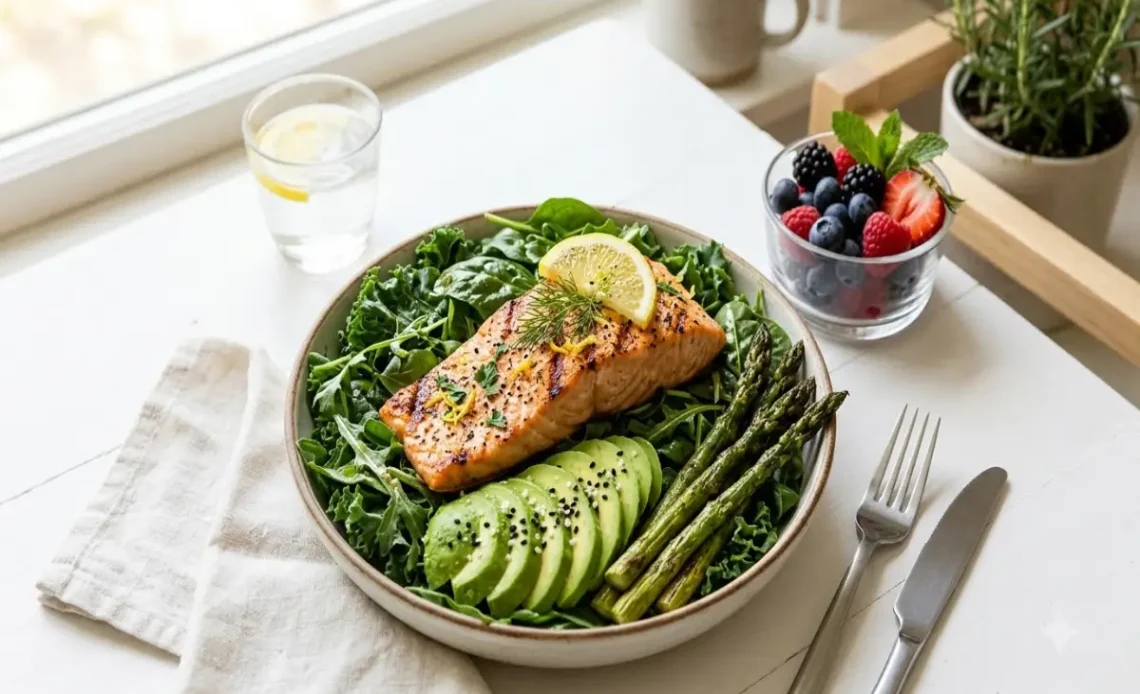
- 4 to 6 ounces, or approximately 110 to 170 grams, of lean sources of protein
- &15g or more of non-starchy vegetables.
- ½– 1 cup of whole-food starch or fruit (optional, as hunger and goals dictate)
- One to two teaspoons of good fat or a small accurately measured piece of avocado, nuts or cheese.
- flavor from herbs and spices, citrus, vinegar, mustard, salsa or hot sauce
Provides volume, protein, and fiber, with reasonable calories. Versatile enough for salads, bowls, wraps, or soups and classic plates.
Why Protein, Fiber, and Volume Work Together
Protein enhances The thermic effect of food (your body uses more calories to digest it), and therefore has a strong effect on fullness hormones. Spreading out protein intake during the day (with a substantial amount at lunch) helps many people to eat fewer calories later in the day.
Veg, pulses and whole grains in a recipe provide texture, delay digestion and help keep the gut healthy. For most people, the bar is set low on fibre so adding more veg to lunches is one of the easiest ways to get closer to the recommended amounts.
Most of the volume comes from water. A big salad or a broth-based soup will fill you up for many fewer calories than a calorie-dense sandwich or fried meal of the same volume. This explains some of what natural eating approaches are trying to accomplish.
When these three factors exist, then having a 400-calorie lunch from whole, natural foods can be more satisfying than a 600-calorie carbohydrate-heavy, fat-containing lunch.
Categories of Healthy Lunch Ideas
High-protein choices
The most appropriate foods are those that are both rich in protein and that are high in protein.
Center your plate around chicken, turkey, fish, eggs, Greek yogurt, cottage cheese, tofu, tempeh, lentils or beans. Then add in some vegetables and a low-calorie sauce or dressing. Such meals are great for helping assuage hunger in the afternoon.
Options with low calorie and high volume
Big salads, soupy, veggie filled stews, wraps with lots of lettuce, broth based foods. Enables you to eat larger quantities while still being fairly low in calories.
Plant-based and vegetarian options.
Protein found in lentils, chickpeas, black beans, tofu, tempeh, egg, Greek yogurt, and cottage cheese. GL and Dairy together in one‘s diet provides better amino acid profile and satiety value.
Meal-prep friendly options
All things cooked once (protein, roasted veggies, grains, sauces) and assembled differently each day. Chili, soups, egg muffins, and grain bowls keep and are easy to reheat so there is less decision fatigue.
Office and packed lunch options
Let‘s face it, not all of us have the time or energy to make healthy packed lunches from scratch, or eat out each day.
No-reheat salads, protein boxes, yogurt-based mixes, roll-ups, and containers that travel without leaking or odors. These takes the friction out of eating at work.
Culturally familiar options
A lot of cuisine disciplines even have balanced components, such as eat less grains and more vegetable & protein and control the amount of cooking oil, then make what you usually eat a weight loss supporting one.
Building Different Types of Lunches
Hearty salads (that are enough to satisfy you)
Begin with a handful of greens/mixed vegetables. Include a lean source of protein (chicken, tuna, eggs, chickpeas, cottage cheese). Focus on a crunchy element(s) and a small portion of dressing. ‘The biggest mistake made is often the big salad with almost no protein and far too much creamy, oily tasty dressing!’
Bowls
Layer a little of the whole-grain or leave it out, add your protein, load with vegetables, and top with an exciting but non-saturated fat dressing. Bowls are the perfect do-it-yourself meal and are simple to control the portions.
Soups and stews.
The soup should not separate into solid and liquid, and the stew should not have an excessive amount of liquid.
Other variations in liquid (with lentils, beans, lean meat, large amounts of vegetables) give both heat and volume – these tend to be suitable for batch cooking and re-heat.
Wraps.
Use big pieces of romaine, a properly-sized whole wheat tortilla or high-fibre wrap. Add in protein and vegetables. Avoids getting heavy and creamy sauces.
Protein boxes
Protein is made up of amino acids that are arranged together. In this experiment we had to label the amino acids and the group of amino acids on both the arrangements of the amino acids and the corncob protein.
A divided container with a big protein, raw veg, a small fruit or starch piece and a healthy fat or a dip. These are kind of like a healthy lunchable and perfect for those hectic days.
Comparison of Lunch Approaches
Full boilingwater, no fat, lots of protein. Method: Bring water to a rolling boil and view the amount of potential protein rising to the surface so you know it‘s ready. Do not add any fat or oil. This drink is very high in calories. Half boilingwater, 1tsp of oil, low in protein. Uses all the same methods as full boilingwater including some negative effects of boiling water to add flavor.
High-protein salad/bowl 350–480 High (30–40g+) High Hunger management & muscle retention All elements are able to be prepared beforehand
Broth-style soup + side 300–450 Medium–High Very high Comfort, low energy density Great for batch cooking
Vegeterian legume based 350–480 Medium High High Plant based eaters Lentils/beans keep well
Protein box / bento325–4HighMediumOffice, variety seekersMinimal assembly
Measured traditional plate 380–500 Variable Medium–High Cultural preferences Adjust ratios
Practical Tips for Success
There is a perceived inaccuracy in the portion awareness.
Use your hand as a general rule: palm = a serving of protein, fist = if including starch, as many nonstarchy vegetables as desired. Practice measuring for about a week or so and your eye will start to develop.
Flavor without additional calories
Herbs, spices, garlic, ginger, citrus, vinegar, mustard, hot sauce and salsa make the simple ingredients come alive. Besides a dash of good fat, the benefit to energy and nutrient absorption and the appeal other than have good fat, a little good fattail:
Meal prep developed without all the stress
Prepare a couple of proteins and a whole vegetables tray a couple of times a week. Mix it in different ways every day. Keep the mayonnaises apart.
Whether dining outside or taking away,
Opt for grilled or baked. Select a very lean cut of beef, chicken, or turkey and order it Grilled or Baked. Request Get Dressing on the Side, if possible. Fill your plate with vegetables, and be cautious of bread, rice, and creamy sauces. Most restaurants will easily make basic adjustments.
In terms of dealing with starvation later in the day.
If the hunger feels too intense; verify that lunch was sufficient in terms of protein and overall bulk. An intended, high protein snack will help traverse the gap without throwing the day into disarray.
Sustainability
The most effective lunch plan is the one you can do repeatedly. Choose a handful of meals that you truly enjoy and lean on them. The exceptions and occasional changes will make it more manageable by avoiding the all-or-nothing mentality that can cancel out your previous work.
Common Pitfalls and How to Avoid Them
- Salad that are mostly lettuce and dressing with 1 gram of protein→ have a good source of protein.
- “Healthy” café meals high in nuts, cheese, dried fruit and heavy dressings– request alternatives to be put together, or assemble your own
- Skipping lunch then overeating later→ whatever you eat is better than nothing even if it‘s just an extremely simple protein-and-vegetable meal, and not ideal nutritional fuel for the body.
- Using willpower only in the afternoon → design the lunch to start you off with more depleted glycogen.
- Boredom→ invent new recipes every day, it is better to change combination of sauces, spices and vegetables.
Putting It All Together
Healthy lunches for weight loss have a few tried and true principles: Load up on protein, load up on volume of veg, don’t have overly large items packed with calories and flavour and make sure you season your food so you feel like eating it! Cold salads, warm bowls, soup, regular plates or fridges on the go it is all the same;
Begin with an ideal basic formula, one or two styles of meal that work with your routine and suit your tastes. Do as much prep work as you can ahead of time. Notice the effects of various lunches on your energy and appetite later in the day. After a time this will become second nature. Lunch will no longer be a daily obstacle but instead will be a steady, sustainable part of a coherent strategy for losing weight.
The actual meals do not have to be complex or perfect. They only have to be consistent enough, satisfying enough and close enough to a modest calorie of