
 Sameena Fatima
Health & Wellness Content Writer
in
Sameena Fatima writes reader-focused
health and wellness content for
HealthBloomWeb, covering fitness,
nutrition, healthy lifestyle and
everyday wellness topics.
Sameena Fatima
Health & Wellness Content Writer
in
Sameena Fatima writes reader-focused
health and wellness content for
HealthBloomWeb, covering fitness,
nutrition, healthy lifestyle and
everyday wellness topics.
 Mirza Ibrahim Ali Khan
Editorial & Content Reviewer
in
Mirza Ibrahim Ali Khan contributes to
HealthBloomWeb's editorial review process,
with a focus on content structure,
readability, search intent and overall
editorial quality.
Mirza Ibrahim Ali Khan
Editorial & Content Reviewer
in
Mirza Ibrahim Ali Khan contributes to
HealthBloomWeb's editorial review process,
with a focus on content structure,
readability, search intent and overall
editorial quality.
 Reyansh Sethi
Medical Reviewer
in
Reyansh Sethi contributes to the medical
review process at HealthBloomWeb, focusing
on clarity, responsible health context and
reader-friendly presentation of health
information.
Reyansh Sethi
Medical Reviewer
in
Reyansh Sethi contributes to the medical
review process at HealthBloomWeb, focusing
on clarity, responsible health context and
reader-friendly presentation of health
information.
You won‘t have to forgo dal, roti, sabzi, or rice to shed pounds. Simply put, a typical Indian home-cooked meal has everything we need to lose weight steadily. Lentils, vegetables, whole grains, curd and spices are already present in a typical Indian homemade meal. The only variations lie in quantities, oil and the amount of protein and fibre you heap onto your plate.
I am keeping it simple as I know everyday Indian style foods can be converted into calorie deficits without feeling deprived. This includes practical plates structures, specific lunch combos, protein packing vegetarian options, how to control oil and roti/rice, and some ideas for home/tiffin.
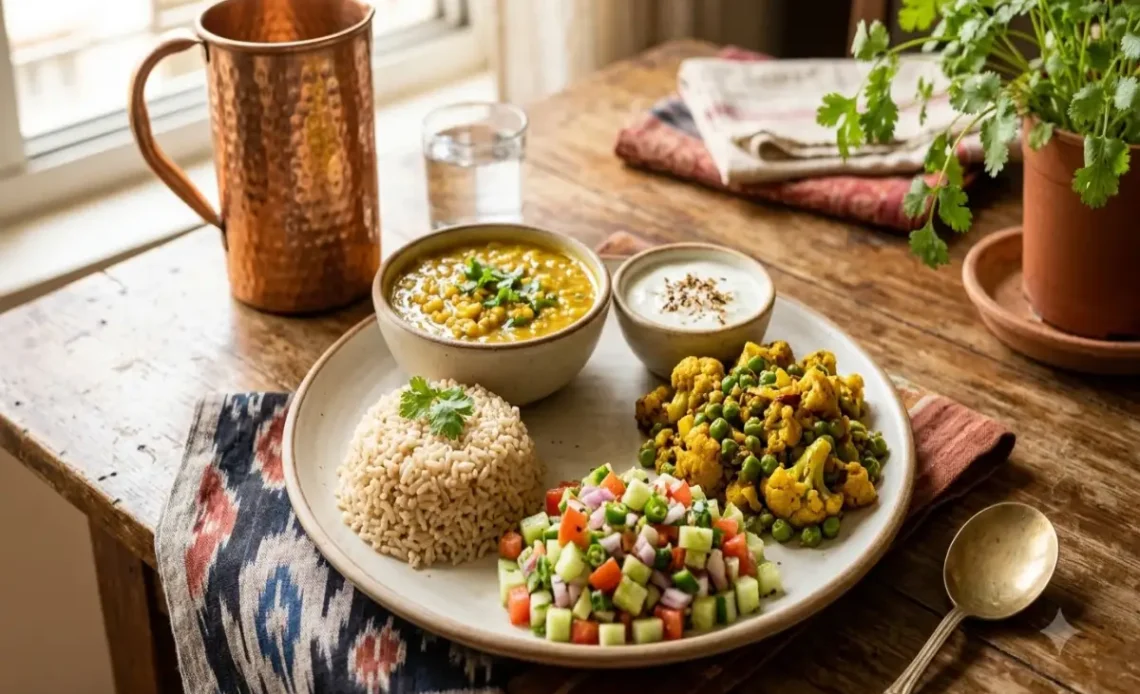
The Simple Indian Weight-Loss Lunch Plate
A useful way to build lunch is:
- Half the plate: vegetables and salad (sons + kachumber or raita)
- One quarter, of either (dall, rajma, channa, paneer, sprouted beans, curd, eggs or non-fatlean meat),
- One quarter: whole-grain carbs (1–2 rotis or a small katori of rice/ millets)
- Fats: Use very little oil or ghee,(preferably measured).
The other thing that this structure does well it also readily increases volume and protein while maintaining calories at a reasonable level for most people trying to lose weight (roughly 350–500 calories for lunch, scale down as needed).
Everyday Healthy Indian Lunch Combinations
1. Classic Dal-Roti-Sabzi (Balanced Version)
1–2 medium, whole wheat or multi-grain rotis +1 big glass of a bowl of dal (moong, masoor or mixture) + a generous helping of low-oil sabzi (lauki, bhindi, cabbage, beans or a mixture) + cucumber-tomato salad OR plain curd/raita.
This is a staple lunch for many Indian homes. A very simplified Indian meal and yet it can be turned into a low calorie weight loss friendly lunch by increasing the size of the dal and sabzi and decreasing the size of the roti and minimizing the oil.
2. Rajma or Chole with Controlled Rice
1 of katori rajma or chole (if made in moderate amount of oil), ½–¾ of katori brown rice/normal rice, salad and a bowl of thin curd.
Rajma and chole provide good plant protein and fibre. Measured portion of rice helps prevent over loading of calories in the meal.
3. Moong Dal Cheela or Besan Chilla with Sides
2 thin cheelas (moong dal or besan or any other), prepared with less oil accompanied by a mint chutney, a katori of curd and a veg side or salad.
High in protein, comparatively calorie light and quick to prepare. Adding a sprinkle grated paneer or a few vegetables would make it more satisfying.
4. Vegetable Khichdi with Curd and Salad
Khichdi: equal parts rice and moong dal with mixed vegetables topped with a gentle tadka. Ac, serve with plain curd and a vast salad.
Makes a comforting, easily digestable, flexible and complete meal when vegetables are in season and use of oil is minimal.
5. Paneer or Tofu Sabzi with Roti and Salad
Low oil paneer bhurji or low oil palak paneer (without the cream) or tofu in a very light sauce + 1–2 rotis + lots of salad or raita.
God knows you need protein! So boost protein with paneer and tofu. See if you can gauge the portion of paneer (approximately 80 – 100 g) and keep the gravy fairly light.
6. Sprouts or Chana Salad Bowl
Boiled or sprouted moong/chana couple and then mixer with onion, tomato, cucumber, lemon, chaat masala, coriander. Which is optioned for a spoon of curd or a small piece of paneer.
Excellent no-cook or minimal-cook choice. Itâs also to carry in a tiffin.
7. Idli or Dosa with Sambar (Portion-Controlled)
2–3 idlisis or 1 medium dosawith a large helping of vegetable laden sambarand a small helping of chutney.
Opt for fermented and throw the sambar with loads of veggies for additional bulk & fibre.
Comparison of Common Indian Lunch Options
Lunch Combination Totalpractical (avg. Portion)g calories 50g Proteinpractical (average portion)g Specific recommendation for weight loss 250kcal
Dal + 2 roti + sabzi + salad/raita 350–450 Dal + curd Larger sabzi, measured oil, 1–2 roti
Rajma/chole + small rice + curd/salad 380–480 Besan + curd ½–¾ katori rice.
Moong dal cheela +curd+salad 300–400 Dal+curd/paneer Use very little oil, put vegetables if you like
Vegetable khichdi + curd + salad 350–450 Dal + rice combo Extra vegetables, light tadka
Paneer/tofu sabzi + 1–2 roti + salad 400–500 Panner/tofu 80–100 g paneer, with low oil gravy
Sprouts/chana salad + curd 300–400 Sprouts/chana + curd High volume, no oil, Very healthy
Chutney/idli/dosa + vegetable sambar 350–450 Fermented + dal More sambar, less chutney/oil
High-Protein Vegetarian Indian Lunch Ideas
Protein is often the missing piece in traditional vegetarian meals. These options help raise it:
- Larger katori of dal or a second pulse (ie, dal + a small portion of chana)
- Paneer/tíefor testampleas little as possible.
- Thick curd of Indian style or Greek style as a side.
- (Under fresh produce) mixed into sabzi or added to salads.
- High protein soy chunks in a light curry or keema type sauce (use sparingly)
- Eggs (if used) and bhurji with vegetables and roti
The sensible target is 20–30+ g at lunch. This can be readily combined: (dal)(with)curd/paneer+(sprouts)
Regional Adaptations
North Indian style
Take DAL, roti, and seasonal sabzi like (lauki, bhindi, gobi, palak) and raitha. Go easy on tadka and be liberal with the veg.
South Indian style
Small portion of vegetable sambar, rasam, poriyal (dry vegetable stir-fry), idli, or a little rice. Focus on sambar and veggies rather than large rice portions.
Other notes on the regions
Rajma-chawal or chole with less rice, more salad can also work. Khichdi, mixed vegetables cooked Unhadiya style (with less/oil) or even a plain fish/chicken (vegetarians) preparations work well when consumed in moderation.
Practical Tips That Make a Difference
Oil and ghee
Places where the local oil and ghee is produced have been labeled as tements, the wider area they are prepared in as bhad, and everything outside as raj n. Ghee is also known as tik pom. Incidents taking place in the diary namely production, storage and sale of oil and ghee has been individualized to distinguish between formal and informal A-series as well as different socio-economic groups, further clarified in the second part of the paper.
Use calibrated measuring spoons. Typically, one teaspoon of oil/ghee per portion of each dish should be enough when using non-stick cookware. Avoid deep-frying and gravies based with cream on normal days.
Roti & Rice.
All the food items for the TAFE students are provided by the Ethnic Food store and all the food is made in house at the foodworks.
For lunch, 1–2 medium rotis or ½ 1 small katori of rice are fine for most people. Clop the plate with lots of sabzi and salad so it is ‘filling’.
Tadka and Flavour.
Spices, ginger, garlic, green chilli, lemon and fresh coriander impart taste with negligible amounts of calories. The dish is normally flavored with a gentle tadka, which would involve cumin seeds, mustard seeds, and addition of a few curry leaves.
Curd, chaas
Plain curd or buttermilk (cheese) adds protein/probiotics/volume. Use plain and not sweetened.
Tiffin-friendly options
because with the exception of the Italian and BLT all of the sandwiches can to be taken home without hassle.
Cheelas, sprouts salad, dal with Sabzi (separate from roti if you can) paneer rolls or khichdi are all good to go. Take the salad and raita in a separate container otherwise they will spoil.
Sample Weekly Indian Lunch Rotation
- Monday : Moong dal+2 roti+ lauki or mixed sabzi+ salad+ curd.
- Tuesday: Rajma, small rice portion + salad + raita
- Wednesday: 2 Moong Daal Cheelas + mint chuntney + curd + vegetable side.
- Thursday : Vegetable khichdi + curd + big salad
- Friday: O paneer or tofu sab!. O serving of two roti or two and; 1 vegetable or side dish. 1 salad (such as cucumber)
- Weekend: m Sprouts or chana salad bowl OR IDLI-SAMBAR with extra vegetables.
Alter the vegetables and dal type so the week does not become monotonous.
Common Questions
Want to gain weight? Can I eat rice and still loose?
YES. Just keep the portion not too high, be generous with dal, sabzi and salad. Use brown rice or millets for extra fibre if required.
What is the limit of acceptable ‘number of rotis’?
Most adults at a moderate deficit will find that 1–2 medium rotis at lunch is fine (assuming the rest of the plate is vegetables and some protein)
And then, can we also talk ghee?
A small measured quantity is still acceptable for most people, and can enhance the eating experience. The main difficulty arises when people are allowed to have unlimited access to a variety of foodstuffs.
Is this green in the long terms?
Yes, because there are familiar foods used. The change is more in proportion and the use of cooking fat not in the removal of whole food groups.
Healthy Indian lunches for weight loss is not about dieting. It‘s about going back to and recreating the Balance of the traditional thali more veg and protein, less carbs and fat, same masala and flavours you already love. Begin with changing one or two lunches this week pad out the sabzi and dal, go easy on the oil & ghee just a tad, keep the roti or rice portion defiantly consistent. Over time these minor tweaks become second nature and promote patience and consistency over days, months and years while giving up none of the food that feeds your soul.