
 Sameena Fatima
Health & Wellness Content Writer
in
Sameena Fatima writes reader-focused
health and wellness content for
HealthBloomWeb, covering fitness,
nutrition, healthy lifestyle and
everyday wellness topics.
Sameena Fatima
Health & Wellness Content Writer
in
Sameena Fatima writes reader-focused
health and wellness content for
HealthBloomWeb, covering fitness,
nutrition, healthy lifestyle and
everyday wellness topics.
 Mirza Ibrahim Ali Khan
Editorial & Content Reviewer
in
Mirza Ibrahim Ali Khan contributes to
HealthBloomWeb's editorial review process,
with a focus on content structure,
readability, search intent and overall
editorial quality.
Mirza Ibrahim Ali Khan
Editorial & Content Reviewer
in
Mirza Ibrahim Ali Khan contributes to
HealthBloomWeb's editorial review process,
with a focus on content structure,
readability, search intent and overall
editorial quality.
 Reyansh Sethi
Medical Reviewer
in
Reyansh Sethi contributes to the medical
review process at HealthBloomWeb, focusing
on clarity, responsible health context and
reader-friendly presentation of health
information.
Reyansh Sethi
Medical Reviewer
in
Reyansh Sethi contributes to the medical
review process at HealthBloomWeb, focusing
on clarity, responsible health context and
reader-friendly presentation of health
information.
It is possible to lose weight without being starved or lacking protein. Lunches need to include items that are a source of both volume and protein; for example, lentils, chickpeas, beans, tofu, tempeh, eggs, Greek yogurt, cottage cheese, quinoa, and plenty of veg. Items include plenty of calories, but give the body a necessary and protein-filled snack to last the day.
Most of us believe that vegetarian dishes are light and lower in protein, which may not always be true; this is only if your plate is full of refined carbs, and/or oil and cheese. However if your plate is full of pulses, soy products, eggs or dairy and filled to the brim with non-starchy vegetables, the results are impressive. Fiber from plants further slows digestion and leads to increased feelings of fullness and can help you stay within a calorie deficit without relying solely on willpower.
This guide concentrates on the day-to-day practical weight-loss vegetarian lunches. In here you‘ll find the highest protein suggestions, the easiest bowls, hot dishes, no-cook ideas, comparison tables and suggestions for all tastes and nationalities.
Why Vegetarian Lunches Can Support Weight Loss
The most apparent benefit of plant-based meals namely, they can lower the total calorie intake is likely a significant contributing factor to weight management. The stomach can be filled with a large quantity of vegetables and legumes with less calories than many meat- and white-bread meals. Studies indicate that those following a balanced vegetarian pattern are at times eating less and feel equally as satisfied. As protein remains the crucial component in retaining muscle and managing hunger, good vegetarian lunch options are well-prepared with a decent source of protein, not simply vegetables and starches.
If you can, aim for about 20-35g protein in your lunch. This amount is achievable from the below foods and will keep most of us full until the next meal.
Best Vegetarian Protein Sources for Lunch
- Lentils – Provides 18g protein per cup when cooked, good source of fiber and a cheap option; they are easily adaptable in to salads, soups and curries.
- Chickpeas & other beans – 14-15g protein per cup, cooked. Delicious in salads, bowls, wraps, or roasted.
- Tofu and Tempeh – Firm tofu and tempeh provide full protein. A standard portion is around 15–20+g.
- Eggs – 2 eggs offer around 12g, increase using whites or with other protein foods.
- Greek yogurt and cottage cheese (15–25 g/cup depending on product); good in bowls or salad dressings.
- Quinoa higher protein content than most grains (8g/cooked cup), and contains a complete profile of amino acids.
- Edamame – About 17g per cup. It can be easily thrown in to bowls or added to a salad.
- Paneer (if included) – higher in calories but effective when used in small amounts in Indian style dishes
- When two protein sources are combined (e.g. lentils+yoghurt, or chickpeas+eggs), it becomes very easy to increase the protein content.
High-Protein Vegetarian Lunch Ideas
1. Lentil and Vegetable Salad with Feta or Cottage Cheese
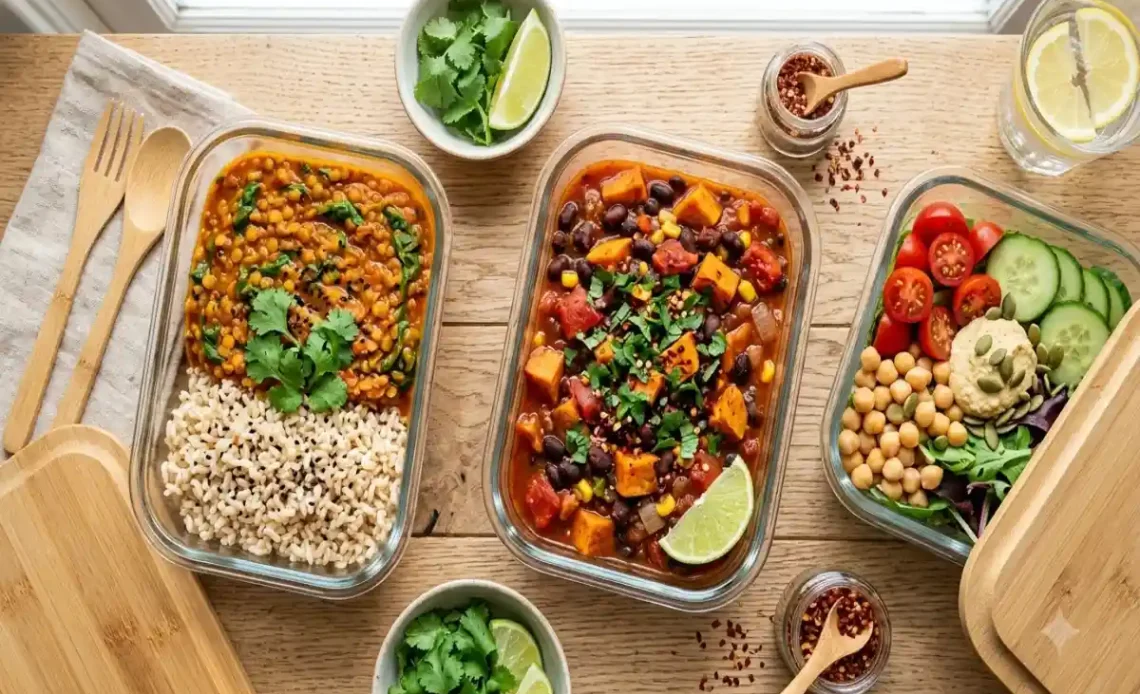
1–1½ cups cooked lentil + cucumber, tomato, peppers, red onion, herbs, lemon juice, & portioned amount of feta OR a scoop of cottage cheese.
Approx 350-450 calories, 25-30g protein. Stores well for meal prep.
2. Chickpea and Greek Yogurt Bowl or Wrap
Mashed or whole chickpeas with Greek yogurt, mustard, celery, and spices. Serve over greens or in a whole-grain wrap with added vegetables.
350–420 calories, of protein that has to be masticated and from legumes and yogurt.
3. Tofu Stir-Fry or Bowl
Pan-fried or baked extra-firm tofu (150-200g) with roasted broccoli, peppers and mushrooms. Served with a light soy-ginger or chili sauce. If desired, can add a small serving of quinoa or brown rice. Otherwise, this will be quite vegetable focused.
400-480 calories and 25-35 g protein depending on amount of tofu
4. Black Bean and Quinoa Bowl
½- ¾ cup black beans + ½ cup cooked quinoa + salsa, corn, lettuce, tomato, and a spoonful of Greek yogurt or specific amount of avocado
around 400–480 calories. Rich in fiber and plant protein.
5. Cottage Cheese Power Bowl
1 cup of low-fat cottage cheese with cucumber, tomato, herbs and a portion (handful) of chickpeas or edamame with optionally seeds or a few olives.
Can sometimes be in the 300-400 calorie range with 30+ grams of protein. Quickest and require no cooking.
6. Egg and Vegetable Muffins or Scramble
Spinach and peppers baked with an egg and maybe a little cheese or cottage cheese, or simply an egg scramble with lots of veggies.
Two or three muffins or a good scramble generally falls in the 300-420 range with protein.
7. Red Lentil or Mixed Bean Soup
A comforting bowl of lentil and vegetable soup. Finish with a spoon of Greek yoghurt if you feel inclined.
300-450 calories (based on density of recipe), filled from fiber and protein
8. Hummus and Vegetable Plate with a Protein Boost
Portioned hummus with lots of raw veggies, add a hard boiled egg, cottage cheese, or roasted chickpeas to round it out.
This also makes it light but filling.
Comparison Table of Key Options
Lunch Idea Approx. Calories Protein (g) Best Feature Prep Style
Lentil + feta/cottage cheese salad 350-450 25-30+ Meal-prep friendly Cook once
Chickpea + Greek yogurt bowl/wrap 350-420 25-35 Creamy & portable No-cook/mix
Tofu vegetable stir fry/bowl 400–480 25–35 Complete protein+ volume Quick cook
Black bean quinoa bowl 400–480 20–28 High fiber Prep of components
Cottage cheese power bowl 300–400 30+ Fastest high-protein option No-cook
Egg vegetable muffins/scramble 300–420 20–30 Portable & versatile Batch bake
Soup made with lentils or beans 300–450 18–25 Heartwarming and satisfying Prepare in bulk
Hummus veg plate + eggs/chickpeas 350–450 20–30 Crunchy & customizable Assembly
Vegetarian Lunch Bowls That Work for Weight Loss
Bowls were the preferred choice as they allow visual portion control and a great place for loads of vegetables.
Build formula
- Base: big handful of greens or cauliflower rice, or a measured 1/2 cup cooked quinoa or brown rice
- Protein: lentil, chickpea, black bean, tofu, tempeh, egg, or cottage cheese
- Vegetables – as much as you like, and in non-starchy form
- Flavors: lemon, herbs, spices, salsa, a tea spoon of olive oil or tahini, a yogurt based sauce.
- Optional crunch- some seeds or a measured amount of nuts
This design holds most bowls between 350-500 calories but keeps volumes satisfying.
Warm and Comforting Options
It does not mean all your lunch has to be cold! Lentil dal with appropriate amount of rice or roti, vegetable and paneer stir fry (controlled oil and paneer), chickpea curry with ample vegetables or tofu and vegetable soup would be good options too. The guidelines are the same – be generous with the legumes/soy, be generous with vegetables and be moderate with fats and starches.
Meals in the Indian style are easy to alter try moong dal, chana, rajma with ample salad or low fat raita, small helpings of rice or roti. In the Mediterranean diet beans, lentils, yogurt, eggs and large vegetable salads (using very little oil or cheese) are encouraged.
No-Cook and Minimal-Prep Ideas
- Cottage cheese or Greek yogurt with cucumber, tomato and chickpeas
- Canned lentils or bean salad combined with pre-cut vegetables and lemon.
- Boiled eggs with Hummus and raw vegetables
- Precooked quinoa or leftover grains, plus beans, salsa, and greens
- Thawed Edamame with vegetables and a light dressing
These come in handy on busy days when a microwave isn‘t available.
Practical Tips for Success
All higher-calorie items (oils, nuts, cheese, avocado, grains) must be measured at least until your eye is skilled. Volume of vegetables is calorie-free in practical terms.
Weekend meal-prep some bulk lentils, chickpeas, quinoa and roasted vegetables. Portion out proteins and dressings.
If dairy and eggs are part of your diet, protein goals are easily met. If you eat a fully plant-based diet, careful use of tofu, tempeh, seitan, lentils and beans, and a variety of protein sources will be beneficial.
Taste can never be compromised. Almost zero calories in spices, garlic, ginger, lemon, vinegar, fresh herbs, chili and mustard make it a dish to look forward to rather than get over.
Sample Weekly Vegetarian Lunch Rotation
- Monday: Salad of lentils and vegetables, served with cottage cheese
- Tuesdays: Chickpea Greek yogurt wrap or bowl
- Wednesday: Tofu and broccoli stir-fry (very vegetarian)
- Thursday: A bowl of black beans and quinoa topped with salsa and yogurt
- Friday: Power bowl with cottage cheese topped with an abundance of vegetables and chickpeas
- Weekend: lentil soup or egg vegetable muffins served with side salad
Vary the vegetables and spices to add more interest.
Common Concerns and Realistic Answers
How much protein will I be getting?
Yes if protein sources are included intentionally from the lists above. Lunch can contain 25-35g without supplements easily with vegetarian lunches.
Do I require special products?
No. Any ordinary lentils from the grocery store, canned beans, tofu, eggs, yogurt, or vegetables will be fine.
So, what about the completeness of protein?
Meeting requirements by eating different plants throughout the day is usually sufficient for amino acids. With legumes and grains or eggs and dairy added, this process is even easier.
Vegetarian lunch recipes for weight loss work when they feel generous, not when they feel depriving. Prioritize plant proteins and dairy or eggs (if used), pad them with vegetables, be mindful of portioning out heavier items, and add plenty of seasoning. The effect is food that helps create a calorie deficit without leaving you feeling hungry. begin with two or three of the most basic plans and use familiar foods you already enjoy to expand the list.