
 Sameena Fatima
Health & Wellness Content Writer
in
Sameena Fatima writes reader-focused
health and wellness content for
HealthBloomWeb, covering fitness,
nutrition, healthy lifestyle and
everyday wellness topics.
Sameena Fatima
Health & Wellness Content Writer
in
Sameena Fatima writes reader-focused
health and wellness content for
HealthBloomWeb, covering fitness,
nutrition, healthy lifestyle and
everyday wellness topics.
 Mirza Ibrahim Ali Khan
Editorial & Content Reviewer
in
Mirza Ibrahim Ali Khan contributes to
HealthBloomWeb's editorial review process,
with a focus on content structure,
readability, search intent and overall
editorial quality.
Mirza Ibrahim Ali Khan
Editorial & Content Reviewer
in
Mirza Ibrahim Ali Khan contributes to
HealthBloomWeb's editorial review process,
with a focus on content structure,
readability, search intent and overall
editorial quality.
 Reyansh Sethi
Medical Reviewer
in
Reyansh Sethi contributes to the medical
review process at HealthBloomWeb, focusing
on clarity, responsible health context and
reader-friendly presentation of health
information.
Reyansh Sethi
Medical Reviewer
in
Reyansh Sethi contributes to the medical
review process at HealthBloomWeb, focusing
on clarity, responsible health context and
reader-friendly presentation of health
information.
Dinner is when most people finally sit down and eat a real meal. It is also the easiest place to fall short on protein if the plate ends up mostly pasta, rice, or bread with a small piece of meat on the side. Aiming for 30–45 grams of protein (sometimes more if you train hard or are larger) at the evening meal helps with recovery, keeps you full overnight, and makes the next day’s hunger easier to manage.
This guide stays practical. Everyday ingredients, simple methods, clear protein numbers, one-pan options, slow-cooker ideas, plant-based choices, comparison tables, and a look at how different cultures approach protein-rich evening meals. No complicated techniques or hard-to-find items.
Why Dinner Protein Counts
After a full day, your body benefits from a solid dose of amino acids for overnight repair. Spreading protein across breakfast, lunch, and dinner works better for muscle maintenance than saving most of it for one big evening plate. A higher-protein dinner also tends to reduce late-night snacking for many people.
For most adults, 30–40 grams is a solid target. Active people, those in a calorie deficit, or older adults often do better closer to 40–50 grams. The simplest approach: choose a clear protein source first, then build vegetables and a reasonable portion of carbs or starches around it.
Protein Content of Common Dinner Foods
Quick reference for building plates (approximate values):
| Food | Typical Serving | Approximate Protein |
| Chicken breast, cooked | 120–150 g (4–5 oz) | 35–45 g |
| Chicken thighs, skinless | 150 g | 30–35 g |
| Lean beef (sirloin, etc.) | 120–150 g | 30–40 g |
| Turkey (ground or breast) | 120–150 g | 30–40 g |
| Salmon or other fish | 150 g | 30–40 g |
| Shrimp | 150–200 g | 30–40+ g |
| Pork tenderloin or chops | 120–150 g | 25–35 g |
| Firm tofu | 200 g | 20–25+ g |
| Tempeh | 150 g | 25–30 g |
| Lentils, cooked | 1–1½ cups | 18–25 g |
| Chickpeas or black beans | 1–1½ cups | 15–22 g |
| Ground turkey or lean beef | 120 g cooked | 25–30 g |
| Eggs (added to dishes) | 2 large | 12–13 g |
Lean poultry, fish, and lean beef deliver the highest protein density for dinner portions. Legumes and tofu work well when portions are generous or combined with other sources.
Easy High-Protein Dinner Ideas
These focus on weeknight reality—most under 40 minutes of active time, many one-pan or sheet-pan style.
- Sheet-Pan Chicken and Vegetables (35–45 g protein)
Season chicken breasts or thighs, toss vegetables (broccoli, peppers, zucchini, carrots) with oil and spices, roast together.
Simple, minimal cleanup, and leftovers work well for lunch the next day. - Baked or Pan-Seared Salmon with Sides (30–40 g)
Salmon fillets with lemon, garlic, or a simple glaze. Pair with roasted vegetables, lentils, or quinoa.
Fatty fish also brings omega-3s. Canned or frozen salmon works when fresh is not available. - Ground Turkey or Beef Skillet (30–40 g)
Brown lean ground meat with onions, garlic, and spices. Add beans, vegetables, or a tomato base. Serve over rice, cauliflower rice, or with a side salad.
One pan, flexible flavors (Mexican-style, Italian, Asian-inspired). - Slow-Cooker or Instant Pot Chili / Stew (30–40+ g)
Chicken, turkey, or beef with beans, tomatoes, and spices.
Set it in the morning and dinner is ready. Freezes well for future nights. - Stir-Fry with Chicken, Shrimp, or Tofu (30–40 g)
Quick-cooking protein + lots of vegetables + a simple sauce over a modest portion of rice or noodles.
Higher-protein pasta (chickpea or lentil) boosts the numbers further. - Pork Chops or Tenderloin with Beans or Lentils (30–40 g)
Sear or bake chops and serve with a side of beans, lentils, or a bean salad.
Double protein sources on the plate without much extra effort. - Turkey or Chicken Meatballs (30–40 g)
Bake a batch of meatballs and serve with vegetables, a light sauce, or over zucchini noodles / high-protein pasta.
Make a large batch and freeze portions. - White Fish (Cod, Tilapia, etc.) with Vegetables (25–35 g)
Bake or pan-cook mild white fish with herbs and lemon. Pair with roasted potatoes or a grain and plenty of greens.
Light, quick, and easy to digest in the evening. - Lentil or Bean-Based Stews and Curries (25–35+ g)
Lentils, chickpeas, or mixed beans simmered with spices and vegetables. Add tofu, paneer, or a side of yogurt if desired.
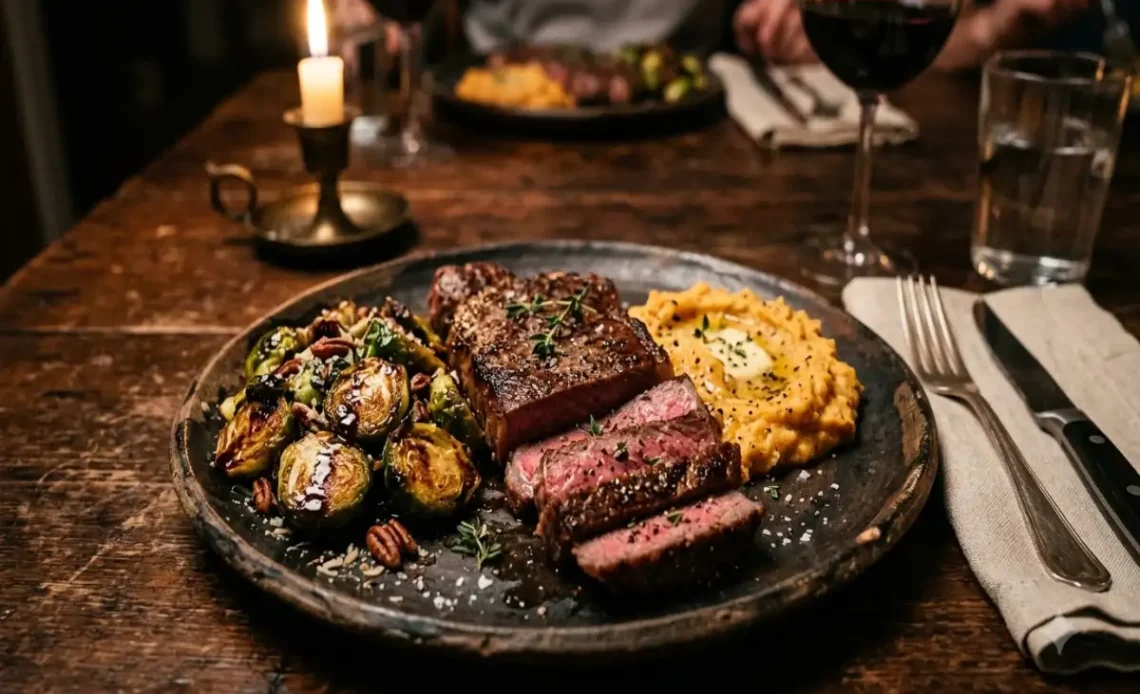
Comforting and budget-friendly. - Steak or Lean Beef with a Side of Beans or Salad (35–50 g)
A modest portion of steak or lean beef with a generous vegetable or bean side.
Treat it as an occasional higher-protein option rather than an everyday default.
One-Pan, Slow-Cooker, and Low-Effort Options
Busy evenings call for methods that do most of the work:
- Sheet-pan dinners: Protein + vegetables roasted together.
- Skillet meals: Ground meat or chopped chicken with vegetables and a sauce.
- Slow cooker / Instant Pot: Chili, stews, shredded chicken or pork, pot roast-style dishes.
- Air fryer: Chicken, fish, or tofu with a vegetable side cooked at the same time.
- Leftover transformation: Turn extra cooked protein into tacos, bowls, or salads the next night.
These approaches cut active cooking time and reduce cleanup.
Comparison Table: Sample Dinners
| Dinner Style | Example | Approx. Protein | Time / Effort | Best For |
| Sheet-pan | Chicken + mixed vegetables | 35–45 g | Low, 30–40 min | Weeknights |
| Skillet | Ground turkey with beans & veggies | 30–40 g | Low, 25 min | Flexible flavors |
| Slow cooker | Chicken or beef chili | 30–40+ g | Hands-off | Busy days |
| Fish-focused | Baked salmon + sides | 30–40 g | Medium, 25 min | Lighter evenings |
| Plant-based | Lentil curry or tofu stir-fry | 25–35 g | Medium | Vegetarian nights |
| Classic | Lean steak + beans/salad | 35–50 g | Medium | Occasional treat |
High-Protein Dinner Ideas from Different Food Cultures
Many traditional evening meals center protein without calling it that:
- Mediterranean: Grilled fish or chicken with vegetables, beans, yogurt sauces, or simple stews.
- Mexican / Latin American: Carne asada, chicken or fish with beans and rice, or bean-and-meat stews. Black beans plus a protein source work well.
- Indian: Tandoori-style chicken, dal (lentils) with rice or roti, or paneer dishes. Increasing the protein portion and moderating the rice/roti keeps the balance.
- East Asian: Grilled or stir-fried chicken, fish, or tofu with vegetables and a modest rice portion. Korean-style grilled meats or simple Japanese fish and rice plates.
- Middle Eastern: Grilled meats (shawarma-style or kofta), chickpea dishes, and yogurt-based sides.
- African influences: Grilled meats (nyama choma style), bean stews, or chicken dishes served with vegetables and a starch.
- European comfort: Slow-cooked stews, pot roast, or fish with lentils or beans.
These traditions show that high-protein evening meals are already common worldwide. You can adapt the flavors and keep the protein focus.
Plant-Based and Vegetarian High-Protein Dinners
Solid plant-based dinners are achievable with generous portions and smart combinations:
- Large tofu or tempeh stir-fries or baked dishes
- Hearty lentil, chickpea, or mixed-bean stews and curries
- High-protein pasta (chickpea, lentil, or edamame) with vegetables and a protein boost (tofu, beans, or dairy if included)
- Bean-and-vegetable chili or stuffed peppers
- Quinoa or farro bowls loaded with legumes, vegetables, and seeds or nuts
Pairing legumes with grains or adding dairy (yogurt, cheese, paneer) raises the protein and improves the amino acid profile for many people.
Meal Prep and Leftover Strategy for Dinner
Dinner leftovers are one of the best high-protein tools:
- Cook extra protein (chicken, turkey, ground meat, tofu) and portion it.
- Make a big batch of chili, stew, or meatballs and freeze half.
- Roast a tray of vegetables alongside the protein so sides are ready.
- Use leftovers for next-day lunch bowls, wraps, or salads.
A single cooking session can cover two dinners and one or two lunches.
Practical Tips for Better High-Protein Dinners
- Decide the protein first, then fill the rest of the plate with vegetables and a controlled carb portion.
- Season boldly—herbs, spices, citrus, garlic, and simple sauces prevent boredom.
- Keep frozen fish, chicken, ground meat, and bags of vegetables on hand for last-minute meals.
- Use higher-protein pasta or add beans/lentils to stretch both protein and fiber.
- If evenings feel rushed, lean on slow-cooker or sheet-pan methods a few nights a week.
- Taste and adjust. A high-protein dinner should still feel like food you look forward to eating.
Sample Weekly Dinner Rotation
Monday: Sheet-pan chicken and vegetables
Tuesday: Ground turkey skillet with beans
Wednesday: Baked salmon with lentils or greens
Thursday: Slow-cooker chili (make extra)
Friday: Tofu or shrimp stir-fry
Saturday: Lean steak or pork with a bean side
Sunday: Big-batch stew or meatballs for the week ahead
Swap based on what is in the fridge, what is on sale, and what the household prefers.
Common Questions
How much protein should dinner actually have?
30–40 grams works well for most people. Adjust upward if you are very active or larger.
Are these good for weight management?
Higher-protein dinners tend to increase fullness and reduce late-night eating for many people. Portion the starches reasonably and load up on vegetables.
What if the family does not like “healthy” food?
Focus on familiar formats—tacos, pasta (higher-protein versions), chili, meatballs, roasted chicken—and simply increase the protein portion while keeping flavors recognizable.
Can I eat high-protein dinners every night without getting bored?
Yes, if you rotate proteins (chicken, fish, turkey, beef, tofu, legumes) and change the seasoning profiles. Global flavor inspirations help a lot.
A high-protein dinner does not need to be complicated or restrictive. Choose a solid protein source, add plenty of vegetables, keep the cooking method simple, and season it so you actually enjoy the meal. Over time the habit becomes automatic, leftovers become easier, and evenings feel more satisfying. Start with two or three of the ideas above this week and build from there.