
 Sameena Fatima
Health & Wellness Content Writer
in
Sameena Fatima writes reader-focused
health and wellness content for
HealthBloomWeb, covering fitness,
nutrition, healthy lifestyle and
everyday wellness topics.
Sameena Fatima
Health & Wellness Content Writer
in
Sameena Fatima writes reader-focused
health and wellness content for
HealthBloomWeb, covering fitness,
nutrition, healthy lifestyle and
everyday wellness topics.
 Mirza Ibrahim Ali Khan
Editorial & Content Reviewer
in
Mirza Ibrahim Ali Khan contributes to
HealthBloomWeb's editorial review process,
with a focus on content structure,
readability, search intent and overall
editorial quality.
Mirza Ibrahim Ali Khan
Editorial & Content Reviewer
in
Mirza Ibrahim Ali Khan contributes to
HealthBloomWeb's editorial review process,
with a focus on content structure,
readability, search intent and overall
editorial quality.
 Reyansh Sethi
Medical Reviewer
in
Reyansh Sethi contributes to the medical
review process at HealthBloomWeb, focusing
on clarity, responsible health context and
reader-friendly presentation of health
information.
Reyansh Sethi
Medical Reviewer
in
Reyansh Sethi contributes to the medical
review process at HealthBloomWeb, focusing
on clarity, responsible health context and
reader-friendly presentation of health
information.
Lunch is the meal most people mess up. A rushed sandwich, leftover takeout, or skipped meal often leaves you foggy and hungry by 3 p.m. Switching to a higher-protein lunch changes that. Aim for roughly 25–40 grams of protein at midday (depending on your size, activity, and goals). That range helps keep energy steady, supports muscle, and cuts the afternoon snack attacks.
This guide sticks to real, everyday food. No fancy techniques or expensive ingredients. You will find easy builds, clear protein numbers, meal-prep tips, no-reheat work options, plant-based choices, comparison tables, and ideas drawn from different food cultures. Everything is written so you can actually use it tomorrow.
Why Lunch Protein Matters
Breakfast gets a lot of attention, but lunch is where many people’s protein intake drops. Spreading protein across the day works better for muscle maintenance than loading most of it at dinner. A solid midday meal also prevents the energy crash that comes from carb-heavy or low-protein options.
For most adults, 25–35 grams is a practical target. If you train hard, are in a calorie deficit, or are older, push toward 35–40 grams. A simple way to think about it: build the plate around a clear protein source first, then add vegetables, a smart carb if you want one, and some flavor.
Protein Content of Common Lunch Foods
Use this as a quick reference (approximate values based on standard portions):
| Food | Typical Serving | Approximate Protein |
| Chicken breast, cooked | 100–130 g (3–4.5 oz) | 30–40 g |
| Turkey breast | 100 g | 29–30 g |
| Canned tuna (drained) | 1 can (~85–100 g) | 18–25 g |
| Salmon, cooked or canned | 100 g | 20–25 g |
| Shrimp, cooked | 100–150 g | 20–30+ g |
| Lean ground beef or turkey | 100 g | 25–30 g |
| Firm tofu | 150 g / ½–1 cup | 15–20+ g |
| Tempeh | 100 g | 17–20 g |
| Lentils or chickpeas, cooked | 1 cup | 14–18 g |
| Black or white beans, cooked | 1 cup | 14–16 g |
| Cottage cheese | 1 cup | 24–28 g |
| Greek yogurt (plain) | 1 cup | 15–25 g |
| Edamame, shelled | 1 cup | 17–18 g |
| Hard-boiled eggs | 2 large | 12–13 g |
| Quinoa, cooked | 1 cup | 8 g |
Chicken, tuna, turkey, and Greek yogurt or cottage cheese are some of the easiest high-protein anchors for lunch.
Easy High-Protein Lunch Ideas
These are built for real life—quick assembly, meal prep friendly, or ready in under 20 minutes.
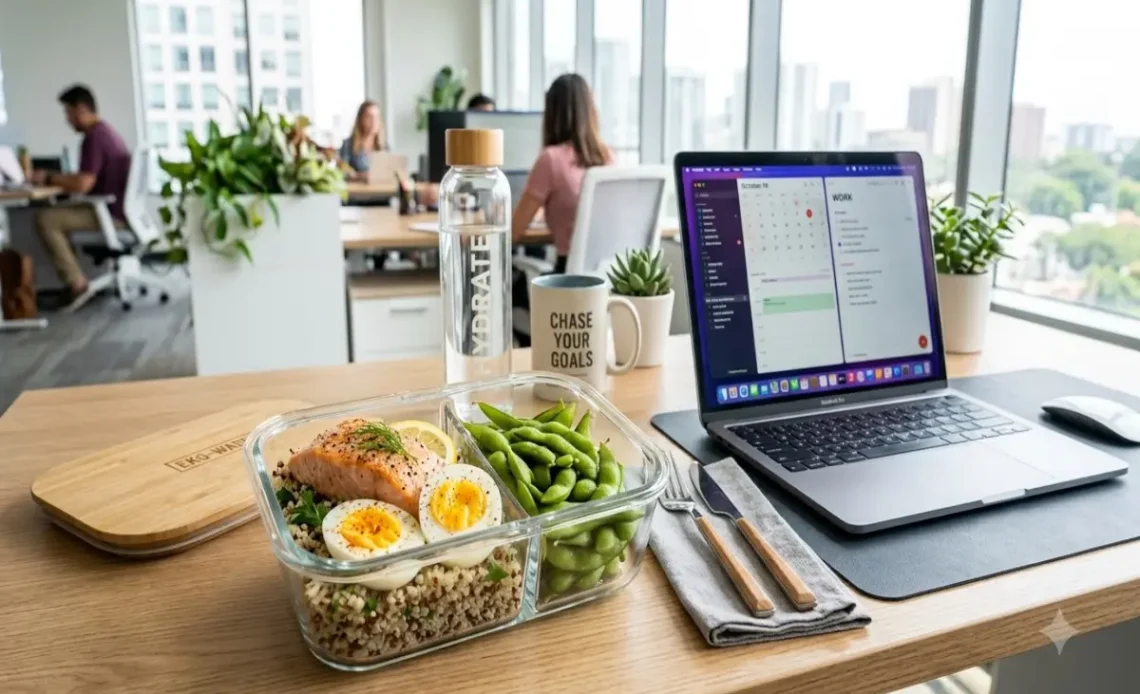
- Chicken Quinoa or Rice Bowl (35–45 g protein)
Cooked chicken breast (120–150 g) + cooked quinoa or brown rice + roasted or raw vegetables + a simple dressing (lemon, olive oil, herbs, or yogurt-based).
Batch-cook the chicken and grain on the weekend. Assemble in minutes. Add feta, avocado, or chickpeas for extra protein and flavor. - Tuna and White Bean Salad or Wrap (30–35 g)
Canned tuna + rinsed white beans or chickpeas + celery or cucumber + Greek yogurt or a light dressing + herbs. Eat as a salad or stuff into a whole-grain wrap.
No cooking required. Holds well in the fridge. - Cottage Cheese or Greek Yogurt Savory Plate (28–40 g)
1 cup cottage cheese or Greek yogurt topped with cucumber, tomato, herbs, a drizzle of olive oil, and optional turkey slices, smoked salmon, or nuts.
Surprisingly filling and completely no-cook. - Salmon or Canned Fish + Lentil Salad (30–40 g)
Cooked or canned salmon + cooked lentils + greens + lemon vinaigrette + optional feta.
Omega-3s plus plant protein. Canned salmon works great for speed and cost. - Turkey or Chicken Wrap / Lettuce Cups (30–40 g)
Sliced turkey or leftover chicken + hummus or Greek yogurt spread + lots of vegetables in a whole-grain wrap or large lettuce leaves.
Easy to pack and eat at a desk. - Tofu or Tempeh Stir-Fry Bowl (25–35 g)
Pan-fried or baked tofu/tempeh + vegetables + a simple sauce (soy, garlic, ginger, or peanut) over rice or cauliflower rice.
Plant-based and reheats well. - Chickpea or Bean Salad Wrap (25–30+ g)
Mashed or whole chickpeas + yogurt or tahini dressing + veggies + optional feta or hard-boiled egg in a wrap.
Budget-friendly and fiber-rich. - Leftover Protein Bowl
Any leftover grilled chicken, steak, fish, or meatballs + vegetables + a grain or potatoes.
The simplest high-protein lunch of all—just plan dinner with extras in mind. - High-Protein Pasta Salad
Chickpea or lentil pasta + chicken or tuna + vegetables + light dressing or pesto.
Higher protein than regular pasta and holds up for several days. - Shrimp or Edamame Quick Bowl
Cooked shrimp or shelled edamame + vegetables + quinoa or rice + simple seasoning.
Fast and light.
No-Reheat and Work-Friendly Options
Many offices have limited kitchen access. These stay good cold or at room temperature:
- Tuna or chicken salad in a container with crackers or veggies on the side
- Greek yogurt savory bowls
- Cottage cheese protein plates
- Pre-assembled wraps (keep dressing separate if needed)
- Mason jar salads with protein at the bottom
- Hard-boiled eggs + cheese + fruit or veggie sticks + nuts
- Bean and tuna mixes
Pack an ice pack if you do not have a fridge. Most of these keep 3–4 days when stored properly.
Meal-Prep Strategy That Actually Works
Spend 60–90 minutes on a Sunday (or one evening) and cover most of the week:
- Cook a big batch of chicken, turkey, or tofu.
- Make a pot of quinoa, rice, or lentils.
- Chop a pile of vegetables or roast a tray.
- Portion into containers. Keep sauces and dressings separate when possible.
- Add a couple of no-cook options (tuna mixes, cottage cheese bases) for variety.
Rotate flavors with different spices, sauces, or toppings so it does not feel repetitive. Chili, burrito bowls, and grain bowls improve after a day in the fridge as flavors meld.
Comparison Table: Sample Lunches
| Lunch Style | Example | Approx. Protein | Prep Style | Best For |
| Bowl | Chicken + quinoa + veggies | 35–45 g | Meal prep | Most days |
| Salad / Mix | Tuna + white beans | 30–35 g | No-cook | Desk / fridge |
| Wrap | Turkey + hummus + veggies | 30–40 g | Assemble fresh | On-the-go |
| Plant-based | Tofu + veggies + grain | 25–35 g | Stir-fry or bake | Vegetarian |
| Dairy-focused | Cottage cheese plate | 28–40 g | Zero cook | Busy mornings |
| Leftover | Dinner protein + sides | 30–50 g | Minimal | Lowest effort |
High-Protein Lunch Ideas from Different Food Cultures
Many traditional midday meals are naturally higher in protein:
- Mediterranean / Greek: Grilled chicken or fish with salad, beans, yogurt sauces, or souvlaki-style plates.
- Mexican-inspired: Chicken or fish tacos/bowls with beans, salsa, and avocado. Black beans + rice form a complete protein base.
- Japanese / Asian: Grilled fish or chicken with rice, miso, edamame, or simple stir-fries. Salmon or tuna options are common.
- Indian: Dal (lentils) with rice or roti, or chicken/paneer curries. Pairing lentils with grains boosts the amino acid profile.
- Middle Eastern: Chickpea-based dishes, grilled meats, yogurt, and vegetable sides.
- Latin American / Brazilian influences: Beans and rice with meat or eggs.
- Thai / Southeast Asian: Grilled chicken (gai yang style), larb, or simple protein with rice and vegetables.
These traditions show you do not need “diet food.” Everyday cooking from many regions already centers protein at the midday meal.
Plant-Based and Vegetarian High-Protein Lunches
You can hit solid numbers without meat:
- Tofu or tempeh bowls and scrambles
- Lentil or chickpea salads and soups
- Edamame + grain + vegetables
- Greek yogurt or cottage cheese (if dairy is okay) bases
- Bean and cheese wraps or nacho-style plates
- High-protein pasta with legumes and veggies
Combine different plant sources across the day for a fuller amino acid profile. Adding a dairy item or egg (if accepted) makes it even easier.
Practical Tips for Success
- Always start with the protein portion when packing or plating.
- Keep canned tuna, salmon, beans, and Greek yogurt stocked.
- Use leftover dinner as the easiest lunch win.
- Add volume with vegetables so the meal feels substantial without excess calories.
- Season well—herbs, spices, citrus, hot sauce, and simple dressings prevent boredom.
- If you struggle with afternoon energy, check that your lunch has both protein and some fiber.
- For weight management, higher protein at lunch often reduces evening overeating.
Sample 5-Day Lunch Rotation
Monday: Chicken quinoa bowl
Tuesday: Tuna white bean salad or wrap
Wednesday: Cottage cheese savory plate + fruit or veggies
Thursday: Tofu or leftover protein stir-fry bowl
Friday: Turkey wrap or high-protein pasta salad
Swap freely based on what you have and what sounds good.
Common Questions
How much protein do I really need at lunch?
25–35 grams works for most people. Adjust based on total daily needs and how you feel.
What if I hate meal prep?
Focus on no-cook options and leftovers. Even two prepared lunches per week is progress.
Are these good for weight loss?
Higher protein meals tend to increase fullness, which helps many people manage calories more easily. Pair with overall balanced eating.
Can I buy these instead of making them?
Rotisserie chicken, canned fish, pre-cooked grains, and Greek yogurt make assembly very fast. Some grocery stores sell ready high-protein bowls—just check the labels.
A high-protein lunch does not have to be complicated or boring. Pick a few anchors you enjoy (chicken, tuna, cottage cheese, tofu, beans), keep simple sides and seasonings on hand, and build from there. Over a couple of weeks you will notice more stable energy and less need for mid-afternoon snacks. Start with one or two of the ideas above this week and adjust to what fits your schedule and taste. Your afternoons will feel better for it.