
 Sameena Fatima
Health & Wellness Content Writer
in
Sameena Fatima writes reader-focused
health and wellness content for
HealthBloomWeb, covering fitness,
nutrition, healthy lifestyle and
everyday wellness topics.
Sameena Fatima
Health & Wellness Content Writer
in
Sameena Fatima writes reader-focused
health and wellness content for
HealthBloomWeb, covering fitness,
nutrition, healthy lifestyle and
everyday wellness topics.
 Mirza Ibrahim Ali Khan
Editorial & Content Reviewer
in
Mirza Ibrahim Ali Khan contributes to
HealthBloomWeb's editorial review process,
with a focus on content structure,
readability, search intent and overall
editorial quality.
Mirza Ibrahim Ali Khan
Editorial & Content Reviewer
in
Mirza Ibrahim Ali Khan contributes to
HealthBloomWeb's editorial review process,
with a focus on content structure,
readability, search intent and overall
editorial quality.
 Reyansh Sethi
Medical Reviewer
in
Reyansh Sethi contributes to the medical
review process at HealthBloomWeb, focusing
on clarity, responsible health context and
reader-friendly presentation of health
information.
Reyansh Sethi
Medical Reviewer
in
Reyansh Sethi contributes to the medical
review process at HealthBloomWeb, focusing
on clarity, responsible health context and
reader-friendly presentation of health
information.
Meal prep gets a bad reputation when it means five identical containers that taste worse every day. Done right, high-protein meal prep is the opposite: you cook once, eat well all week, and stop deciding what to make when you are already hungry. The goal is straightforward—have ready-to-eat or easy-to-assemble meals that deliver 25–40 grams of protein each so you hit your daily target without thinking about it every single time.
This guide is for beginners and busy people. It covers the best proteins that hold up, how to cook them in bulk, storage rules, mix-and-match ideas, sample weekly plans, and practical tips so the food stays good and you stay consistent.
Why High-Protein Meal Prep Helps
Most people fall short on protein at lunch or when evenings get chaotic. Prepping removes the decision fatigue. When cooked chicken, seasoned ground meat, hard-boiled eggs, or a pot of lentils are already in the fridge, building a solid meal takes minutes instead of an hour. Spreading protein across meals also supports muscle repair better than loading it all into one dinner.
Start small. Prepping two or three proteins and a couple of sides for three to four days is enough. You do not need to cover every meal for seven days on day one.
Best Proteins for Meal Prep (Ones That Hold Up)
Not every protein reheats well. These are the reliable ones:
| Protein | Why It Works for Prep | Approx. Protein per 100–150 g cooked | Fridge Life | Notes |
| Chicken thighs (skinless) | Stays moist | 25–35 g | 3–4 days | Better than breast for reheating |
| Chicken breast | Versatile | 30–45 g | 3–4 days | Marinate or store with sauce/broth |
| Ground turkey or lean beef | Easy to season different ways | 25–30 g | 3–4 days | Split into taco and plain batches |
| Hard-boiled eggs | Zero reheat needed | 6–7 g each | 5–7 days | Great for breakfast or snacks |
| Canned tuna or salmon | No cooking | 18–25 g per can | Pantry + fridge after opening | Mix with yogurt or beans |
| Lentils or chickpeas | Plant-based, improve with time | 15–20 g per cup | 4–5 days | Freeze well |
| Tofu or tempeh | Absorbs flavor | 15–25 g | 3–4 days | Bake or pan-sear in bulk |
| Turkey or chicken meatballs | Reheat excellently | 25–35 g per serving | 3–4 days / freeze | Make double batches |
Chicken thighs, ground meats, meatballs, and legumes are the most forgiving. Lean chicken breast benefits from being stored with a bit of sauce or broth so it does not dry out.
The Basic High-Protein Meal Prep Framework
Think in building blocks instead of complete finished meals every time:
- Proteins (cook 2–3 types)
- Grains or starches (quinoa, rice, sweet potato, high-protein pasta)
- Vegetables (roasted tray or simple steamed/raw)
- Flavor boosters (sauces, dressings, herbs, spices kept separate)
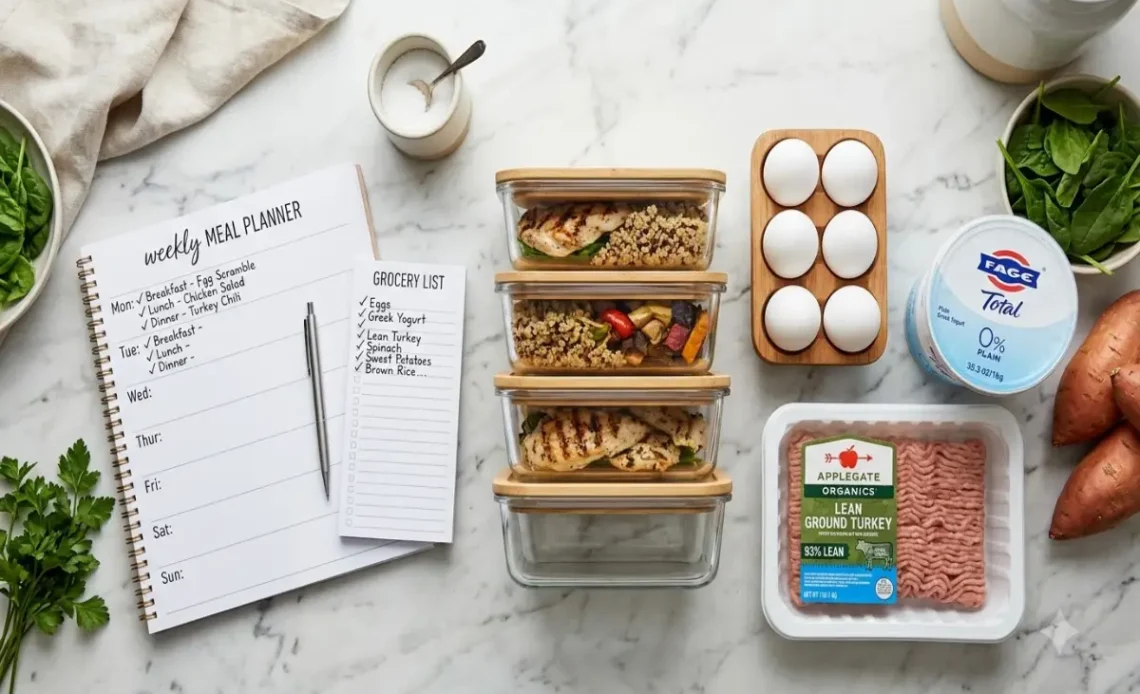
Cook the proteins and grains on one day. Roast a big tray of vegetables. Portion or leave components separate so you can mix them differently through the week. This prevents flavor fatigue.
How to Batch-Cook the Main Proteins
Chicken
Bake seasoned breasts or thighs at 375–400°F until they hit 165°F internal temperature. Or use a slow cooker with salsa or broth for shredded chicken. Slice or shred while warm, then portion.
Ground meat
Brown a large batch of turkey or lean beef. Season half taco-style and leave half plain or Italian-seasoned. Drain excess fat and cool quickly.
Eggs
Hard-boil a dozen. Or bake egg muffins with vegetables and cheese for grab-and-go breakfasts.
Legumes
Cook a pot of lentils or open and rinse canned beans/chickpeas. Season simply so they work in multiple dishes.
Tofu
Press, cube or slice, then bake or pan-sear with seasoning. It firms up and holds texture well.
Cool everything before sealing containers. Hot food trapped with steam turns soggy.
Storage Rules That Keep Food Safe and Tasty
- Most cooked proteins and mixed meals last 3–4 days in the fridge.
- Cool food within two hours of cooking.
- Use airtight containers. Glass is ideal for reheating.
- Keep dressings and sauces separate until you eat.
- Label with the date.
- Freeze extras (shredded chicken, meatballs, chili, cooked ground meat, many soups) for up to 2–3 months.
- Reheat to 165°F. Add a splash of water, broth, or sauce to lean proteins so they stay moist.
Seafood and very lean chicken are best eaten earlier in the week. Heartier dishes like chili, meatballs, and lentil stews hold up longer.
Simple Mix-and-Match Meal Ideas
Once you have the components, assembly is fast:
- Chicken + quinoa + roasted vegetables + lemon or yogurt sauce
- Ground turkey + rice or beans + salsa and veggies (taco bowl style)
- Tuna + white beans or chickpeas + cucumber and herbs (no-cook)
- Lentils + roasted sweet potato + greens + tahini or vinaigrette
- Meatballs + high-protein pasta or zucchini noodles + simple tomato sauce
- Hard-boiled eggs + cottage cheese or Greek yogurt + fruit or vegetables for breakfast
- Tofu + vegetables + rice with a soy-ginger or peanut-style sauce
Change the sauce or spice blend and the same ingredients feel different by Wednesday.
Beginner-Friendly Weekly Approach
Sunday (or one evening) – 60–90 minutes
- Cook 1–2 proteins (chicken + ground turkey, or chicken + lentils)
- Cook one grain
- Roast a big tray of vegetables
- Hard-boil eggs if desired
- Make one sauce or dressing
- Portion some complete meals and leave other components separate
During the week
- Grab prepped containers for lunch
- Reheat a protein + side for dinner and add something fresh if you want
- Use leftovers creatively (chicken becomes wraps or salads)
You can also prep only lunches or only dinners at first. Many people find that prepping dinner leftovers that become the next day’s lunch is the easiest entry point.
Sample High-Protein Prep Day Components
| Component | Example | Protein Contribution | How Long It Lasts |
| Protein 1 | Baked chicken thighs | 30–40 g per portion | 3–4 days |
| Protein 2 | Seasoned ground turkey | 25–30 g per portion | 3–4 days |
| Grain | Quinoa or brown rice | 6–8 g per cup | 4–5 days |
| Vegetables | Roasted broccoli, peppers, zucchini | Low, but volume | 3–4 days |
| Extra | Hard-boiled eggs or lentils | 6–18 g | 4–7 days |
| Sauce | Yogurt-based or vinaigrette | Variable | 4–5 days |
Combine these into 4–6 solid meals plus snacks.
Practical Tips for Success
- Start with proteins you already like. Do not force foods you dislike just because they are high in protein.
- Buy a set of similar-sized containers so stacking and portioning is easy.
- Keep frozen vegetables and canned beans/tuna as backup.
- Season boldly—meal prep fails when the food tastes bland.
- Freeze half of big batches so you are not eating the same thing for six days straight.
- If chicken breast dries out for you, switch to thighs or store it with sauce.
- Track roughly for a week or two so you learn what portion sizes actually deliver 30+ grams.
Common Beginner Mistakes
- Trying to prep seven full days of every meal on the first attempt (it is overwhelming).
- Not cooling food before sealing (leads to sogginess).
- Putting dressing on salads days ahead (wilting).
- Relying only on chicken breast without moisture or variety.
- Forgetting to label and then guessing what is safe to eat.
Plant-Based High-Protein Prep Options
Lentils, chickpeas, black beans, tofu, tempeh, and high-protein pasta form the base. Cook a large pot of lentils or bake a tray of seasoned tofu. Pair with grains and vegetables. Add Greek yogurt, cottage cheese, or eggs if your diet allows dairy and eggs for an easier protein boost. Many bean and lentil dishes improve in flavor after a day or two in the fridge.
Making It Sustainable
The people who stick with meal prep treat it as a flexible system, not a rigid set of identical boxes. Some weeks you prep more, some weeks you only cook extra dinner protein. The win is having high-protein food ready when life gets busy. Over time the process gets faster and the food stays more interesting because you learn which combinations you actually enjoy.
High-protein meal prep is not about perfection. It is about reducing friction so that hitting your protein goals becomes the default instead of the exception. Pick two proteins, one grain, and a tray of vegetables this weekend. Portion them, store them properly, and notice how much easier the week feels. Adjust from there. That is how the habit sticks.