
 Sameena Fatima
Health & Wellness Content Writer
in
Sameena Fatima writes reader-focused
health and wellness content for
HealthBloomWeb, covering fitness,
nutrition, healthy lifestyle and
everyday wellness topics.
Sameena Fatima
Health & Wellness Content Writer
in
Sameena Fatima writes reader-focused
health and wellness content for
HealthBloomWeb, covering fitness,
nutrition, healthy lifestyle and
everyday wellness topics.
 Mirza Ibrahim Ali Khan
Editorial & Content Reviewer
in
Mirza Ibrahim Ali Khan contributes to
HealthBloomWeb's editorial review process,
with a focus on content structure,
readability, search intent and overall
editorial quality.
Mirza Ibrahim Ali Khan
Editorial & Content Reviewer
in
Mirza Ibrahim Ali Khan contributes to
HealthBloomWeb's editorial review process,
with a focus on content structure,
readability, search intent and overall
editorial quality.
 Reyansh Sethi
Medical Reviewer
in
Reyansh Sethi contributes to the medical
review process at HealthBloomWeb, focusing
on clarity, responsible health context and
reader-friendly presentation of health
information.
Reyansh Sethi
Medical Reviewer
in
Reyansh Sethi contributes to the medical
review process at HealthBloomWeb, focusing
on clarity, responsible health context and
reader-friendly presentation of health
information.
A common worry with vegetarian eating is protein. The good news is that hitting solid numbers is completely doable without meat. Many everyday plant foods and dairy/egg options (if you include them) pack enough protein to support energy, muscle, and fullness. Aim for roughly 20–35 grams per meal and the day adds up nicely.
This guide keeps things practical and varied. You will find the best vegetarian protein sources, clear numbers, simple meal ideas for different times of day, complete-protein tips, comparison tables, and ways to keep meals interesting so you do not get stuck eating the same tofu dish every night.
How Much Protein Do Vegetarians Need?
The same general targets apply: most adults do well with 1.2–1.6 grams of protein per kilogram of body weight daily (higher if very active). Spread it across meals rather than trying to get it all at once. For a 70 kg person that might mean 85–110+ grams per day, or about 25–35 grams at each main meal plus snacks.
Vegetarians who include eggs and dairy usually find it easier. Fully plant-based (vegan) eaters can still meet needs by focusing on legumes, soy foods, seitan, and smart combinations.
Top Vegetarian Protein Foods
Here is a practical list with approximate protein amounts:
| Food | Typical Serving | Approximate Protein | Notes |
| Greek yogurt (plain) | 1 cup (200–245 g) | 15–25 g | Easy and versatile |
| Cottage cheese | 1 cup | 24–28 g | Great savory or sweet |
| Firm tofu | 150–200 g | 15–25 g | Absorbs flavors well |
| Tempeh | 100–150 g | 15–20+ g | Fermented, firm texture |
| Lentils (cooked) | 1 cup | 18 g | Budget-friendly staple |
| Chickpeas or black beans | 1 cup cooked | 14–15 g | Use in salads, bowls, curries |
| Edamame | 1 cup | 17–18 g | Complete protein |
| Seitan | 100 g | 20–25 g | Very high if you tolerate gluten |
| Eggs | 2 large | 12–13 g | Complete protein |
| Paneer or halloumi | 100 g | 18–25 g | Good in curries and salads |
| Quinoa (cooked) | 1 cup | 8 g | Complete protein grain |
| Hemp seeds | 3 tbsp | 9–10 g | Easy topper |
| High-protein pasta (chickpea/lentil) | 2 oz dry | 12–20 g | Easy swap |
Soy foods (tofu, tempeh, edamame), Greek yogurt, cottage cheese, lentils, and seitan are among the strongest everyday options.
Complete Proteins and Smart Combinations
Some plant foods already contain all nine essential amino acids in useful amounts: soy (tofu, tempeh, edamame), quinoa, buckwheat, hemp seeds, and chia seeds.
Most other plant proteins are lower in one or two amino acids. You do not need to combine them perfectly at every single meal—getting a variety across the day works. Classic pairings that fill the gaps include:
- Beans or lentils + rice or other grains
- Chickpeas + whole-wheat pita or couscous
- Peanut butter + whole-grain bread
- Hummus + whole-grain crackers or bread
- Lentils + barley or quinoa
These combinations have been used in traditional diets for centuries and make complete proteins naturally.
Easy High-Protein Vegetarian Meal Ideas
Breakfast
- Greek yogurt or cottage cheese bowl with berries, nuts or seeds, and a spoon of nut butter (25–35 g)
- Tofu scramble with vegetables and toast or potatoes
- Egg-based dishes (omelet, scrambled eggs, or egg muffins) with cheese or beans
- Overnight oats made with Greek yogurt or protein-rich milk and topped with seeds
Lunch
- Lentil or chickpea salad with feta or halloumi, vegetables, and a grain
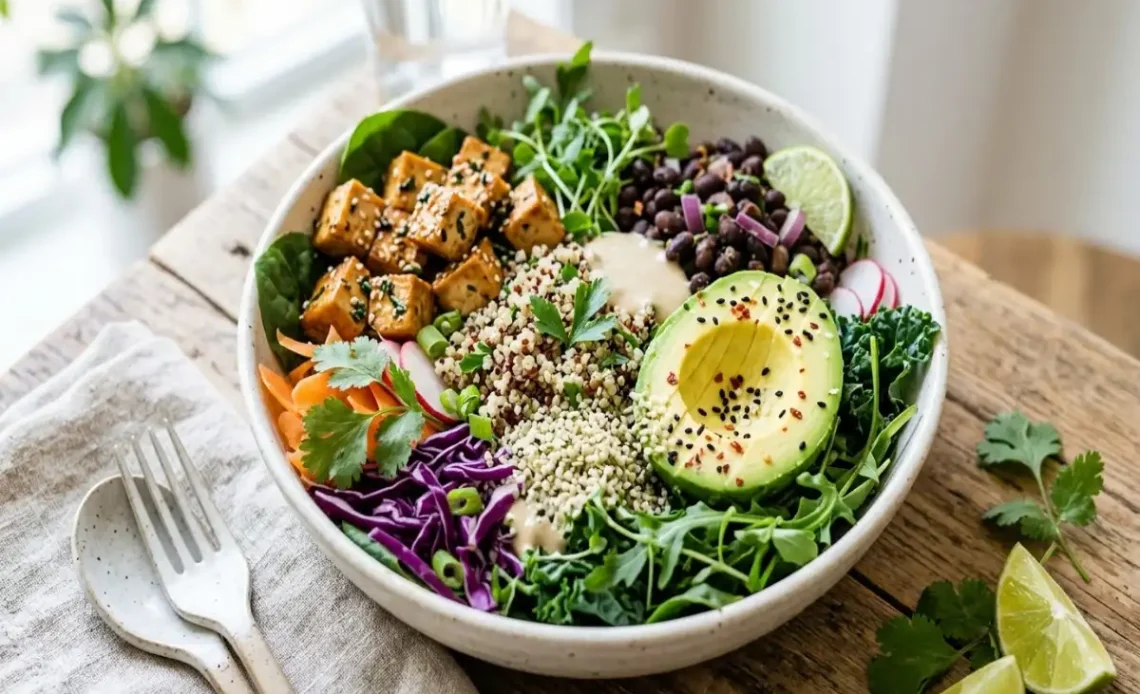
- Tofu or tempeh grain bowl with roasted vegetables and a tahini or yogurt sauce
- Bean and cheese quesadillas or wraps with salsa and avocado
- High-protein pasta (chickpea or lentil) with a simple tomato or pesto sauce and added beans
Dinner
- Chickpea or black bean curry or chili with rice or quinoa
- Baked or pan-fried tofu/tempeh with vegetables and a flavorful sauce
- Lentil Bolognese or stew served over pasta or potatoes
- Paneer or halloumi stir-fry or curry
- Stuffed peppers or sweet potatoes filled with beans, quinoa, and cheese
- Shakshuka (eggs in tomato sauce) with added chickpeas or beans
Snacks
- Cottage cheese or Greek yogurt
- Handful of nuts or seeds with fruit
- Roasted chickpeas or edamame
- Hard-boiled eggs
- Hummus with vegetables or whole-grain crackers
Comparison Table: Sample Vegetarian Meals
| Meal Type | Example | Approx. Protein | Prep Style | Best For |
| Dairy-focused | Greek yogurt bowl + seeds | 25–35 g | No-cook | Quick mornings |
| Soy-based | Tofu stir-fry + rice | 25–35 g | 20–30 min | Weeknights |
| Legume-based | Lentil curry or chili | 20–30 g | One-pot | Batch cooking |
| Egg + cheese | Shakshuka or omelet with beans | 25–35 g | 15–25 min | Flexible |
| Mixed plant | Chickpea quinoa bowl + feta | 25–30 g | Meal prep friendly | Lunch or dinner |
Tips for Hitting Protein Goals Without Meat
- Make legumes or soy the center of the plate, not a side.
- Use higher-protein pasta, bread, or tortillas when it fits.
- Add Greek yogurt, cottage cheese, or eggs when your diet allows—they boost numbers easily.
- Keep canned beans, lentils, tofu, and frozen edamame stocked.
- Season well. Spices, herbs, citrus, garlic, and good sauces make plant proteins more satisfying.
- Include a variety of sources across the day rather than relying on one food.
- If you are fully plant-based, pay a bit more attention to total intake and consider a protein powder on busy days if needed.
Meal Prep Friendly Vegetarian Options
Many of these hold up well:
- Big pots of lentil or bean chili/stew
- Baked or marinated tofu/tempeh portions
- Cooked quinoa or high-protein pasta
- Chickpea or lentil salads (dressing on the side)
- Egg muffins or frittata slices
- Overnight oats or chia puddings made with yogurt
Store in airtight containers for 3–4 days. Most bean and lentil dishes freeze well.
Common Concerns Answered
Will I get enough protein without meat?
Yes, with planning. Focus on the higher-protein foods listed and build meals around them.
What about iron, B12, and other nutrients?
Pair iron-rich plant foods (lentils, beans, tofu) with vitamin C sources. B12 is mainly found in animal products, fortified foods, or supplements for those who avoid all animal foods. A varied vegetarian diet plus attention to these points works for most people.
Is seitan or processed meat alternatives okay?
They can help with protein density. Use them as tools alongside whole foods rather than the only source.
Do I need protein powder?
Not required, but convenient on busy days or when appetite is low. Whole-food sources first is ideal.
Vegetarian high-protein eating does not have to feel restrictive or complicated. Build meals around legumes, soy foods, eggs, dairy (if included), and complementary grains. Keep a few reliable recipes in rotation, stock the pantry with beans and tofu, and experiment with flavors from different cuisines. Over time it becomes second nature, and the meals stay satisfying. Start with two or three of the ideas above this week and adjust based on what you enjoy and what fits your schedule.