
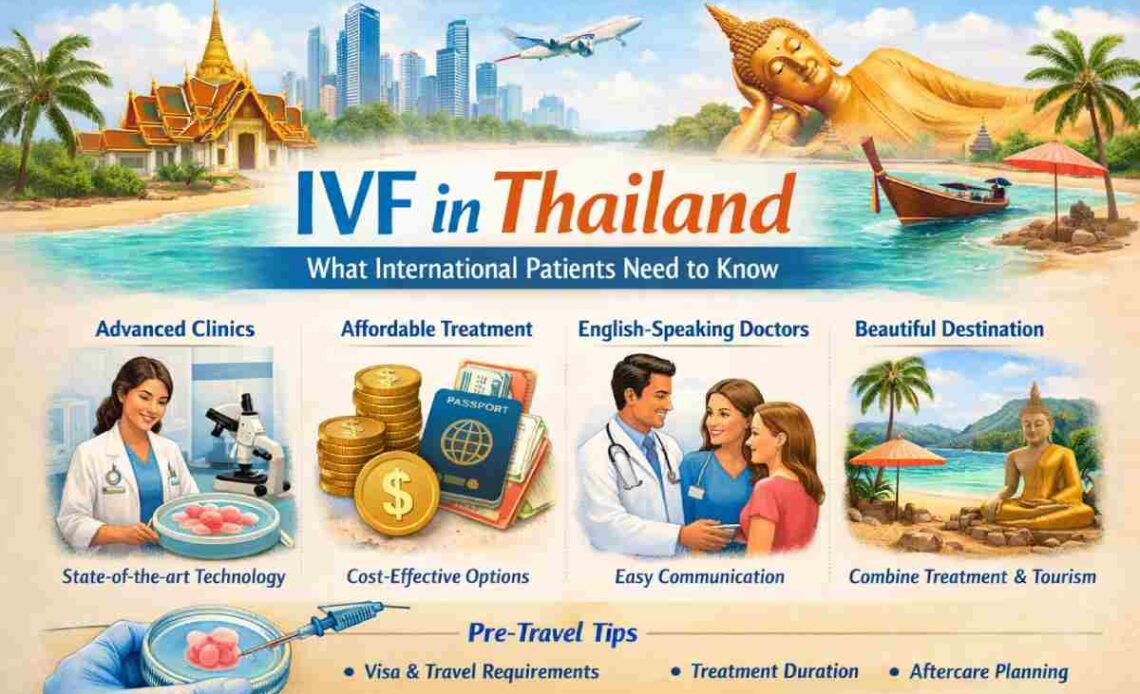
For individuals and couples facing fertility challenges, in vitro fertilization (IVF) has become one of the most established and effective assisted reproductive technologies available today. The decision to pursue IVF is rarely simple. It often involves years of trying to conceive, multiple consultations with specialists, and reflection on what family-building means at a personal level.
Many patients describe the experience as both hopeful and uncertain—a combination of emotions that deserves acknowledgment. As access to fertility care becomes increasingly global, many international patients explore treatment options beyond their home countries.
Thailand is one of the destinations frequently considered for IVF treatment. This article provides a practical, medically grounded overview of IVF in Thailand, focusing on how the process works, what international patients should expect, and which clinical, legal, and logistical factors are important when planning care abroad.
Why Patients Look Abroad for IVF Treatment
Fertility treatment decisions are often influenced by a combination of medical, personal, and logistical considerations. Some patients seek care abroad due to long waiting times at home, limited access to advanced fertility services, or the desire for specialized expertise.
In certain healthcare systems, waiting lists for IVF can extend for months or even years, which may not align with the time-sensitive nature of fertility treatment—particularly for patients of advancing maternal age. Others may find that specific technologies are more readily available in certain countries. Some patients value the continuity of care that comes with completing treatment at a single facility, rather than coordinating between providers.
Thailand has developed a strong reputation in private healthcare, including reproductive medicine. International patients are often drawn by the availability of modern laboratory facilities, experienced fertility specialists, and structured care pathways designed to support patients traveling from overseas.
How IVF Works: A Step-by-Step Overview
IVF is a multi-stage medical process that involves fertilizing an egg outside the body and transferring an embryo into the uterus. While treatment protocols are individualized, most IVF cycles follow a similar clinical sequence.
Initial Consultation and Fertility Evaluation
The process begins with a comprehensive fertility assessment. This typically includes a review of medical history, previous fertility treatments, age-related factors, and lifestyle considerations. Diagnostic tests may include hormone blood tests, pelvic ultrasound, semen analysis, and, in some cases, genetic screening.
Patients often ask at this stage about their likely chances of success, which tests are essential versus optional, and how long results will take. The answers depend on individual circumstances, and clinicians typically tailor testing based on what is known about each patient’s history.
For international patients, initial assessments are sometimes conducted remotely to determine treatment suitability and plan care before travel.
Ovarian Stimulation and Monitoring
Hormonal medications are prescribed to stimulate the ovaries to produce multiple eggs in a single cycle. This phase typically lasts 8 to 14 days, though responses vary. During this phase, patients attend regular monitoring appointments that include ultrasound scans and blood tests. These allow clinicians to track follicle development and adjust medication doses as needed.
Many patients ask what to expect physically during stimulation. Common experiences include mild bloating, tenderness near the ovaries, and fatigue. These symptoms are generally manageable and resolve after egg retrieval.
Careful monitoring is essential to maximize egg quality while minimizing risks such as ovarian hyperstimulation.
Egg Retrieval and Fertilization
Once the eggs reach maturity, they are retrieved through a minimally invasive procedure performed under sedation. The procedure usually takes 15 to 30 minutes, and most patients rest for a few hours before returning to their accommodation.
Patients frequently ask whether the procedure is painful. Under sedation, patients typically feel no discomfort; afterward, some mild cramping may occur but usually resolves within a day or two. On the same day, sperm is prepared and fertilization occurs in the laboratory.
Depending on clinical indications, fertilization may be performed using standard IVF or intracytoplasmic sperm injection (ICSI), where a single sperm is injected directly into the egg.
Embryo Development and Transfer
Fertilized eggs are cultured in a controlled laboratory environment for several days, usually between three and six. Embryologists assess embryo development and quality during this period.
Patients often want to know how many embryos reached viable stages and what determines selection. Grading criteria vary, but embryologists generally assess cell division patterns, structural development, and overall quality. One or more embryos are then selected for transfer into the uterus, based on clinical guidelines and patient discussion.
The embryo transfer procedure is usually quick and does not require anesthesia. Any remaining viable embryos may be frozen for future use.
Pregnancy Testing and Follow-Up
A pregnancy test is performed approximately 10 to 14 days after embryo transfer. If pregnancy is confirmed, follow-up care focuses on early pregnancy monitoring and ongoing medical support.
IVF Success Rates and Individual Factors
IVF success rates vary significantly between individuals. Key factors influencing outcomes include age, ovarian reserve, egg and sperm quality, underlying fertility diagnosis, and previous IVF history.
Published success rates can sometimes be misleading. Aggregate statistics may reflect a clinic’s patient population rather than an individual’s specific likelihood of success.
A clinic with a high overall rate may treat a younger patient group, while another with a lower published rate may take on more complex cases. For this reason, individualized counseling matters more than headline numbers.
Clinics typically emphasize personalized success estimates rather than generalized statistics. A thorough discussion with a fertility specialist helps patients set realistic expectations based on their specific circumstances.
Legal and Ethical Framework in Thailand
Assisted reproductive technologies in Thailand are governed by national regulations that define who is eligible for treatment and under what conditions. IVF treatment is available to married couples, including international patients, provided legal requirements are met. Documentation such as a valid marriage certificate and passports is typically required.
Understanding these regulations matters because eligibility criteria differ between countries. What is permitted in one jurisdiction may not be permitted in another, and verifying compliance before beginning treatment avoids potential complications.
Procedures involving donor eggs, donor sperm, or surrogacy are subject to additional legal and ethical guidelines. Patients considering these options should seek clear information before beginning treatment.
Practical Considerations for International Patients
A typical IVF cycle requires a stay of approximately two to three weeks. Patients should prepare medical records in advance and allow adequate time for monitoring and recovery. Planning should also account for flexibility, as treatment schedules may shift based on how the body responds to medication.
Coordinating with a home physician is helpful for follow-up care after returning. Emotional support and counseling can also play an important role, as fertility treatment can be physically and psychologically demanding. Traveling abroad for medical care adds logistical complexity, and acknowledging this helps patients prepare mentally and practically.
Safety and Medical Standards
Private healthcare facilities in Thailand operate under structured clinical protocols, including infection control standards, laboratory quality systems, and patient safety frameworks. Many fertility centers utilize advanced embryology laboratories and follow internationally recognized clinical practices.
Patients are encouraged to ask about laboratory accreditation, staff qualifications, and how complications are managed. A facility’s willingness to explain its processes openly is often a useful indicator of its commitment to patient safety.
Costs and Financial Planning
The cost of IVF treatment in Thailand varies depending on individual treatment plans, medications, laboratory techniques, and additional services. Patients should request clear cost breakdowns and confirm what is included in quoted fees.
Some costs may be predictable, such as consultation fees, while others depend on how treatment progresses. Medication costs, in particular, can vary based on dosage requirements. Asking about billing structure helps avoid unexpected expenses.
Making an Informed Decision
Choosing IVF treatment abroad requires careful consideration. Patients should understand medical options, legal requirements, treatment timelines, and personal readiness before proceeding.
For international patients considering fertility treatment abroad, access to clear, medically reliable information is an essential part of the decision-making process. Understanding how IVF is regulated, how treatment cycles are structured, and what practical considerations are involved can help patients move forward with greater confidence. Every patient’s situation is different, and what works well for one person may not suit another. Taking time to gather information, ask questions, and reflect on personal priorities is a reasonable approach to a decision that carries both medical and emotional weight. For those seeking further clinical details about IVF in Thailand, additional patient information is available through Samitivej’s official medical resources.
Also Read: Doxycycline and Lactic Acid Bacillus Tablets