
Written By:Sameena Fatima
Reviewed By:Mirza Ibrahim Ali Khan
Medical Reviewed By:Reyansh Sethi
Published on:Aug 5, 2026
Last Updated on:Aug 24, 2026
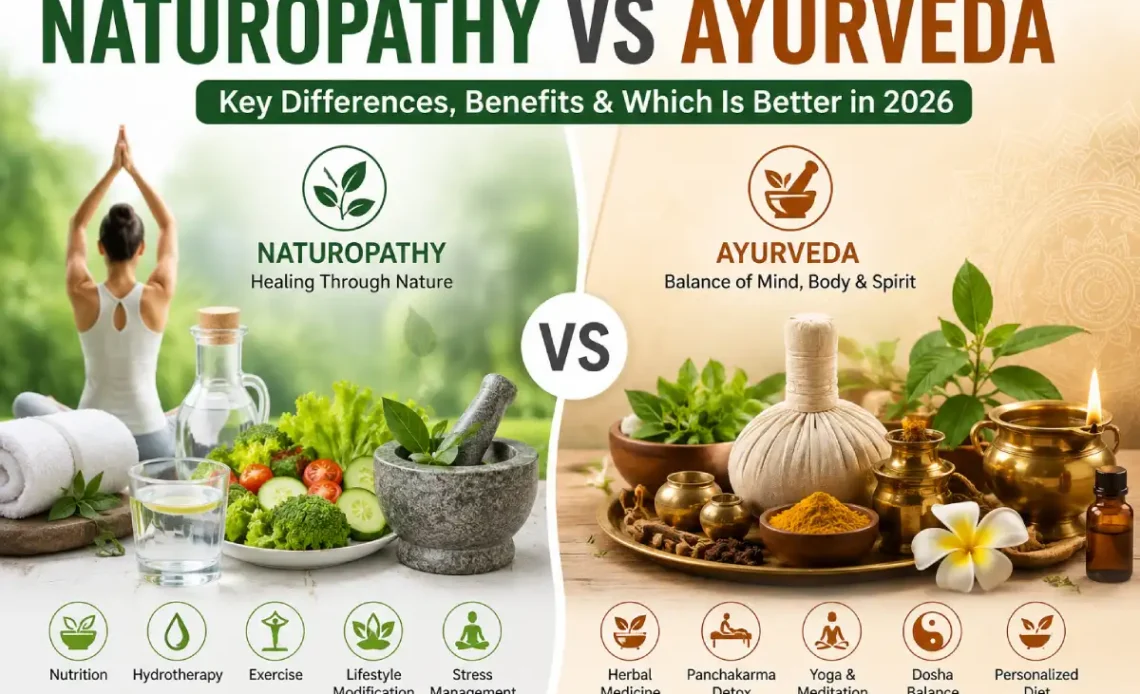
If you are looking for naturopathy vs Ayurveda, then you are actually trying to identify the right treatment for your wellness needs. Both naturopathy and Ayurveda focus on natural healing and overall health and wellness using natural therapies; there are still important differences in their approach and so treatment options. By understanding the treatment differences you can make the decision that is right for your health needs.
As per the World Health organization (who) traditional and complementary medicine is booming across the globe. There are millions of people not only using natural healthcare interventions along with traditional medicine but also there are millions of people who are relying more on natural healthcare intervention. In India Ayurveda and Naturopathy have been recognized by the Ministry of AYUSH and have at present been legally approved terms when practiced by trained professional.
What exactly Is Naturopathy?
Naturopathy is a system of natural health care that believes that the human body has the ability to heal itself given the proper environment.
Rather than her solely concentrating on symptoms, a rule of naturopathy is finding out what is causing the disease by utilizing healthy lifestyle practice, using natural therapies.
Common Naturopathy Treatments
- Tailored diet schemes
- Hydrotherapy
- Yoga/ breathing techniques.
- Physical activities
- Stress management.
- Therapeutic fasting
- Optimization sleep, we need to improve sleep frequency, intensity, duration and quality.
- Nature therapy
- Lifestyle counseling.
Unlike most other traditional systems, medicare is mostly avoided in naturopathy, with emphasis usually put on long term lifestyle changes.
Core Principles of Naturopathy
- The root cause is not right.
- Aid the body‘s own healing capacity
- Protect themselves from disease they have good habits
- The full person should be considered
- Educate the patient including all of the following self care.
Thanks to this preventative approach, naturopathy has gained popularity among those who are seeking to maintain good health in the long term and is effectively addressing modern lifestyle related health issues like obesity, stress and digestive discomfort.
What has called Ayurveda.
Ayurveda, is believed to be among the earliest traditional systems of medicine known to mankind. With origins in India and a record exceeding 5,000 years, Ayurveda incorporates the balanced state of body, mind and spirit.
The term “Ayurveda” translates as “the science of life”.
Ayurveda asserts that each person has a specific body type, or Prakriti. This depends on three bio-energies, or Doshas:
- Vata
- Pitta
- Kapha
Disease may ensue when these Doshas are out of balance.
Common Ayurvedic Treatments
- Herbal medicine.
- Panchakarma detoxification.
- Massage in Ayurveda.
- Yoga
- Meditation
- Diet plans particularly suited to doshas
- Dail routines (Consider snake bites)
- Seasonal lifestyle recommendations
Ayurveda is about tailoring the treatment to the individual, therefore the treatment influences possible by different individuals who have the same diagnosis.
Naturopathy vs Ayurveda: Side-by-Side Comparison
| Feature | Naturopathy | Ayurveda |
| Origin | Modern natural medicine (19th century) | Ancient India (5,000+ years) |
| Philosophy | Healing power of nature | Balance of the three Doshas |
| Diagnosis | Lifestyle, nutrition, health history | Pulse, tongue, body constitution (Prakriti), symptoms |
| Primary Treatments | Nutrition, hydrotherapy, fasting, exercise | Herbal medicine, Panchakarma, massage, diet |
| Medicines | Minimal or none | Herbal formulations |
| Diet | Whole-food nutrition | Dosha-specific nutrition |
| Exercise | Physical activity, yoga | Yoga and daily routines |
| Detoxification | Fasting, hydrotherapy | Panchakarma |
| Personalization | Lifestyle-focused | Constitution-based |
| Goal | Restore natural healing | Restore Dosha balance |
Key Treatment Differences Between Naturopathy and Ayurveda
Nonetheless, at the end of the day, while both approaches promote the healing power of nature, the approaches are very different.
| Treatment Area | Naturopathy | Ayurveda |
| Nutrition | Evidence-informed whole-food diet | Dosha-specific dietary recommendations |
| Herbs | Limited use | Major component of treatment |
| Hydrotherapy | Core therapy | Occasionally used |
| Massage | Optional | Essential therapy |
| Detox | Fasting, natural cleansing | Panchakarma therapies |
| Lifestyle Coaching | Extensive | Included through daily routines |
| Yoga | Supportive therapy | Integral part of treatment |
The most visually apparent difference is that Ayurveda seems to have a greater use of special herbal formulas and body constitution based therapies, while naturopathy appears to focus more heavily on lifestyle medicine and the bodies’ natural healing powers.
2026 Ratio: Number of Naturopaths to Number of Ayurveda Practitioners/month
The recent global trends in interest of natural therapies.
| Factor | Naturopathy | Ayurveda |
| Popularity in Preventive Care | High | Very High |
| Personalized Treatment | High | Very High |
| Lifestyle Modification | Excellent | Excellent |
| Herbal Medicine | Moderate | Extensive |
| Scientific Clinical Research | Growing | Growing |
| Government Recognition in India | Yes (AYUSH) | Yes (AYUSH) |
| Integration with Modern Healthcare | Increasing | Increasing |
Expert Advice: By 2026, numerous integrative wellness clinics are expected to integrate lifestyle-oriented naturopathy with some Ayurvedic protocols like yoga, meditation and personalized diet and nutrition. These services tend to be aimed at enhancing preventive care while catering to individual health requirements. Appropriate practitioner‘s counsel remains essential before adopting any course of treatment, and such traditional health practices should not be substituted in the case of life-threatening diseases.
Overview of what each condition can do.
Health Goal Naturopathy Ayurveda
Stress Management ✔ Excellent ✔ Excellent
Digestive Wellness ✔ Good ✔ Excellent
Weight Management ✔ Excellent ✔ Good
Chronic Pain Support ✔ Good ✔ Excellent
Lifestyle Disorders ✔ Excellent ✔ Excellent
Preventive Healthcare ✔ Excellent ✔ Excellent
Benefits of Naturopathy
The primary approach of Naturopathy is to treat disease and improve health by making healthy, manageable lifestyle adaptations instead of typical reliance upon medication. It is used as a complementary intervention with orthodox medicine as a preventative and health maintenance method or to treat long standing conditions.
Potential Benefits
- Promote healthy diet.
- Encourages consistent exercise
- Enhances the quality of sleep.
- Assists in the management of daily stress.
- Assists gastrointestinal health
- Aids in maintaining a healthy weight
- Disease prevention
- Heavy drinkers tend to be more concerned with maintaining their health and taking measures to prevent illness.
- Empower patients through education and self-care
The wellness focus and concern for lifestyle issues make naturopathy attractive to many people.
Benefits of Ayurveda
Ayurveda also cares for personalized treatment according to Prakriti (Chakrapani et al 1998) and Repertory instead of symptoms alone.
Potential Benefits
- Treatment individualized to each patient. Customized therapy.
- Normal on your digestive health
- Conducive to a balanced diet
- Encourages psychological well-being using yoga and meditation.
- Uses conventional herbal recipes under professional supervision.
- Focus on preventive care, such as offering free Pap smears
- Establishes healthy everyday and seasonal routines
- Aims at enhancing overall quality of life.
Since Ayurveda has been practiced for thousands of years, it continues to be one of the most prevalent traditional medicicular system in the world.
We combine Naturopathy and Ayurveda?
Yes, in many integrative health practices naturopathy and Ayurveda are used as concurrent modalities with the guidance of a healthcare practitioner.
For example, a wellness plan might include:
- whole-food nutrition, through naturopathy.
- Other dietary considerations include.
- Stress intervention techniques
- Ayurvedic dietary recommendations
- Providing the right herbal support as recommended by a registered herbalist.
- Journal of Lifestyle Counseling
The combination of therapies must always be under the supervision of a certified healthcare professional if you have any chronic diseases, are pregnant or taking any prescription drugs.
Conclusion
In the context of healing, comparing naturopathy vs Ayurveda, is evident that naturopathy and ayurveda all work towards improving health naturally, using holistic systems to design therapy treatments and healing techniques. But one differs from other like in the way defines illness and provide treatment.
Naturopathy emphasizes on nutrition, therapy, exercise, detoxification, stress removal and strengthening immune mechanism. Ayurveda emphasizes on the balancing of individual constitutional demands through herbal remedies, dietetic measures, yoga, and classical medicines.
Health advisory: The information contained in this article is not intended to diagnose, treat or prevent any disease or health condition, and is not a substitute for medical advice. Please seek advice from a health professional before starting any new health regimen.