
 Sameena Fatima
Health & Wellness Content Writer
in
Sameena Fatima writes reader-focused
health and wellness content for
HealthBloomWeb, covering fitness,
nutrition, healthy lifestyle and
everyday wellness topics.
Sameena Fatima
Health & Wellness Content Writer
in
Sameena Fatima writes reader-focused
health and wellness content for
HealthBloomWeb, covering fitness,
nutrition, healthy lifestyle and
everyday wellness topics.
 Mirza Ibrahim Ali Khan
Editorial & Content Reviewer
in
Mirza Ibrahim Ali Khan contributes to
HealthBloomWeb's editorial review process,
with a focus on content structure,
readability, search intent and overall
editorial quality.
Mirza Ibrahim Ali Khan
Editorial & Content Reviewer
in
Mirza Ibrahim Ali Khan contributes to
HealthBloomWeb's editorial review process,
with a focus on content structure,
readability, search intent and overall
editorial quality.
 Reyansh Sethi
Medical Reviewer
in
Reyansh Sethi contributes to the medical
review process at HealthBloomWeb, focusing
on clarity, responsible health context and
reader-friendly presentation of health
information.
Reyansh Sethi
Medical Reviewer
in
Reyansh Sethi contributes to the medical
review process at HealthBloomWeb, focusing
on clarity, responsible health context and
reader-friendly presentation of health
information.
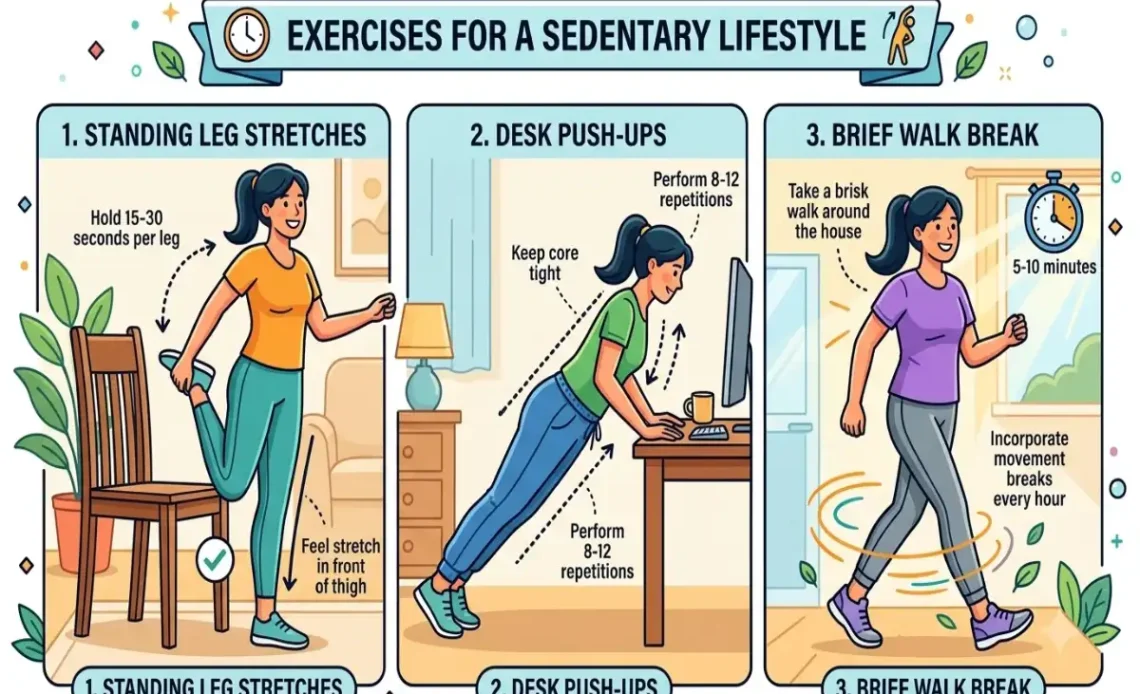
If you spend most of the day sitting, your body gets used to stillness. Muscles tighten, posture shifts, and the idea of “exercise” can feel distant or even intimidating. The good news is that you do not need complicated routines, gym equipment, or long sessions to start reversing those effects. Simple, low-impact movements done consistently make a real difference — especially when they target the areas most affected by prolonged sitting.
This article focuses on practical exercises for people who are currently inactive or desk-bound. It covers stretches to undo the tightness from sitting, strength moves that rebuild basic muscle, easy cardio options, desk-friendly exercises, and simple routines you can do at home with no special gear. Everything is designed to be beginner-friendly and realistic.
Why Specific Exercises Matter After Lots of Sitting
Long hours in a chair typically tighten the hip flexors, weaken the glutes and core, round the upper back, and leave the legs less active. Blood flow slows in the lower body. Joints feel stiff. The exercises below address these common patterns directly. They also help with the metabolic and circulatory benefits that come from interrupting stillness and using large muscle groups.
You can start with just a few movements a day. Consistency matters more than intensity at the beginning.
Stretches to Undo Sitting Tightness
These can be done daily, ideally after long sitting periods or in the evening.
Hip flexor stretch
Kneel on one knee with the other foot forward (like a lunge). Gently push the hips forward until you feel a stretch in the front of the back hip. Keep the torso upright. Hold 20–30 seconds each side. This counters the shortened position from sitting.
Hamstring stretch
Sit on the edge of a chair, extend one leg with the heel on the floor, and hinge forward from the hips while keeping the back long. Hold 20–30 seconds each side. Alternatively, stand and place one heel on a low step or chair and lean forward gently.
Chest opener
Stand or sit tall. Clasp hands behind your back (or hold a towel if needed) and gently lift the chest while drawing the shoulders back. Hold 20–30 seconds. This helps reverse the rounded-shoulder posture common at desks.
Neck and upper back release
Sit or stand tall. Slowly tilt one ear toward the shoulder, then the other. Follow with gentle chin-to-chest nods and slow head turns. Add shoulder rolls forward and backward. Do these several times a day if your neck feels tight.
Seated spinal twist
Sit tall in a chair, place one hand on the opposite knee, and gently rotate the torso. Hold briefly each side. This eases mid-back stiffness.
Hold stretches in a comfortable range — never force or bounce. Breathe normally.
Simple Strength Moves for Beginners
These rebuild the muscles that weaken with sitting. Aim for two short sessions a week to start, then build to more as it feels easier. Do 8–12 repetitions per set, 1–2 sets.
Chair sit-to-stand
Sit on a sturdy chair, feet flat. Stand up fully, then sit back down with control. Use your hands lightly for support if needed at first. This strengthens the legs and glutes.
Wall push-ups
Stand facing a wall, hands on the wall at shoulder height. Bend the elbows to bring the chest toward the wall, then push back. Keep the body in a straight line. Easier than floor push-ups and still effective for the chest, shoulders, and arms.
Standing calf raises
Hold a chair or wall for balance. Rise onto the balls of the feet, then lower slowly. This helps circulation in the lower legs and strengthens the calves.
Glute bridge
Lie on your back with knees bent and feet flat. Lift the hips toward the ceiling by squeezing the glutes, then lower with control. This activates the back of the hips, which often go quiet during long sitting.
Bird-dog (beginner version)
On hands and knees, extend one arm forward and the opposite leg back while keeping the back stable. Hold briefly, then switch. Start with smaller ranges if balance is a challenge. This builds core stability and reverse the effects of a rounded posture.
Seated or standing marching
Lift one knee at a time in a marching motion. Add arm swings if comfortable. This gets the heart rate up gently and activates the hip flexors and core in a controlled way.
Move slowly and with control. Quality matters more than speed or high numbers.
Easy Cardio Options That Suit Sedentary Starters
You do not need to run or join a class.
Walking
The most accessible and effective option for most people. Start with 10 minutes at a comfortable pace. Gradually increase time or add short bursts of slightly faster walking. Walking after meals is especially helpful for blood sugar.
Stair climbing
Even a few flights, done slowly, provide a good challenge for the legs and lungs. Use a handrail if needed. Start with one or two flights and build.
Marching or step-touches in place
Useful when weather or time limits outdoor walking. Do these during television breaks or between work tasks.
Chair-based cardio
Seated marching, arm circles, or seated “swimming” motions can raise the heart rate gently if standing is difficult on a given day.
Aim for activity that makes you breathe a bit harder but still allows conversation. That is the moderate-intensity zone recommended in guidelines.
Desk and Office Exercises
These require almost no space and can be done in work clothes.
- Seated knee lifts (marching while sitting)
- Seated torso twists
- Shoulder blade squeezes (pull the shoulder blades together and hold for a few seconds)
- Ankle circles and foot pumps to keep blood moving in the lower legs
- Standing desk stretches or calf raises while on a call
- Wall push-ups against an office wall during a break
Set a reminder to do one or two of these every hour. Even 60–90 seconds of movement helps.
Sample Beginner Routines
5–10 Minute Morning or Evening Routine
- Hip flexor stretch – 20–30 sec each side
- Chest opener – 20–30 sec
- Chair sit-to-stands – 8–12 reps
- Wall push-ups – 8–12 reps
- Standing calf raises – 10–15 reps
- Gentle neck rolls and shoulder rolls
Desk Break Circuit (2–3 minutes)
- Seated marches – 30 seconds
- Shoulder blade squeezes – 10 reps
- Seated twist – a few each side
- Stand and do a few calf raises or march in place
Short Strength Session (10–15 minutes, twice a week)
- Chair sit-to-stands – 2 sets
- Glute bridges – 2 sets
- Wall push-ups – 2 sets
- Bird-dog – 6–8 each side
- Calf raises – 2 sets
Rest as needed between sets. Stop if anything causes sharp pain.
How to Progress Safely
- Begin with fewer repetitions or shorter holds if needed.
- Add a second set only when the first feels easy.
- Increase walking time by 5 minutes every week or two.
- Focus on form — controlled movement protects joints.
- If you have existing pain, balance issues, or medical conditions, choose the gentlest versions and consider checking with a health professional before starting.
Combining Movement with Daily Life
Pair exercises with existing habits. Do calf raises while waiting for the kettle. Stretch hip flexors after long drives. March in place during a podcast. Walk part of your commute or lunch break. These pairings make the new behaviours easier to maintain.
What to Expect
In the first couple of weeks many people notice less stiffness and slightly better energy. After 4–6 weeks of consistent short sessions, strength and endurance usually improve enough that everyday tasks feel easier. Blood flow, posture, and mood often benefit as well.
The goal is not perfection. It is regular use of the muscles that sitting neglects, frequent breaks from stillness, and gradual building of capacity. Simple exercises done often outperform occasional intense efforts for people coming out of a sedentary pattern.
Start with the stretches and one or two strength moves. Add walking when you can. Keep the desk breaks going. Over time these small practices rebuild the strength, mobility, and circulation that prolonged sitting reduces — and they do it in a way that fits real life.