
 Sameena Fatima
Health & Wellness Content Writer
in
Sameena Fatima writes reader-focused
health and wellness content for
HealthBloomWeb, covering fitness,
nutrition, healthy lifestyle and
everyday wellness topics.
Sameena Fatima
Health & Wellness Content Writer
in
Sameena Fatima writes reader-focused
health and wellness content for
HealthBloomWeb, covering fitness,
nutrition, healthy lifestyle and
everyday wellness topics.
 Mirza Ibrahim Ali Khan
Editorial & Content Reviewer
in
Mirza Ibrahim Ali Khan contributes to
HealthBloomWeb's editorial review process,
with a focus on content structure,
readability, search intent and overall
editorial quality.
Mirza Ibrahim Ali Khan
Editorial & Content Reviewer
in
Mirza Ibrahim Ali Khan contributes to
HealthBloomWeb's editorial review process,
with a focus on content structure,
readability, search intent and overall
editorial quality.
 Reyansh Sethi
Medical Reviewer
in
Reyansh Sethi contributes to the medical
review process at HealthBloomWeb, focusing
on clarity, responsible health context and
reader-friendly presentation of health
information.
Reyansh Sethi
Medical Reviewer
in
Reyansh Sethi contributes to the medical
review process at HealthBloomWeb, focusing
on clarity, responsible health context and
reader-friendly presentation of health
information.
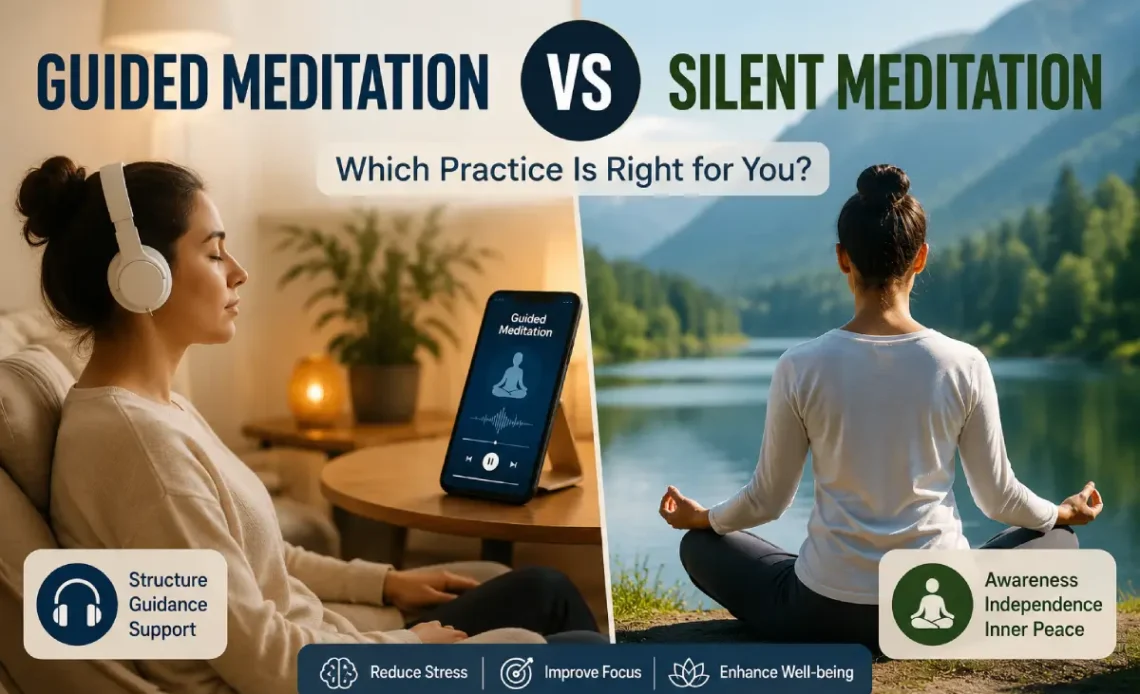
Guided Meditation vs Silent Meditation: Which Is Best For You?
The Meditation: All You Need to Know about the World’s Most Popular mind-body practice! (and yes, there is more than one type) In the past few years, meditation has taken the world of wellness by storm, and it comes as no surprise. Meditation benefits a variety of aspects of your mental and physical health, from reducing stress and anxiety to enhancing focus and increasing the overall feeling of wellbeing. Even if it’s an easy concept, most people get a little confused about what Guided Meditation and Silent Meditation actually involve.
This Article is the Part of Meditation
When starting meditation, if you are unsure of where to start this meditation type comparison can help you build a meditation habit that you will enjoy.
Our guided meditation and silent meditation explanations go in-depth, highlighting each technique, its unique benefits, and best use cases for you to consider before trying to implement a meditation habit in your daily routine. Mindful Insight Research has proven that the style of mediation practice matters far less than maintaining consistency. If you can maintain your practice regularly, the benefits of mediation will start showing, regardless of the form you use.
Quick Comparison: Guided Meditation vs Silent Meditation
| Feature – Guided Meditation – Silent Meditation |
| Best for BeginnersIntermediate & Advanced |
| Directions voice instructions throughout; then become independent. |
| Learning Curve Easy Moderate to Challenging |
| Focus Support High Depends on self-discipline |
| Common Tools Apps, audio sessions, videos Quiet environment, timer |
| Flexibility Structured Highly flexible |
| Distraction Level Lower May be higher for novices |
| Independence Moderate High |
| Ideal Session Length 5–20 mins 10–45 mins |
Definition Of Guided Meditation
Guided meditation, as the name may suggest, refers to having a guide – a therapist or teacher or a tape or recording – direct your meditation process. Your guide will direct you to focus on your breath, visualize a calm place, observe your body sensations, or silence your thoughts.
Most people experience guided meditation through:
- Meditation applications
- Sessions – You Tube
- Online courses – mindfulness
- Health podcasts
- Recordings
As your thoughts are being led away, Guided meditation is most often prescribed for those who find it hard to sit still or are beginners.
Common Types of Guided Meditation
- Mindfulness meditation
- Body scan meditation
- Loving-kindness meditation
- Sleep meditation
- Meditation when Breathing
- Meditation by visualization
Guided Meditation Benefits
One of the biggest reasons guided meditation remains popular is that it removes much of the uncertainty beginners experience.
- Easier for Beginners
A teacher or narrator explains exactly what to do, making it much less intimidating than sitting in complete silence.
- Better Focus
Listening to verbal instructions helps redirect wandering thoughts, making it easier to stay present.
- Lower Stress Levels
Many guided sessions include calming breathing exercises and relaxation techniques that can quickly reduce feelings of stress and anxiety.
- Helps Build a Habit
Structured sessions with a clear beginning and end make it easier to establish a consistent meditation routine.
- Goal-Oriented Sessions
You can find guided meditations specifically designed for:
- Better sleep
- Anxiety relief
- Stress management
- Improved focus
- Emotional healing
- Confidence building
What Is Silent Meditation?
When you use silent meditation, you let go of external instruction and the role it plays, and pay attention to your thoughts, emotions, body, or breath. In essence, the only direction you will have is the one from within yourself, staying in the moment on your own time.
It can seem as if this would be the easiest practice, but for most, it is the most challenging of meditations as there is nothing you can be led back to in case you go off course.
Many people who have been practicing meditation for years will elect to have sessions in silence.
Popular Silent Meditation Techniques
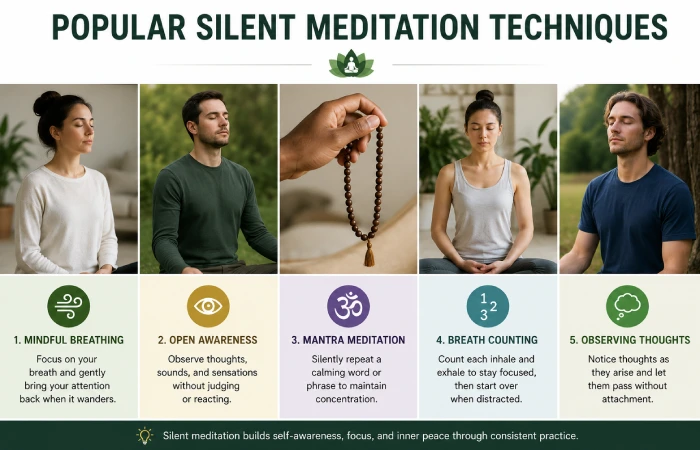
As stated earlier, silent meditation is not some dogmatic, singular approach. Instead, it may vary from person to person. How ever the techniques listed may appeal more or less, depending on what your intention is: –
Mindful Breathing
Focus entirely on your breath while gently bringing your attention back whenever your mind wanders.
Open Awareness
Observe thoughts, sounds, emotions, and sensations without judging or reacting to them.
Mantra Meditation
Silently repeat a calming word or phrase to maintain concentration.
Breath Counting
Count each inhale and exhale until reaching a certain number before starting again.
Observing Thoughts
Rather than trying to stop thinking, notice thoughts as they arise and let them pass naturally.
Benefits of Silent Meditation
Once you’ve developed basic concentration skills, silent meditation can become an incredibly rewarding practice.
Encourages Independent Practice
Without relying on audio guidance, you learn to develop mindfulness on your own.
Improves Mental Discipline
Maintaining focus without external prompts strengthens attention and emotional regulation over time.
Flexible Practice
You don’t need internet or any fancy apps to silently mediate, not to mention a headset.
Greater Self-Awareness
Many practitioners report becoming more aware of thought patterns, emotional triggers, and habitual reactions through consistent silent practice.
Adaptable Session Length
Whether you have five minutes or an hour, silent meditation can easily fit into your schedule.
Guided Meditation vs Silent Meditation: Key Differences
| Comparison Area | Guided Meditation | Silent Meditation |
| Learning Difficulty | Very beginner-friendly | Requires practice |
| Structure | Instructor-led | Self-guided |
| External Support | High | None |
| Mental Effort | Moderate | Higher |
| Best Use | Learning meditation | Deepening mindfulness |
| Recommended Experience | Beginner | Intermediate to Advanced |
Research Update
Mindfulness researchers in 2026 conclude the benefits for managing stress, boosting focus, and increasing emotional health can come from either guided meditation or silent meditation, so the best thing is to stick with one consistently-whether it is guided or silent. Beginners will often benefit from the added structure of guided meditations whereas those with experience will often use the convenience of unguided options.
Frequently Asked Questions
Guided Meditation vs Unguided?
No. Guided may work for you if you are a new meditator, since they are generally more guided, however if you are more of an experienced meditator, they may be a good idea for the fact that the are a little more independent.
Is it ok for beginners to do silent meditation?
You definitely can! While some beginners find guided meditation helpful in the beginning to get their confidence up before moving onto silent meditation.
What if my meditations don’t clear my head?
The purpose of meditation isn’t to “clear your mind” necessarily. When thoughts pop into your head, acknowledge them, without judgment, and gently bring your awareness back to the breath or your body.
Can I blend guided and silent meditation?
Yes! It’s very common to start your meditation with a guided practice and conclude it by sitting in silence for a minute or two to see what’s happening internally.
Which meditation is better for stress relief?
Guided meditation vs silent meditation for stress. Ultimately, both types of meditation are a helpful stress relief technique.
If you’re a beginner looking for immediate relaxation, guided meditation is usually easier to get started with.
But with consistent practice, silent meditation may lead to more profound mindfulness.
Conclusion
Making a choice between guided meditation vs silent meditation isn‘t really complicated. Guided meditation provides a framework, reassurance and straightforward directions. Silent meditation provides a sense of self-reliance and greater self-exploration.
Rather than focusing on which meditation style is “the best” in a broad sense, the real question is, “which will be best for me?” If you are a novice, a guided meditation can provide a bit more structure and build the confidence of experiencing a successful meditation session. As you gain more confidence and awareness, the practice of silence meditation may be beneficial to heighten the effects of your sessions.