
 Sameena Fatima
Health & Wellness Content Writer
in
Sameena Fatima writes reader-focused
health and wellness content for
HealthBloomWeb, covering fitness,
nutrition, healthy lifestyle and
everyday wellness topics.
Sameena Fatima
Health & Wellness Content Writer
in
Sameena Fatima writes reader-focused
health and wellness content for
HealthBloomWeb, covering fitness,
nutrition, healthy lifestyle and
everyday wellness topics.
 Mirza Ibrahim Ali Khan
Editorial & Content Reviewer
in
Mirza Ibrahim Ali Khan contributes to
HealthBloomWeb's editorial review process,
with a focus on content structure,
readability, search intent and overall
editorial quality.
Mirza Ibrahim Ali Khan
Editorial & Content Reviewer
in
Mirza Ibrahim Ali Khan contributes to
HealthBloomWeb's editorial review process,
with a focus on content structure,
readability, search intent and overall
editorial quality.
 Reyansh Sethi
Medical Reviewer
in
Reyansh Sethi contributes to the medical
review process at HealthBloomWeb, focusing
on clarity, responsible health context and
reader-friendly presentation of health
information.
Reyansh Sethi
Medical Reviewer
in
Reyansh Sethi contributes to the medical
review process at HealthBloomWeb, focusing
on clarity, responsible health context and
reader-friendly presentation of health
information.
Introduction
Zen meditation is among the oldest meditation practices in the world and one of the most popular, with millions of practitioners using it to cultivate inner peace, clarity of mind, and better emotional management. Based in Zen Buddhism, Zen meditation (or zazen meditation) involves sitting quietly, noticing your breath, and letting your thoughts fly by freely.
This Article is the Part of Meditation
If you‘re seeking to enhance focus during work, decrease worry, or establish a daily zen mindfulness practice, Zen meditation provides an accessible yet effective solution. This article will provide an overview of it, its advantages, and how to begin.
What Is Zen Meditation
Another form of meditation that we will look at is Zen meditation, or zazen meditation. This form of meditation is basically seated meditation and is part of the Zen Buddhist religion. The practice is different to a number of the other practices in that it does not include guided meditation. Instead, the practice involves simply being present in the moment.
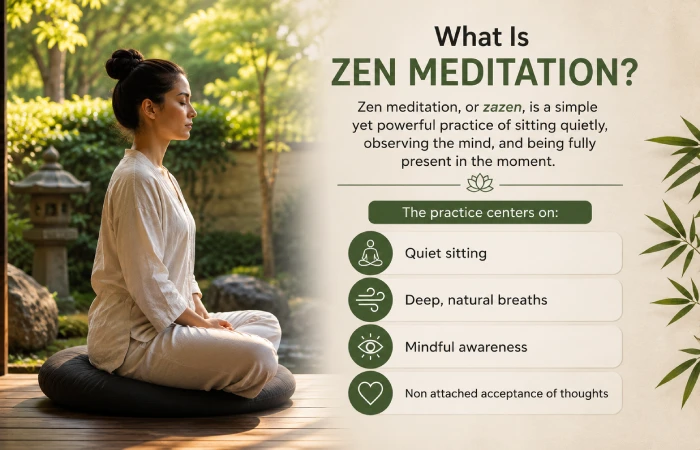
The practice centers on:
- Quiet sitting
- Deep, natural breaths
- Mindful awareness
- Non attached acceptance of thoughts
Instead of attempting to ‘clear’ the mind, the meditator just observes whatever thoughts occur and softly brings focus back to the breathing.
Benefits of Zen Meditation
Benefits Of Zen Meditation The more you start practicing Zen meditation every day, the more you’ll feel a wide variety of physical, mental and emotional benefits.
Increases Focus
The more that you meditate to focus, transcendental meditation for focus is also one to practice since you train your mind to concentrate on the moment you are in. With this increased meditation practice, concentration, productivity, and decisiveness increase as well.
Reduces Stress
Stress management meditation (Zen meditation) thus activates relaxation response. Active relaxation response can help lowering the stress level and emotional strength.
Supports Emotional Well-Being
Consistent practice may lead to less emotional reactivity and developing patience as well as adopting a more relaxed emotional state.
Enhances Mindfulness
This encourages many of the thoughts and feelings to be easier to remember, which can help a person to experience more mindfulness of their thoughts and feelings and their environment.
Encourages Better Sleep
According to many practitioners, daily meditation quiets the mind chatter and helps induce sleep and to achieve full rest.
How to Practice Zazen Meditation
This is easy to get started on, you don‘t need any other equipment or any extent of previous experience to get going.
Step 1: Choose a Quiet Space
Find a quiet and private place where you will not be disturbed for 10–20 minutes.
Step 2: Sit Comfortably
A meditation seat the top of a thick folded blanket, a meditation cushion, or a chair. Keep your spine relaxed and natural, but not falling or stiffening.
Step 3: Position Your Hands
Place your hands in your lap in a relaxing manner or adopt the old-fashioned ‘cosmic mudra’ where hands are stacked one on top of the other, with relaxed thumbs lightly touching.
Step 4: Focus on Your Breath
Breathe naturally through your nose. Become aware of each breath without attempting to alter it.
Step 5: Observe Your Thoughts
Thoughts will occur. Do not get involved with them. Hold them lightly in your mind and return again and again to your breath.
Begin practicing 10 minutes a day and add more time as practicing feels right.
Zen Meditation vs. Mindfulness Meditation
| Feature | Zen Meditation | loving-kindness meditation |
| Main Area of Focus | Breath and seated mindfulness | Present-moment daily life awareness |
| Guidance | Usually silent | Often guided |
| Origin | Venerable Zen Buddhism | Various Buddhist traditions, including their popular |
| Goal | Enhanced knowledge and understanding | living more relaxed and aware |
Both enable sharp reasoning skills, although Zen is characterized more by mindful, disciplined sitting and persistence.
Tips for Beginners
To build a sustainable practice:
- Make sure you meditate at the same time every day.
- Start on a small scale.
- Don‘t compare yourself to others: don‘t judge me.
- Wearing loose-fitting clothes.
- Continue normal breathing.
- Don‘t be discouraged; just keep at it.
Learning is a very flexible process and can be easily changed with only a few minutes a day.
Common Mistakes to Avoid
This faces many beginners.
- In anticipation of a clear mind.
- Poor sitting posture.
- Attempting to make relaxation happen.
- Not practicing after a tiring day.
- Getting frustrated and unfocused by distraction.
Keep in mind, that when you notice it and softly bring the attention back in.
Who is Zen Meditation Suitable For?

Zen meditation is suitable for most healthy adults and may be especially helpful for:
- Studentswho want to concentrate better
- Industry workers under stress.
- People who sought after mindfulness
- Those who were establishing good daily habits
- For those seeking a holistic and natural means of improving their emotional well being
Seek recommendations of a qualified health professional if you have serious psychological problems.
Frequently Asked Questions
Appropriateness of Zen meditation for beginning practitioners: Is Zen meditation suitable for beginners?
Yes. Zen meditation is very easy to learn. Beginners can spend only 2- 3 minutes everyday and can make it a regular routine.
Practice for how many hours every day?
A good place to start realistically is with 10-15 minutes a day. If you find that comfortable, you may want to go to 20-30 minutes.
How is Zen meditation different from zazen meditation?
It makes no distinction. Zazen is in the Japanese language, but it is the name of the seated meditation that is the heart of Zen meditation.
Can Zen meditation alleviate stress?
Many individuals practice the Zen style of meditation as one of the most effective stress management meditation practices because it promotes relaxation, emotion awareness, and smooth breathing.
Is need extra equipment?
No. I think all you need is a place that is peaceful and relaxing to sit in. It is nice to have a meditation cushion for better posture, but it is not necessary.
Conclusion
Zen meditation provides an easy, graceful, and timeless method for developing mindfulness, attention, and serenity. With regular meditation practice through zazen, you will find yourself more able to stay in the present moment, manage daily life stresses more effectively and have clearer, more focused thinking. Starting out with a few minutes per day to practice sitting with awareness can be your first step toward a more centered, mindful existence.