
 Sameena Fatima
Health & Wellness Content Writer
in
Sameena Fatima writes reader-focused
health and wellness content for
HealthBloomWeb, covering fitness,
nutrition, healthy lifestyle and
everyday wellness topics.
Sameena Fatima
Health & Wellness Content Writer
in
Sameena Fatima writes reader-focused
health and wellness content for
HealthBloomWeb, covering fitness,
nutrition, healthy lifestyle and
everyday wellness topics.
 Mirza Ibrahim Ali Khan
Editorial & Content Reviewer
in
Mirza Ibrahim Ali Khan contributes to
HealthBloomWeb's editorial review process,
with a focus on content structure,
readability, search intent and overall
editorial quality.
Mirza Ibrahim Ali Khan
Editorial & Content Reviewer
in
Mirza Ibrahim Ali Khan contributes to
HealthBloomWeb's editorial review process,
with a focus on content structure,
readability, search intent and overall
editorial quality.
 Reyansh Sethi
Medical Reviewer
in
Reyansh Sethi contributes to the medical
review process at HealthBloomWeb, focusing
on clarity, responsible health context and
reader-friendly presentation of health
information.
Reyansh Sethi
Medical Reviewer
in
Reyansh Sethi contributes to the medical
review process at HealthBloomWeb, focusing
on clarity, responsible health context and
reader-friendly presentation of health
information.
Basics of healthy eating do not necessarily have to be complicated. A healthy diet can simply be maintaining a diverse range of nutritious foods every day, that give you energy and nutrients your body needs. More so than following extreme diets and avoiding whole groups of foods, most people can learn to focus more on balanced eating and creating healthy habits.
Healthy diet is built on four main principles of adequacy, balance, moderation, and diversity, which should serve as the basis of the intake of all foods. However, the types of foods individuals consume will depend on their cultures, lifestyles, budgets, and personal needs.
A simple, beginner friendly explaining healthy eating and creating a balanced diet for normal living.
What Are The Fundamentals Of Good Nutrition?
Healthy Eating means incorporating a wide variety of foods and beverages in the right quantities to meet your body‘s nutritional needs and promote good health.
The goal is not to eat “perfectly”. Pay attention to the big picture of your eating pattern.
A healthy eating pattern generally includes:
- Vegetables and fruits
- Whole grains and other carbohydrate foods containing good quantities of fibre
- High protein foods
- About healthy fats
- Dairy or other suitable replacements
- Drinking enough water
The guidance provided by CDC today focuses on healthy nutrient dense foods such as vegetables, fruits, grains, protein foods, healthy fats, and dairy foods without added sugars while avoiding large amounts of added sugars, sodium and highly processed foods.
What constitutes a balanced diet?
A healthy balanced diet offers your body all the nutrients it needs in the right proportions and doesn‘t regularly provide too much or too little energy.
According to the NHS “A healthy balanced diet is one in which a wide variety of foods are eaten in the correct proportions to provide the nutrients the body needs for good health”
We all have a different idea of what a balanced diet is. Your needs will depend on:
- Age
- Increased physical activity
- Lifestyle
- Personal food preferences
- Eating To Be Green
- Some diseases/conditions
- For instance, the diet might be composed of foods that are known to be healthy, like dal, rotis, rice, vegetables, eggs, curd, fish, beans or even fruit.
The Essential Nutrients Your Body Needs
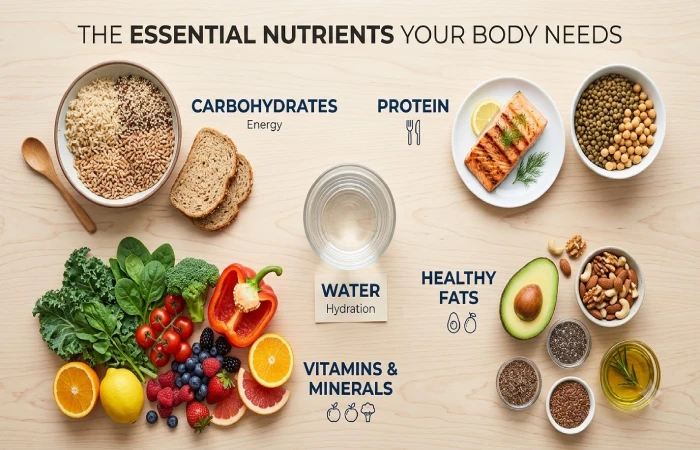
The foods we eat can supply us with a number of different types of essential nutrients.
Nutrient Main Role Food Examples
- Carbohydrates Give energy they are found in Whole grains, pulses, fruits
- Protein Is necessary for cell growth and repairE.g.. eggs, lentils, beans, fish
- Fat, healthy Provide energy and supports body functions, especially the brain Avocado, olive oil, sunflower seeds, nuts
- Vitamins Assist various body functions Ensure intake of a variety of fruits and vegetables
- Minerals Provide support to bones, blood and other functions Dairy, legumes, leafy vegetables
- Fibre Promotes healthy digestion Brown rice, legumes, greens None of the foods listed as providing fibre were in the diet which might suggest that she rarely eats healthy foods.
- Water Keeps the body hydrated and functioning Water and foods high in water
The World Health Organisation (WHO) points out that, Essential amino acids, essential fatty acids and most vitamins and minerals are defined as vital nutrients that must be ingested.
Eating a wide range of foods is by far the easiest way to achieve adequate intakes of the nutrients and emphasizes a varied diet rather than depending on just a few “superfoods”.
The Main Parts of a Healthy Diet
1. Eat Plenty of Vegetables and Fruits
Vegetables and fruits are sources of vitamins, minerals and dietary fibre.
Within this, attempt to have a variety of colours and varieties each day.
Examples include:
- Spinach
- Carrots
- Tomatoes
- Broccoli
- Beans
- Apples
- Oranges
- Bananas
- Guava
- Papaya
As per WHO 2026 guidance, people over the age of 10 should be consuming minimum 400g of fruits and vegetables per day.
2. Choose Whole Grains More Often
Can offer fibre and various other nutrients.
Healthy options include:
- Oats
- Brown rice.
- Whole wheat bread
- Whole-wheat roti
- Millet
- Whole-grain cereals.
You wont need to change everything at a stroke. Simply choose to eat one or two more high fibre alternatives rather than refined options.
3. Include Protein in Your Meals
Protein: Necessary for repair, growth and development, normal body function etc.
Good options include:
- Lentils
- Chickpeas
- Beans
- Eggs
- Fish
- Poultry
- Tofu
- Yogurt
- Nuts and seeds
CDC encourages people to consume a variety of protein-rich foods instead of one source.
4. Choose Healthy Fats
Fats are an important part of nutrition, however the type of fat is important.
Sources of predominantly unsaturated fats include:
- Nuts
- Seeds
- Avocado
- Fish
- Olive oil
- Other unsaturated vegetable oils.
WHO suggests preferences for unsaturated lipids and a avoid of too large intakes of saturated fats as well as short- and medium-chain industrial trans fats.
How to Build a Balanced Meal
There are straightforward ways of encouraging healthy eating in novices, such as the basic meal-building approach.
Try including:
Vegetable or fruit, protein, or sort of carbohydrates and a healthy fat source.
For example:
- Healthy Breakfast
- Oats
- Fruit
- Yogurt or most likely milk.
- Nuts/Seeds.
Healthy Lunch
- Ubiquity of roti, whole-wheat
- Dal
- Salad mixed vegetables
- Yogurt
Healthy Dinner
- You might include rice, or another type of cereal.
- Beans, fish, chicken or Tofu
- Vegetables
- Healthy fat in moderation.
We are often more relaxed about it when we treat it as a fluid guideline rather than strict rules about what and when to eat.
Healthy Eating Habits for Beginners

The building blocks of good nutrition are small, repetitive decisions.
Start With These Simple Nutrition Tips
- Add in before you remove. Add more vegetables or fruit before you attempt to cut out every single one of your favourite foods.
- Plan a few meals. Meal planning helps ensures we make easier healthy choices when we are busy.
- Leaving healthy foods out and visible. If you are trying to cut back, keep fruit and healthy snacks accessible (on the counter or table rather than in the cupboard).
- Read the food labels. How do they compare in terms of serving size, sodium, added sugars and ingredients.
- Eat a variety of foods. Variety in the diet can help to improve nutrient intakes.
- Start with small changes. One one unhealthy behavior and stick with it for several weeks. Becomes older and more sustainable.
The CDC‘s updated recommendation also involves more realistic suggestions like planning, selecting a diverse range of nutrient-rich foods, and shopping for healthier choices.
Simple Healthy Food Swaps
Instead of Try More Often
Sweetened drinks Water, or non-sweetened drinks
Refined breakfast cereal Oats or a breakfast cereal with a higher level of fibre.
From the Snacks that are Highly Processed (e.g. Fruit, nuts or yogurt)
White bread, 1 piece (or slice) Whole-grain bread is made with unrefined flours and contains more vitamins, minerals and dietary fiber.
Fried foods several times a week Grilled, baked or steamed foods
Sweets and confectionery (e.g., cake, biscuits, and sugar); sugar‐sweetened foods and beverages. Sugared yogurt; yogurt with added fruit.
These are guidelines, not laws.
Common Mistakes When Starting a Healthy Diet
Trying to Change Everything at Once
There can be a lot of difficulty in maintaining such extreme changes.
Yet better: begin with one or two possible, realistic habits.
Removing Entire Food Groups
Most individuals will not have to be on auto-limit any saturated fats, or carbohydrates.
Concentrate on the quality of the food and the balance.
Believing Healthy Food Must Be Expensive
Affordable options can include:
- Lentils
- Beans
- Chickpeas
- Eggs
- Oats
- Seasonal fruits.
- More the seasonal vegetables.
Expecting Perfection
Skimping on one not-so-good meal isn‘t going to blow your overall healthy eating way of life.
Perfection is a lot to aim for, so just getting the concept across is good enough. Make sure you pay attention to consistency.
Healthy Eating Basics: A Simple 7-Day Start
You just don‘t need a complex healthy eating diet.
Try this simple approach:
Day 1: Make one additional vegetable serving.
On the second day: The second day should include a small piece of fruit.
Day 3: Pick a whole food, grain.
Day 4: Incorporate a protein into a meal.
Day 5. Have one less Sugary drink! (for example, sodas, fruit-drink, high-sugar juice…)
Day 6: Have one meal that is balanced at home.
Day 7: For each change, reflect on whether it seemed feasible.
Then continue building from there.
Frequently Asked Questions
What are the fundamentals of eating healthy?
Eating for health involves eating a balanced variety of vegetables, fruits, whole grains, protein foods and healthy fats as well as avoiding excessive amounts of added sugars, sodium and unhealthy fats.
What exactly is a healthy diet?
A varied and balanced diet will supply all the energy and nutrients needed in the correct proportions.
What are the nutrients?
The essential nutrients include specific proteins and fats, vitamins, mineral and other nutrients that are required for the body to function normally. A variety of foods provides the foundation for sufficient nutrients intake.
What about rice? Can you include this in a healthy diet?
Yes. Rice can make part of a healthy diet. The quality of the entire meal, the diet as a whole, the way in which it is prepared and one‘s requirements are much more relevant than should the nutritious value of one food be totally healthy or unhealthy.
Final Thoughts
Healthy eating does not necessarily mean rigid perfection, a healthy diet that is likely to be the easiest to sustain is one that includes a mixture of all the healthy attributes, variety, balance, moderation and what you like to eat and can prepare.
Begin with the fundamentals. Consume a large selection of wholesome, nutrient rich foods, assemble balanced meals, make sure to add important nutrients and gradually enhance your healthy habits. For laymen, consistency is usually W-Y-G far more beneficial in the beginning than attempting an aggressive nutrition regime.