
 Sameena Fatima
Health & Wellness Content Writer
in
Sameena Fatima writes reader-focused
health and wellness content for
HealthBloomWeb, covering fitness,
nutrition, healthy lifestyle and
everyday wellness topics.
Sameena Fatima
Health & Wellness Content Writer
in
Sameena Fatima writes reader-focused
health and wellness content for
HealthBloomWeb, covering fitness,
nutrition, healthy lifestyle and
everyday wellness topics.
 Mirza Ibrahim Ali Khan
Editorial & Content Reviewer
in
Mirza Ibrahim Ali Khan contributes to
HealthBloomWeb's editorial review process,
with a focus on content structure,
readability, search intent and overall
editorial quality.
Mirza Ibrahim Ali Khan
Editorial & Content Reviewer
in
Mirza Ibrahim Ali Khan contributes to
HealthBloomWeb's editorial review process,
with a focus on content structure,
readability, search intent and overall
editorial quality.
 Reyansh Sethi
Medical Reviewer
in
Reyansh Sethi contributes to the medical
review process at HealthBloomWeb, focusing
on clarity, responsible health context and
reader-friendly presentation of health
information.
Reyansh Sethi
Medical Reviewer
in
Reyansh Sethi contributes to the medical
review process at HealthBloomWeb, focusing
on clarity, responsible health context and
reader-friendly presentation of health
information.
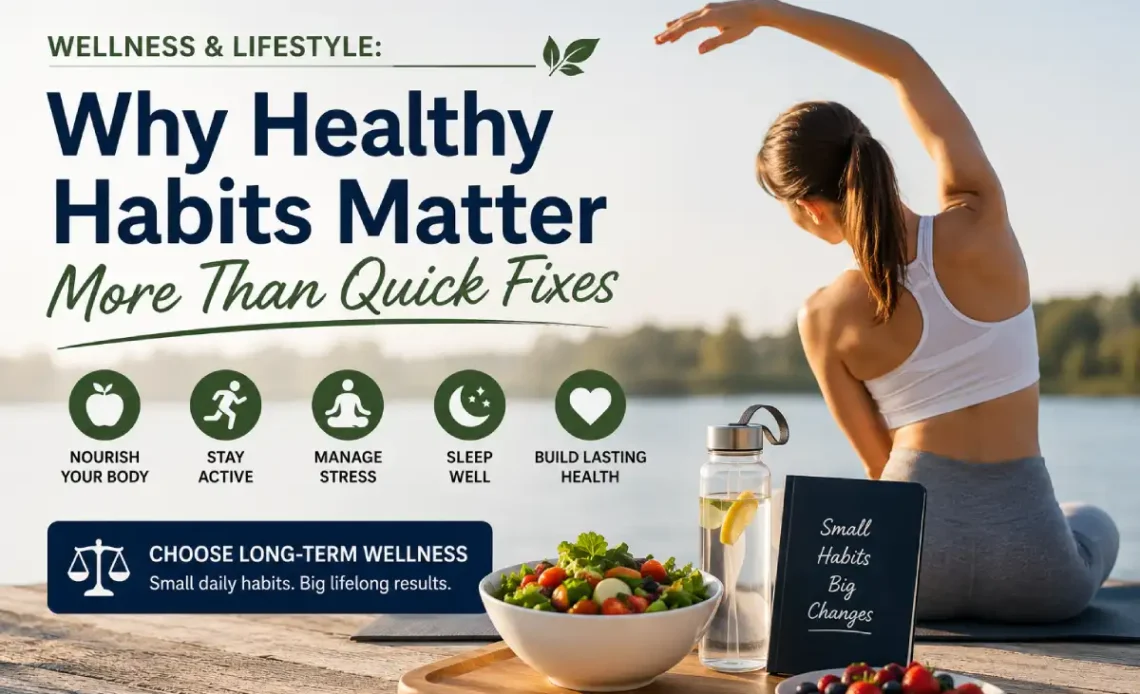
Wellness & Lifestyle is not just a ‘hot topic’ but the essential principle behind successful long-term health, sustainable weight management and a balanced lifestyle.
Whilst numerous individuals are opting for crash diets and starvation diets, and even intensive exercise regimes, research has indicated that steady, long-term weight loss results are primarily due to a regular intake of sensible options.
This Article is a part of Weight loss
Holistic health is part of the new way in which we look at wellbeing today and includes physical exercise, sufficient sleep, stress management, fluid intake, good nutrition and mental wellbeing. All of these together affect one‘s energy, shape and composition, metabolism, as well as one‘s overall existence.
By the year 2026, health experts will now be focusing on health and lifestyle based diet and exercise strategies as they are scientifically proven to be the most sustainable and successful way of achieving health goals. Whatever your health and fitness goal is individual or joint, lifestyle- based healthy way of life is your 100% successful path to success.
Definition of Wellness & Lifestyle
Wellness is the conscious choice you make to lead a healthy physical, mental and emotional lifestyle.
Healthy lifestyle is often made up of:
Regularly exercise
Healthy diet
Adequate hydration
Quality sleep
Stress management
Positive daily routines
Mental well-being practices
Health is about cultivating long-lasting healthy habits-not about temporary diets or challenges that burn out within weeks or months.
The Six Pillars of Wellness
| Wellness Area | Primary Benefit |
| Nutrition | Supports energy and recovery |
| Exercise | Improves strength and cardiovascular health |
| Sleep | Enhances recovery and hormone regulation |
| Hydration | Supports metabolism and body functions |
| Stress Management | Improves emotional and physical health |
| Mental Wellness | Supports consistency and motivation |
Best Morning Habits for Weight Loss
Morning habits can make or break the entire day and numerous behavior psychology studies have found a correlation between morning routines and success with forming healthy habits. Many successful weight loss stories are not about intricate and complicated plans, but rather,simple morning habits that work.
Morning Habits for Effective Weight Loss
| Morning Habit | Potential Benefit |
| Drink Water Upon Waking | Supports hydration |
| Morning Walk | Increases daily activity |
| Protein-Rich Breakfast | Helps control hunger |
| Stretching or Mobility Work | Improves movement quality |
| Daily Goal Planning | Encourages accountability |
Sample 30-Minute Morning Wellness Routine
| Time | Activity |
| 0–5 Minutes | Drink water |
| 5–15 Minutes | Light stretching |
| 15–30 Minutes | Walk outdoors |
| Breakfast | Protein-focused meal |
Why Morning Habits Work
Morning routines reduce decision fatigue. When healthy behaviors become automatic, consistency becomes easier.
Importance of Sleep for Fat Loss
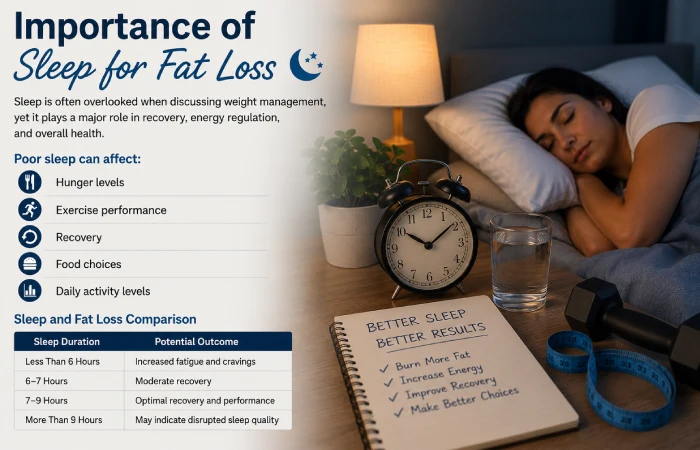
But we don’t often think about the impact that sleep has on weight loss, despite being huge to our recovery, energy production, and all-round well-being.
Poor sleep can affect:
- Hunger levels
- Exercise performance
- Recovery
- Food choices
- Daily activity levels
Sleep and Fat Loss Comparison
| Sleep Duration | Potential Outcome |
| Less Than 6 Hours | Increased fatigue and cravings |
| 6–7 Hours | Moderate recovery |
| 7–9 Hours | Optimal recovery and performance |
| More Than 9 Hours | May indicate disrupted sleep quality |
Signs You Need Better Sleep
- Waking up tired
- Afternoon energy crashes
- Increased hunger
- Poor workout performance
- Difficulty concentrating
Sleep Optimization Checklist
- ✓ Maintain a consistent bedtime
- ✓ Reduce screen exposure before sleep
- ✓ Keep the bedroom cool and dark
- ✓ Avoid caffeine late in the day
- ✓ Create a relaxing nighttime routine
Stress and Belly Fat Connection
The link between stress and belly fat One of the more hotly debated subjects in wellness world is stress and weight gain. Although stress by itself doesn’t give someone extra belly fat, it frequently fosters behaviors that sabotage efforts to drop excess weight.
Stress Related Issues People will encounter
| Stress Response | Potential Impact |
| Emotional Eating | Increased calorie intake |
| Poor Sleep | Reduced recovery |
| Fatigue | Lower activity levels |
| Reduced Motivation | Inconsistent workouts |
| Poor Food Choices | Increased processed food consumption |
Stress Management Strategies
- Daily walking
- Deep breathing exercises
- Meditation
- Journaling
- Time management
- Social support
Stress Levels and Lifestyle Habits
| Stress Level | Exercise Consistency | Sleep Quality |
| Low | High | High |
| Moderate | Moderate | Moderate |
| High | Lower | Lower |
Managing stress often improves multiple aspects of health simultaneously.
Hydration for Weight Loss
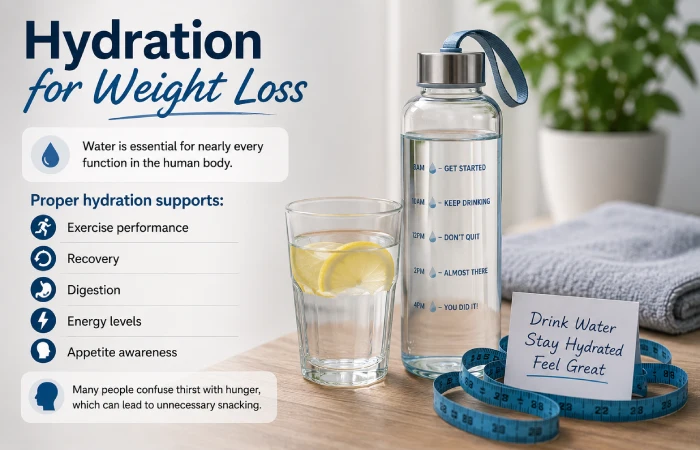
Water is essential for nearly every function in the human body.
Proper hydration supports:
- Exercise performance
- Recovery
- Digestion
- Energy levels
- Appetite awareness
Many people confuse thirst with hunger, which can lead to unnecessary snacking.
Hydration Benefits Comparison
| Benefit | Why It Matters Comparison |
| Supports Exercise | Better performance |
| Helps Recovery | Improved muscle function |
| Maintains Energy | Reduces fatigue |
| Supports Digestion | Promotes overall wellness |
| Appetite Awareness | Helps distinguish hunger from thirst |
Daily Hydration Habits
| Habit | Difficulty Level |
| Carry a water bottle | Easy |
| Drink before meals | Easy |
| Track intake | Moderate |
| Increase intake during exercise | Easy |
Hydration Trend for 2026 In 2026, you can expect the popularity of smart water bottles and hydration-tracking apps to grow, along with greater interest in wellness routines.
Health & Lifestyle Tips for Your Fitness
There’s a big misconception that fitness means doing lots of different workouts.
Your workouts are just one aspect of a fit, healthy lifestyle.
In fact, fitness is only as successful as the lifestyle habits you engage in every day outside the gym.
| Habit | Impact on Results |
| Daily Walking | High |
| Strength Training | Very High |
| Meal Planning | High |
| Sleep Consistency | High |
| Stress Management | Moderate to High |
| Hydration | Moderate to High |
Beginner-Friendly Fitness Habits
- Walk daily
- Strength train 2–3 times weekly
- Eat more whole foods
- Prioritize sleep
- Stay hydrated
- Track progress consistently
These habits may seem simple, but they create a powerful foundation for long-term success.
2026 Wellness Trends and Research Insights
Current wellness trends show a shift away from extreme fitness challenges toward sustainable habits.
Most Popular Wellness Practices in 2026
| Wellness Trend | Popularity Score |
| Walking Programs | 95 |
| Strength Training | 92 |
| Sleep Optimization | 89 |
| Mindfulness Practices | 84 |
| Hydration Tracking | 81 |
Wellness Product Comparison
Many people use wellness tools to support healthy habits.
Popular Wellness Products
| Product | Best For | Price Range |
| Fitness Tracker | Activity monitoring | $$ |
| Smart Water Bottle | Hydration reminders | $$ |
| Resistance Bands | Home workouts | $ |
| Sleep Tracker | Recovery monitoring | $$ |
| Meditation App | Stress management | $ |
Best Value for Beginners
- Resistance bands
- Fitness tracker
- Reusable water bottle
These tools provide practical support without significant expense.
In conclusion
Wellness and lifestyle are not about having perfect eating habits-they’re about the many choices that add up over a lifetime to keep you healthy. If your target is weight loss, increased fitness, better sleep, stress reduction or just increased energy-they’re the combination of healthy behaviors integrated into your lifestyle that’ll see you through. Small, sustainable changes and consistent behavior are key to life-long health and well-being.