
 Sameena Fatima
Health & Wellness Content Writer
in
Sameena Fatima writes reader-focused
health and wellness content for
HealthBloomWeb, covering fitness,
nutrition, healthy lifestyle and
everyday wellness topics.
Sameena Fatima
Health & Wellness Content Writer
in
Sameena Fatima writes reader-focused
health and wellness content for
HealthBloomWeb, covering fitness,
nutrition, healthy lifestyle and
everyday wellness topics.
 Mirza Ibrahim Ali Khan
Editorial & Content Reviewer
in
Mirza Ibrahim Ali Khan contributes to
HealthBloomWeb's editorial review process,
with a focus on content structure,
readability, search intent and overall
editorial quality.
Mirza Ibrahim Ali Khan
Editorial & Content Reviewer
in
Mirza Ibrahim Ali Khan contributes to
HealthBloomWeb's editorial review process,
with a focus on content structure,
readability, search intent and overall
editorial quality.
 Reyansh Sethi
Medical Reviewer
in
Reyansh Sethi contributes to the medical
review process at HealthBloomWeb, focusing
on clarity, responsible health context and
reader-friendly presentation of health
information.
Reyansh Sethi
Medical Reviewer
in
Reyansh Sethi contributes to the medical
review process at HealthBloomWeb, focusing
on clarity, responsible health context and
reader-friendly presentation of health
information.
Probiotics vs Prebiotics for Gut Health
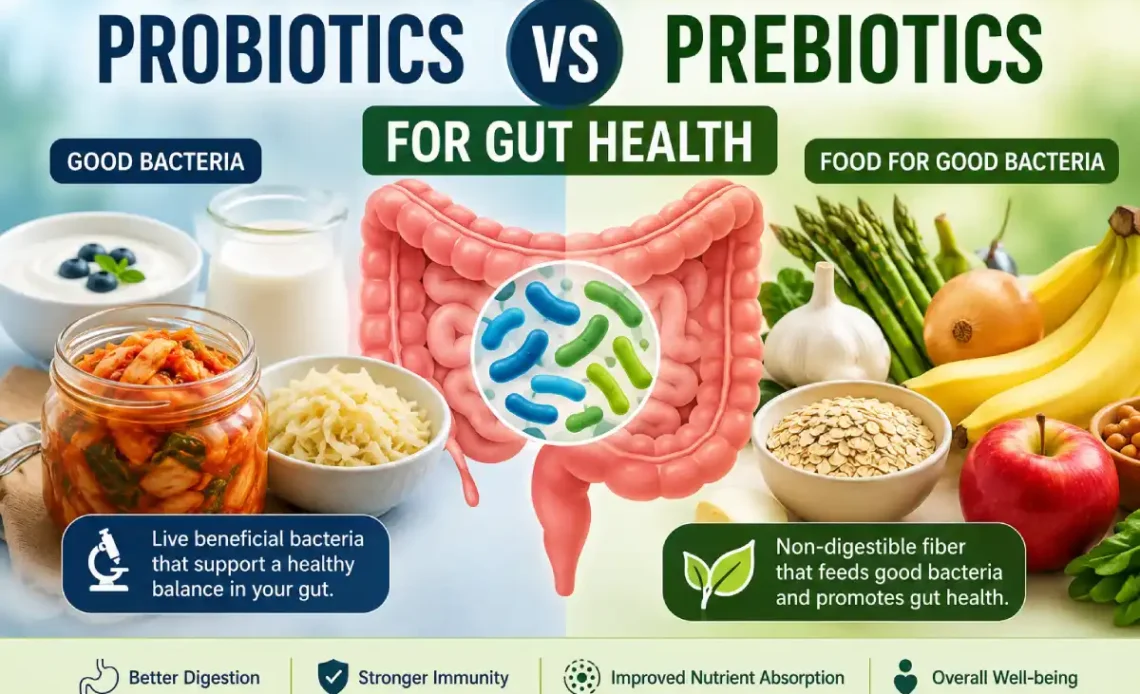
If you‘re exploring ways to enhance your digestive system, you‘ve probably heard about probiotics and prebiotics for gut health. Although they are frequently mentioned side by side, these terms refer to distinct components that benefit your digestive health.
Probiotics are live beneficial bacteria which are added to a healthy gut and prebiotics are a type of fibre for gut health. Both contain a number of different elements and are known to enhance a healthy gut microbiome, boost metabolism, improve digestion and overall health.
This Article is the Part of Health Habits
Probiotic. so what is it?
Define Probiotic: Is an additive to base and dairy product. It is a supplement containing single or combinations of microorganism such as Lactobacillus acidophilus, Bifidobacterium bifidum, and other nonpathogenic microorganisms. These specific microorganism are normally present in the dairy product and can be added during preparation.
Probiotics are living microorganisms (generally bacteria but some yeasts) that when taken in appropriate amounts can lead to health benefits. They work best to improve and restore a natural balance of ”good” gut bacteria A good proportion of ‘good ‘bacterial balance inside and colonizes it There are a lot of trillions of bugs in your colon – put them together it is called your Gut Microbiome. Antibiotics, illness, stress and a bad diet will disrupt the ‘good” and your balance and probiotics work to substitute and return these helpful bugs into balance
Common Probiotic Foods
- Yogurt with live cultures
- Kefir
- Kimchi
- Sauerkraut
- Tempeh
- Miso
- Kombucha
Probiotics Benefits
Research suggests probiotics may help:
- Offers skill to improve digestion.
- Minimize antibiotic-related diarrhea
- Provide support to immune system
- Help control symptoms of: Encourage consistent bowel function
- Help restore vaginal and urinary health
- Enhace microbiome diversety.
Remember: not all probiotics impact us in the same way.
What Is Prebiotics?
Prebiotics are indigestible plant fibers that form the ‘fuel’ for the beneficial bacteria which are pre-existing in your digestive system. They are not living organisms, as probiotics are.
Prebiotics, act like a fertiliser on the flora in your gut. They help beneficial microbes in your bowel to grow and are also transformed into products (like fatty acids) that are beneficial for your intestinal tract.
Prebiotics Benefits
Adding more prebiotic-rich foods to your diet may:
- Enhance digestion
- Encourage the passing of healthy stools
- Improve mineral uptake Support immune health (i.e., strengthen immune response).
- Enhance the proliferation of good bacteria.
- Decrease inflammation of the GI tract.
Prebiotics are a great addition to the daily diet, as the majority of adults do not eat a high enough daily intake of dietary fiber.
Probiotics vs Prebiotics: Key Differences
| Feature | Probiotics | Prebiotics |
| What are they | Live beneficial bacteria | Non-digestible dietary fiber |
| Main function | Provide good bacteria | Protect good bacteria |
| Found in | Refrigerated berries, cheese, and other fermented foods and supplements | Bunches of fruit, vegetables, whole grains |
| Examples | Lactobacillus, Bifidobacterium | Inulin, FOS, resistant starch |
| Nourishing existing microbiotics. | Restore digestive flora | Nourishing existing microbiotics. |
The simplest way to remember the difference is:
- Pro-biotic =Good bacteria
- Prebiotics = food for the beneficial bacteria
Best Food Sources
Probiotic Foods
- Yogurt
- Kifer
- Sauerkraut
- Kimchi includes a variety of fermented vegetables,
- Miso: The size of each had bowl 116 was increased by a factor of 10
- Tempeh
- Kombucha
It is made by the fermentation of black or green tea leaves with kombucha (grown on honey or sugar) in contact for a fermentative, that produces a fine mass of symbiotic growth of typical culture.
Prebiotic Foods
- Garlic
- Onions
- Bananas
- Oats: Available in both standard and gluten free varieties. Lack of information in relation to gluten content.
- Chicory root
- Asparagus It may be used as a condiment with the addition of vinegar, or the salted and seasoned stalks can be eaten as a snack. The shoots are available from the latter end of
- Leek‘s
- Apples
Consuming a diverse range of these foods daily offers your digestive system natural backing.
Which works to better optimize the gut?
It‘s not probiotics or prebiotics it often is both.
Probiotics: The beneficial bacteria that you put into your stomach. Prebiotics: The nourishment for the bacteria in your system.
If you‘re not eating enough fiber, then just taking a probiotic supplement may not be the optimal long-term solution, as the bacteria would need to be fed.
In the general adult population, eating a wide variety of probiotics stored in fermented foods along with plenty of fiber in the form of fruits, vegetables, legumes, and grains is optimal for the longevity of digestive health.
What are Synbiotics?
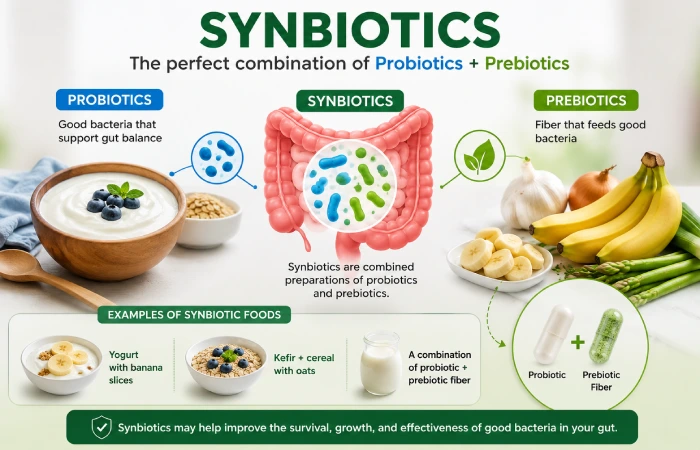
Synbiotics are combined preparations of probiotics and prebiotics.
The goal is simple:
- Introduce good bacteria.
- Feed them right now.
For example:
- Yogurt with banana slices
- Kefir + cereal with oats.
- A combination of a probiotic and a prebiotic fiber.
Numerous healthcare professionals advocate the use of synbiotics because the possibility remains that they can also enhance the growth and functioning of probiotic strains within the gut.
Should You Use Supplements?
Supplements may be useful if you:
- Has completed antibiotics earlier.
- Often suffer from digestive problems
- Struggle with eating fermented foods
- Confirmed by a healthcare professional
However, supplements can support rather than substitute a nutritious diet based on good fiber foods and fermented foods.
When shopping, look for:
- Selected well characterized bacterial strains
- Do not buy products with expiration date.
- Storage Tells you how to choose you should store the medicine.
- Third-party quality testing
In the case of a weakened immune system or a severe health condition, you should consult your doctor before taking probiotic supplement.
Tips for Supporting a Healthy Gut Naturally
Along with probiotics and prebiotics, these habits help maintain healthy digestive flora:
- Eat all the variety of color fruits and veggies.
- Add more fiber to your diet each day.
- Drink enough water.
- Get plenty of exercise.
- Keep highly refined foods and excess sweeteners to a minimum.
- Manage stress with relaxation techniques.
- Get enough sleep.
Small well maintained lifestyle changes will influence your gut microbiome in a positive way over time.
Answers for Frequently Asked Questions:
Q Can I take probiotics and prebiotics at same time?
Yes. In most of case,it is a good idea to take probiotics and prebiotics together, as the prebiotics will be food for the probiotic bacteria to live on.
Q Which one is best: probiotics or prebiotics?
No. Probiotics and prebiotics both work differently to benefit your gut.
Q When can I expect my first result?
Some may feel effects with some days as soon as couple of weeks, but your whole digestive profile will be change over couple months depending on lifestyle and health conditions.
Q Will I be able to get sufficient volume from food?
For most healthy people, a simple and balanced diet with plenty of fermentation products and fiber will provide enough probiotics and prebiotics. Supplements can sometimes be beneficial with the right approach.