
 Sameena Fatima
Health & Wellness Content Writer
in
Sameena Fatima writes reader-focused
health and wellness content for
HealthBloomWeb, covering fitness,
nutrition, healthy lifestyle and
everyday wellness topics.
Sameena Fatima
Health & Wellness Content Writer
in
Sameena Fatima writes reader-focused
health and wellness content for
HealthBloomWeb, covering fitness,
nutrition, healthy lifestyle and
everyday wellness topics.
 Mirza Ibrahim Ali Khan
Editorial & Content Reviewer
in
Mirza Ibrahim Ali Khan contributes to
HealthBloomWeb's editorial review process,
with a focus on content structure,
readability, search intent and overall
editorial quality.
Mirza Ibrahim Ali Khan
Editorial & Content Reviewer
in
Mirza Ibrahim Ali Khan contributes to
HealthBloomWeb's editorial review process,
with a focus on content structure,
readability, search intent and overall
editorial quality.
 Reyansh Sethi
Medical Reviewer
in
Reyansh Sethi contributes to the medical
review process at HealthBloomWeb, focusing
on clarity, responsible health context and
reader-friendly presentation of health
information.
Reyansh Sethi
Medical Reviewer
in
Reyansh Sethi contributes to the medical
review process at HealthBloomWeb, focusing
on clarity, responsible health context and
reader-friendly presentation of health
information.
Introduction
Meditation comes in so many different forms now that there’s a practice for every individual – regardless of your lifestyle, schedule, or goals. If you’re interested in alleviating stress, sleep better, increase your focus, manage your anxiety and even achieve weight loss and have better relationships, there’s a type of mediation for you. Meditation, once just an ancient form of spiritual healing, has become scientifically-proven, and thousands of people use their daily meditation practice to enhance overall physical and emotional wellness, decrease anxiety, and relieve stress and boost overall well-being and sleep.
And why is meditation all of the sudden taking the world by storm? There are many, many reasons for this, including that it’s an incredibly accessible activity. The type of meditation you choose depends greatly upon what it is you want.
This Article is the Part of Meditation
What Is Meditation?
The term for a mental technique that increases a person’s awareness and focus; promotes emotional calmness; and is used to relax. There are a variety of ancient practices for meditating from different spiritual origins, though there is modern meditation for both medical purposes and spiritual reasons (religion not required).
At its core, meditation involves directing attention toward a specific focus point. This focus could be:
- The breath
- A word or mantra
- Bodily sensations
- Visual imagery
- Sounds
- Thoughts and emotions
- Movement
Meditation at a Glance
| Aspect | Description |
| Purpose | Awareness, relaxation, mental clarity |
| Skill Level | Beginner to advanced |
| Daily Time Required | 5–30 minutes |
| Equipment Needed | None |
| Suitable For | Most healthy adults |
| Location | Home, office, outdoors, meditation centers |
How Meditation Works
Modern neuroscience suggests meditation may influence several areas of the brain involved in:
- Attention control
- Emotional processing
- Stress response
- Self-awareness
- Memory formation
Regular practice appears to support healthier responses to everyday stressors. Instead of reacting automatically to situations, meditators often develop greater emotional flexibility and resilience.
What Happens During Meditation?
When you meditate, several physiological changes may occur:
| Body System | Potential Response |
| Nervous System | Reduced stress response |
| Heart Rate | May decrease slightly |
| Breathing | Becomes slower and deeper |
| Muscles | Reduced tension |
| Mind | Improved focus and awareness |
These effects help explain why meditation is commonly recommended as part of a healthy lifestyle.
Meditation Is Perhaps Most Important Now Than Ever Before
Why It’s true for 2026 There’s never been so many things clamouring for our attention: mobile phones, social media, jobs and an overwhelming amount of data are the order of the day. You may have already discovered:
- Chronic stress
- Poor sleep quality
- Mental fatigue
- Reduced attention span
- Emotional burnout
Meditation offers a practical way to counterbalance these challenges.
Lifestyle Challenges vs Meditation Benefits
| Modern Challenge | Meditation Benefit |
| Constant notifications | Improved focus |
| Work stress | Better emotional regulation |
| Sleep disruption | Enhanced relaxation |
| Anxiety | Increased mindfulness |
| Mental overload | Greater clarity |
This is one reason meditation continues to grow in popularity across healthcare, workplace wellness programs, fitness communities, and mental health practices.
Benefits of Meditation
The advantages of meditation are far-reaching. With regular use, one can expect the negatives to be eliminated and the positives to be enhanced.
Mental Health Benefits
Less Stress
Less Stress This has been a reason as to why many continue to meditate throughout the ages and remains arguably the most common of all the reasons why people continue with this practice today. The various techniques involved in Mindfulness meditation allow one to begin to identify their own indicators of stress and respond to them in a much more useful and considered way.
Improved Emotional Balance
Meditation allows some space between yourself and an experience of yours. If you are meditating you are aware of these emotional reactions in your mind. This increased awareness will often help you respond more emotion
Better Anxiety Management
A common feature of many different meditation styles is to focus on the present (being mindful). This reduced recollection of past events and could potentially help relieve the negative effects of worrying in excess about future events.
Physical Health Benefits
Better Sleep Quality
Meditation can help to relax the mind prior to sleep and ease the thoughts that can cause interruptions to sleep.
Improved Relaxation Response
The relaxation response Meditation helps turn on the body’s relaxation response in a counter-action against the physical symptoms of long term stress.
Healthier Lifestyle Habits
It is also reported by many practitioners that they become more conscious of their eating habits, exercise, and other kinds of self-care.
Cognitive Benefits
Enhanced Focus
Targeted meditation exercises towards mindful awareness may have the long-term effect of enhancing attention.
Improved Mental Clarity
Enhanced Mental Focus Meditating will help to alleviate mental fog in your mind. Mediation practices in our daily routines help us focus better and make smarter decisions
Increased Productivity
Meditation will also help boost focus. Many high-ranking individuals meditated on a daily basis to grow their resilience, creativity, and endurance in their work field.
Research Snapshot
| Benefit Area | Evidence Strength |
| Stress Reduction | Strong |
| Anxiety Support | Strong |
| Focus & Attention | Strong |
| Sleep Improvement | Moderate to Strong |
| Emotional Regulation | Strong |
| Blood Pressure Support | Moderate |
Types of Meditation:
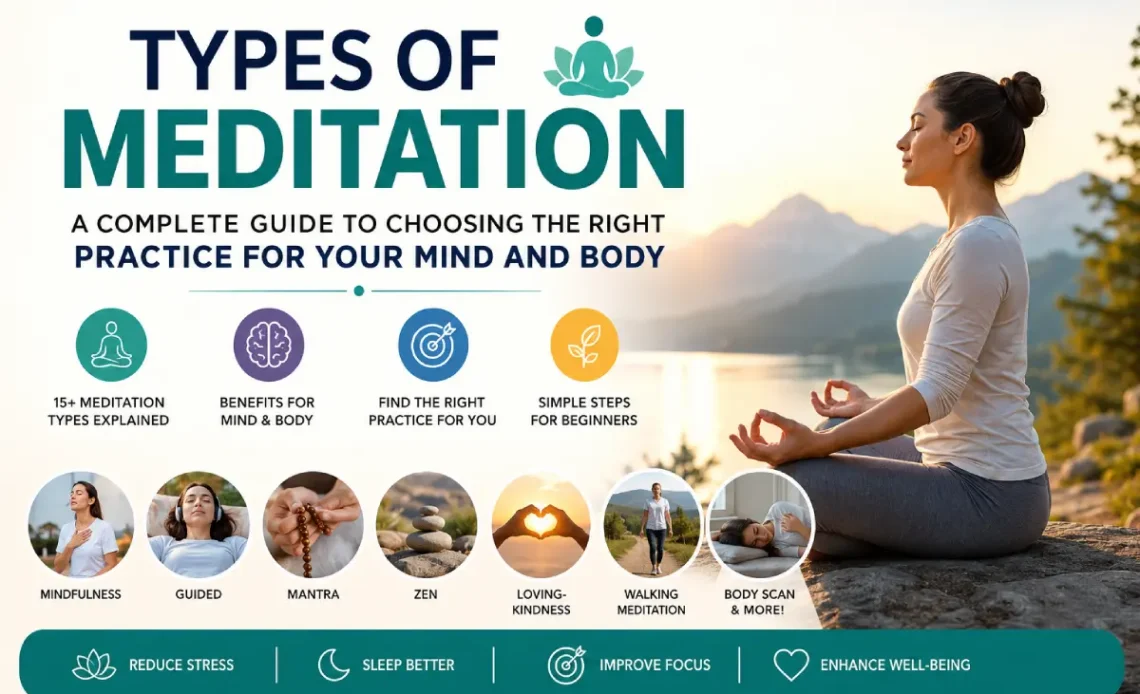
Introduction One of the biggest misconceptions about meditation is that it only refers to one practice. Of course, you already know that meditation comes in various types, with each emphasizing different concepts such as the act of paying attention, compassion, focus, movement, spirituality, and relaxation, etc.
Quick Overview of Popular Meditation Types
| Meditation Type | Best For |
| Mindfulness Meditation | Beginners |
| Guided Meditation | Stress Relief |
| Loving-Kindness Meditation | Emotional Health |
| Body Scan Meditation | Sleep |
| Breath Awareness Meditation | Anxiety |
| Mantra Meditation | Focus |
| Zen Meditation | Discipline |
| Vipassana Meditation | Self-Awareness |
| Transcendental Meditation | Deep Relaxation |
| Walking Meditation | Active Individuals |
| Visualization Meditation | Goal Achievement |
| Spiritual Meditation | Inner Connection |
| Chakra Meditation | Energy Practices |
| Movement Meditation | People Who Dislike Sitting Still |
| Yoga Meditation | Mind-Body Wellness |
Below, we will discuss each of these five different types of meditation individually. We will discus benefits, who these forms of meditation are most suitable for and tips for beginning your own practice.
15 Types of Meditation Explained
One of the biggest issues faced by meditators starting out is: which meditation technique should I take? It is actually contingent on what your goal is when practicing it. Certain meditations for instance aim towards achieving peace and quietude while some are aimed towards enhanced mental ability, mental state, and mental condition.
The great thing is that you truly cannot start any practice in the wrong way. Here’s a simple look at various methods of meditating:
1. Mindfulness Meditation
This one type of meditation practice currently among the most popular methods around called the Mindfulness Meditation method. Mindfulness Meditation basically asks the meditator to focus on being aware of each and every breath that is taken at each given moment. This is, to focus on whatever happens to pass by in our minds in our meditation session.
How It Works
During mindfulness meditation, you focus on:
- Your breathing
- Physical sensations
- Sounds around you
- Thoughts and emotions
Whenever your mind wanders, gently bring your attention back to the present moment.
Best For
- Beginners
- Stress management
- Anxiety reduction
- Everyday mindfulness
Benefits
- Improves emotional awareness
- Reduces stress
- Enhances focus
- Supports better decision-making
Pro Tip
5 mins a day, no days missed. 2 years later, don’t even question whether you ‘should’ practice.
2. Guided Meditation
Guided Meditation One of the easiest ways to start your own meditation practice is to use guided silent meditation. Instead of sitting in meditation on your own, you are being led by the instructions of an app, a video, a teacher, or an audio recording. It Works Like this
A guide leads you through:
- Breathing exercises
- Relaxation techniques
- Visualizations
- Mindfulness exercises
Best For
- First-time meditators
- Busy professionals
- Stress relief
- Sleep improvement
Benefits
- Easy to follow
- Reduces uncertainty
- Builds confidence
- Helps maintain consistency
Common Beginner Mistake
Many people constantly switch between meditation apps. Choose one program and follow it consistently for at least two weeks.
3. Loving-Kindness Meditation (Metta Meditation)
Loving-Kindness Meditation (Metta Meditation) A practice where you concentrate on feelings of kindness, compassion and unconditional love toward yourself and all other living beings. Loving-Kindness Meditation consists of silently reciting these or similar phrases:
- May I be happy.
- May I be healthy.
- May I be safe.
- May I live with ease.
Over time, these wishes are extended to loved ones, acquaintances, and even difficult people.
Best For
- Emotional healing
- Self-compassion
- Relationship improvement
Benefits
- Reduces anger
- Increases empathy
- Supports emotional resilience
- Improves social connection
Who Should Try It?
People who struggle with self-criticism often find this meditation particularly helpful.
4. Body Scan Meditation
A body scan meditation, a relaxation technique used to release tension, entails scanning over your body and focus on each individual area. During the practice, your awareness moves slowly over:
- Toes
- Feet
- Legs
- Hips
- Abdomen
- Chest
- Arms
- Neck
- Face
The goal is not to change sensations but simply notice them.
Best For
- Better sleep
- Stress reduction
- Physical relaxation
Benefits
- Improves body awareness
- Reduces muscle tension
- Supports recovery after work or exercise
Ideal Practice Time
Many people perform body scan meditation before bedtime.
5. Breath Awareness Meditation
Breath awareness meditation “Your breath is the subject, the anchor. It has everything it needs within itself,” says meditation expert Richard Miller, PhD, in his book. This meditation involves the simple, easy-to-remember task of observing the flow of your breath, and it only takes 10 minutes to practice: It’s one of the easiest meditations, since there are no complex poses, mantra repetition, or visualizations required.
The idea is that focusing on your breath helps you anchor your attention, preventing it from spiraling out of control and causing anxiety.
When your attention wanders, just gently bring it back to the breath without judgment. “In breath awareness, the Breath is the only subject you focus on; when the Breath departs, the breath always returns, so we bring our attention back to the Breath when we notice that we’ve lost the focus” Miller explains.
Focus on:
- The sensation of breathing in
- The sensation of breathing out
- The rise and fall of the chest
- Air moving through the nostrils
Whenever thoughts arise, return your focus to the breath.
Best For
- Anxiety
- Mental clarity
- Focus improvement
Benefits
- Can be practiced anywhere
- Requires no equipment
- Builds concentration
Quick Practice
Even one minute of conscious breathing can help interrupt stress patterns.
6. Mantra Meditation
Mantra Meditation: What’s In It For You?
Mantra Meditation utilizes the repetition of a word, phrase or sound to assist you in focusing and training the mind. It’s quite commonly used for the purpose of meditation.
Mantra examples used most often include: “om,” which is one of the oldest known chants, or other sacred sounds, such as the Tibetan mantras of compassion (like “om mani padme hum”), or ancient Sanskrit chanting such as a sacred “om.”
Repeating the Mantra Mantras can be repeated aloud, in a low whisper or can be silently recited within your mind. Mantras are ideally used as a method to achieve inner peace by quieting the internal chatter or to facilitate any desired state of being such as peace, bliss or stillness. You’re always using a word, phrase, mantra, prayer, breathing technique or some form of visualization to train and calm your mind.
7. Transcendental Meditation
Transcendental Meditation is a system of structured meditation presented by authorized TM teachers. Followers of the technique sit for around 20 minutes twice each day while silently and mentally reciting their own personal mantra.
Best For
- Deep relaxation
- Long-term stress management
Benefits
- Easy to practice
- Doesn’t require concentration
- Popular among professionals and executives
Considerations
Formal instruction is typically required.
8. Zen Meditation
Zen Meditation (Zazen) Developed from Buddhist practices, zen meditation focuses on posture, breathing, and awareness. People will sit with an erect posture and observe their thoughts without getting involved.
Best For
- Discipline
- Long-term mindfulness development
Benefits
- Deep self-awareness
- Improved concentration
- Mental resilience
Difficulty Level
Advanced
Many beginners prefer mindfulness meditation before progressing to Zen practices.
9. Vipassana Meditation
Vipassana meditation is defined as Vipassana is “to see things as they really are”. In this form of meditation, you focus on becoming totally aware of the body, mental formations and sensations within the mind and body, by noticing them as they come up without reacting to them.
Best For
- Self-discovery
- Personal growth
- Emotional awareness
Benefits
- Increased mindfulness
- Better emotional regulation
- Improved insight
Who Should Practice?
Individuals seeking deeper understanding of thoughts and behaviors.
10. Spiritual Meditation
Spiritual Meditation works with spiritual Meditation and Connecting with our sense of divine presence, or finding a sense of the deeper purpose or meaning of the cosmos. Every Spiritual Meditation approach may be unique.
Common Practices
- Prayer
- Reflection
- Silent contemplation
- Sacred texts
Best For
- Spiritual growth
- Faith-based wellness
Benefits
- Increased inner peace
- Sense of connection
- Personal fulfillment
11. Visualization Meditation
Visualization meditation uses mental imagery to promote relaxation, confidence, and goal achievement.
Examples
Visualizing:
- A peaceful beach
- A forest path
- Future success
- Healing and recovery
Best For
- Positive mindset
- Stress reduction
- Performance enhancement
Benefits
- Encourages optimism
- Supports motivation
- Enhances relaxation
12. Walking Meditation
Meditation doesn’t always require sitting still.
Walking meditation combines movement with mindful awareness.
How It Works
Focus on:
- Each step
- Body movement
- Breathing
- Surroundings
Best For
- Active personalities
- Beginners who dislike sitting
Benefits
- Improves mindfulness
- Encourages movement
- Easy to practice outdoors
13. Movement Meditation
Movement meditation includes mindful physical activities such as:
- Stretching
- Tai Chi
- Qigong
- Slow movement exercises
Best For
- Restless minds
- Active individuals
Benefits
- Enhances body awareness
- Improves flexibility
- Combines movement and mindfulness
14. Chakra Meditation
Chakra meditation originates from Eastern traditions and focuses on energy centers throughout the body.
Practitioners often use:
- Visualization
- Breathing exercises
- Mantras
Best For
- Spiritual exploration
- Energy-focused practices
Benefits
- Encourages self-reflection
- Supports mindfulness
Important Note
Scientific evidence for chakra systems remains limited compared to mindfulness-based approaches.
15. Yoga Meditation
Yoga meditation combines physical postures, breathing techniques, and mindful awareness.
Best For
- Mind-body wellness
- Stress management
- Flexibility improvement
Benefits
- Strengthens body awareness
- Supports relaxation
- Improves mobility
Why It Works
Yoga integrates movement and mindfulness, making meditation more accessible for many beginners.
Meditation Types Comparison Table
| Meditation Type | Difficulty | Best For | Daily Time |
| Mindfulness | Easy | Beginners | 5-15 min |
| Guided | Very Easy | Stress Relief | 10-20 min |
| Breath Awareness | Easy | Anxiety | 5-10 min |
| Body Scan | Easy | Sleep | 10-20 min |
| Loving-Kindness | Moderate | Emotional Health | 10-15 min |
| Mantra | Moderate | Focus | 15-20 min |
| Walking | Easy | Active People | 10-30 min |
| Visualization | Easy | Motivation | 10-15 min |
| Yoga Meditation | Moderate | Wellness | 20-30 min |
| Vipassana | Advanced | Self-Awareness | 20-45 min |
| Zen | Advanced | Discipline | 20-40 min |
| Transcendental | Moderate | Deep Relaxation | 20 min |
Which Style of Meditation is the Right Meditation for You?
There’s no one size fits all champion. The most effective type of meditation is simply the one that you’re going to do. Beginners will usually find one of the following three forms of meditation easiest to start with: Guided meditation Breath awareness meditation Mindfulness meditation These may feel easy enough, and from then on, you could move onto more advanced styles of meditation such as Vipassana, Zen, or Transcendental meditation.
Best Meditation for Stress, Sleep, Weight Loss, Focus, and Anxiety
Perhaps the most important benefit of meditation is that for specific issues, different techniques work better. All different modes of meditation have some common benefits, but there are ways in which one style of meditation works better than the others:
If you are confused on where to start then start by what your main goal is.
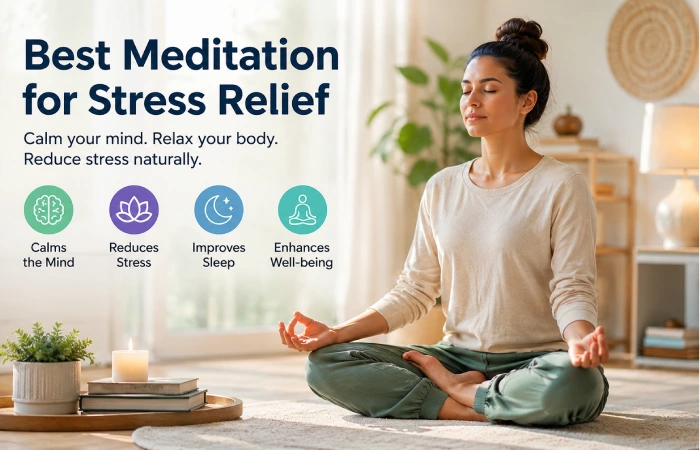
Best Meditation for Stress Relief
Meditation for Stress Reduction One major impact of chronic stress on a person is on mental well-being. Along with effects on mind, it affects the body adversely. Chronic stress leads to the low level of concentration, tiredness, sleep disorder, and depletion of energy.
Top Meditation Styles for Stress
| Meditation Type | Why It Works |
| Mindfulness Meditation | Improves present moment focus and reduces mind chatter |
| Guided Meditation | offers relaxed structure |
| Body Scan Meditation | A method of body awareness that releases the physical tension that is stored within the body. |
| Transcendental Meditation | Encourages deep relaxation |
| Calms the nervous system by | Breath Awareness Meditation |
Recommended Routine
- Morning: 5–10 mins mindfulness meditation
- Afternoon: 2 minutes of mindfulness breathing
- Meditation premorning: body scan
Best Meditation for Better Sleep
A common problem which prevents many people from sleeping is that their mind remains active for a long time after they get into bed.
Gradually, meditation has constructed a break between mind work and relaxation.
Best Sleep Meditation Techniques
| Meditation Style | Sleep Benefits |
| Body Scan Meditation | Muscle relaxation and tension reduction |
| Mind Mantras Guided Sleep Meditation | To Quiet the Mind and Lets the Body Rest |
| Breath Awareness Meditation | Slows breathing and relax the mind |
| Visualization Meditation | Facilitates relaxation through pictures |
Evening Sleep Routine
- Turn off screens 30 minutes prior to sleeping.
- Breathe deeply, maintain for 2 minutes.
- Have a 10-minute body scan meditation.
- Utilize a Guided sleep meditation if necessary.
Common Sleep Mistake
Most beginners think that meditation should in the moment of practice itself put them to sleep. The aim is to relax. Sleep generally will come with time as you are practicing consistently.
Best Meditation for Weight Loss
Meditation for weight loss isn‘t a weight-loss program, but we think it could encourage eating behaviors that lead to a healthier lifestyle and could enable people to be more conscious of their selves.
Studies show that practitioners of mindful eating are better at mindful eating.
Best Meditation Styles for Weight Management
| Meditation Type | Potential Benefit |
| Mindfulness Meditation | Reduces emotional eating |
| Mindful Eating Meditation | Improves food awareness |
| Breath Awareness Meditation | Helps manage cravings |
| Loving-Kindness Meditation | Reduces self-criticism |
How Meditation Supports Weight Goals
Meditation may help:
- Reduce stress-related eating
- Improve awareness of food choices
- Strengthen self-control
- Encourage healthier habits
Best Meditation for Focus and Productivity
Attention is one of the most important resources in today‘s busy world. Constant pings and buzzes make it very hard to maintain focus.
Meditation is an exercise which trains the mind to recollect at a certain ‘single-pointed’ focus.
Best Meditation Techniques for Concentration
| Meditation Type | Focus Benefits |
| Mantra Meditation | Strengthens attention |
| Breath Awareness Meditation | Improves concentration |
| Mindfulness Meditation | Reduces distractions |
| Zen Meditation | Builds mental discipline |
Productivity Meditation Routine
Before starting work:
- Sit comfortably
- Focus on breathing
- Practice for 5–10 minutes
- Begin work immediately afterward
Many people notice improved focus within a few weeks of consistent practice.
Best Meditation for Anxiety
Meditation for anxiety worrying about the future is usually a component of anxiety. Meditating on the present time helps for that.
Top Choices for Anxiety Relief
Meditation Style Anxiety Support
Mindfulness Meditation Reduces rumination
Loving-Kindness Meditation Promotes emotional well-being
Guided Meditation Gives reassurance and containment
Breath Awareness Meditation Helps with stress regulation
How to Choose the Right Meditation Style
I know there are so many available how do you know which one to choose?
The simplest way would be to align the style of meditation with your goal:
Step 1: Define Your Primary Goal
Ask yourself:
Would I like to decrease the amount of stress I experienceng?
- Sleep enhancement?
- Intensify concentration?
- Aids to build mindfulness?
- Create a spiritual practice?
Your answer will identify which options you should make stronger and those you need to strengthen.
Step 2: Consider Your Personality
Behavioral characteristics have been shown to influence the meditation style used.
Personality Type Recommended Meditation
Analytical Mindfulness, Vipassana
Creative Visualization
Spiritual Spiritual Meditation
Active Walking Meditation
Busy Professional Guided Meditation
Beginner Mindfulness, Breath Awareness
Step 3: Start Small
An important reason that many people sometimes choose to stop practicing meditation is because they have unreasonable expectations from meditation.
Start with:
5 min a day
Regular timetable
Comfortable environment
Hourly personal training sessions, on a daily basis are more effective than the weekly long gruelling sessions.
4. Trial for 2–4 weeks.
Try each meditation style for a sufficient period; don‘t give up too quickly.
There are many advantages that one would find only after a number of weeks of regular exercise.
Meditation for Beginners: A Simple 30-Day Roadmap
The goal isn’t perfection.
The goal is building a sustainable habit.
Week 1: Build Awareness
Daily Practice: 5 Minutes
Focus on:
- Breathing
- Sitting comfortably
- Returning attention when distracted
Week 2: Increase Consistency
Daily Practice: 7–10 Minutes
Add:
- Guided meditation
- Body awareness exercises
Week 3: Explore Different Styles
Try:
- Mindfulness
- Body Scan
- Loving-Kindness
- Walking Meditation
Notice which style feels most natural.
Week 4: Create a Long-Term Routine
Select:
- One primary meditation style
- One backup meditation style
Establish a realistic daily schedule.
Example Routine
| Time | Activity |
| Morning | 10-Minute Mindfulness Meditation |
| Afternoon | 2-Minute Breathing Break |
| Evening | Body Scan Meditation |
Meditation Apps and Tools Comparison
While meditation requires no equipment, some people find apps helpful.
| Feature | Guided Apps | Self-Guided Practice |
| Beginner Friendly | Excellent | Moderate |
| Cost | Free–Premium | Free |
| Flexibility | High | High |
| Structure | Excellent | Depends on Experience |
| Long-Term Independence | Moderate | Excellent |
Recommended Features
Look for:
- Beginner courses
- Sleep meditations
- Progress tracking
- Offline access
- Short daily sessions
What Happens When You Practice Consistently?
Meditation: the Extended Benefits for the Committed! Many folks choose meditation in hopes of relieving anxiety or to improve sleep patterns. Those are fantastic motivations for taking it up, yet the more seasoned meditators will often testify to experiences well beyond sheer tranquility.
The factor is this: constancy.
While one meditation session can leave you feeling a little more calm, if you make it a practice over time it has the power to change how you think, how you respond, where your attention flows, and how you handle the realities of daily life.
Improved Emotional Resilience
Enhanced Emotional Resilience It’s simply the fact that we all face unexpected obstacles, uncertainty, and moments that make our stress levels spike. But with meditation, those circumstances might not change – how we react to them can. Regular meditators are more likely to experience: An increase in emotional awareness Skills to more efficiently handle stress A decrease in the impulse to react impulsively More patience When faced with a trigger, meditation empowers us to take a step back and respond, instead of reacting blindly.
Enhanced Self-Awareness
One of the most powerful aspects of meditation is learning to observe your thoughts rather than becoming controlled by them.
This increased awareness may help you:
- Identify negative thinking patterns
- Recognize emotional triggers
- Improve decision-making
- Build healthier habits
Over time, many practitioners report feeling more intentional in daily life.
Better Relationships
Improved Relationships Some of the potential impacts on social relationships can include: Better listening abilities Increased empathy Less impulsivity when emotional Increased ability to feel kindness. The loving kindness, or “metta”, style of meditation is one option you might use for a variety of reasons.
Increased Productivity and Creativity
Modern work environments often reward constant activity, but creativity and productivity typically require focused attention.
Meditation can support:
- Deep work
- Mental clarity
- Problem-solving
- Innovative thinking
Many successful entrepreneurs, athletes, executives, and performers incorporate meditation into their daily routines.
Long-Term Support
Long-Term Support for Your Health Mindfulness shouldn’t be used as a medical treatment, but it may enhance a healthy lifestyle that incorporates:
- Exercise
- Nutritious eating
- Quality sleep
- Stress management
- Social connection
Together, these habits contribute to overall well-being.
Frequently Asked Questions About Meditation
What are the main types of meditation?
The most popular meditation styles include mindfulness meditation, guided meditation, body scan meditation, breath awareness meditation, loving-kindness meditation, mantra meditation, Zen meditation, Vipassana meditation, and Transcendental Meditation.
Which meditation is best for beginners?
Guided meditation and mindfulness meditation are typically the easiest starting points because they require minimal experience.
How long should beginners meditate?
Most beginners can start with 5–10 minutes per day and gradually increase their practice as they become more comfortable.
Can meditation reduce stress?
Meditation is widely used as a stress-management tool and may help improve emotional regulation and resilience.
Which meditation is best for anxiety?
Mindfulness meditation, guided meditation, loving-kindness meditation, and breath awareness meditation are commonly used for anxiety management.
Conclusion
The many types of meditation available today mean there is no single “best” method for everyone. Some people benefit most from mindfulness meditation, while others prefer guided sessions, body scan techniques, walking meditation, or more advanced practices such as Zen or Vipassana.
The most effective meditation style is the one that aligns with your goals and fits naturally into your daily routine.
If you’re new to meditation, begin with a simple practice such as mindfulness meditation or guided meditation. Focus on consistency rather than perfection. Even a few minutes of daily practice can help build awareness, improve focus, support emotional well-being, and create a healthier relationship with stress.
Over time, meditation can become more than a wellness habit—it can become a valuable skill for navigating everyday life with greater clarity, balance, and resilience.
Start small, stay patient, and allow your practice to evolve naturally.