
 Sameena Fatima
Health & Wellness Content Writer
in
Sameena Fatima writes reader-focused
health and wellness content for
HealthBloomWeb, covering fitness,
nutrition, healthy lifestyle and
everyday wellness topics.
Sameena Fatima
Health & Wellness Content Writer
in
Sameena Fatima writes reader-focused
health and wellness content for
HealthBloomWeb, covering fitness,
nutrition, healthy lifestyle and
everyday wellness topics.
 Mirza Ibrahim Ali Khan
Editorial & Content Reviewer
in
Mirza Ibrahim Ali Khan contributes to
HealthBloomWeb's editorial review process,
with a focus on content structure,
readability, search intent and overall
editorial quality.
Mirza Ibrahim Ali Khan
Editorial & Content Reviewer
in
Mirza Ibrahim Ali Khan contributes to
HealthBloomWeb's editorial review process,
with a focus on content structure,
readability, search intent and overall
editorial quality.
 Reyansh Sethi
Medical Reviewer
in
Reyansh Sethi contributes to the medical
review process at HealthBloomWeb, focusing
on clarity, responsible health context and
reader-friendly presentation of health
information.
Reyansh Sethi
Medical Reviewer
in
Reyansh Sethi contributes to the medical
review process at HealthBloomWeb, focusing
on clarity, responsible health context and
reader-friendly presentation of health
information.
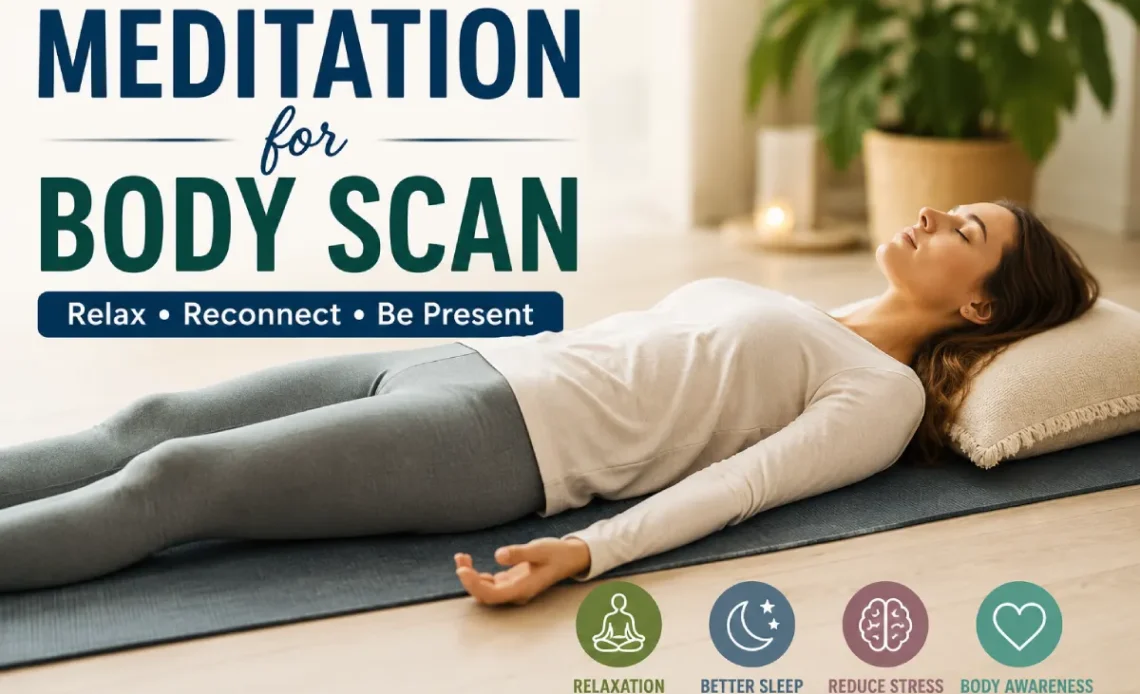
Beginners often find the meditation for body scan to be one of the easiest mindfulness practices to master. With this meditation method, rather than battling your own thoughts you simply note the physical sensations inside your body. As a result, practicing this meditation relaxes an active mind, alleviates stress, and improves the quality of sleep apnea surgery.
This Article is the Part of Mindfulness
If you suffer from everyday stress, trouble sleeping, muscle tension, or just want to develop a better mindfulness routine the body scan meditation is a good place to begin. Current research from recent mindfulness publications still suggests that mindfulness meditation is correlated with lower perceived stress reduction, greater emotional regulation and increased general well-being when practiced regularly.
In this guide, you will learn all about how the mindfulness body scan meditation works, the scientific benefits, a simple step-by-step routine you can do anywhere, and some practical tips to help incorporate it into everyday life.
For What Is Meditation for the Body Scan?
Body scan meditation. A practice of mindfulness in which you direct your attention slowly to various parts of your body, observing each sensation such as warmth, tension, tingling, heaviness, or relaxation in turn, without trying to change them.
In contrast to other meditation types that involve solely breathing or reciting a mantra, body scan meditation involves a growing awareness of one‘s physical and emotional states. It isn‘t about getting rid of any sensation but approaching it with intrigue and acceptance.
Such practices are common in MBSR programs developed for people to deal with stress, anxiety, chronic pain and low-grade stress.
During a Body Scan Meditation, You May Notice:
- Tightening of the muscles
- Areas of relaxion
- Temperature variation
- Numbness
- The way you are breathing:
- Emotional response at associated with physical sensation
How Can Mindfulness Body Scan Meditation Help?
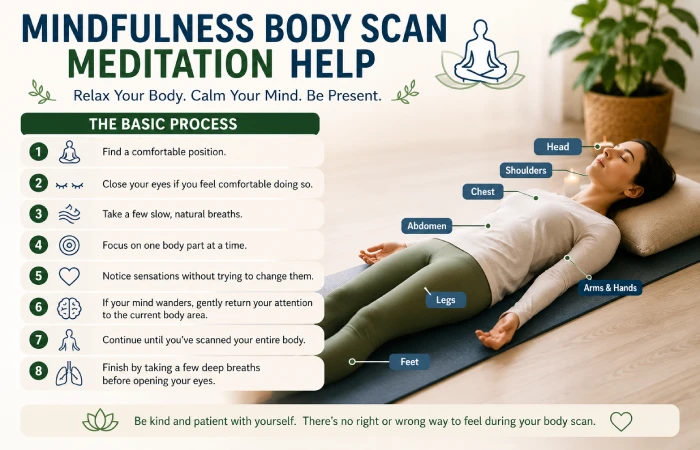
All of us slip from experience of our day-to-day lives to thoughts of the past or the future. Mindfulness body scan brings your focus back to the present by feeling into your body.
As you gradually sweep up from your head to your toes or down from your toes to your head you just notice what you notice, without making any judgment “Oh, that‘s good,” or “oh, that‘s bad.”
This awareness triggers the relax response in the body, which releases mental fatigue and physical tension.
The Basic Process
- Find a comfortable position.
- Close your eyes if you feel comfortable doing so.
- Take a few slow, natural breaths.
- Focus on one body part at a time.
- Notice sensations without trying to change them.
- If your mind wanders, gently return your attention to the current body area.
- Continue until you‘ve scanned your entire body.
- Finish by taking a few deep breaths before opening your eyes.
Practised regularly, this simple process becomes more natural.
Benefits of Meditation for Body Scan
An occasional relaxation meditation can have many mental and physical benefits. Every individual is different but if done regularly it can help to support you.
| Benefit | How It Helps |
| Reduces Stress | Allows the body‘s relaxation response to be activated and aids in reducing a sensation of overload. |
| Improves Sleep | Quiet‘s busy mind at night, helping you drift off to sleep more easily. |
| Builds Mindfulness | Heightens awareness of the present moment. |
| Enhances Emotional Balance | Assists you in becoming aware of feelings without acting out. |
| Increases Body Awareness | Aids in better identification of tension, posture, pain. |
| Supports Focus | Promotes sustained focus, softly redirecting the attention when the mind begins to drift. |
Step-by-Step Guide to Practice Meditation for Body Scan
You don‘t need the latest equipment or a designated meditation room. Simply choose a tranquil environment, and set aside a few minutes free from distraction.
Step 1: Choose a Comfortable Position
Lying down on your back, sit on an armchair or on a yoga mat. Keep your body relaxed by keeping your hands still.
Beginner tip – if you get sleepy when lying down and want to do more, try sitting.
Step 2: Focus on Your Breathing
Breathe in three to five time very slowly, naturally.
You don‘t have to go deep into your breathing. Just be aware of your chest and abdominal movements.
Slow your breathing until it has reached a natural, comfortable rate.
Step 3: Begin Scanning Your Body
Focus now on the top of your head.
Spend 15–30 seconds noticing any sensations before gradually moving your attention through:
- Forehead
- Eyes
- Jaws
- Neck
I will discuss the following items under the heading of ‘Neck’.
Complex Parietal and abdominalreactionsLianowski, et al., [18]foundtwitching of the head, neck and shoulders in all supraspinatus CL who did not exhibit any reflexes andthe head and shoulders in two of three Bellows points.
• Arms.
• Hands.
• Chest.
• Abdomen.
• Back
• Hips
• Legs
• Knees
• Calves
• Ankles
• Feet
• Toes
Don‘t worry if you don‘t get much at the beginning that‘s what the practice is about: noticing.
Step 4: Observe Without Judgment
As you observe sensations, do not make any effort to fix or change.
Instead of thinking:
Shoulders shouldn‘t be tight,”
try:
I‘m having tight shoulders today.
This non-judgemental awareness is one of the cornerstones of mindfulness meditation.
Step 5: Return Your Attention When Your Mind Wanders
Having your mind wandering is absolutely fine.
When this occurs, kindly redirect your attention back to the area you are working with and do so as not to judge yourself.
Anyway, every time you take back your mindfulness practice.
Step 6: End with Gratitude
Once you have completed scanning your whole body, breathe slowly a few times and become aware of how your body feels now, as compared to how it felt when you began.
Ease open your eyes and pause for a moment before facing the day again.
Tips for Beginners
The good news is that beginning new mindfulness practices doesn‘t have to be complicated. The purpose isn‘t for you to clear your mind of everything, but for you to be more aware of the, you.
Follow these simple tips to build a sustainable habit:
- Begin with 5 to 10-minutes rather than long sessions.
- Practice at the same time every day to develop a routine.
- Wear a comfortable, free flowing, loose-fitting clothing.
- In a quiet setting and free from distractions.
- Don‘t be afraid to make mistakes; focus on curiosity rather than perfection.
- If your mind wonders too much, go for a guided session.
Keep in mind that every meditation session will be different. There will be times when you feel very relaxed, and times when it‘s difficult to quiet your mind for long periods. Either way is OK.
Meditation for Body Scan Before Sleep
When racing thoughts are an obstacle to falling asleep, sleep meditation, such as a body scan, can help to relax mind and body ready for sleep.
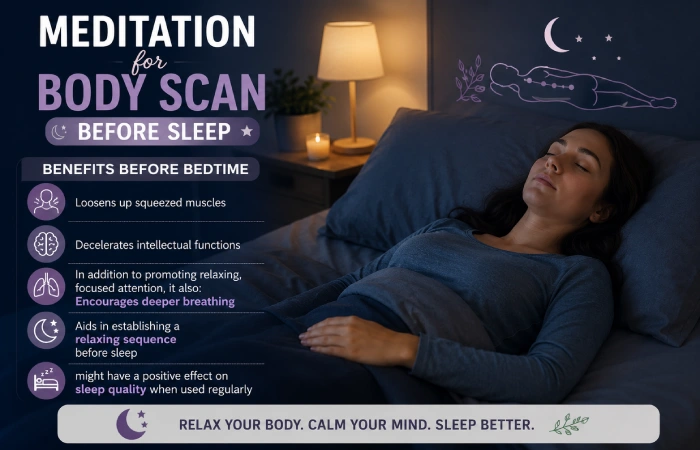
You focus away from how you will manage for tomorrow‘s commitments to a feeling in the present. It often quiets the mind and helps the nervous system relax.
Benefits Before Bedtime
- Loosens up squeezed muscles
- Decelerates intellectual functions
- In addition to promoting relaxing, focused attention, it also: Encourages deeper breathing
- Aids in establishing a relaxing sequence before sleep
- might have a positive effect on sleep quality when used regularly
Perform your body scan meditation 15–20 minutes before going to sleep, lying flat on your bed for the most benefits.
Conclusion
The Body Scan is a very simple meditation that is easy to do and has many benefits. This type of mindfulness meditation session allows you to check-in with your body, eliminate stress and bring your mind to a quiet place. When you do this on a regular basis your end up being more relaxed and self-aware as well as emotionally calm.
The key here is consistency, not the amount of time. Despite the short duration, five to ten minutes a day can contribute to a more effective and sustainable mindfulness practice. No matter if you are interested in enhancing sleep, handling stress of life, or trying out new forms of meditation, the body scan is an easy and practical method to aim toward a healthier life that lasts.