
Written By:Sameena Fatima
Reviewed By:Mirza Ibrahim Ali Khan
Medical Reviewed By:Reyansh Sethi
Published on:Aug 5, 2026
Last Updated on:Aug 24, 2026
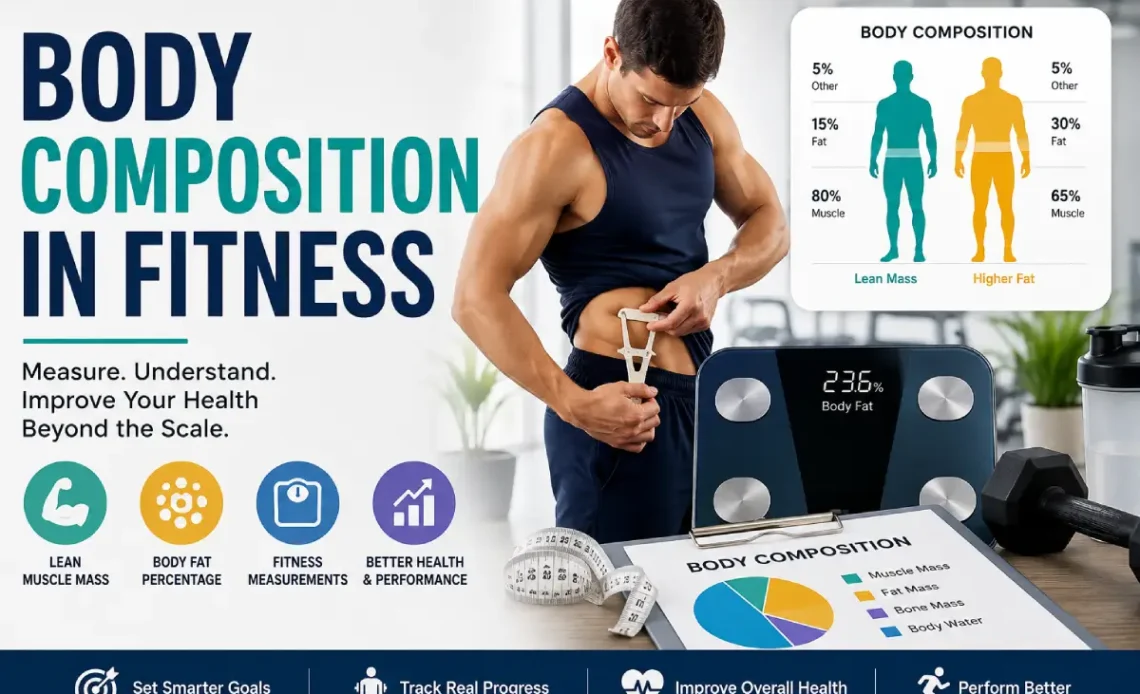
Body composition for fitness is an essential part of the five components of health-related fitness and gives you a much better insight into your current health status then just body weight. The percentage of body fat mass, lean body mass, fat-free mass and the other constituents making up your physique will be what you focus on as opposed to the number that the scales give out. Whether your objective is weight loss, fat loss or athletic enhancement understanding your body composition will enable you to make fitter informed choices.
This information guide has been created for you to get an understanding about your body composition and the difference it plays compared to BMI, to assess your own body composition correctly, and implement effective nutrition and exercise principles for body composition improvement.
This Article is the Part of Cardio Fitness
Body Composition in Fitness What is Body Composition?
Body composition breaks up your body into two categories, a “ fat mass” and a “fat free mass”. A person can weigh exactly the same as the person next to them and be extremely more or less healthy with the help of body composition.
Body composition essentially tells your how much of your body is fat (essential and stored body fat), and how much is lean body mass (including muscle, bone, organs, connective tissues, and body water).
Body Weight: How heavy you are – is just a number. Body Composition: The makeup of your weight. Body Fat 101 Body Fat consists of two components: Body fat: this is necessary and stored body fat (also called adipose tissue) fat Free mass (also called Lean mass): includes everything in your body except fat. These include: muscles, bone, organs, blood vessels, connective tissue, and fluids Body Comp Vs.
Body weight For instance, a person weighing 75kg can be very healthier compared to someone else of equal weight if they have less body fat and morelean mass.
Why Body Composition Matters
Body composition helps assess:
- Overall fitness level
- Metabolic health
- Muscle development
- Risk of obesity-related diseases
- Athletic performance
- Progress during weight-loss or muscle-building programs
Rather than chasing a lower number on the scale, many fitness professionals recommend improving body composition by reducing excess body fat while preserving or increasing lean muscle mass.
Components of Body Composition
Understanding the different parts of body composition makes it easier to set realistic health and fitness goals.
| Component | Description | Why It Matters |
| Fat Mass | Essential and stored body fat | Energy storage, hormone production, organ protection |
| Lean Muscle Mass | Skeletal muscles | Strength, metabolism, mobility |
| Fat-Free Mass | Muscles, bones, organs, and water | Indicates overall healthy tissue |
| Bone Mass | Mineral content in bones | Supports movement and reduces fracture risk |
| Body Water | Intracellular and extracellular fluids | Hydration and normal body functions |
Body Composition vs BMI
Many people confuse body composition with Body Mass Index (BMI), but they measure different aspects of health.
| Feature | Body Composition | BMI |
| Measures | Fat, muscle, bone, and water | Height and weight only |
| Accuracy | Higher | Lower |
| Considers Muscle Mass | Yes | No |
| Useful for Athletes | Yes | Often misleading |
| Health Assessment | Comprehensive | General screening |
Example
Imagine two individuals:
| Person | Weight | BMI | Body Fat Percentage |
| Athlete | 80 kg | 27 | 12% |
| Sedentary Adult | 80 kg | 27 | 31% |
These two individuals have the same BMI and fitness level, but their compositions are far different. The athlete’s higher lean muscle percentage, in comparison to the sedentary individuals high percentage of body fat, makes him health. In summary – BMI can only get us this far; body composition will go a long way in determining your current health level.
Healthy Body Fat Percentage
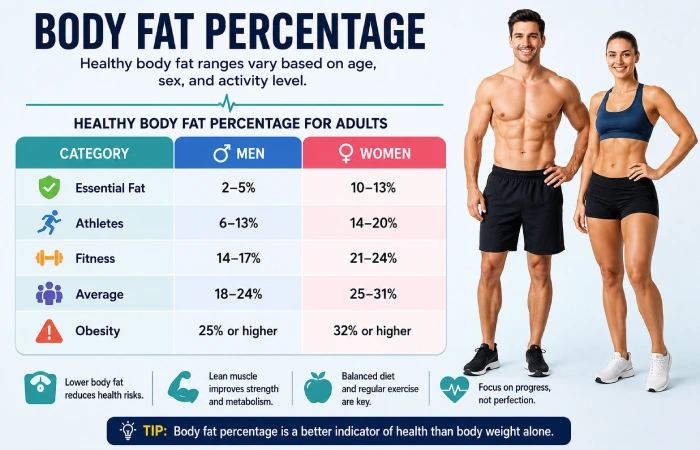
Healthy body fat ranges vary based on age, sex, and activity level.
Healthy Body Fat Percentage for Adults
| Category | Men | Women |
| Essential Fat | 2–5% | 10–13% |
| Athletes | 6–13% | 14–20% |
| Fitness | 14–17% | 21–24% |
| Average | 18–24% | 25–31% |
| Obesity | 25% or higher | 32% or higher |
These ranges are general guidelines. Individual goals should be based on overall health, medical history, and fitness objectives rather than achieving the lowest possible body fat percentage.
Why Healthy Body Composition Is Better Than Weight Loss Alone
Many people focus only on losing weight, but improving body composition offers greater long-term health benefits.
Benefits include:
- Improved metabolic rate
- Better insulin sensitivity
- Increased strength and endurance
- Reduced risk of cardiovascular disease
- Enhanced athletic performance
- Better posture and balance
- Improved confidence and physical appearance
For example, someone who gains 3 kg of muscle while losing 3 kg of fat may see little change on the scale but experience significant improvements in strength, energy, and overall health.
How Is Body Composition Measured?
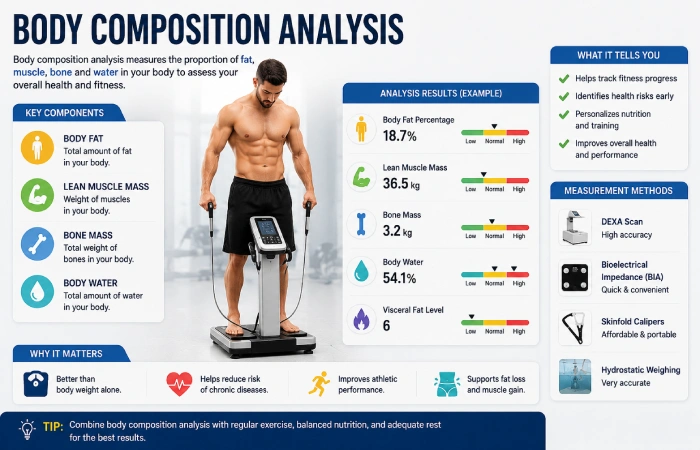
Several methods are available to assess body composition. Each differs in cost, convenience, and accuracy.
| Method | Accuracy | Cost | Best For |
| Bioelectrical Impedance Analysis (BIA) | Moderate | Low | Home monitoring |
| Skinfold Calipers | Moderate | Low | Fitness assessments |
| DEXA Scan | Very High | High | Clinical evaluation |
| Hydrostatic Weighing | High | High | Sports science |
| Air Displacement (Bod Pod) | High | High | Research and athletes |
- Bioelectrical Impedance Analysis (BIA)
BIA devices, commonly found in smart scales, send a safe electrical signal through the body to estimate fat, muscle, and water percentages.
Pros
- Quick
- Affordable
- Easy to use at home
Limitations
- Hydration levels can influence results.
- Measurements are less precise than DEXA scans.
- DEXA Scan
Dual-Energy X-ray Absorptiometry (DEXA) is considered one of the most accurate methods for measuring body composition.
It provides detailed information on:
- Body fat percentage
- Lean muscle mass
- Bone mineral density
- Fat distribution
DEXA scans are commonly used in sports medicine and clinical settings for comprehensive body composition analysis.
Best Exercises to Improve Body Composition
Improving body composition requires a combination of resistance training, cardiovascular exercise, and consistent physical activity.
Strength Training
Resistance exercises stimulate muscle growth while helping preserve lean muscle during fat loss.
Examples include:
- Squats
- Deadlifts
- Push-ups
- Bench presses
- Rows
- Lunges
Aim for 2–4 strength-training sessions per week, progressively increasing resistance as your fitness improves.
Cardiovascular Exercise
Cardio supports calorie expenditure and cardiovascular health.
Popular options include:
- Brisk walking
- Running
- Cycling
- Swimming
- Rowing
- High-Intensity Interval Training (HIIT)
Most adults benefit from 150–300 minutes of moderate-intensity aerobic activity each week, combined with regular strength training for the best improvements in body composition.
To Sum It All Up
Body composition is one of the best measurements you can take throughout your fitness journeys to understand how well you’re performing and progressing. Body composition looks beyond your BMI or the number on the scale, examining exactly how much of you are fat mass percentage, lean body mass, and fat free mass. It’s not necessarily to get to a specific number of body fat mass percentage or lean muscle mass.
The best way to progress with body composition is to establish sustainable lifestyle behaviors.
This includes engaging in consistent respiration exercise on a regular basis, participating in regular physical exercise and exercise, and consuming a consistent balanced diet and to make use of water to supply sufficient hydration and an appropriate and sufficient sleep regimen. With consistent progress in using accurate fitness measurements and measuring outcomes over time and by targeting your
overall well being; you can lower body fat, retain your muscle mass, and also boost strength and vitality.
Please understand that the views and opinions expressed in this article is not a substitute for personalized recommendation from and qualified medical or dietician professional. Consult your licensed health professional for any physical challenges or fitness goals you wish to tackle with.