
Written By:Sameena Fatima
Reviewed By:Mirza Ibrahim Ali Khan
Medical Reviewed By:Reyansh Sethi
Published on:Aug 5, 2026
Last Updated on:Aug 24, 2026
Introduction
If you want to attain and build a more healthy body-better cardiorespiratory endurance, greater strength, improved flexibility, and desirable body composition-then incorporating physical activity that enhances components of health-related fitness should be your priority. Whether you’re a fitness novice or re-introducing physical activity to your life, a well-conceived exercise training program would benefit and boost both your physical performance and health.
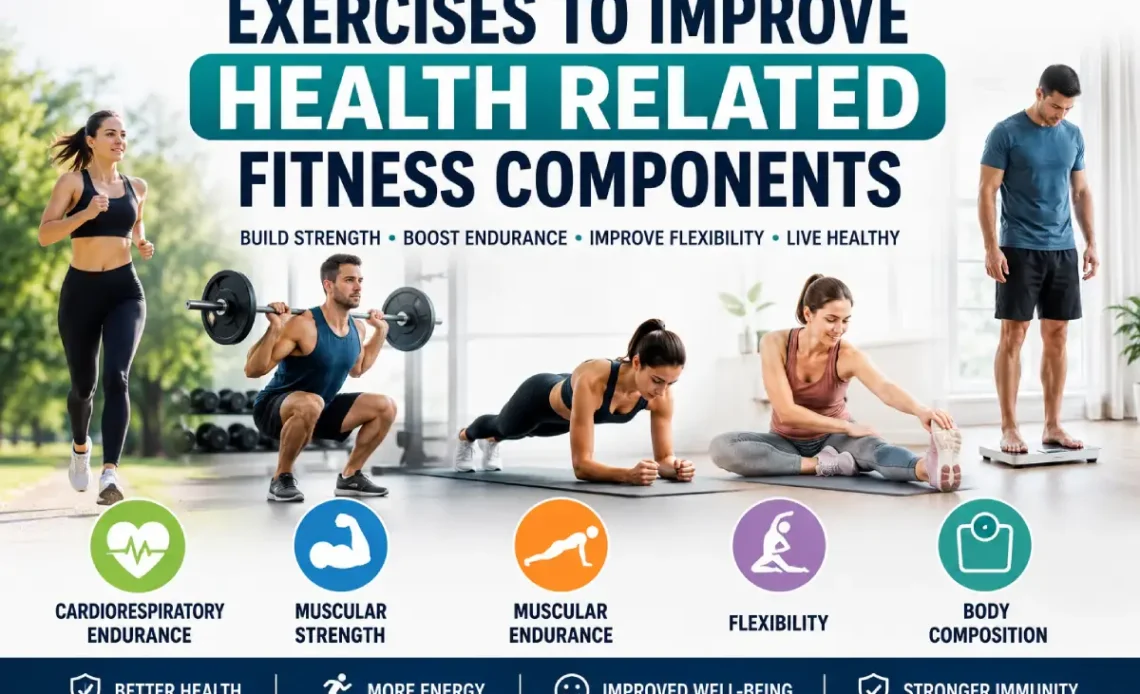
To be healthy, physical activity to enhance all five components of health-related fitness is necessary-cardiorespiratory endurance, muscular strength, muscular endurance, flexibility, and body composition. Unlike focusing on and targeting one single fitness component, a routine for improving overall fitness should include components for cardiorespiratory performance and muscular fitness, as well as routine flexibility.
Here guide will give you the optimal exercises for each component as well as a basic, all-in-one workout you can do at home, or at the gym.
This Article is the Part of Cardio Fitness
Health Related Fitness Components Explained
Health-related fitness is comprised of five interrelated components that collectively promote healthy living. Fitness Component Benefit
- Cardiorespiratory Endurance Strong heart and lungs
- Muscular Strength Better muscles, better bones
- Muscular Endurance Strong muscles that don’t quit
- Flexibility Increase joint range and reduce injury
- Body Composition Balance the muscle to fat ratio
Working out all five health-related fitness components is important because it creates an all-around fitter, health-conscious individual that is more capable in activities of everyday life, and more resistant to developing some of the common ailments.
Best Cardio Exercises to Improve Endurance
Cardio exercises strengthen the heart and lungs while increasing stamina.
Some of the best options include:
- Brisk walking
- Jogging
- Cycling
- Swimming
- Jump rope
- Stair climbing
- Rowing
- Dancing
Beginner workout of the week: aim for 150 mins cardio, 5 days per week for 30 mins (per day).
Strength Workouts for Muscular Strength
The benefits of strength training The advantages of building more muscle mass include improved muscle power and strength, as well as improved posture and the strengthening of your bones and joints.
Effective exercises include:
- Squats
- Push-ups
- Dumbbell shoulder press
- Lunges
- Deadlifts
- Pull-ups or assisted pull-ups
- Bench press
- Resistance band rows
Aim to do between two to three per session per week, and try not to work the same muscle groups more than once between exercise rest days.
Exercises for Muscular Endurance
Muscular endurance means that your muscles can do the same movement repeatedly without quickly getting fatigued.
Try these exercises:
- Plank holds
- Wall sits
- High-repetition bodyweight squats
- Mountain climbers
- Step-ups
- Bicycle crunches
- Jump squats
- Burpees
Repeat 2-3 sets with 12-20 repetitions, or hold for 30-60 seconds for all static-style movements.
Flexibility Routine for Better Mobility
Better flexibility leads to higher quality movement. Also reduces stiffness following a workout.
Include stretches such as:
- Hamstring stretch
- Hip flexor stretch
- Child’s pose
- Cat-Cow stretch
- Cobra stretch
- Shoulder stretch
- Standing quad stretch
- Seated spinal twist
Stretach every after your work out and hold your stretch no bounce for 20-30 seconds.
Functional Exercises for Everyday Fitness
Functional exercises are the kind of movements you’d actually do throughout your day, working to improve your balance, stability, and coordination.
Examples include:
- Farmer’s carry
- Kettlebell swings
- Step-ups
- Walking lunges
- Medicine ball slams
- Box squats
- Single-leg balance drills
These motions simplify things. Tasks as mundane as ascending and descending stairs, handling a carton of eggs, or bending to put items in your cart become less straining and a much more safe practice.
Beginner Full Body Workout Plan
For the new exerciser, this easy workout focuses on all 5 health-related fitness components.
| Exercise | Repetitions |
| Brisk Walk | 10 minutes |
| Bodyweight Squats | 15 |
| Push-ups (Modified if Needed) | 10 |
| Walking Lunges | 12 each leg |
| Plank | 30 seconds |
| Jump Rope | 2 minutes |
| Child’s Pose Stretch | 30 seconds |
| Hamstring Stretch | 30 seconds |
Do the circuit 2 to 3 times, depending on how fit you are.
Weekly Fitness Training Plan
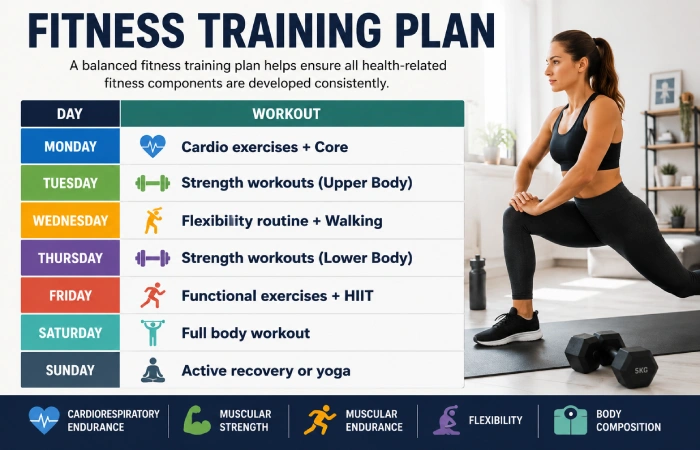
A balanced fitness training plan helps ensure all health-related fitness components are developed consistently.
| Day | Workout |
| Monday | Cardio exercises + Core |
| Tuesday | Strength workouts (Upper Body) |
| Wednesday | Flexibility routine + Walking |
| Thursday | Strength workouts (Lower Body) |
| Friday | Functional exercises + HIIT |
| Saturday | Full body workout |
| Sunday | Active recovery or yoga |
As always, be sure to hydrate well, follow a balanced diet and get good sleep for optimal support for recovery and gains.
Tips to Improve Health Related Fitness Faster
To maximize results:
- Warm up for 5–10 minutes before exercising.
- Increase workout intensity gradually.
- Focus on proper exercise technique.
- Combine cardio and strength training each week.
- Include flexibility exercises after every workout.
- Allow adequate rest between sessions.
- Track your progress to stay motivated.
Don’t aim for perfect, aim for consistent. Sustainable progress over time is key to a healthy fitness journey
Conclusion
If you embark on a journey to improve your fitness components with an established regimen, you will have greater stamina, strength, and flexibility, and can develop a stronger body. You will be doing the beginner-level workout program or be doing the intermediate-level workout, and will benefit and gain health while building an activity of all types.
Frequently Asked Questions
Q: What are the exercises for health components of physical fitness?
A: You’ll need to perform cardiovascular exercise, flexibility, strength training to strengthen muscle and body with increased ability.
We highly advise to make one the best body workouts such as brisk walking, running, squatting, push-ups, lunges, bodyweight exercises, etc.
Q: How often should new people workout?
A: A person that is new to a workout regimen should try to participate in 3 or more fitness days per week so that they may see their work efforts make some visible and tangible progress in their body. It is of great benefit to provide the rest day too for your muscle recovery
Q: Will a full body exercise improve all health components?
A: In fact it does. A full body program could help develop every single component in our program.
Q: Are functional exercises the best to stay fit?
A: Functional exercise is to assist people live better day by day lives and this will work best for individuals wanting improve there posture, balance as well as overall strength.Combined with other styles of exercise this will also help you remain at good physical health!