
 Sameena Fatima
Health & Wellness Content Writer
in
Sameena Fatima writes reader-focused
health and wellness content for
HealthBloomWeb, covering fitness,
nutrition, healthy lifestyle and
everyday wellness topics.
Sameena Fatima
Health & Wellness Content Writer
in
Sameena Fatima writes reader-focused
health and wellness content for
HealthBloomWeb, covering fitness,
nutrition, healthy lifestyle and
everyday wellness topics.
 Mirza Ibrahim Ali Khan
Editorial & Content Reviewer
in
Mirza Ibrahim Ali Khan contributes to
HealthBloomWeb's editorial review process,
with a focus on content structure,
readability, search intent and overall
editorial quality.
Mirza Ibrahim Ali Khan
Editorial & Content Reviewer
in
Mirza Ibrahim Ali Khan contributes to
HealthBloomWeb's editorial review process,
with a focus on content structure,
readability, search intent and overall
editorial quality.
 Reyansh Sethi
Medical Reviewer
in
Reyansh Sethi contributes to the medical
review process at HealthBloomWeb, focusing
on clarity, responsible health context and
reader-friendly presentation of health
information.
Reyansh Sethi
Medical Reviewer
in
Reyansh Sethi contributes to the medical
review process at HealthBloomWeb, focusing
on clarity, responsible health context and
reader-friendly presentation of health
information.
In this section we have included the explanation for the cortisol, stress response and nervous system support and the reasons why a supplement can be used as adjunct therapy to lifestyle management.
Explain what hydrocortisone is, stress response, nervous system support, and why a supplement can be helpful along with lifestyle management.
This Article is a Part of Anxiety Relief
Best Natural Supplements for Stress
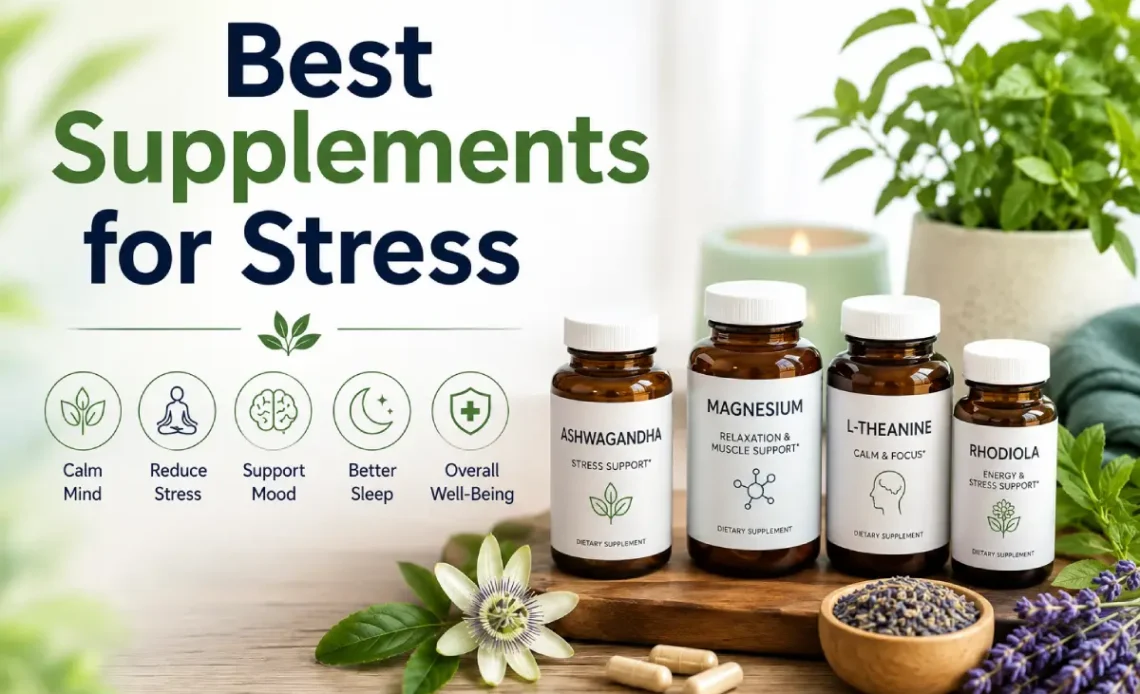
People are using supplements more and more to deal with stress and feel better. Natural supplements are really helpful for stress and emotional wellbeing. Some natural supplements are very good at helping with stress. Ashwagandha and the other supplements also help the body deal with stress. They do this by making the body better at handling physical stressors. Natural supplements like Ashwagandha and Magnesium are very useful. L-Theanine and Rhodiola Rosea are also very good, at helping with stress.
| Supplement | Primary Benefit | Research Support |
| Ashwagandha | Cortisol reduction | Strong |
| Magnesium | Relaxation support | Strong |
| L-Theanine | Calm focus | Moderate-Strong |
| Rhodiola Rosea | Stress resilience | Moderate |
| Omega-3 | Mood support | Strong |
Natural supplements are most active when joint with healthy sleep, exercise, and stable nutrition.
Magnesium for Stress Relief

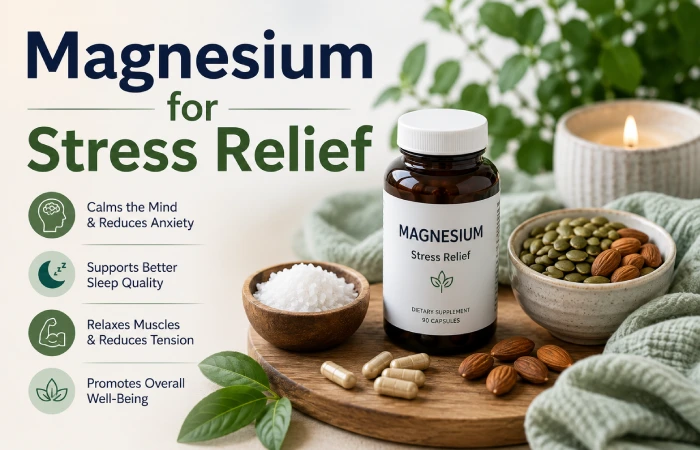
Magnesium is really important for dealing with stress. It helps our body do lots of things. It is crucial for our nervous system. When we are stressed for a time the magnesium in our body can get used up which can make us feel tired have trouble sleeping get annoyed easily and have tight muscles.
If we get magnesium, it strength help us relax and sleep better which can really help with managing stress. Magnesium is helpful for relaxation and sleep. These things are important for working stress And also getting magnesium can make a big difference, in how we feel when we are stressed.
Benefits of Magnesium
- Supports nervous system function
- Promotes muscle relaxation
- Helps improve sleep quality
- May reduce stress-related fatigue
- Supports healthy cortisol regulation
Best Forms of Magnesium
| Form | Best For |
| Magnesium Glycinate | Stress and sleep |
| Magnesium Citrate | General supplementation |
| Magnesium Threonate | Brain health |
| Magnesium Malate | Energy support |
Recommended Dosage
| Group | Daily Amount |
| Adult Men | 400–420 mg |
| Adult Women | 310–320 mg |
Ashwagandha Benefits for Anxiety
Ashwagandhais an adaptogen, also referred to as an ayurvedic herbs which comes from an Indian plant which’s used by many from centuries of time. As ashwagandha, as we already talked about above, comes from Ayurveda, therefore this herbs is best known for it is capable of giving relief from the several types of anxieties and stresses, and maintain the mood of a person in balance and steady position.
The ashwagandha supplementation has also shown from lots of researches to reduce the cortisol levels of a person. It will not only helpful in giving relief from stress and anxiety symptoms but it is also good for a person suffering from disturbed sleeping hours.
Benefits of Ashwagandha
- Supports stress resilience
- Helps reduce cortisol levels
- Promotes calmness
- Improves sleep quality
- May support cognitive performance
Ashwagandha Dosage Guide
| Form | Daily Dose |
| Standardized Extract | 240–600 mg |
| Root Powder | 1–5 grams |
Potential Side Effects
- Mild digestive discomfort
- Drowsiness
- Nausea
- Possible thyroid interactions
L-Theanine for Relaxation
L-Theanine is something that is found in tea leaves. It is an amino acid that naturally. L-Theanine helps people relax without making feel very sleepy.
This is different from a lot of things that are supposed to calm you down. L-Theanine is good for your brain because it helps with brain wave activity. This activity is what happens when your mind is calm. You are still alert. L-Theanine helps the brain do this sort of thing well. It gives a quiet boost without pushing too hard. A calm focus comes through more clearly because of it.
Benefits of L-Theanine
- Encourages calm focus
- Reduces mental tension
- Supports concentration
- Promotes relaxation without sedation
- May improve sleep quality
Recommended Dosage
| Purpose | Dose |
| Daily Stress Support | 100–200 mg |
| Enhanced Relaxation | 200–400 mg |
Who Should Consider L-Theanine?
L-Theanine can really help people who have trouble stopping their mind from racing when they are stressed or who have a time focusing. It may also help with sleep problems.
Rhodiola Rosea advantages
Rhodiola Rosea is another herb that people are talking about. This herb is also good for helping the body deal with stress whether it is in your mind or your body. People know Rhodiola Rosea for making people less tired helping them think better and making them more able to handle their emotions. Rhodiola Rosea is really good at reducing fatigue.
Benefits of Rhodiola Rosea
- Supports mental stamina
- Reduces fatigue
- Improves stress resilience
- Supports cognitive performance
- May improve mood
Recommended Dosage
| Form | Daily Dose |
| Standardized Extract | 200–600 mg |
Potential Side Effects
- Dry mouth
- Mild dizziness
- Temporary irritability
How to Choose the Right Stress Supplement
| Goal | Recommended Supplement comparison |
| Reduce Cortisol | Ashwagandha |
| Improve Sleep | Magnesium Glycinate |
| Calm Focus | L-Theanine |
| Combat Fatigue | Rhodiola Rosea |
| Overall Wellness | Omega-3 Fatty Acids |
Frequently Asked Questions
What is the best supplement for stress and anxiety?
Among well–researched options for calming the mind, ashwagandha stands out. Magnesium shows strong support through multiple trials. There is L-theanine, often noted in studies focusing on ease under pressure.
How long do stress supplements take to work?
Results differ by supplement product reviews . L-theanine may be effective after an hour, ashwagandha and magnesium often take a few weeks of daily use.
Is it possible for me to mix stress supplements?
A lot of people who will use magnesium will also use ashwagandha and L-theanine. Don‘t combine supplements without consulting with your physician.
Conclusion
The top supplements for stress are magnesium, ashwagandha, L-theanine and Rhodiola Rosea. What they do is aid stress resiliency, induce relaxation and improve mental health in general. When used in conjunction with a healthy lifestyle, these supplements represent the most sustainable long-term natural stress relief program.