
 Sameena Fatima
Health & Wellness Content Writer
in
Sameena Fatima writes reader-focused
health and wellness content for
HealthBloomWeb, covering fitness,
nutrition, healthy lifestyle and
everyday wellness topics.
Sameena Fatima
Health & Wellness Content Writer
in
Sameena Fatima writes reader-focused
health and wellness content for
HealthBloomWeb, covering fitness,
nutrition, healthy lifestyle and
everyday wellness topics.
 Mirza Ibrahim Ali Khan
Editorial & Content Reviewer
in
Mirza Ibrahim Ali Khan contributes to
HealthBloomWeb's editorial review process,
with a focus on content structure,
readability, search intent and overall
editorial quality.
Mirza Ibrahim Ali Khan
Editorial & Content Reviewer
in
Mirza Ibrahim Ali Khan contributes to
HealthBloomWeb's editorial review process,
with a focus on content structure,
readability, search intent and overall
editorial quality.
 Reyansh Sethi
Medical Reviewer
in
Reyansh Sethi contributes to the medical
review process at HealthBloomWeb, focusing
on clarity, responsible health context and
reader-friendly presentation of health
information.
Reyansh Sethi
Medical Reviewer
in
Reyansh Sethi contributes to the medical
review process at HealthBloomWeb, focusing
on clarity, responsible health context and
reader-friendly presentation of health
information.
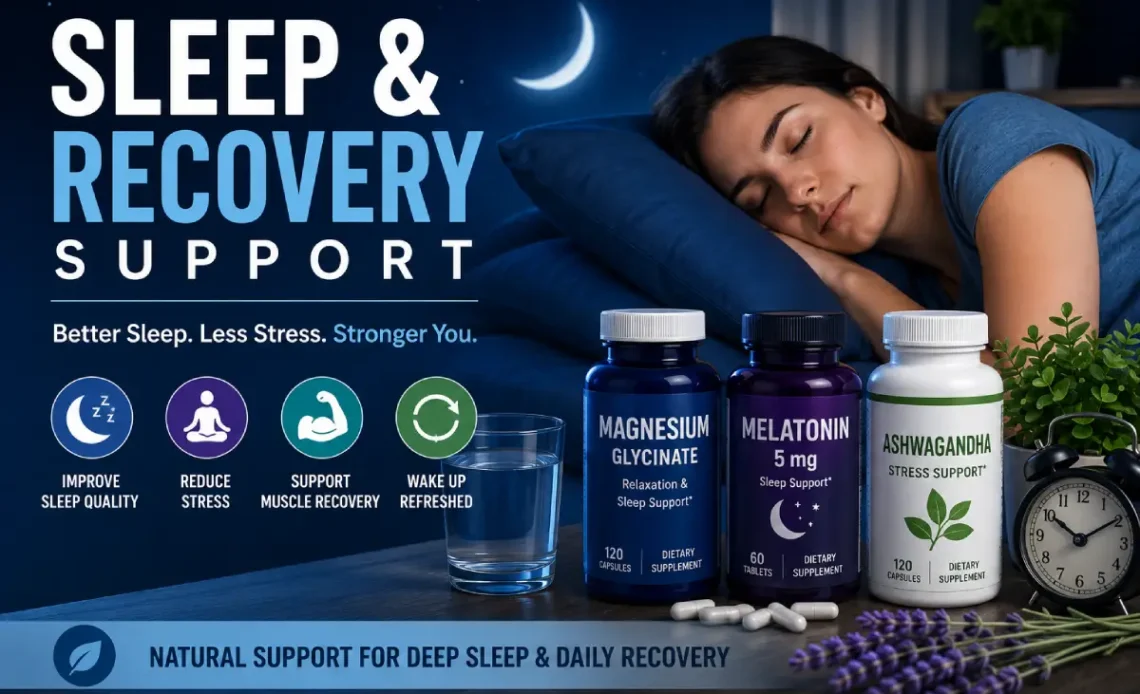
Sleep & Recovery Support
Sleep & Recovery Support one of the most important soodings of physical health, mental well-being, And stress control. However, millions of individuals have trouble sleeping enough, feeling super stressed, and recovering sufficiently. Whether you want to relax the stress basics, enhance concentration, recover from workouts, or just feel alive all day long, sleep should be your primary concern.
Further studies reveal that sleep has an influence on virtually every system within the body. In deep sleep, the body undertakes repair of damaged tissues while hormones return to their balanced state, memories are sharpened, along with the reduction of stress hormones. Moreover, chronic sleep deprivation inhibits the body‘s repair process leading to heightened anxiety and deterioration of health.
In this guide, you‘ll discover how sleep affects anxiety, what the top supplements to sleep and alleviate anxiety are, natural sleep aids, and practical recovery methods validated by the latest health information.
This Article is a Part of Anxiety Relief
Why Sleep & Recovery Support Matters
While many people train hard and eat well they forget recovery. If diet is not as important as the training the recovery is where our body adapts and gets stronger.
What Happens During Quality Sleep?
| Recovery Function | Benefit |
| Muscle Repair | Restores damaged muscle fibers |
| Hormone Regulation | Balances cortisol and growth hormone |
| Brain Recovery | Improves focus and memory |
| Immune Function | Strengthens disease resistance |
| Emotional Processing | Supports mental wellness |
| Energy Restoration | Replenishes energy stores |
Without sufficient sleep, even the best nutrition and exercise programs become less effective.
Sleep and Recovery Statistics
| Sleep Factor | Research Findings |
| Recommended Sleep | 7–9 hours per night |
| Adults Reporting Poor Sleep | ~35% |
| Impact of Sleep Deprivation on Stress | Significant increase in cortisol |
| Impact on Cognitive Performance | Reduced concentration and memory |
| Recovery Benefits of Deep Sleep | Highest tissue repair occurs during deep sleep |
How Sleep Impacts Anxiety
There is perhaps nothing in health science more entwined than poor sleep and anxiety. You see, a lack of shut-eye ramps up brain regions tied to emotion and decreases our brain’s capacity to control our stress-response functions, which in turn can make normal obstacles feel insurmountable. Conversely, anxiety also interferes with our sleep due to intrusive thoughts, surging cortisol hormones, and general relaxation difficulties.
Sleep vs Anxiety Relationship
| Poor Sleep Effect | Impact on Anxiety |
| Elevated Cortisol | Increased stress response |
| Reduced Emotional Control | Higher anxiety symptoms |
| Brain Fog | Increased worry |
| Fatigue | Reduced coping ability |
| Sleep Fragmentation | Greater emotional reactivity |
A lot of us tend to experience relief from our anxieties as well as stress when we enhance our sleep.
Best Supplements for Sleep and Anxiety
Supplements cannot replace healthy sleep habits, but there are may provide additional support for individuals experiencing stress-related sleep challenges.
Supplement Comparison Table
| Supplement | Best For | Sleep Support | Anxiety Support comparison |
| Magnesium Glycinate | Relaxation | Excellent | Excellent |
| L-Theanine | Calm Focus | Good | Excellent |
| Ashwagandha | Stress Reduction | Good | Excellent |
| Melatonin | Sleep Timing | Excellent | Moderate |
| Glycine | Deep Sleep | Very Good | Moderate |
| Valerian Root | Relaxation | Good | Moderate |
Which Supplement Is Best?
- When We Can’t Fall Asleep: Melatonin
- Stress-Caused Insomnia: Ashwagandha
- Muscle Tension at Night: Magnesium Glycinate
- Racing Thoughts: L-Theanine
- Sleep Quality Improvement: Glycine
Always be sure to consult your doctor or another appropriately trained professional before beginning the use of any new nutritional supplement.
Melatonin for Stress Relief

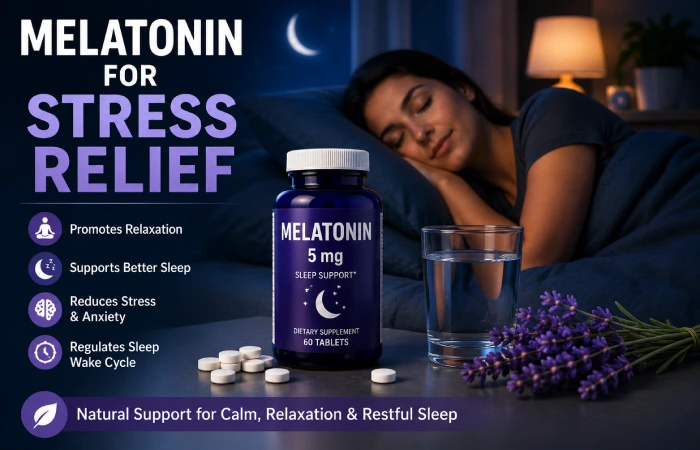
Melatonin, also called the “sleep hormone,” controls your body’s internal clock. Although best known as a remedy for timing issues in sleep, it may indirectly help with stress. Melatonin can also promote sleep. … Chronic stress affects melatonin secretion and making it difficult for you to go to sleep; supplemental melatonin may work to re-regulate your sleep schedule.
Melatonin Benefits
- Supports sleep onset
- Helps regulate circadian rhythm
- Useful for jet lag recovery
- May improve sleep consistency
- Supports recovery during periods of stress
Melatonin Comparison
| Dose | Typical Use |
| 0.5–1 mg | Mild sleep support |
| 1–3 mg | General sleep difficulties |
| 3–5 mg | Short-term sleep challenges |
Natural Sleep Support Remedies
Many effective sleep strategies require no supplements at all.
Best Natural Sleep Remedies
| Remedy: |
| Consistent Sleep Schedule |
| Meditation |
| Deep Breathing |
| Exercise |
| Reduced Screen Time |
| Dark Sleep Environment |
| Limiting Evening Caffeine |
Evening Routine Example
- Do not have caffeine past lunchtime.
- Turn down the light and screens one hour before bedtime.
- Do the ten minute breathing exercises.
- Room is cold and dark.
- Stick to a regular bedtime.
It seems as though these simple habits, above anything else, could bring your sleep quality back before you even have to go about trying out supplements.
Magnesium Before Bed
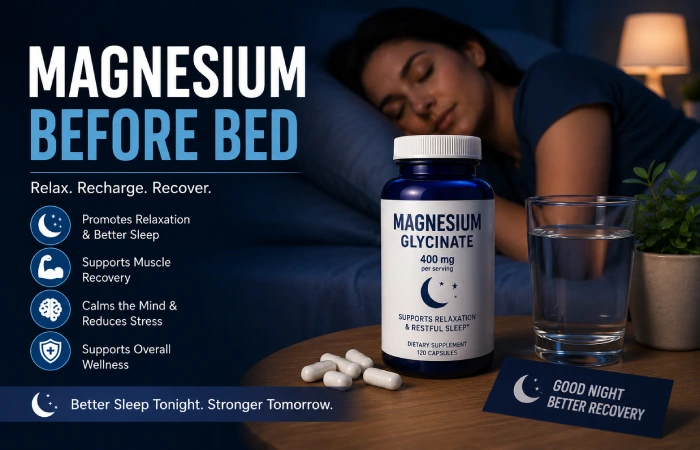
The Most Researched Mineral for sleep and relaxation is magnesium which affects regulating nerve signals, involved in calming and a sense of equilibrium within the nervous system.
Most adults don’t even get the Recommended Daily Allowance for Magnesium and this has impacts sleep.
Benefits of Taking Magnesium Before Bed
- Supports relaxation
- Reduces muscle tension
- Promotes deeper sleep
- Supports stress recovery
- Helps regulate nervous system activity
Magnesium Forms Comparison
| Form | Best For |
| Magnesium Glycinate | Sleep and anxiety |
| Magnesium Citrate | General supplementation |
| Magnesium Threonate | Cognitive support |
| Magnesium Malate | Recovery and energy |
Recommended Timing
Most people benefit from taking magnesium 30–60 minutes before bedtime.
Recovery Nutrition for Better Sleep
Nutrition has an effect on recovery and quality of your sleep. On the other hand, certain ingredients within foods contain nutritional compounds which are to promote synthesis of neurotransmitters and produce our endogenous form of melatonin.
Foods That Support Sleep and Recovery
| Food | Key Nutrient | |
| Almonds | Magnesium | |
| Kiwi | Antioxidants | |
| Tart Cherries | Natural Melatonin | |
| Salmon | Omega-3 Fatty Acids | |
| Pumpkin Seeds | Magnesium & Zinc | |
| Oatmeal | Complex Carbohydrates | |
Common Sleep Problems and Solutions
Waking Up During the Night
Possible Causes
- Stress
- Alcohol consumption
- Sleep apnea
- Environmental disturbances
Solutions
- Improve bedroom environment
- Reduce alcohol intake
- Manage stress
- Seek medical advice if persistent
Sleep & Recovery Product Comparison
| Product Type | Primary Benefit | Best For |
| Magnesium Glycinate | Relaxation | Stress-related sleep issues |
| Melatonin | Sleep timing | Jet lag and schedule adjustment |
| L-Theanine | Mental calmness | Racing thoughts |
| White Noise Machine | Sleep environment | Light sleepers |
| Sleep Mask | Darkness optimization | Shift workers |
Frequently Asked Questions
What is the best supplement for sleep and anxiety?
Based on top recommendations, melatonin, magnesium glycinate, L-theanine and ashwagandha top out.
Is there an increased risk of anxiety if sleep is suffering?
Furthermore, it could even increase cortisol, impair your emotional controls, and make you more stressed.
Is it better to take magnesium than melatonin?
Each serve a different function. The magnesium is mainly concerned with being relaxing and promoting good nervous system health; melatonin‘s main function is sleeping pattern control.
How much sleep is needed for recovery?
Properly functioning adults generally need 7-9 hours of sleep per night to get a sufficient night’s rest.
How is the quickest natural way to jump sleep?
Follow consistent sleep, forgo the caffeine, minimise screen use before bed as well as sleep in a dark room remains the greatest.
Conclusion
Sleep & Recovery Support A key cornerstone to everyone’s health. Sleep supports recovery, manage stress and mental wellbeing & optimise Physical Performance. Promoting healthy sleep habit and consistency, along with a few well-proven and expertly combined natural sleep support supplements including Magnesium, L-Theanine and Ashwagandha, set you up for long-term health and resilience.
Quality nutrition, stress reduction tools and targeting any individual sleep-related gaps in combination with great sleep practices is sure to lead the biggest dividends. Even just 30-minute increases in your sleep duration or the amount of light sleep you achieve per night can lead to huge gains in your energy levels, mood, and focus.