
 Sameena Fatima
Health & Wellness Content Writer
in
Sameena Fatima writes reader-focused
health and wellness content for
HealthBloomWeb, covering fitness,
nutrition, healthy lifestyle and
everyday wellness topics.
Sameena Fatima
Health & Wellness Content Writer
in
Sameena Fatima writes reader-focused
health and wellness content for
HealthBloomWeb, covering fitness,
nutrition, healthy lifestyle and
everyday wellness topics.
 Mirza Ibrahim Ali Khan
Editorial & Content Reviewer
in
Mirza Ibrahim Ali Khan contributes to
HealthBloomWeb's editorial review process,
with a focus on content structure,
readability, search intent and overall
editorial quality.
Mirza Ibrahim Ali Khan
Editorial & Content Reviewer
in
Mirza Ibrahim Ali Khan contributes to
HealthBloomWeb's editorial review process,
with a focus on content structure,
readability, search intent and overall
editorial quality.
 Reyansh Sethi
Medical Reviewer
in
Reyansh Sethi contributes to the medical
review process at HealthBloomWeb, focusing
on clarity, responsible health context and
reader-friendly presentation of health
information.
Reyansh Sethi
Medical Reviewer
in
Reyansh Sethi contributes to the medical
review process at HealthBloomWeb, focusing
on clarity, responsible health context and
reader-friendly presentation of health
information.
Fitness & Stress Reduction
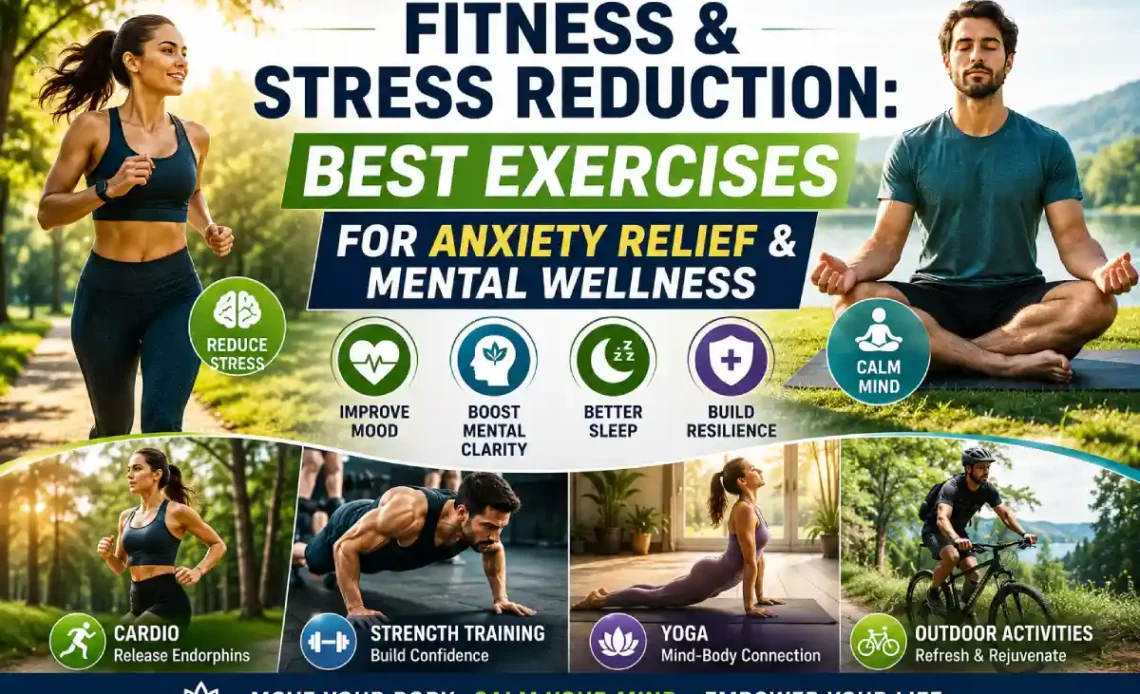
Fitness & stress management are always associated in the direction of promoting a healthier body and mind. Most of the people, among whom I include my self, work out and do sports because we’d like to get rid of a couple of kgs, or simply to be in shape. But, one of the good sides of every form of physical exercises is the fact that these can have a great influence to make a stressful person feel better and to ease down the mood.
In a busy day today people often carry a great deal of worry and anxiety with the majority having long hours at work and on screen, little sleep and constant day to day duties that may take its toll on the mind, body and feelings. Yet, there is something remarkably effective that people have been doing for centuries to relieve themselves and these feelings; that’s exercise.
This Article is a Part of Anxiety Relief
This guide looks at the science, behind fitness and stress basics relief. It compares workout styles to find what works best. The guide also explains how recovery helps your body.
Why Fitness Helps Reduce Stress
When you do exercise your body releases endorphins. These are often called feel hormones. Exercise also helps with cortisol. It improves the quality of your sleep. It increases emotional resilience when you exercise. Exercise is really good for your body. It makes you feel better when you exercise and you feel great all through.
Benefits of Exercise for Stress Relief
| Benefit | Impact |
| Endorphin Release | Improves mood |
| Better Sleep | Supports recovery |
| Cortisol Regulation | Helps manage stress |
| Improved Focus | Enhances concentration |
| Increased Energy | Reduces fatigue |
| Emotional Resilience | Supports mental wellness |
2026 Exercise and Wellness Comparison
| Lifestyle Factor | Impact on Stress Management |
| Regular Exercise | Very High |
| Quality Sleep | Very High |
| Balanced Nutrition | High |
| Meditation | High |
| Social Support | High |
| Hydration | Moderate |
Key Insight: People who combine regular exercise with healthy sleep and nutrition habits often experience better improvements in stress best supplements organization than those relying on a single strategy.
Best Exercises for Anxiety Relief
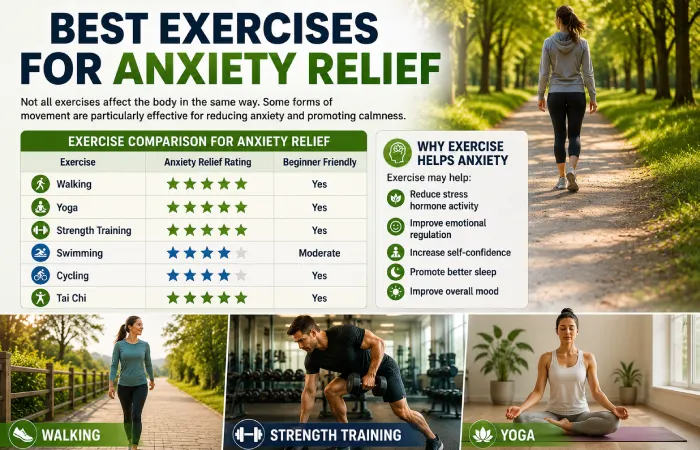
I am just saying the body respond different for different kinds of exercise. Like this certain kind of exercise will make the person feel less anxiety and feel so cool! Some kinds of exercises just will make the difference in the person feeling!
Exercise Comparison for Anxiety Relief
| Exercise | Anxiety Relief Rating | Beginner Friendly |
| Walking | Excellent | Yes |
| Yoga | Excellent | Yes |
| Strength Training | Excellent | Yes |
| Swimming | Very Good | Moderate |
| Cycling | Very Good | Yes |
| Tai Chi | Excellent | Yes |
Why Exercise Helps Anxiety
Exercise may help:
- Reduce stress hormone activity
- Improve emotional regulation
- Increase self-confidence
- Promote better sleep
- Improve overall mood
Photo Suggestion
Include a real image showing:
- Outdoor walking path
- Beginner strength-training session
- Yoga practice in a calm environment
Yoga for Stress Management
Yoga is something really good for your physical and mental health. It’s a mind-body activity that combines the physical movements of yoga with the breathing of exercise and the concentration that yoga breathing promotes. That’s what makes Yoga such a great activity for the relief of your stress. Yoga is very effective, at managing stress because it does all these things together.
Benefits of Yoga
| Benefit | How It Helps |
| Deep Breathing | Activates relaxation response |
| Flexibility | Reduces physical tension |
| Mindfulness | Supports emotional balance |
| Better Sleep | Improves recovery |
| Reduced Cortisol | Supports stress regulation |
Beginner Yoga Flow
- Child’s Pose
- Cat-Cow Stretch
- Downward Dog
- Seated Forward Fold
- Corpse Pose
Daily practicing 15-20 minutes a day of yoga can be the perfect stress reliever and will make sure you will achieve mental clarity. Yoga is great for this. Doing yoga daily can make a difference, in how you feel when you do yoga. Yoga helps you feel better and yoga can clear your mind when you do it every day. Yoga is great, for relaxation. It can also help with mental clarity.
Walking and High-Intensity Interval Training also known as HIIT are two known types of workouts. They both have an impact on our body. In different ways. Walking is one thing. Hiit is another.
Walking vs HIIT Comparison
| Factor | Walking | HIIT |
| Stress Relief | Excellent | Good |
| Recovery Needs | Low | High |
| Cortisol Impact | Lower | Can temporarily increase |
| Anxiety Reduction | Excellent | Moderate |
| Calorie Burn | Moderate | High |
| Beginner Friendly | Excellent | Moderate |
Which Is Better?
For people who are stressed or anxious all the time walking is usually a choice because it is easy to do every day.
HIIT workouts can be good, for fitness. You need to make sure you rest enough too.
Walking is a way to start and you can do it even when you are feeling stressed or anxious.
It is also helpful to balance HIIT workouts with walking and other low-impact activities.
Quick Recommendation
If you want to manage stress walking is a choice.
If you want to improve your heart health and the way your body looks you should try High Intensity Interval Training.
Walking helps with stress and High Intensity Interval Training helps with heart health and body composition.
Meditation and Mental Wellness
Meditation has the ability to work hand in hand with your workout regime. It helps train your brain to adapt much better to the stresses that can trigger cravings and unhealthy behavior.
Benefits of Meditation
| Benefit | Mental Wellness Impact |
| Reduced Stress | Greater calmness |
| Better Focus | Improved productivity |
| Improved Sleep | Enhanced recovery |
| Lower Anxiety | Better emotional control |
| Emotional Awareness | Increased resilience |
Beginner Meditation Routine
- Sit comfortably
- Focus on your breathing
- Inhale slowly for four seconds
- Exhale slowly for four seconds
- Continue for five to ten minutes
Best Meditation Apps Comparison
| App Type | Best For |
| Guided Meditation Apps | Beginners |
| Breathing Apps | Quick stress relief |
| Sleep Meditation Apps | Evening relaxation |
Recovery Workouts for Stress Relief
Recovery. It’s an element frequently neglected but essential for both optimal physical and stress relief.
Too much physical activity, without sufficient recovery, can cause you to fatigue and even burn out.
Best Recovery Activities
| Recovery Activity | Benefit |
| Walking | Improves circulation |
| Yoga | Reduces tension |
| Stretching | Supports flexibility |
| Mobility Work | Enhances recovery |
| Light Cycling | Promotes blood flow |
Signs You Need More Recovery
- Persistent fatigue
- Poor sleep quality
- Increased irritability
- Reduced workout performance
- Elevated stress levels
Recovery Checklist
✓ Prioritize sleep
✓ Stay hydrated
✓ Eat balanced meals
✓ Schedule rest days
✓ Practice stress-management techniques
Product Comparison: Tools That Support Fitness & Stress Reduction
This section helps satisfy commercial search intent.
Fitness and Wellness Product Comparison
| Product Type | Benefits | Best For Comparison |
| Yoga Mat | Home yoga sessions | Beginners |
| Resistance Bands | Strength training | Home workouts |
| Fitness Tracker | Activity monitoring | Daily accountability |
| Foam Roller | Muscle recovery | Active individuals |
| Meditation App | Stress management | Mental wellness |
Common Fitness Mistakes That Increase Stress
Problem: Feeling More Tired After Exercise
Possible Causes
- Overtraining
- Poor sleep
- Inadequate nutrition
Solutions
- Add recovery days
- Improvement sleep habits
- Growth protein intake
Problem: Increased Anxiety After Workouts
Possible Causes
- Excessive HIIT
- Overuse of stimulants
- Lack of recovery
Solutions
- Incorporate walking and yoga
- Reduce caffeine intake
- Focus on balanced exercise routines
Problem: Difficulty Staying Consistent
Possible Causes
- Unrealistic goals
- Lack of routine
- Exercise boredom
Solutions
- Start small
- Schedule workouts
- Choose activities you enjoy
Conclusion
It is undeniable that fitness and stress reduction are correlated. Exercise not only decreases stress by improving your body’s ability to respond to stressors but it also decreases your risk of stress-related diseases, increases your mood and can lessen feelings of anxiety, helps release stress hormones, encourages quality sleep, and makes you stronger against mental and physical pressures.
By including the most beneficial types of exercise for stress, yoga, walking or HIIT, meditation and useful recovery workouts, you can successfully manage stress while increasing your physical health. Remember that regularity is important-a small daily practice may turn out to be more valuable over the course of time than brief bursts of high energy.