
Written By:Sameena Fatima
Reviewed By:Mirza Ibrahim Ali Khan
Medical Reviewed By:Reyansh Sethi
Published on:Aug 5, 2026
Last Updated on:Aug 24, 2026
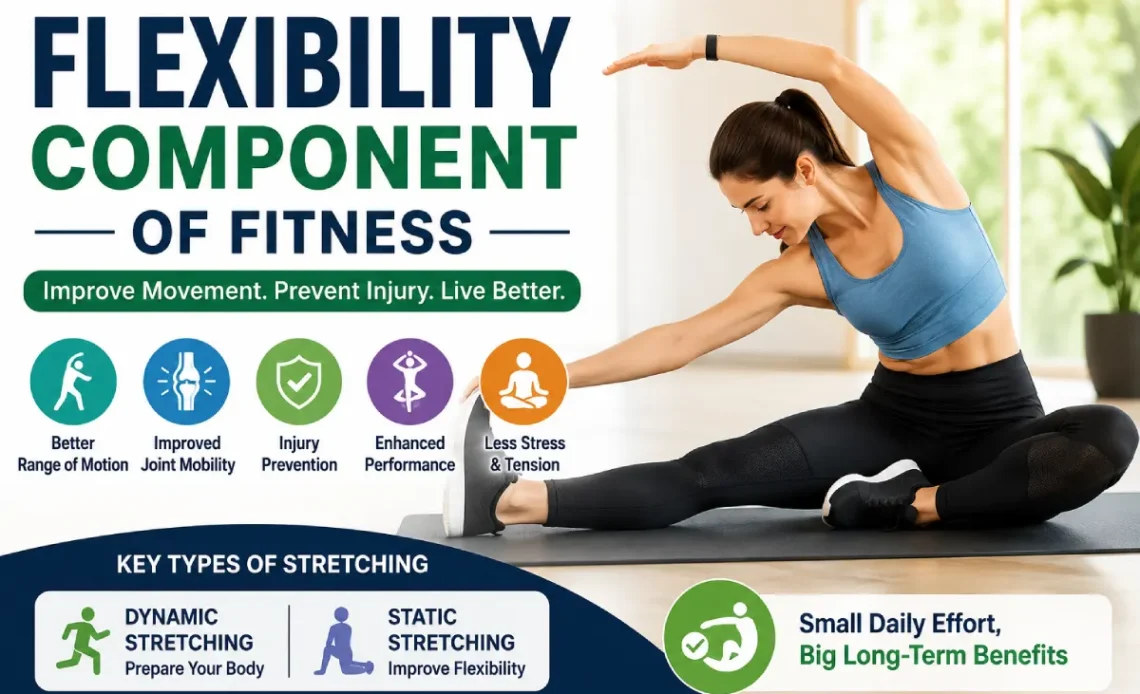
Flexibility fitness has five major areas, one of which is the physical concept of flexibility that is very important in the process of movement. The health component of flexibility can keep our joints Healthy and our posture better when we do everyday work. Regardless of whether you are a professional athlete, a person who works in the office, or a beginner who just started exercising, improving flexibility can effectively increase range of movement, relax stiff muscles, and reduce exercise risk. In this article, you’ll learn what flexibility is, Why flexibility is so important, which is the most suitable stretches and so on.
This Article is the Part of Cardio Fitness
Flexibility in Fitness.
Flexibility refers to our body’s ability to extend the movement of the body in a natural rhythm, flexibility also means the extent to which muscles and ligaments can stretch. With good Flexibility our body can work without discomfort. Instead of Strength or endurance flexibility focuses more on the ease of movement. Each person has a different degree of flexibility according to genetics, age and physical condition.
Advantages of Flexibility training:
It can improve posture and balance; improve Athletic Performance; improve Joint Mobility. Relieve tightness in the muscles; facilitate movement smoothly to reduce risk of muscle injury.
Here are some other key advantages to stretching your body regularly:
- Better Range of Motion.
- Improved Joint Mobility.
- Reduced Muscle Tightness.
- Better Athletic Performance.
- Enhanced Balance.
- Improved Recovery.
- Better Posture.
Common Stretching Exercises.
To experience the effects of flexibility, a variety of stretching methods can be performed.
1. Dynamic Stretching.
Dynamic Stretching consists of repetitive motion to prepare the body for a more rigorous physical activity. For example:
Arm Circles; leg circles; high knee jumping; torso twists. Dynamic stretching should be performed after a warm-up.
2. Static Stretching.
Dynamic Stretching: static stretching is holding your stretch for 15 to 30 seconds without moving or bouncing.
For example: hamstrings; chest; shoulder stretches; quads. Static stretching is done after a workout or as part of a static stretching exercise or routine.
Best Stretches for Beginners.
I think that for people just starting a yoga session or flexibility routine, or those with flexibility problems due to other conditions or an sedentary lifestyle, the following are excellent stretches to incorporate.
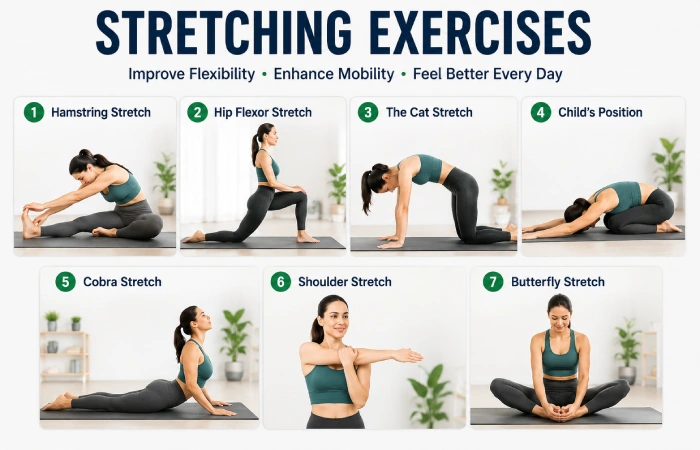
1. Hamstring Stretch.
2. Hip Flexor stretch.
3. The Cat Stretch.
4.child’s position.
5.cobra Stretch.
6.shoulder stretch.
7.butterfly Stretch.
Flexibility and Mobility Training.
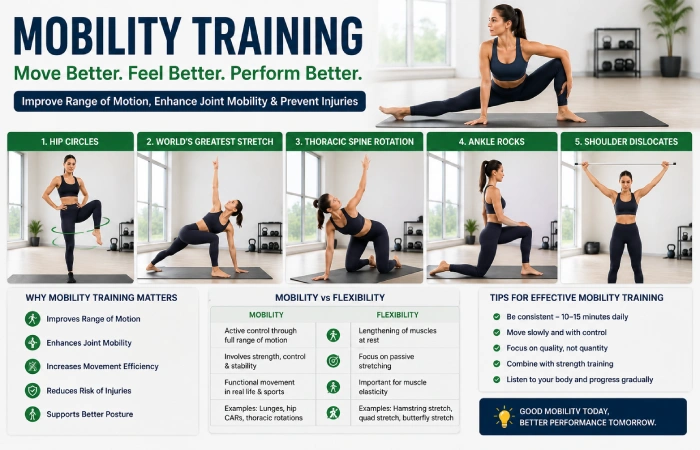
Though the two terms are sometimes associated with one another, flexibility and mobility training are different concepts. While both will encourage healthy and effective body mechanics, they have separate meanings. In essence, while flexibility involves muscles being able to lengthen, mobility is about the joints’ ability to move with controlled precision through their range of movement.
Mobility: can include the body’s power in the controlled range of movement, including stretch, balance and power training.
Flexibiliity: can stretch the muscles and ligaments of our body, enhance The body’s elasticity to make our body moves more fluidly and better elasticity.
How to Improve Your Flexibility
- Stretch at least 2 to 3 days per week.
- Dynamic stretch before exercise.
- Hold static stretches for between 15 and 30 seconds and no longer than 60 seconds.
- Warm your muscles before stretching.
- Avoid bouncy or ballistic stretching and instead hold the stretch.
- Breathe andrelax into the stretch. You should feel mild tension rather than pain.
- Maintain a consistent routine.
- use Yoga and Pilate exercises.
- consider professional mobility training.
- do not stretch your body on pain.
Flexibility refers to the capacity of our muscles and the connecting tissues which surround the joints that enables our bodies to extend to the furthermost range as possible without feeling strain in the body. Flexibility of the body is important for overall fitness as it provides a better and healthier posture to our body and helps the muscles to remain in healthy shape that will ensure smooth functioning of body joints and reduce back problems.
Choosing Flexibility Equipment
If you’re looking to enhance your stretching routine, several affordable tools can help:
- Yoga mat
- Resistance bands
- Foam roller
- Stretching strap
- Massage ball
These accessories can make stretching more comfortable and support better movement quality when used correctly.
Frequently Asked Questions
How often should I do flexibility exercises?
You should aim to do flexibility exercises at least 2-3 times a week. Daily stretches, when performed carefully, can have additional benefits.
What is the difference between flexibility and joint mobility?
Flexibility is the ability of muscles and tissues to expand, while joint mobility is the ability of joints to move actively through their range of motion.
Is it better to use dynamic stretching or static stretching?
Both have uses, dynamic stretching is often used for workouts while static stretching is a good addition to cooldowns and recovery after training.
Can flexibility be improved as I get older?
Yes.
Although stiffness naturally increases with age, taking action to regularly do flexibility training will help you remain mobile and improve your movement as well.
Summary
is a very important area to improve when working toward better overall fitness. Working on your flexibility not only allows better range of motion for athletic activities but will also help to maintain and improve mobility of the joints.
Your ability to stretch and maintain mobility can lead to better posture, reduced chance of injury, and simply a greater ease of movement both in and outside the gym. If this is a new area of your fitness regimen, it does not take many minutes out of each day to see dramatic improvements so don’t delay!