
 Sameena Fatima
Health & Wellness Content Writer
in
Sameena Fatima writes reader-focused
health and wellness content for
HealthBloomWeb, covering fitness,
nutrition, healthy lifestyle and
everyday wellness topics.
Sameena Fatima
Health & Wellness Content Writer
in
Sameena Fatima writes reader-focused
health and wellness content for
HealthBloomWeb, covering fitness,
nutrition, healthy lifestyle and
everyday wellness topics.
 Mirza Ibrahim Ali Khan
Editorial & Content Reviewer
in
Mirza Ibrahim Ali Khan contributes to
HealthBloomWeb's editorial review process,
with a focus on content structure,
readability, search intent and overall
editorial quality.
Mirza Ibrahim Ali Khan
Editorial & Content Reviewer
in
Mirza Ibrahim Ali Khan contributes to
HealthBloomWeb's editorial review process,
with a focus on content structure,
readability, search intent and overall
editorial quality.
 Reyansh Sethi
Medical Reviewer
in
Reyansh Sethi contributes to the medical
review process at HealthBloomWeb, focusing
on clarity, responsible health context and
reader-friendly presentation of health
information.
Reyansh Sethi
Medical Reviewer
in
Reyansh Sethi contributes to the medical
review process at HealthBloomWeb, focusing
on clarity, responsible health context and
reader-friendly presentation of health
information.
Understand Causes, Symptoms, and Relief with these Tips.
Stress & Anxiety Basics are currently among the most searched subjects within mental wellness due to the everyday experience of millions, with feelings of stress, worry, and being overwhelmed with emotions becoming an everyday norm. Whether stress has occurred at work, due to financial stress, in relationships, or with health concerns, understanding what stress and Anxiety do to our bodies is the first of many steps towards a managed mind.
Whilst stress and Anxiety go hand in hand, they’re not quite the same thing. Understanding their distinct differences, the signs to watch out for, and the relationship between cortisol and Anxiety will enable you to make better choices regarding the overall well-being of your mind.
This Article is a Part of Anxiety Relief
Stress vs Anxiety
Stress: In reaction to a particular event, demand or possible danger, your body goes into a state of psychological and physiological responses. This is meant to activate your “fight or flight” mode to help you deal with events that demand attention.
Anxiety: This is a feeling of fear or concern even in the absence of any perceived danger. It is a normal feeling that one may have for a short while, but when persistent, may affect your daily activities.
Anxiety vs Stress Explained
| Stress | Anxiety |
| Usually triggered by a specific event. | May occur without a clear trigger |
| Often temporary | Can persist for weeks or months |
| Linked to external pressures | Often driven by internal worries. |
| Typically resolves when the problem is solved | May continue after the stressor is gone |
Although they differ, both can produce similar emotional and physical symptoms.
What Causes Stress and Anxiety?
Many factors can contribute to stress and Anxiety.
Common Stress Triggers
- Heavy workload
- Financial problems
- Family responsibilities
- Health concerns
- Major life changes
- Relationship conflicts
Common Anxiety Triggers
- Fear of uncertainty
- Excessive worrying
- Negative thinking patterns
- Traumatic experiences
- Genetic predisposition
- Chronic stress exposure
Modern Lifestyle Factors
Today’s digital world has introduced new sources of stress, including:
- Social media comparison
- Information overload
- Constant notifications
- Poor work-life balance
- Sleep deprivation
These may lead to gradual stress mentally and may result in symptoms of anxiety as well.
Symptoms of Chronic Stress
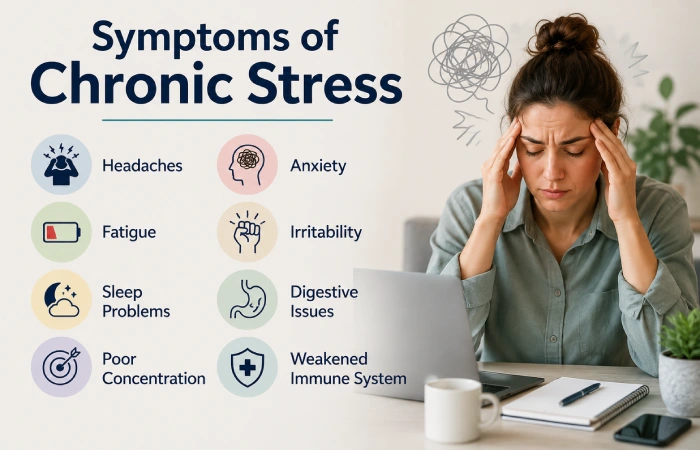
Stress is good in short-term cases, but chronic stress may have a negative effect on almost all parts of the body.
Physical Symptoms
- Frequent headaches
- Muscle tension
- Fatigue
- Digestive issues
- Increased heart rate
- Sleep disturbances
Emotional Symptoms
- Irritability
- Mood swings
- Feeling overwhelmed
- Restlessness
- Increased frustration
Cognitive Symptoms
- Difficulty concentrating
- Memory problems
- Racing thoughts
- Poor decision-making
If such symptoms are experienced for weeks or even months, then there is likely chronic stress, which is influencing your overall health.
How Stress Affects the Body
One of the main principles included into Stress & Anxiety Basics is information concerning the influence of stress on physical health.
Nervous System
As a result of stress, there is stimulation of the sympathetic nervous system, which causes greater body awareness.
Cardiovascular System
Long-term stress may contribute to:
- Elevated blood pressure
- Increased heart rate
- Greater cardiovascular strain
Digestive System
Stress can affect digestion and also may contribute to:
- Stomach discomfort
- Appetite changes
- Bloating
- Indigestion
Sleep Quality
Many people experience:
- Difficulty falling asleep
- Frequent nighttime waking
- Poor sleep quality
Immune Function
Long-term stress can lead to poor immune responses within the body.
Cortisol and Anxiety Connection
Cortisol is known as the primary stress hormone in the body. It controls energy and stress levels among other functions in the body.
When stress becomes chronic, cortisol levels may remain elevated for extended periods.
Signs of Elevated Cortisol
- Increased Anxiety
- Fatigue
- Weight gain
- Sleep disturbances
- Difficulty concentrating
Understanding cortisol is essential for managing stress effectively.
Natural Methods to Alleviate Stress and Anxiety
The positive side of things is that there are a lot of natural ways to deal with stress and enhance emotional state.
Exercise on a Regular Basis
Physical exercise stimulates the production of endorphins which help improve your mood and decrease stress.
Sleep Enough
Make sure you sleep for 7-9 hours per day.
Apply Mindfulness Techniques
Deep breathing and meditation will calm your nervous system and help to get rid of anxiety.
Eat a Balanced Diet
Focus on:
- Fruits and vegetables
- Lean proteins
- Whole grains
- Healthy fats
Limit Caffeine
Too much caffeine might cause more nervousness, as well as aggravate anxiety symptoms in those who are sensitive to this compound.
Forming Relationships
Communicating with close friends, relatives, or support groups is a good way to lessen loneliness and also relieve stress.
Supplements and Other Products for Stress Relief
Although lifestyle modifications need to be at the core of stress relief strategies, there are also other options.
Common Options
| Product Type | Potential Benefit |
| Magnesium Supplements | Supports relaxation and nervous system function |
| Ashwagandha | May help support healthy stress responses |
| Herbal Teas | Promote relaxation |
| Meditation Apps | Encourage mindfulness habits |
| Sleep Support Products | Help improve sleep quality |
Always consult a healthcare professional before starting any supplement routine.
When Should You Seek Professional Help?
Consider speaking with a healthcare provider if you experience:
- Persistent Anxiety lasting several weeks
- Frequent panic attacks
- Severe sleep problems
- Difficulty functioning at work or school
- Symptoms of depression alongside Anxiety
Professional guidance can provide personalized treatment and also support.
Frequently Asked Questions
Is stress the same as Anxiety?
No. Stress is a response to an external problem and also Anxiety, the usual state of Anxiety, is always present even when there is no problem.
Stress and Anxiety Can long-term stress lead to Anxiety?
Yes. Chronic Long Term stress is often put at the roots of beginning anxiety symptoms as well as other mental health problems.
And how would you tell if you were under chronic stress?
According to the NICE guidelines, to establish an early diagnosis, symptoms such as fatigue, irritability, headache, sleeping problems and also poor concentration.
How does a level of cortisol make you anxious?
Elevations in cortisol levels may be associated with increased alertness, Anxiety, nervousness, sleep disturbances or insomnia, and also hyperactivity.
So, what is the most effective and most rapid way of de-stressing?
Deep breathe, stretch, brisk walk, use of mindfulness, tune out: walk away.
Final Thoughts
Our understanding of the Stress & Anxiety Principles enables you to preempt the symptoms, discover potential stress and anxietyprecursors and to implement approaches in order to preserve your mental health. Discovering causes of stress, the effects of stress and the cortisol and anxietyrelationship can help you in forming efficient, enduring behavioral patterns.
Remember that occasional stress is common place but longer lasting stress and future focused anxiety are definitely something worth addressing. Take small everyday steps that make a big difference.