

 Sameena Fatima
Health & Wellness Content Writer
in
Sameena Fatima writes reader-focused
health and wellness content for
HealthBloomWeb, covering fitness,
nutrition, healthy lifestyle and
everyday wellness topics.
Sameena Fatima
Health & Wellness Content Writer
in
Sameena Fatima writes reader-focused
health and wellness content for
HealthBloomWeb, covering fitness,
nutrition, healthy lifestyle and
everyday wellness topics.
 Mirza Ibrahim Ali Khan
Editorial & Content Reviewer
in
Mirza Ibrahim Ali Khan contributes to
HealthBloomWeb's editorial review process,
with a focus on content structure,
readability, search intent and overall
editorial quality.
Mirza Ibrahim Ali Khan
Editorial & Content Reviewer
in
Mirza Ibrahim Ali Khan contributes to
HealthBloomWeb's editorial review process,
with a focus on content structure,
readability, search intent and overall
editorial quality.
 Reyansh Sethi
Medical Reviewer
in
Reyansh Sethi contributes to the medical
review process at HealthBloomWeb, focusing
on clarity, responsible health context and
reader-friendly presentation of health
information.
Reyansh Sethi
Medical Reviewer
in
Reyansh Sethi contributes to the medical
review process at HealthBloomWeb, focusing
on clarity, responsible health context and
reader-friendly presentation of health
information.
Sleep apnea surgery recovery is a crucial element of your long-term success after treatment. If you have undergone UPPP surgery, Inspire implant surgery, maxillomandibular advancement (MMA), nasal surgery, or even tonsil removal; understanding the process of how your body is going to recover will help your healing process go quicker and prevent complications.
This Article is the Part of Sleep Improvement
Recovery time will depend upon the specific procedure, your general health and how well you follow your surgeon‘s post operative care instructions. For most procedures, the patient will experience swelling, a sore throat, and soft diet for the first few weeks. However, proper post-operation care can yield better results.
Why Recovery Time Varies
Several factors influence your sleep apnea operation recovery, including:
- Type of operation carried out
- Age and general fitness
- Smoking status
- Weight
- Diabetes mellitus or other illnesses has..
- Of course, it is always better to follow the post operative instructions.
Usually needs less time to recover than for jaw surgery or combined procedures than minimally invasive.
Sleep Apnea Surgery Recovery Timeline
Knowing the timeline of your recovery allows you to prepare for each stage of healing.
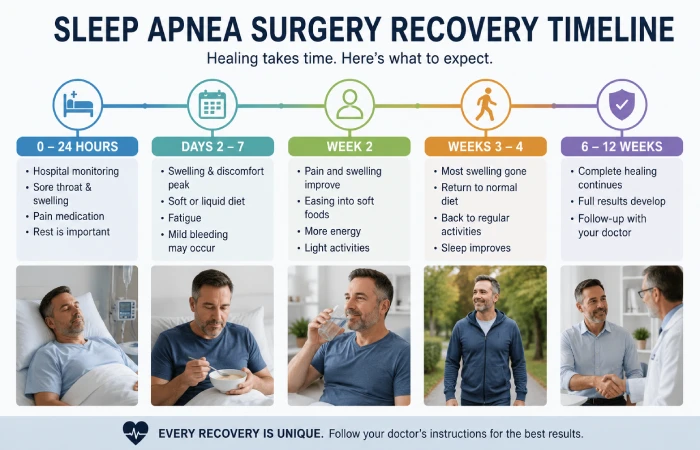
| Recovery Stage | What to Expect |
| First 24 Hours | Hospital observation sore throat swelling pain relief |
| Days 2–7 | Maximum swelling, soft diet, tiredness and possibly light bleeding. |
| Week 2 | Pain settles, swallowing easier |
| Weeks 3–4 | Most patients resume usual activities |
| 6–12 Weeks | Full recover following surgery and repeating sleep study if advised |
First Week After Surgery
The first week can be the most uneasy.
Common symptoms include:
- Sore throat
- Swollen tongue or throat
- Trouble swallowing
- Communication and referral of pain in the face and head. Ear pain (referred pain)
- Fatigue
- Light halitosis while healing
During this period:
- Make sure to stay well hydrated.
- Take prescriptions exactly as prescribed.
- Eat soft, cool foods.
- Refrain from excessive activity.
- Sleep with your head raised.
Healing After Surgery
Post surgical healing occurs incrementally.
1st week
Maximum swelling
Most painful is
Pureed, liquid or soft foods.
Week 2.
Redness and swelling subsided; these measurements were then used to compare the severity of inflammation.
Eating is easier
Energy is starting to come back in.
Weeks 3–4.
Most tissues have healed
Normal speaking normal
Sleep quality can potentially begin improving.
After 2–3 Months
Healing occurs inside your body even after the symptoms have gone. Your doctor may want you to have another sleep study to see if your treatment has been successful.
Post-Surgery Care Tips
Good post-operative care will minimize the chances of any complication occurring.
Stay Hydrated
Frequently drink water to stay away from dehydration.
Avoid:
- Alcohol
- Carbonated drinks
- Hot drinks
Eat Soft Foods
Recommended foods include:
- Yogurt
- Mashed potatoes
- Applesauce
- Soups that are smooth
- Crambled eggs
- Oatmeal
- Protein shakes
Avoid:
- Chips
- Toast
- Hot & spicy foods
- Citrus foods
- Hard meats
Get Enough Rest
Rest helps healing faster.
Most surgeons recommend:
- Sleeping with your head elevated
- Not lifting things that are too heavy.
- Resting period – no heavy exercise for at least 2 weeks
Take Medications Properly
Never skip:
- Pain relief
- Antibiotics (if needed)
- Use of an anti-inflammatory drug
Finish the whole course even if you are feeling better.
Managing Pain During Recovery
Pain is based on what type of surgery it is.
Surgery Expected Pain:
- UPPP Moderate to Severe
- Severe (first week)
- Inspire Implant Mild to Moderate
- Nasal Surgery Mild
- MMA Surgery Moderate to Severe
Pain usually reduces substantially after the second week.
Return to Work.
Recovery is occupation specific.
Job Type Return Time
- Office Work 1–2wks
- Light Physical Work 2–3 weeks
- Heavy Labor 4–6 weeks
Always listen to your surgeon before you go back to work.
Exercise After Surgery
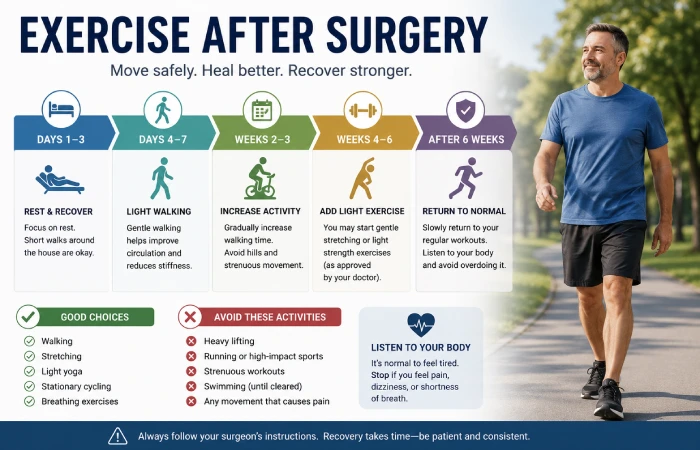
Light walking is permissible after a few days.
Avoid:
- Running
- Weight lifting:.
- Swimming
- Contact sports
Only resume non-exercise after you. has been cleared by the doctor.
Possible Complications
Contact your healthcare provider immediately if you experience:
- Heavy bleeding
- body temperature GA-increased to> 101 degrees F (> 38.3 degrees C)
- Hard to breathe
- Severe dehydration
- Repeated vomiting
- Pain that gets worse again after improving to start with
Timely management prevents severe complications.
Tips for Faster Recovery
Follow these habits for a smoother sleep apnea surgery recovery:
- Make sure to drink water.
- Eat soft foods which are high in protein.
- Try not to smoke.
- Limit Alcohol.
- Follow medication instructions.
- Find the follow up appointments.
- Keep your throat moist.
- Sleep with your head elevated.
- No heavy activity.
- Be gentle and patient with the healing process.
Can Surgery Cure Sleep Apnea Immediately?
While.
Swelling in the early weeks may temporarily impair breathing. Generally, surgeons will assess an initial outcome after complete healing of the nose, with some reassessment–repeat sleep study–several weeks or months later.
Some patients will notice immediate changes, and others will just see slowing changes because their swelling is going down.
Frequently Asked Questions
Duration of sleep apnea surgery recovery
Most of the patients recover within 2-4 weeks as internal healing may take 6-12 weeks depending on the procedure.
Is sleep apnea surgery painful?
Yes. Throat surgery (UPPP, for example, or tonsillectomy) generally causes more pain than procedure performed by your nose or Inspire implant procedure. Pain is usually most severe in the first week.
What foods can I eat during funic?
Eat soft foods that are easy to swallow like yogurt, mashed potatoes, soup, oatmeal, blended drinks and scrambled eggs until your doctor gives you the OK to eat normally.
What time I am allowed to do my sport?
Mild walking is generally OK within a few days, heavy exercise should be avoided anywhere from 2-4 weeks or until cleared by your surgeon.
How often do I call my doctor?
Seek help if you experience heavy bleeding, difficulty breathing, persistent fever, extreme dehydration or increasing pain.
Final Thoughts
It takes time and the right management and communication with your health care team to recover from the surgery. Holding pain has been reported for the first two weeks after surgery but the minimum wait to recovery can be achieved through adherence to your surgeon‘s advice, maintaining adequate hydration, eating soft diet and taking rest. The recovery time frame and ideal post operation management also aid longer lasting treatment results and improvement in sleep quality.