
 Sameena Fatima
Health & Wellness Content Writer
in
Sameena Fatima writes reader-focused
health and wellness content for
HealthBloomWeb, covering fitness,
nutrition, healthy lifestyle and
everyday wellness topics.
Sameena Fatima
Health & Wellness Content Writer
in
Sameena Fatima writes reader-focused
health and wellness content for
HealthBloomWeb, covering fitness,
nutrition, healthy lifestyle and
everyday wellness topics.
 Mirza Ibrahim Ali Khan
Editorial & Content Reviewer
in
Mirza Ibrahim Ali Khan contributes to
HealthBloomWeb's editorial review process,
with a focus on content structure,
readability, search intent and overall
editorial quality.
Mirza Ibrahim Ali Khan
Editorial & Content Reviewer
in
Mirza Ibrahim Ali Khan contributes to
HealthBloomWeb's editorial review process,
with a focus on content structure,
readability, search intent and overall
editorial quality.
 Reyansh Sethi
Medical Reviewer
in
Reyansh Sethi contributes to the medical
review process at HealthBloomWeb, focusing
on clarity, responsible health context and
reader-friendly presentation of health
information.
Reyansh Sethi
Medical Reviewer
in
Reyansh Sethi contributes to the medical
review process at HealthBloomWeb, focusing
on clarity, responsible health context and
reader-friendly presentation of health
information.
Medically Reviewed | Evidence-Based
For some people with obstructive sleep apnea (OSA) who can’t tolerate a CPAP machine, surgery can be life-altering.
CPAP remains the first line for majority of adult patient with moderate to severe OSA but surgical correction of anatomical aberration could be a permanent fix in selected appropriate candidates.
If surgery is right for you, then everything you need to know can be found here; how and why sleep apnea occurs, when surgery is advised, the types of procedures, life after surgery, success rates of different types of surgery, the risks and what other options are available. Also, how a doctor would decide which procedure is suitable for you, and what your airway looks like, your health and severity of sleep apnea are.
No matter if you have recently been diagnosed or if you are trying to decide on a course of action after being unsuccessful with CPAP, this evidence-based guide was developed to assist you in choosing the best course of action in collaboration with a knowledgeable sleep medicine specialist.
This Article is the Part of Sleep Improvement
What is Sleep Apnea?
Sleep apnea is a frequent sleep disorder wherein a individual briefly pauses or very stops their respiration although sleep. A breathing disruption might last several seconds to additional than a minute and can transpire as usually as hundred times in a solitary evening. Even if you cannot recall getting disturbed for the length of your sleep, your respiration pauses disrupt your rest, slash
How Normal Breathing Differs From Sleep Apnea
| Normal Sleep | Sleep Apnea |
| Air flows freely through the airway | Airway narrows or becomes blocked, or breathing effort is disrupted |
| Oxygen levels remain stable | Oxygen levels repeatedly drop |
| Consistent cycles throughout the night | Broken cycles and interrupted sleep |
| Smooth, steady breathing | Snorting, gagging, choking, gasping, or breathing cessations |
Types of Sleep Apnea
It’s important to distinguish because the type of sleep apnea will affect which treatments are recommended – even surgery.
1. Obstructive sleep Apnea (OSA)
OSA is the most prevalent type of sleep apnea. More OSA patients are discovered every year compared to other types of sleep apnea.OSA happens when throat muscles collapse or relax and prevent the passage of air. Normally when you sleep, throat muscles relax.
This results in the soft palate or your tongue either blocking the airway partially or entirely.
The brain can command the body to breathe, but no air flow enters into or exit from the mouth due to airway restriction till the point blockage is removed.
Factors for OSA include:
- Excess body weight
- Enlarged tonsils
- A naturally narrow airway
- A large tongue
- Nasal obstruction
- Receding jaw structure
- Increasing age
Most sleep apnea surgeries are designed to treat this form of the condition.
2. Central Sleep Apnea CSA
A CSA is a relatively rare condition that is caused by a different issue. Instead of the airway being blocked, for some reason the brain doesn’t signal your body to continue breathing for brief periods.
There are three types of CSA: CSA associated with congestive heart failure.CSA associated with an opiate or narcotic (such as Codeine).
CSA with Cheyne-Stokes breathing pattern.
Central sleep apnea may occur in anyone with a number of medical conditions, including but not limited to:
Cheyne-Stokes respiration CSA occurs in about 5 percent of people who suffer from sleep apnea. CSA with Congestive Heart Failure About 5 to 15 percent of people who have congestive heart failure suffer from CSA. About half of those cases result in Cheyne-Stokes breathing patterns CSA associated with Opiates and Narcotics If you are suffering from opioid or opiate addiction and using prescription pain medication on a daily basis, you may suffer from central sleep apnea.
This is particularly true if you are taking 30 mg or more of opiate painkillers. CSA with Cheyne-Stokes breathing pattern It is not unusual to develop CSA with Cheyne-Stokes breathing patterns when you suffer from congestive heart failure.
Types of CSA :
This type of CSA is characterized by periods of rapid shallow breathing followed by periods of apnea. The following types of disorders are known to be associated with CSA:Congestive heart failure CSA with Opiate use Neurological disorders such as stroke CSA withCheyne-Stokes pattern. CSA causes CSA may occur in any type of person but more often is found in men, those over the age of 40, and those who carry too much body fat.
If CSA runs in your family, you will be at higher risk. Risk factors forCSA include but not are not limited to:Congestive heart failure Neurological condition or disorder Opiate or opiate useCSA with Opiates and Narcotics CSA is related to both Central Sleep Apnea and Sleep Apnea and often associated with. CSA is generally not caused by any specific condition but is more often related to the body’s ability to control its breathing reflexes during sleep.
Factors CSA with Cheyne-Stokes Breathing
Some other common causes or risk factors CSA with Cheyne-Stokes breathing CSA may be related to the following factors or conditions:
Congestive heart failure stroke and any other type of neurological condition, injury, or stroke; drug abuse of opiates; any other chronic diseaseCSA is a much less frequent cause of sleep apnea compared to OSA but it does affect thousands of Americans and other individuals around the globe each year.
CSA often involves disruption of breathing during sleep, but there may be other side effects as well. Other common complications ofCSACSA may include but are not limited to the following complications or side effects: Excessive sleepiness; Trouble with concentrating and memorizing CSA may be managed with the use of prescribed CPAP or BiPAP machines; mechanical ventilation and also surgery. The specific management method would depend on CSA’s exact cause, the individual’s personal preference and physical health, and the individual’s specific condition and symptoms.CSA Treatment Many types of central sleep apnea are manageable with medications. Some effective treatments forCSA CSA have demonstrated effectiveness.
Medical treatment for CSA and treatment options include many effective remedies and management techniques that include; CPAP, the mechanical control of ventilation (MCV), oxygen therapy and surgery.
CSA: The Central Airflow Control CSA, more typically termed as the Central Airflow Control, CSA has been considered a key part of sleep
3. Mixed (Complex) Sleep Apnea
Mixed sleep apnea occurs when elements of obstructive sleep apnea (OSA) and central sleep apnea (CSA) occur together. Some people develop central apneas after starting CPAP treatment for OSA. This condition requires individualized evaluation and management by a sleep specialist.
Comparison of Sleep Apnea Types
| Feature | Obstructive Sleep Apnea | Central Sleep Apnea | Mixed Sleep Apnea |
| Cause | Physical airway blockage | Brain signaling problem | Combination of both |
| Most Common? | Yes | No | Less common |
| Snoring | Common | Less common | Variable |
| Surgery Helpful? | Often, in selected patients | Usually no | Depends on the obstructive component |
| CPAP Response | Often effective | May require specialized devices | Varies |
Signs and Symptoms of Sleep Apnea
Many people live with sleep apnea for years without realizing they have it. Often, a partner or family member first notices the warning signs.
Common symptoms include:
- Loud, habitual snoring
- Pauses in breathing during sleep
- Gasping or choking episodes at night
- Excessive daytime sleepiness
- Morning headaches
- Dry mouth on waking
- Difficulty concentrating
- Memory problems
- Mood changes or irritability
- Reduced work productivity
- Decreased libido
- Frequent nighttime urination
Symptoms also differ by age Sleep apnea is exhibited in different manners in kids: snoring during sleep, open mouth breathing, decline in studies and attention, and also shifts in conduct and behavioral characteristics.
Why is Treating Sleep Apnea Required?
Inaction can Lead to Negative Outcomes Over the long haul – It can affect many of the organ systems in the body, including heart failure or elevated blood pressure. Stress on the systems occurs each time blood oxygen levels go down and the individual struggles to fall asleep or stay sleeping, leading to a lack of good rest. The potential side effects of treating an sleep disorder in order to avoid these outcomes are:
- High blood pressure
- Heart attack
- Stroke
- Irregular heart rhythms
- Heart failure
- Type 2 diabetes
- Increased risk of motor vehicle accidents due to drowsiness
- Depression and anxiety
- Reduced quality of life
- Cognitive decline in older adults
By getting an early diagnosis and the correct treatment you can eliminate the vast majority of these risks and have the best quality of sleep and better health.
Diagnosing Sleep Apnea
You need the proper diagnosis to achieve the proper treatment. Your medical doctor will assess: your symptoms your medical history physical exam test results and sleep studies if necessary. Test Your Health Options for Sleep Apnea diagnose a disorder The major options available to diagnosing Sleep Apnea is through an established Sleep lab that watches:
Overnight Polysomnography (Sleep Study)
Conducted in a sleep laboratory, this comprehensive test monitors:
- Brain activity
- Eye movements
- Heart rate
- Breathing patterns
- Oxygen levels
- Limb movements
- Snoring
- Sleep stages
It remains the gold standard for diagnosing sleep apnea and determining its severity.
Home Sleep Apnea Test (HSAT)
If a few adult candidates for HSAT are identified with suspected obstructive sleep apnea but no complicated factors, HSAT at home might be applicable to observe respiration, airflow and oxygen concentration during the time of sleeping at the time in home but is unable to obtain such comprehensive details as laboratory research in full details.
Apnea-Hypopnea Index (AHI)
The AHI measures the average number of breathing interruptions per hour of sleep and helps classify the severity of obstructive sleep apnea.
| AHI Score | Severity |
| 5–14 | Mild |
| 15–29 | Moderate |
| 30 or higher | Severe |
AHI is one factor used when deciding whether surgery or another treatment may be appropriate. Symptoms, oxygen levels, and anatomical findings also play important roles.
When Is Sleep Apnea Surgery Recommended?
Your surgeon may recommend surgery to treat sleep apnea if… The preferred first line treatment for most adults suffering from obstructive sleep apnea (OSA) is a system called continuous positive airway pressure (CPAP) because it’s effective if tolerated properly each and every night. However, most individuals cannot fall asleep, remain asleep and become accustomed to wearing a CPAP mask on a nightly basis.
Discomfort, allergies, anxiety about a breathing mask and persistent air leak problems are a few of the issues that cause patients to avoid CPAP.
If a CPAP machine isn’t the ideal solution for you after an in-depth evaluation by your sleep doctor and an ear, nose, and throat (ENT) or maxillofacial surgeon, surgery may be a more suitable choice. Surgery seeks to eliminate the physical reasons why the upper airways collapse at night as opposed to just symptom treatment.
The Following may indicate that
- You Are A Good Candidate for sleep Apnea Surgery
- You have moderate to severe obstructive sleep apnea on your sleep study.
- Your doctor has ruled that you may not tolerate a cpap device and you can’t adhere to using one properly and consistently. Tonsils/ adenoids enlarged that may be causing some of your obstruction
- You have a deviated septum/chronically blocked nose
- Have tongue-base collapse or excessive soft tissue narrowing the airway.
- Have jaw abnormalities that contribute to airway collapse.
- Continue to have significant symptoms despite non-surgical treatment.
Surgery Is Usually Not Recommended If:
- You have untreated central sleep apnea.
- Your symptoms are mild and respond well to conservative treatment.
- Significant medical conditions make surgery unsafe.
- The expected benefits do not outweigh the surgical risks.
Pre-Surgical Evaluation
Before recommending surgery, your healthcare team may perform several tests to identify where the airway collapses during sleep.
Common Evaluations
| Evaluation | Purpose |
| Sleep Study (Polysomnography) | Confirms diagnosis and severity |
| Home Sleep Apnea Test | Alternative for selected patients |
| ENT Examination | Evaluates the nose, throat, and tonsils |
| Drug-Induced Sleep Endoscopy (DISE) | Identifies the exact location of airway collapse |
| CT Scan or MRI (when indicated) | Assesses facial and airway anatomy |
| Dental/Jaw Assessment | Determines if jaw advancement surgery may help |
A detailed evaluation improves surgical planning and increases the likelihood of successful treatment.
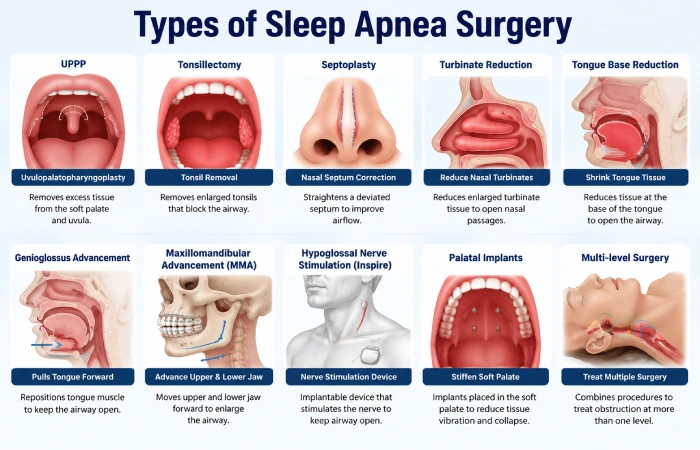
Types of Sleep Apnea Surgery
Types of sleep apnea surgery As with other sleep apnea procedures, a single surgery is not perfect for all patients. The type of operation used will depend on the area of blockage in your upper airway, your general health and weight, and the extent of your sleep apnea.
1. Uvulopalatopharyngoplasty (UPPP)
What Is It?
Surgery UPPP – The UPPP is perhaps the most often-used type of surgery to treat obstructive sleep apnea. During this procedure, the extra tissues from your uvula (the dangly thing that hangs down from the soft palate) and your soft palate (the back roof of your mouth) and your throat are removed or reduced so the upper airway can be opened.
- Soft palate obstruction
- Enlarged uvula
- Mild to moderate OSA
- CPAP intolerance
Advantages
- Improves airflow
- May reduce snoring
- Long-established procedure
Possible Risks
- Sore throat during recovery
- Temporary swallowing difficulty
- Voice changes (rare)
- Bleeding or infection
Recovery
Most patients recover within 2–4 weeks, although throat discomfort is common during the first two weeks.
2. Hypoglossal Nerve Stimulation (Inspire Therapy)
This minimally invasive procedure involves implanting a small device under the skin in the chest. During sleep, it stimulates the hypoglossal nerve so the tongue does not move backward and obstruct the airway.
Unlike CPAP, no mask is required.
- Moderate to severe OSA
- Unable to tolerate CPAP
- Appropriate body mass index (BMI)
- Specific airway anatomy confirmed by DISE
Benefits
- No mask during sleep
- Improved sleep quality
- High patient satisfaction
- Adjustable settings
Limitations
- Requires implantation surgery
- Battery replacement after several years
- Not suitable for every patient
3. Maxillomandibular Advancement (MMA)
Maxillomandibular Advancement (MMA) The leading procedure to treat severe sleep apnea, this surgery brings the lower and upper jaws forward in an operation, enlarging the air passage to help keep the tongue and soft tissue away from the throat.
- Severe OSA
- Small or recessed jaw
- Multiple levels of airway obstruction
- Younger, healthy surgical candidates
Advantages
- High long-term success rates
- Significantly enlarges the airway
- Often reduces dependence on CPAP
Recovery
Recovery generally takes 6–12 weeks, with temporary dietary restrictions while the jaw heals.
4. Septoplasty
A deviated nasal septum can make breathing through the nose difficult and reduce CPAP tolerance.
Septoplasty straightens the nasal septum, improving airflow.
Benefits
- Easier nasal breathing
- Improved CPAP comfort
- Reduced nasal obstruction
Although septoplasty alone rarely cures obstructive sleep apnea, it often enhances other treatments.
5. Turbinate Reduction
Turbinate Reduction Turbinates which are too large can obstruct the airway. Reducing them can enhance nasal breathing and also create a CPAP machine or dental appliance more tolerable.
6. Tonsillectomy
Enlarged tonsils are a common cause of airway obstruction, especially in children but also in some adults.
Removing the tonsils may substantially improve breathing during sleep.
7. Adenoidectomy
More commonly performed in children, adenoid removal can relieve airway obstruction when enlarged adenoids contribute to sleep apnea.
8. Tongue Base Reduction
If the tongue collapses backward during sleep, reducing its size or repositioning it can improve airflow.
Several surgical techniques are available, including radiofrequency ablation and robotic-assisted procedures.
9. Genioglossus Advancement
This surgery repositions the tongue muscle attachment to help keep the tongue forward during sleep.
It is often combined with other procedures rather than performed alone.
10. Multi-Level Airway Surgery
Many adults have airway obstruction at more than one location.
In these cases, surgeons may combine procedures such as:
- Septoplasty
- UPPP
- Tongue reduction
- Genioglossus advancement
Treating multiple obstruction sites generally provides better outcomes than addressing only one area.
Comparison of Sleep Apnea Surgeries
| Procedure | Primary Target | Typical Candidates | Recovery | Hospital Stay |
| UPPP | Soft palate | Mild–Moderate OSA | 2–4 weeks | Outpatient or overnight |
| Inspire Therapy | Tongue collapse | CPAP-intolerant patients | 2–3 weeks | Usually overnight |
| MMA | Jaw structure | Severe OSA | 6–12 weeks | 1–3 days |
| Septoplasty | Nasal septum | Nasal obstruction | 1–2 weeks | Outpatient |
| Turbinate Reduction | Nasal airway | Chronic congestion | 1–2 weeks | Outpatient |
| Tonsillectomy | Enlarged tonsils | Adults & children | 2 weeks | Outpatient |
| Tongue Base Reduction | Tongue obstruction | Selected adults | 2–4 weeks | Usually overnight |
| Multi-Level Surgery | Multiple sites | Complex OSA | Varies | Depends on procedures |
Estimated Success Rates by Procedure
Success depends on careful patient selection, surgical technique, anatomy, body weight, and long-term follow-up.
| Procedure | Approximate Success Range* |
| Maxillomandibular Advancement | 80–90% |
| Hypoglossal Nerve Stimulation | 70–80% |
| UPPP | 40–60% |
| Tonsillectomy (selected adults) | 60–80% |
| Septoplasty Alone | Low as a standalone OSA treatment; often improves nasal airflow and CPAP tolerance |
*These ranges are approximate and reported outcomes vary across studies and patient populations.
Benefits of Sleep Apnea Surgery
Successful surgery may provide:
- Reduced nighttime breathing interruptions
- Better sleep quality
- Less daytime sleepiness
- Reduced snoring
- Improved concentration and memory
- Better blood pressure control in some patients
- Improved quality of life
- Reduced reliance on CPAP in selected cases
It is important to remember that surgery does not guarantee a permanent cure for every patient. Some individuals may still require CPAP, an oral appliance, weight management, or additional treatment after surgery.
Risks and Possible Complications
All surgery involves a certain amount of risk. Complications include:
- Bleeding
- Infection
- Pain during recovery
- Temporary swallowing difficulty
- Dry throat
- Voice changes
- Persistent snoring
- Continued obstructive sleep apnea
- Need for additional surgery
- Reaction to anesthesia
Discuss these risks with your surgeon before making a treatment decision.
Surgery vs. CPAP vs. Inspire vs. Oral Appliance
| Feature | CPAP | Surgery | Inspire Therapy | Oral Appliance |
| Non-surgical | Right | Wroung | Wroung | Right |
| First-line treatment | Right | Usually no | Usually no | Sometimes |
| Permanent anatomical change | Wroung | Right | Wroung | Wroung |
| Daily device required | Right | Wroung | Remote activation only | Right |
| Recovery time | None | Varies | Short | None |
| Best for | Most adults with moderate–severe OSA | Selected patients with correctable anatomy | CPAP-intolerant patients meeting criteria | Mild–moderate OSA or CPAP intolerance |
Week By Week: Sleep Apnea Surgery Recovery
Recovery after sleep apnea surgery will depend on the type of surgery performed, as well as your individual health and if multiple surgeries were conducted during the same procedure. Some patients may be able to return to their regular activities after about one week; however, other patients –especially those undergoing jaw surgery- may require several weeks before their recovery is complete. By following the surgeon’s instructions carefully, the potential complications can be minimized.
Recovery Timeline
| Recovery Stage | What You Can Expect | Tips |
| First 24 Hours | Sore throat, swelling, mild bleeding, drowsiness | Rest, stay hydrated, take prescribed medications |
| Days 2–7 | Peak swelling and discomfort | Eat soft foods, avoid strenuous activity, sleep with your head elevated |
| Weeks 2–4 | Pain improves, swallowing becomes easier | Gradually resume normal activities as advised |
| Weeks 4–8 | Continued healing and improved breathing | Attend follow-up appointments and discuss any persistent symptoms |
| 2–6 Months | Final healing and reassessment | A repeat sleep study may be recommended to evaluate treatment success |
Managing Pain After Surgery
Dealing With Your Pain Post-Operation You’ll experience some pain – particularly after operations of the jaw and/or throat. Your doctor or dentist might advise the following: Prescription or OTC pain medication Ice or cold drinks (if permissible) Plenty of fluid intake Eating a soft, bland diet Rest during the first few days You’ll want to alert your surgeon right away about heavy bleeding, breathing trouble, a continued fever, or worsening pain that isn’t resolved by medication.
Foods to Eat During Recovery
What to Eat During the Recovery period Proper food can help to keep your surgical site healthy as well as make it easier to swallow.
Recommended Foods
- Yogurt
- Smooth soups (not excessively hot)
- Mashed potatoes
- Oatmeal
- Applesauce
- Scrambled eggs
- Cottage cheese
- Protein smoothies
- Well-cooked pasta
- Soft fruits such as bananas
Foods to Avoid
- Chips
- Toast
- Nuts
- Popcorn
- Spicy foods
- Acidic beverages
- Alcohol
- Very hot drinks
- Crunchy snacks
Returning to Work and Exercise
Recovery times vary by procedure.
| Procedure | Return to Desk Work | Return to Exercise |
| Septoplasty | 3–7 days | About 2 weeks |
| Turbinate Reduction | 3–7 days | About 2 weeks |
| UPPP | 2–3 weeks | 3–4 weeks |
| Inspire Implant | 1–2 weeks | 2–3 weeks |
| MMA Surgery | 4–6 weeks | 8–12 weeks |
Always follow your surgeon’s recommendations before resuming strenuous activity.
How Much Does Surgery for Sleep Apnea Cost?
Sleep apnea surgery is expensive, and these figures are just estimates that don’t factor in the particular surgical approach, where you have the procedure done, or how much your surgeon is compensated (as well as where you live or your own insurance plan). Procedure Estimated Price (USD) What It’s Typically Covered For (by insurance)UPPP $5K to $15KIf your physician deems it medically necessary Inspire Therapy $30K to $65KYes, if you qualify for therapy MMA Surgery $40K to $100K Yes, but it needs prior authorization.
Septoplasty $3K to $10KUsually covered in the case of a deviated septum or other obstruction Tonsillectomy $3K to $8KYes, if you meet the criteria “Medically necessary” can depend on factors ranging from a history of health conditions to where the obstruction is located in the mouth and throat.
Get in touch with your insurance carrier to discuss the specifics.
Factors That Influence Cost
- Hospital fees
- Surgeon’s fees
- Anesthesia
- Preoperative testing
- Follow-up appointments
- Geographic location
- Insurance deductible and copay
Before scheduling surgery, request a written estimate from your healthcare provider and verify coverage with your insurance company.
Does Insurance Cover Sleep Apnea Surgery?
In many cases, yes—but only if specific medical criteria are met.
Insurance providers commonly require:
- A confirmed diagnosis of obstructive sleep apnea through a sleep study
- Documentation showing that CPAP was ineffective or not tolerated (when applicable)
- Evidence that the selected surgery is medically necessary
- Prior authorization before the procedure
Requirements vary, so check with your insurer before surgery.
When to Seek Immediate Medical Care
Seek urgent medical attention if you develop:
- Difficulty breathing
- Heavy bleeding
- High fever
- Chest pain
- Severe dehydration
- Signs of an allergic reaction to medication
Long-Term Success: Lifestyle Changes Matter
Even after successful surgery, healthy habits play an important role in maintaining results.
Maintain a Healthy Weight
Weight gain can contribute to renewed airway narrowing and may reduce the long-term effectiveness of surgery.
Stay Physically Active
Regular exercise supports weight management, cardiovascular health, and better sleep quality.
Limit Alcohol Before Bedtime
Alcohol relaxes throat muscles and can worsen airway collapse during sleep.
Avoid Smoking
Smoking irritates the airway, increases inflammation, and slows healing.
Sleep on Your Side
For some people, side sleeping reduces airway collapse and complements surgical treatment.
Keep Follow-Up Appointments
Your doctor may recommend repeat sleep testing several months after surgery to determine how well treatment worked and whether additional therapy is needed.
Alternatives to Sleep Apnea Surgery
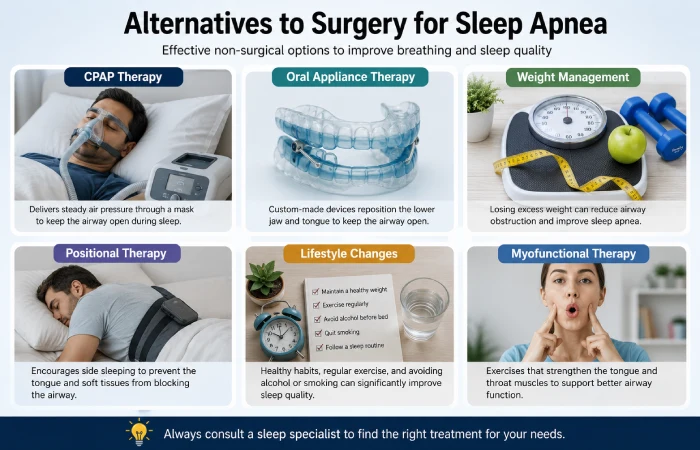
Alternatives to sleep apnea surgery is only one treatment option. Many people achieve excellent results without an operation.
1. Continuous Positive Airway Pressure (CPAP)
CPAP remains the gold standard for most adults with moderate to severe obstructive sleep apnea. It delivers pressurized air through a mask to keep the airway open during sleep.
Best For
- Moderate to severe OSA
- People who tolerate the device well
2. Oral Appliance Therapy
Custom-made oral appliances reposition the lower jaw and tongue to help keep the airway open.
Best For
- Mild to moderate OSA
- Individuals who cannot tolerate CPAP
3. Weight Management
For people who are overweight or obese, even modest weight loss may reduce the severity of obstructive sleep apnea.
Weight management is often recommended alongside other treatments rather than as a replacement.
4. Positional Therapy
Some people experience apnea primarily while sleeping on their back.
Positional therapy encourages side sleeping using specialized devices or behavioral techniques.
5. Myofunctional Therapy
These guided exercises strengthen the tongue and throat muscles. While not a substitute for standard treatment, they may provide additional benefit in selected individuals.
Comparison of Sleep Apnea Treatments
| Treatment | Invasive | Typical Effectiveness | Best For |
| CPAP | No | Very High (when used consistently) | Moderate–Severe OSA |
| Oral Appliance | No | Moderate | Mild–Moderate OSA |
| Weight Management | No | Varies | Overweight patients |
| Positional Therapy | No | Mild–Moderate | Position-dependent OSA |
| Sleep Apnea Surgery | Yes | Varies by procedure and patient | Selected candidates with anatomical obstruction |
Frequently Asked Questions About Sleep Apnea Surgery
1. Can sleep apnea surgery permanently cure sleep apnea?
It varies depending on the cause of your sleep apnea and the surgical procedure. Some patients experience total or nearly total remission of symptoms; while many still require the use of CPAP, Oral appliances, or lifestyle modification. Long-term follow-up with repeat sleep studies will determine the success of surgical management.
2. Who is the best candidate for sleep apnea surgery?
The candidates are adults with obstructive sleep apnea (OSA) who:
- Have a history of or confirmed OSA through a sleep study.
- Unable to tolerate, or derive benefit from CPAP therapy.
- Present an identifiable anatomic cause of airway collapse.
- Able to be fit enough to have surgery.
3. What is the most successful sleep apnea surgery?
Maxillomandibular Advancement (MMA) likely results in the best outcomes when appropriately selected patients are considered because it increases the airway at various levels. Nonetheless, the “best” procedure is one that suits the patient‘s particular anatomy and sleep study value.
4. Is sleep apnea surgery painful?
Most patients find it uncomfortable for a temporary period of time after the procedure and especially after throat or jaw procedures. It generally settles within the first two weeks with pain relief from medications, hydration and a soft diet.
5. How long does recovery take?
Recovery varies by procedure:
- Surgery Typical Recovery
- Septoplasty 1-2 weeks
- UPPP 2–4 weeks.
- Inspire Implant-2 to 3 weeks.
- MMA Surgery 6–12 weeks
Your surgeon will give you a timetable of your individual recovery.
Final Conclusion
Sleep apnea surgery can offer an excellent solution for some individuals suffering from obstructive sleep apnea, particularly when CPAP and other non-surgical options have failed to resolve the condition or if an identifiable obstruction can be addressed. But it isn’t a universal cure, and a successful procedure depends on identifying the appropriate treatment plan, selecting the correct surgical approach and selecting the right candidate. Always talk to your physician and sleep surgeon about the variety of options available before surgery.