
 Sameena Fatima
Health & Wellness Content Writer
in
Sameena Fatima writes reader-focused
health and wellness content for
HealthBloomWeb, covering fitness,
nutrition, healthy lifestyle and
everyday wellness topics.
Sameena Fatima
Health & Wellness Content Writer
in
Sameena Fatima writes reader-focused
health and wellness content for
HealthBloomWeb, covering fitness,
nutrition, healthy lifestyle and
everyday wellness topics.
 Mirza Ibrahim Ali Khan
Editorial & Content Reviewer
in
Mirza Ibrahim Ali Khan contributes to
HealthBloomWeb's editorial review process,
with a focus on content structure,
readability, search intent and overall
editorial quality.
Mirza Ibrahim Ali Khan
Editorial & Content Reviewer
in
Mirza Ibrahim Ali Khan contributes to
HealthBloomWeb's editorial review process,
with a focus on content structure,
readability, search intent and overall
editorial quality.
 Reyansh Sethi
Medical Reviewer
in
Reyansh Sethi contributes to the medical
review process at HealthBloomWeb, focusing
on clarity, responsible health context and
reader-friendly presentation of health
information.
Reyansh Sethi
Medical Reviewer
in
Reyansh Sethi contributes to the medical
review process at HealthBloomWeb, focusing
on clarity, responsible health context and
reader-friendly presentation of health
information.
Introduction
Naturopathic treatment is growing in popularity as people are seeking alternative/further options to improve their health, to prevent illness, or care for chronic health conditions in conjunction with traditional medicine. Rather than simply suppressing symptoms with pharmaceuticals, naturopathic medicine aims to support the body‘s own healing ability through individualized nutrition, exercise, stress management, sleep, and evidence-based herbal and natural therapies.
The increasing popularity of preventive medicine, lifestyle medicine, and integrating overall health and wellness has led many clinicians to accept complementary therapies as beneficial when integrated appropriately. Patients seek out and utilize treatments that support healthier lifestyles and mental health and overall well-being in addition to alleviating symptoms in 2026.
Naturopathy – a complete description of how it works, what it is about, the foundation and philosophies, therapies offered, benefits which may be gained, safety considerations and what to expect from a consultation with a naturopath.
What Does Treatment with Naturopathy Entail?
Naturopathy treatment is a holistic type of health care practice, which includes aspects such as good lifestyle habits, natural nutrition, physical therapies and some natural treatments, which all support general health. It aims to boost the body‘s natural ability to heal, adapt and respond with the underlying causes of disease being treated, where appropriate, in addition to the symptoms.
Compared to therapies targeted at alleviating symptoms alone, naturopathic medicine is known to emphasize various areas of an individual‘s health, such as:
- (Diet )-consists of foods that are available on a daily basis i.e. milk, juices, eggs, fruit, cereal, bread, rice, pasta, lamb, chicken, potato, and sugar. These foods will be predominantly consumed on a daily basis, but is still sufficient to support other meals such as; Sunday roast and a treat.
- Physical activity
- sleep quality
- Stress levels are not mentioned in the proposal, and the database would benefit from including a measure of stress levels as a moderator.
- emotional well-being This refers to mood, passion, and positive and negative affections. Within the MYM scale, this is assessed through three items:
- Emosite is “affectively facilitated state,” and is used as a measure of well-being in the current WHO scales.
- Medical history
- All environmental exposures Pre–existing medical conditions Treatment plans are often personalized as “each patient has a different health history, lifestyle, and goals”.
A Simple Example
Imagine a person who has one of these every day:
A standard assessment may find the specific medical condition and suggest the medication or other intervention required.
A naturopathic approach may also explore:
- Eating habits Source
- Cost of fiber consumption
- Water flush Physical activity
- Physical activity, including the type of activity and intensity its performed at.
- the amount of physical activity within the population or subgroup.
- Stress level. High levels may be more susceptible to healthy cuts than relatively low.
- Other important assessment categories include the quality of sleep. In terms of sleep, the participant would be asked about the amount of sleep they generally obtained on an average night and the quality of sleep they experienced.
- Timing of meals: We collected details regarding the time of each meal/snack from observation, the number of home cooked meals (from the home cooked survey) and pack lunch intake (from the pack lunch questionnaire) for each day.6
- PCFA of food sensitivities (if it is relevant)
Its aim is to optimise long term digestive health through pre and post diagnosis lifestyle changes, but to also ensure that significant co-morbid medical illnesses are accurately diagnosed.
Brief History of Naturopathy
While ideas of natural healing have existed for thousands of years, the modern practice of naturopathy originated in the late 1800s into the early 1900s. It integrates theories from nutrition, hygiene, physical medicine, herbal practices, and preventative medicine.
Currently, standards for naturopathic practice differ from country to country. N some countries naturopathic physicians are well trained and are licensed to provide many types of health care while other countries are less regulated or unregulated. Patients should check the educational background of their practitioners as well as the practitioners scope of practice.
The Six Core Principles of Naturopathy
The above principles form most protocols for naturopathic treatments.
| Principle | Meaning |
| First, Do No Harm | Use the least invasive and safest therapies appropriate for the situation. |
| Healing Power of Nature | Support the body’s natural capacity to maintain and restore health. |
| Identify the Cause | Look beyond symptoms to understand contributing factors. |
| Treat the Whole Person | Consider physical, emotional, mental, social, and environmental influences. |
| Doctor as Teacher | Educate patients to make informed health decisions. |
| Prevention First | Encourage healthy habits to reduce future disease risk. |
Many of these principles coincide with current anti-aging and preventive medicine, and “lifestyle medicine”.
How is a Naturopathy Treatment Effected?
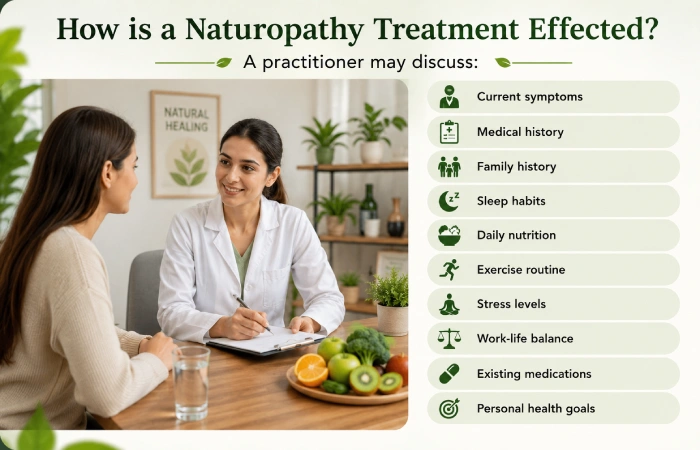
Rather than taking a blanket approach., nor with a general health screen.
- Present features
- Medical history: This is a written account of the patient: their symptoms, examinations, investigations and procedures. This allows for the information to be concise and helpful to the doctor providing an accurate history.
- Family history: some diseases tend to run in families. Familial factors may help to explain the clustering of diseases in certain groups. However, familial aggregation is more complex than simple familiarity.
- Sleep practices, such as the following activities:
- Nutrition daily
- Exercise program
- Generally an increase in stress, for example, requesting skills or making money related demands, may results in an increase in performance. However, high or increasing distress may have either a positive or negative effect on task completion.
- Work/life balance; includes taking continuous leave from work and achieving a balance between work (task completion) and non- work (both group/individual activities).
- The medications that are in use already
- Personal health goals
From this evaluation, a personalized program might incorporate some various adjuncts.
Common Components of a Naturopathy Treatment Plan
| Treatment Component | Purpose |
| Nutrition counseling | Promoting better quality of diet and adequacy of nutrients |
| Lifestyle modification | Encourage sustained health practices |
| Physical activity | Improve cardiovascular health, Improve metabolic health, Improve musculoskeletal health. |
| Stress management | Decrease ongoing stress, increase stress-resistance |
| Sleep optimization | Enhance restoration and long term health |
| Hydrotherapy | Use various water techniques to relax and rehabilitate |
| Massage therapy | Use massage therapy to aid in muscle relaxation and ease muscle tension |
| Yoga and breathing exercises | Boosts range of motion and mental health, strengthen balance and flexibility |
The appropriateness of combining therapies is not predetermined but is initiated where there is a need for the therapy.
How Naturopathy Differs from Conventional Medicine
Being able to understand the distinctions will assist and enable patients to be able to make informed choices about their healthcare.
| Feature | Naturopathy Treatment | Conventional Medicine |
| Primary Focus | Whole-person wellness | health promotion and prevention of disease versus Disease diagnosis and treatment |
| Main Goal | Support natural healing and prevention | by optimizing the vital energy. H. Treat the acute and chronic medical conditions on root. |
| Approach | Lifestyle-centered | Medication, procedures and surgery when necessary |
| Personalization | High | Varies by condition |
| Prevention | Major focus | Increasing emphasis but often back up plan |
| Scientific Evidence | Strong for many lifestyle interventions; varies for other therapies | Extensive evidence base across medical specialties |
They can also work together if well coordinated.
Why More People Are Exploring Naturopathic Care in 2026
Of all the various healthcare trends that have emerged, a number have been significant factors in the burgeoning field of naturopathy:
| Trend | Why It Matters |
| Rising chronic diseases | Several diseases would greatly improve with supplementation of healthy lifestyle habits in addition to the medication. |
| Preventive healthcare | Increasing public desire to prevent getting disease. |
| Stress-related illnesses | Keener focus on stress management and mind-body health is evident. |
| Personalized healthcare | Patients appreciate tailored care programs and collaborative decision-making. |
| Healthy aging | An increasing number of adults want to stay mobile, energetic and independent. |
Why a Personalized Approach Matters
There is no one approach that will work for everyone. Every person has different needs, on the basis of his or her age, illnesses and medications, activity level, and health objectives.
For example:
- Someone with high blood pressure might be helped through changes in diet, exercise and relaxation therapy as well as taking prescribed medication if necessary.
- A person with the chronic back pain can use up physical therapy, exercise, weight control, and some chosen complementary therapy with doctor supervision..
- An individual who is on managing diabetes may use nutrition counseling and physical activity as additional lifestyle changes to use with the prescribed management plan.
The best, most effective care is collaborative, evidence based conventional medicine combined with sound lifestyle and complementary measures.
Common Myths About Naturopathy
| Myth | Reality |
| Natural is completely safe. | Natural medicines might still produce side effects or interact with other drugs. |
| Naturopathy can stand alone in place of all medical treatment. | Certain severe illnesses must be given medical priority. |
| All therapies are supported by the science. | The evidence different for each therapy and condition. |
| One treatment works for everyone. | A key element of the profession. |
| Results happen immediately. | A lot of time and patience goes into making sustainable lifestyle changes. They don‘t offer significant results until they have been in effect for weeks or months. |
Types of Naturopathy Therapy
One of the most significant advantages of naturopathy treatments is that it doesn‘t use just one therapy. Instead practitioners of naturopathy assess a patient‘s needs and combine natural therapies that most effectively achieve an individual‘s health goals, taking medical history and prior lifestyle into account.
Naturopathy aims to heal and strengthen the body‘s natural defenses, in addition to combating diseased tissues rather than by merely concealing the symptoms.
The specific treatments advised are different for everyone. So a person with long term back pain might be given exercises, massages and instructed on how to sit properly. A person with gastrointestinal problems would likely be advised on certain dietary and lifestyle changes.
1. Nutrition Therapy
Nutrition therapy is regarded as the cornerstone of the majority of naturopathic therapy plans because everyday food consumption has an impact on almost every part of our well-being.
A naturopath will look at:
- Current eating habits
- Meal timing
- Nutrient intake
- Hydration
- Fiber consumption
- Food quality
- Lifestyle factors that may influence our eatingInstead of promoting fad, restrictive, or so called ‘detox’ dieting, evidence-based naturopathic therapies promote long term healthy eating, where foods are predominately whole foods.
Common Dietary Guidelines
- vegetables
- fruits
- whole grains
- legumes
- nuts and seeds
- healthy fats
- lean sources of protein
- plenty of water
Foods commonly eliminated or avoided
- ultra processed foods
- sweet drinks
- too much refined sugar
- too much salt
- overly processed snacks
- too much alcohol (where applicable)
Health Outcomes
- Assists with maintaining a healthy body weight
- May help with blood sugar balance
- Promotes health in the digestive tract
- Support of cardiovascular health
- Promotion of energy levels
2. Lifestyle Medicine
2. Lifestyle medicine
Lifestyle medicine is arguably the most science-supported treatment area within naturopathic. Instead of quick fixes, it seeks to give you tools that foster lasting healthy habits. Your naturopath can advise on some of the following:
- Daily movement
- Getting a decent sleep 2x a day
- Smoking cessation Managing stress
- Healthy food habits
- Spending time outdoors
- How work and life intersect (life/work integration)
Why is lifestyle medicine important? Chronic lifestyle diseases lifestyle interventions.
3. Hydrotherapy
Hydrotherapy The principle behind hydrotherapy (also known as water therapy) is to utilize temperature (hot, cold and contrast) as well as shapes and forms of water (ice, warm compress, baths etc.) as part of a therapy to promote relaxation, stimulate circulation of blood flow & assist with the healing process.
Commonly prescribed methods include
- Warm water baths.
- Heat/cold contrast baths.
- Steam room or sauna.
- Warm compresses.
- Cold compresses.
Benefit.
- Benefit Evidence.
- Reduced muscle tension Moderate.
- Temporary Pain Relief Moderate.
- Faster post-exercise recovery Moderate.
- Enhanced blood flow Moderate to Limited.
- Stress relaxation Moderate.
Due to potential cardiovascular contraindications, modifications should be discussed with a health professional for those with certain heart conditions or circulation problems.
4. Yoga Therapy
Yoga means a union of body movement, flexibility, breath work and mindful focus. In holistic care, it may be suggested as a supplement for physical and psychological healing. Potential Health Benefits May include
- Enhanced flexibility
- Enhanced balance
- Decreased stress
- Increased mobility
- Enhanced posture
- Better sleep may support traditional treatments for Chronic pain
Anxiety Various musculoskeletal issues.
5. Breathing Exercises
Breathing exercises is an easy process that aims to achieve better attention to breathing rhythm and increase calm.
A number of breathing exercises examples:
- Diaphragmatic Breathing
- breathing
- Slow Nasal Breathing
- Pursed Lip Breathing
What it might helps with:
- Less stress
- Better relaxation
- More concentration
- Better emotional response
It’s highly recommend to practices it together with mindfulness for better results.
Is Naturopathy Successful in the Treatment of diseases?
It’s commonly said that naturopathy can treat or sometimes cure long-standing illnesses and other ailments. However, just as it is with many alternative and holistic therapies or modalities, with naturopathy, it really is not as simple as asking “does it cure diseases?”. One of the top things you want to understand first is that naturopathic remedies are designed to enhance your body’s ability to restore self-care and health as part of your overall lifestyle.
While naturopathic medicine might be incredibly valuable for numerous chronic conditions such as lifestyle-related health concerns or issues such as, for example, a bad heart, the best plan for everyone is to consider naturopathic medicine as a supplement, not a substitute for, any standard health treatment you may need from a doctor.
Possible Risks of Naturopathy Treatment
Although many naturopathic approaches are low risk, they are not completely free of potential complications.
Possible concerns include:
- Delaying necessary medical treatment
- Herb–drug interactions
- Allergic reactions
- Inappropriate supplement use
- Unrealistic expectations
- Unverified health claims
Working with qualified healthcare professionals helps reduce these risks.