
 Sameena Fatima
Health & Wellness Content Writer
in
Sameena Fatima writes reader-focused
health and wellness content for
HealthBloomWeb, covering fitness,
nutrition, healthy lifestyle and
everyday wellness topics.
Sameena Fatima
Health & Wellness Content Writer
in
Sameena Fatima writes reader-focused
health and wellness content for
HealthBloomWeb, covering fitness,
nutrition, healthy lifestyle and
everyday wellness topics.
 Mirza Ibrahim Ali Khan
Editorial & Content Reviewer
in
Mirza Ibrahim Ali Khan contributes to
HealthBloomWeb's editorial review process,
with a focus on content structure,
readability, search intent and overall
editorial quality.
Mirza Ibrahim Ali Khan
Editorial & Content Reviewer
in
Mirza Ibrahim Ali Khan contributes to
HealthBloomWeb's editorial review process,
with a focus on content structure,
readability, search intent and overall
editorial quality.
 Reyansh Sethi
Medical Reviewer
in
Reyansh Sethi contributes to the medical
review process at HealthBloomWeb, focusing
on clarity, responsible health context and
reader-friendly presentation of health
information.
Reyansh Sethi
Medical Reviewer
in
Reyansh Sethi contributes to the medical
review process at HealthBloomWeb, focusing
on clarity, responsible health context and
reader-friendly presentation of health
information.
Why Comparison Content Helps You Make Better Wellness Decisions
Comparison Articles (High CTR) remain page 1 winners. They allow readers to analyze similar products or services side by side and save them time while getting all necessary facts. Readers can avoid reading ten articles on ten related subjects by reading a single comparison one.
This method can be particularly effective in the health industry where individuals are frequently comparing foods, drinks, forms of exercise and stress-relief and lifestyle behaviors before implementing changes.
This Article is a part of Cortisol Management
As health information grows more complex, comparison content helps to clarify. Whether you‘d like to learn how to better manage stress, enhance hormone balance, optimize fitness results or simply make better nutrition decisions, it‘s critical to learn the pros and cons of each.
This resource, supported by experts, compares several of the top wellness searches in 2026 with practical knowledge, proven suggestions, and how-tos.
Comparison Articles Generate Higher CTR and Engagement
Comparison content is natural to be interested because it matches human decision making process.
Most users searching comparison keywords are closer to taking action than those searching general informational topics.
Benefits of Comparison Content
- Simplifies complex decisions
- Saves research time
- Improves user experience
- Provides clear recommendations
- Supports purchasing decisions
- Helps compare pros and cons
2026 Content Engagement Comparison
| Content Type | Average User Engagement |
| General Blog Posts | Moderate |
| Educational Guides | High |
| Product Reviews | High |
| Comparison Articles | Very High |
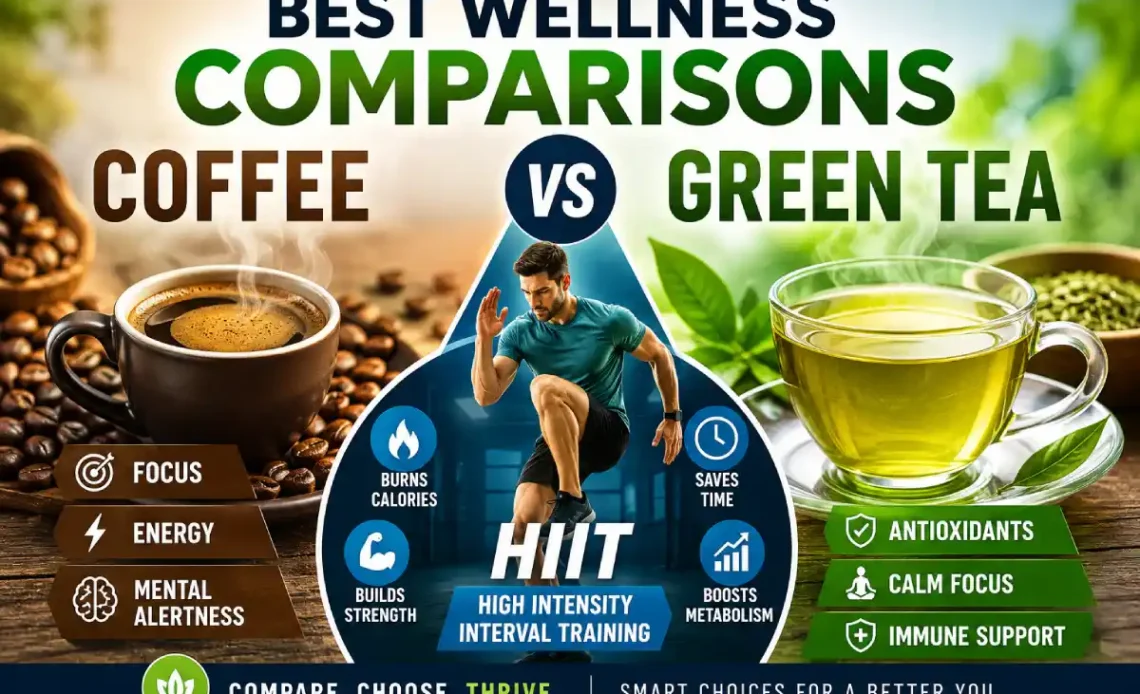
Coffee vs Green Tea for Cortisol
Coffee and green tea are among the world’s most consumed beverages. Both contain caffeine, but their effects on energy, stress, and also cortisol differ significantly.
Coffee
Coffee provides a rapid energy boost and improved mental alertness.
Benefits
- Enhances focus
- Supports workout performance
- Rich in antioxidants
- Widely accessible
Drawbacks
- Higher caffeine content
- May increase jitters
- Can disrupt sleep when consumed late
- May temporarily elevate trigger cortisol levels more significantly
Green Tea
Green tea offers a gentler energy experience while providing powerful anti oxidants.
Benefits
- Contains L-theanine
- Supports calm focus
- Lower caffeine content
- May promote relaxation
Drawbacks
- Less stimulating for some individuals
- Milder energy boost
Coffee vs Green Tea Comparison Table
| Factor | Coffee | Green Tea |
| Caffeine Content | High | Moderate |
| Energy Boost | Strong | Steady |
| Relaxation Support | Low | Moderate |
| Cortisol Impact | Higher | Lower |
| Antioxidants | High | Very High |
Expert Verdict
For individuals focused on stress management and cortisol balance, green tea generally provides a more balanced choice.
HIIT vs Yoga for Stress Relief
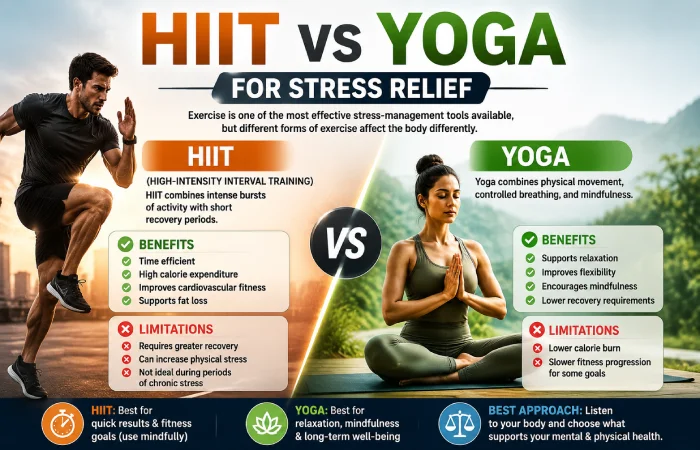
Exercise is one of the most effective stress-management tools available, but different forms of exercise affect the body differently.
HIIT (High-Intensity Interval Training)
HIIT combines intense bursts of activity with short recovery periods.
Benefits
- Time efficient
- High calorie expenditure
- Improves cardiovascular fitness
- Supports fat loss
Limitations
- Requires greater recovery
- Can increase physical stress
- Not ideal during periods of chronic stress
Yoga
Yoga combines physical movement, controlled breathing, and mindfulness.
Benefits
- Supports relaxation
- Improves flexibility
- Encourages mindfulness
- Lower recovery requirements
Limitations
- Lower calorie burn
- Slower fitness progression for some goals
HIIT vs Yoga Comparison
| Factor | HIIT | Yoga |
| Stress Relief | Moderate | Very High |
| Calorie Burn | High | Moderate |
| Recovery Needs | High | Low |
| Cortisol Response | Higher | Lower |
| Beginner Friendly | Moderate | High |
Expert Verdict
For cortisol reduction and stress management, yoga typically offers greater benefits.
Sugar vs Artificial Sweeteners
Many consumers trying to improve their health wonder whether sugar or artificial sweeteners are the better option.
Sugar
Advantages
- Natural energy source
- Familiar taste
- Commonly available
Disadvantages
- Increases calorie intake
- Can contribute to blood sugar spikes
- May encourage cravings
Artificial Sweeteners
Advantages
- Low or zero calories
- Minimal blood sugar impact
- Useful for calorie reduction
Disadvantages
- Research remains mixed on long-term effects
- May maintain preference for sweet foods
Sugar vs Artificial Sweeteners Comparison
| Factor | Sugar | Artificial Sweeteners |
| Calories | Higher | Lower |
| Blood Sugar Impact | High | Minimal |
| Sweetness | Moderate | High |
| Weight-Loss Support | Lower | Higher |
| Nutritional Value | Low | Low |
Expert Verdict
The healthiest approach is often reducing overall dependence on sweetened foods rather than choosing one sweetener exclusively.
Meditation vs Exercise for Stress
Both meditation and exercise are scientifically supported methods for managing stress.
However, they work through different mechanisms.
Meditation
Meditation primarily targets the nervous system and mental stress response.
Benefits
- Supports emotional resilience
- Improves focus
- Enhances mindfulness
- Requires minimal equipment
Exercise
Exercise improves both physical and mental health.
Benefits
- Releases endorphins
- Supports cardiovascular health
- Improves sleep quality
- Builds stress resilience
Meditation vs Exercise Comparison
| Factor | Meditation | Exercise |
| Mental Relaxation | Very High | High |
| Physical Benefits | Low | Very High |
| Accessibility | High | Moderate |
| Time Requirement | Low | Moderate |
| Stress Reduction | Very High | Very High |
Processed Foods vs Whole Foods
Nutrition plays a significant role in energy levels, recovery, stress management, and long-term health.
Processed Foods
Examples include:
- Packaged snacks
- Fast food
- Sugary cereals
- Energy drinks
Benefits
- Convenience
- Longer shelf life
- Easy availability
Drawbacks
- Lower nutrient density
- Higher sodium and added sugar
- Lower fiber content
Whole Foods
Examples include:
- Fruits
- Vegetables
- Whole grains
- Lean proteins
- Nuts and seeds
Benefits
- Rich in nutrients
- Higher fiber content
- Better satiety
- Supports overall wellness
Processed Foods vs Whole Foods Comparison
| Factor | Processed Foods | Whole Foods |
| Nutritional Quality | Lower | Higher |
| Fiber Content | Lower | Higher |
| Added Sugar | Higher | Lower |
| Satiety | Lower | Higher |
| Long-Term Health Support | Moderate | Excellent |
Whole foods consistently provide superior nutritional value and support healthier eating patterns.
Quick Wellness Winners Summary
| Comparison | Recommended Choice |
| Coffee vs Green Tea | Green Tea |
| HIIT vs Yoga | Yoga |
| Sugar vs Artificial Sweeteners | Depends on Goals |
| Meditation vs Exercise | Combination of Both |
| Processed Foods vs Whole Foods | Whole Foods |
Common Decision-Making Mistakes
Following Trends Instead of Evidence
Social media trends often oversimplify wellness advice.
Looking for One Perfect Solution
Most health improvements result from multiple healthy habits working together.
Ignoring Sustainability
The best strategy is one you can maintain consistently over time.
Conclusion
Comparison based wellness- which is better? Still one of the best forms of making sound health choices, Coffee vs Green Tea for Cortisol basics, HIIT vs Yoga for Stress Relief, Sugar vs Artificial Sweeteners, Meditation vs Exercise, Processed Foods vs Whole Foods, who wins- depends entirely on your in-take of time, funds, time and discipline.
Don‘t look for a perfect solution. Choose one that is sustainable and can be backed by research, your own experience and real world apply and works in the long run. Small incremental changes are often more effective than a large change that is easy to manage. This approach designed for and around the individual is the key to sustainable health, stress management and well-being.