
 Sameena Fatima
Health & Wellness Content Writer
in
Sameena Fatima writes reader-focused
health and wellness content for
HealthBloomWeb, covering fitness,
nutrition, healthy lifestyle and
everyday wellness topics.
Sameena Fatima
Health & Wellness Content Writer
in
Sameena Fatima writes reader-focused
health and wellness content for
HealthBloomWeb, covering fitness,
nutrition, healthy lifestyle and
everyday wellness topics.
 Mirza Ibrahim Ali Khan
Editorial & Content Reviewer
in
Mirza Ibrahim Ali Khan contributes to
HealthBloomWeb's editorial review process,
with a focus on content structure,
readability, search intent and overall
editorial quality.
Mirza Ibrahim Ali Khan
Editorial & Content Reviewer
in
Mirza Ibrahim Ali Khan contributes to
HealthBloomWeb's editorial review process,
with a focus on content structure,
readability, search intent and overall
editorial quality.
 Reyansh Sethi
Medical Reviewer
in
Reyansh Sethi contributes to the medical
review process at HealthBloomWeb, focusing
on clarity, responsible health context and
reader-friendly presentation of health
information.
Reyansh Sethi
Medical Reviewer
in
Reyansh Sethi contributes to the medical
review process at HealthBloomWeb, focusing
on clarity, responsible health context and
reader-friendly presentation of health
information.
Foods That Trigger Cortisol
Stress isn‘t just caused by work demands or sleep deprivation. It‘s also affected by what we eat every day that influences our body‘s stress reactions. Some eatables that activate cortisol may raise inflammation, shatter hormones and put your body in tenacious “flight or fight” mode.
Cortisol is called ‘the stress hormone’. Your body creates this naturally in order to control energy, blood glucose, metabolism and the immune system. Continuously high levels of cortisol can have several effects including fatigue, weight loss or gain, inability to sleep, anxiety and hormonal imbalance.
Here you‘ll find what foods to eat that raise cortisol triggering foods, reason they impact stress hormones, and improved options you may pick in 2026 for improved mental health and wellness.
This Article is a part of Cortisol Management
What exactly Is cortisol?
Cortisol-a natural hormone secreted by your adrenal glands, is one which you must cope with stress and also maintain normal bodily function.
The high cortisol levels persisting for a long time can lead to:
- More belly fat.
- Sleeping problems
- Anxiety and irritability (both required for the diagnosis)
- Blood sugar surges
- Hormonal imbalance.
- Exhaustion and burnout
- A significant factor in cortisol regulation is diet.
Before discussing which foods you should avoid if you are trying to reduce stress, a little knowledge of what cortisol is and what it does would be helpful. You can read our guide to the cortisol & stress basics hormones to discover exactly what cortisol is, its health affects and why all health aspects are positively affected by a balance level of it.
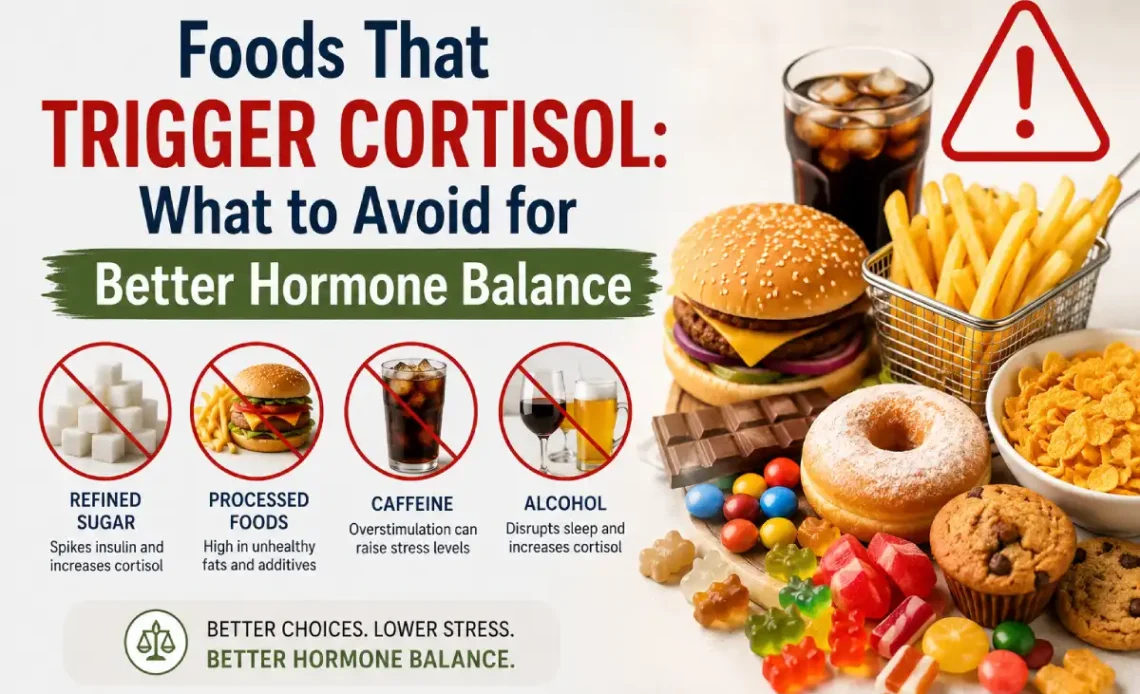
Sugary Foods and Soft Drinks
One of the biggest dietary triggers of cortisol is excess sugar.
Food high in sugar will raise blood glucose levels faster than foods without any. Your body then kicks in to chuck out a dose of insulin and stress hormones (cortisol). If you are always having sugar rushes it would have to mean that your cortisol levels would be high all day.
Examples
- Soda
- Candy
- Packaged desserts
- Sweet breakfast cereals
- Energy drinks
Does Sugar Increase Cortisol?
Yes. Studies in 2026 still suggest that high sugar intake might promote inflammation and cortisol secretion, particularly if high sugar snacks are eat regularly and if coupled with sleep deprivation and high stress levels.
Better Alternatives
| Avoid | Choose Instead |
|---|---|
| Soft drinks | Coconut water |
| Candy bars | Dark chocolate |
| Sugary cereal | Oats with berries |
| Packaged sweets | Fresh fruit |
Caffeine affects cortisol. Cortisol is a stress hormone.
Caffeine helps people feel more awake and focused. It works on the system. Caffeine gives an energy boost.
Much caffeine can be bad. It can make the adrenal glands work hard. This can make cortisol levels go up. Caffeine and cortisol levels are connected.
This effect is even stronger when caffeine is consumed:
- On an empty stomach
- Multiple times daily
- During chronic stress
- Late in the evening
Common High-Caffeine Products
- Energy drinks
- Strong coffee
- Pre-workout supplements
- High-caffeine teas
Caffeine vs Cortisol Impact
| Beverage | Average Caffeine | Potential Cortisol Impact Comparison |
|---|---|---|
| Energy drink | 200–300 mg | Very High |
| Black coffee | 95–150 mg | High |
| Green tea | 30–50 mg | Mild |
| Herbal tea | 0 mg | None |
Better Alternatives
- Herbal tea
- Decaf coffee
- Matcha in moderation
- Lemon water
Processed Foods and Cortisol
Foods that are highly processed are not good for us. They have things like carbohydrates and unhealthy fats. These foods also have preservatives and artificial ingredients. The thing, about these foods is that they can make our body get inflamed. Processed foods are really bad because they can cause inflammation in the body.
Refined carbohydrates, trans fats, preservatives and artificial ingredients are common in overly processed foods, which may promote inflammation in the body.
Processed Foods and Cortisol
Stress activates the stress response system of the body. A diet consisting of largely processed foods may be associated with chronically high levels of cortisol and compromised metabolic health.
- Frozen processed meals
- Fast food
- Chips and packaged snacks
- Processed meats
- Foods to Limit
- Instant noodles
Why They’re Harmful
| Ingredient Type | Effect on Stress Hormones |
|---|---|
| Refined oils | Inflammation |
| Artificial additives | Hormonal stress |
| Excess sodium | Blood pressure increase |
| Refined carbs | Blood sugar spikes |
Alcohol and Cortisol Levels
It may feel relaxing at first but this thing can really mess up the hormone balance and the sleep quality. The hormone balance and the sleep quality can be affected in a way by it.
Alcohol and Cortisol Levels
Studies show it can:
- Increase nighttime cortisol
- Disrupt deep sleep
- Increase dehydration
- Raise anxiety the next day
If you eat this food a lot it can be too much, for your body. It may make your adrenal system work hard and make you feel even more stressed out when you are already dealing with chronic stress symptoms. This food can really affect your system and make your chronic stress symptoms worse.
Higher-Risk Alcoholic Drinks
- Sugary cocktails
- Strong spirits
- Excess beer consumption
- Energy drink + alcohol combinations
Better Choices
If you drink occasionally:
- Stay hydrated
- Limit sugar mixers
- Avoid drinking before sleep
- Practice moderation
Refined Carbohydrates
White bread, pastries and refined flour products are digested fast. They can make your blood sugar go up and down quickly.
These spikes may increase cortisol and insulin simultaneously, especially in people with poor metabolic health.
Examples
- White bread
- Donuts
- Cakes
- White pasta
- Pastries
Better Alternatives
| Refined Carb | Better Option |
|---|---|
| White bread | Whole grain bread |
| White pasta | Brown rice pasta |
| Pastries | Greek yogurt + fruit |
| White rice | Quinoa |
Artificial Sweeteners
Some artificial sweeteners may affect gut bacteria and appetite regulation, indirectly impacting stress hormones.
While research is still developing in 2026, experts recommend moderation.
Common Artificial Sweeteners
- Aspartame
- Sucralose
- Saccharin
Symptoms of High Cortisol
If your diet regularly includes cortisol-triggering foods, you may experience symptoms such as:
- Belly fat gain
- Sugar cravings
- Poor sleep
- Fatigue
- Mood swings
- Anxiety
- Brain fog
- Low energy
Foods That Help Lower Cortisol Naturally
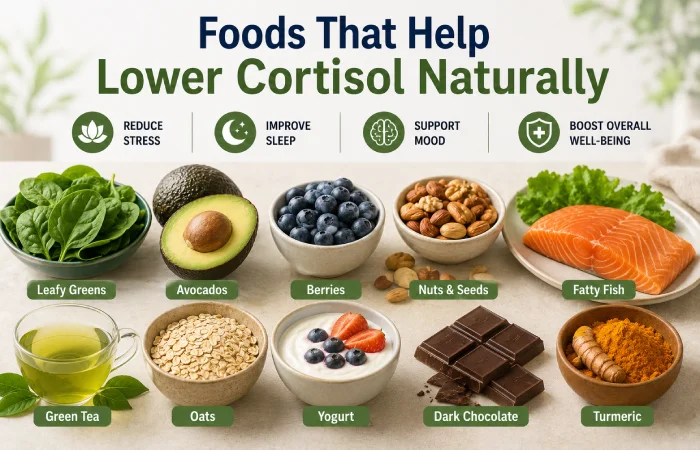
Balancing cortisol is not only about avoiding harmful foods. Adding nutrient-dense foods also matters.
Best Foods for Cortisol Support
| Food | Benefit |
|---|---|
| Avocados | Healthy fats |
| Salmon | Omega-3 support |
| Leafy greens | Magnesium |
| Berries | Antioxidants |
| Nuts and seeds | Stress support |
| Yogurt | Gut health |
| Oats | Stable energy |
Fortunately, certain nutrient-rich foods may help support a healthier stress response. Discover the anti-cortisol and stress-reducing foods that can help promote relaxation and overall wellness.
Everyday Habits That Decrease Cortisol
In addition to improving your diet, these habits may help lower stress hormones naturally:
- Sleeping time 7–9 hours
- Reduce caffeine consumption
- Stay body hydrated
- Exercise moderately
- Practice meditation
- Eat balanced meals
- Limit ultra-processed foods
Professional Insight
By the year 2026 nutrition experts will know more about how gut health, inflammation and cortisol’re connected. Eating a lot of processed sugar and stimulants can cause problems, like long term stress and metabolic imbalance.
To really take care of ourselves we should eat foods get good sleep and manage stress well. These things are still the way to invest in our health for a long time.
Frequently Asked Questions
What types of food cause the most increase in cortisol?
Sugary foods, alcohol, highly processed foods, refined carbs and energy drinks are some of the main cortisol provoking foods.
Does coffee raise cortisol?
Yes. Too much coffee temporarily may increase cortisol, especially if you are consuming it on an empty stomach.
Raising stress hormones with sugar?
Sure. Frequent sugar spikes could cause the cortisol and inflammation to build up over time.
A alcohol. Is it bad for cortisol?
Regular consumption of it can be disruptive to the sleep pattern and it can also raise levels of cortisol at night.
How is cortisol reduced naturally?
Reduce cortisol levels by consuming whole foods, sleeping more, cut back on caffeine, learn to relax and by exercising regularly.
A Summary
Recognizing which foods increase cortisol will support optimal hormone levels, energy, sleep and mental well-being as well. Although it’s alright to consume candy lollipops, diet soda, coffee, doughnuts and other stimulating, carbohydrate rich foods periodically, eating them consistently can constantly bombard your system with an excessive amount of stress. A diet of highly nutritious whole foods, adequate hydration, relaxation and stress management can contribute to optimum levels of natural cortisol.