
 Sameena Fatima
Health & Wellness Content Writer
in
Sameena Fatima writes reader-focused
health and wellness content for
HealthBloomWeb, covering fitness,
nutrition, healthy lifestyle and
everyday wellness topics.
Sameena Fatima
Health & Wellness Content Writer
in
Sameena Fatima writes reader-focused
health and wellness content for
HealthBloomWeb, covering fitness,
nutrition, healthy lifestyle and
everyday wellness topics.
 Mirza Ibrahim Ali Khan
Editorial & Content Reviewer
in
Mirza Ibrahim Ali Khan contributes to
HealthBloomWeb's editorial review process,
with a focus on content structure,
readability, search intent and overall
editorial quality.
Mirza Ibrahim Ali Khan
Editorial & Content Reviewer
in
Mirza Ibrahim Ali Khan contributes to
HealthBloomWeb's editorial review process,
with a focus on content structure,
readability, search intent and overall
editorial quality.
 Reyansh Sethi
Medical Reviewer
in
Reyansh Sethi contributes to the medical
review process at HealthBloomWeb, focusing
on clarity, responsible health context and
reader-friendly presentation of health
information.
Reyansh Sethi
Medical Reviewer
in
Reyansh Sethi contributes to the medical
review process at HealthBloomWeb, focusing
on clarity, responsible health context and
reader-friendly presentation of health
information.
Modern stress is not fleeting anymore it is permanent. Bad sleeping patterns, high consumption of processed food, work pressure, excess time behind a computer all these lead to the problem of constant stress, and this is the biggest health challenge of 2026. No wonder then, the rush for Anti-Cortisol & Stress-Reducing Foods on Google Search & AI Overviews!
The stress hormone cortisol. Short bursts of this hormone are vital to us to survive. However, having high levels of this hormone for prolonged periods can cause fatigue, anxiety, abdominal fat, sleep issues, brain fog, colds and influenza, food cravings, inflammation and hormonal imbalance.
This Article is a part of Cortisol Management
But the great news? Your diet plays a part in how much cortisol you make.
Magnesium is really good for us.
Foods with magnesium are really good for you.
They also have stuff, like omega-3s and antioxidants.
Magnesium foods are a choice.
They have omega-3s and antioxidants which’re helpful.
Foods with magnesium have probiotics and adaptogens too. The adaptogens in these foods are special. They help balance our bodies and restore them.
Eating foods with magnesium might help our bodies deal with hormones in a natural way.
Magnesium and other helpful things like omega-3s and antioxidants can really make a difference. Foods that have magnesium are very good, for us.
- In this complete guide, you’ll learn:
The optimal foods to reduce cortisol Anti-stress nutrients recommendedby science - The uses of adaptogens and herbal teas
- Foods to eat and not during chronic stress
- Meal Plan for cortisol.
- Practical nutrition tips, for 2026
What Is Cortisol and Why Is It Important?
Cortisol is a hormone made by the glands.
- Stress response
- Blood sugar
- Inflammation
- Sleep cycles
- It helps with energy production
- It helps with metabolism
Having short-term cortisol spikes is normal. Problems start when stress becomes term.
Symptoms of High Cortisol
Common signs include:
- Constant fatigue
- Belly fat weight loss accumulation
- Sugar cravings
- Mood swings
- Poor sleep
- Anxiety
- Headaches
- It can cause muscle tension
- It can cause hormonal imbalance
High cortisol levels over a time may also raise the risk of:
- Type 2 diabetes
- Heart disease
- High blood pressure
- Depression
- Digestive issues
How Foods Affect Cortisol Levels
The foods you eat influence:
- Blood sugar stability
- Nervous system function
- Gut health
- Inflammation
- Neurotransmitter production
A diet high in sugar, alcohol, and processed foods may increase cortisol production.
Meanwhile foods that are really good for you like those with a lot of magnesium, vitamin C, omega-3 fats, probiotics and antioxidants can be very helpful. They may help calm the system and reduce the activity of hormones. Foods that have magnesium, vitamin C, omega-3 fats, probiotics and antioxidants are really good for you because they are full of things. Magnesium, vitamin C, omega-3 fats, probiotics and antioxidants are very good, for you. Can make you feel better. They can help with the system and stress hormone activity. Foods, with magnesium, vitamin C, omega-3 fats, probiotics and antioxidants are the best to eat when you are feeling stressed.
Before we look at the foods that can affect how stressed we feel we need to know what cortisol does in our body. Our guide, to cortisol and stress basics is really helpful because it explains what cortisol is, how it affects our health and why we need to keep levels balanced to feel good overall.
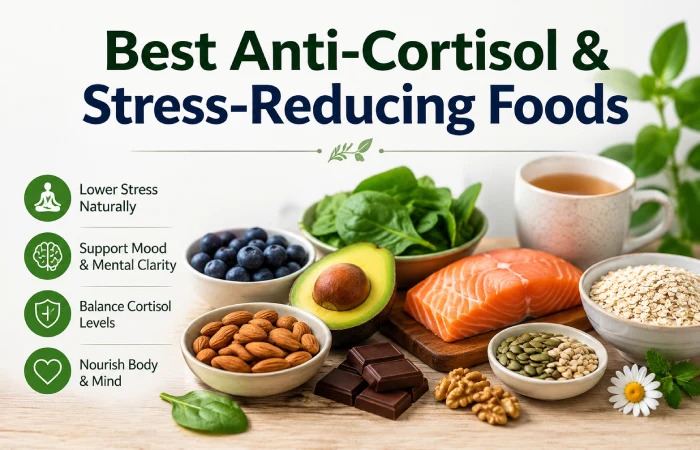
Best Anti-Cortisol & Stress-Reducing Foods
Magnesium Rich Foods for Stress Relief
Magnesium is really important for our system and it helps control cortisol.
Magnesium is a player when it comes to keeping us calm.
Studies have found that people who do not have magnesium in their bodies are more likely to feel stressed and anxious.
The magnesium rich foods are great for stress relief.
Some of the Magnesium Rich Foods for Stress are good to eat when we are feeling stressed.
Magnesium Rich Foods for Stress can help us feel better when we are feeling overwhelmed.
The Magnesium Rich Foods for Stress are a way to get the magnesium we need.
We should eat Magnesium Rich Foods, for Stress to help with stress relief.
| Food | Magnesium (Approx.) | Stress Benefits |
|---|---|---|
| Pumpkin seeds | 150mg per ounce | Supports nervous system |
| Spinach | 157mg per cup | Helps muscle relaxation |
| Almonds | 80mg per ounce | Supports sleep quality |
| Dark chocolate | 65mg per ounce | May improve mood |
| Avocados | 58mg each | Healthy fat + magnesium |
Why Magnesium Matters
Magnesium helps:
- Regulate cortisol secretion
- Improve sleep quality
- Relax muscles
- Support mood balance
2. Fatty Fish and Omega-3 Foods
Omega-3 fatty acids may help reduce inflammation linked to chronic stress.
Best Omega-3 Foods
| Food | Omega-3 Content | Benefits |
|---|---|---|
| Salmon | High | Brain and mood support |
| Sardines | High | Anti-inflammatory |
| Mackerel | High | Hormonal support |
| Chia seeds | Moderate | Plant-based omega-3 |
| Walnuts | Moderate | Cognitive support |
2026 Research Insights
Some research says that taking omega-3 can help lower the stress hormone cortisol when we are in spots. This can also make our emotions stronger. Omega-3 is really good, for us when we are feeling stressed. It can help us deal with things better. Omega-3 does a lot to help our resilience.
3. Herbal Teas for Relaxation
Herbal teas remain one of the most searched natural stress remedies in 2026.
Best Herbal Teas for Relaxation
| Herbal Tea | Main Benefits |
|---|---|
| Chamomile tea | Makes you feel calm and relaxed |
| Ashwagandha tea | Helps Ashwagandha tea deal with stress |
| Lemon balm tea | Is good, for people who feel |
| Green tea | Has a special ingredient that calms Green tea drinkers |
| Lavender tea | Helps people sleep better with Lavender tea |
Why Herbal Teas Help
Warm herbal beverages may:
- Calm the nervous system
- Improve sleep
- Reduce mental tension
- Support parasympathetic activity
4. Adaptogenic Foods Guide
These natural things called adaptogens are thought to help our body deal with stress.
We have lots of them around us.
Popular Adaptogenic Foods in 2026
| Adaptogen | Potential Benefits |
|---|---|
| Ashwagandha | Cortisol support |
| Rhodiola | Energy and stress resilience |
| Holy basil | Mood balance |
| Reishi mushroom | Sleep support |
| Maca root | Energy regulation |
Are Adaptogens Scientifically Proven?
Research is promising, but adaptogens work best alongside:
- Balanced nutrition
- Sleep optimization
- Exercise
- Stress management habits
They are not magic solutions.
5. Fermented Foods and Gut Health
The gut-brain connection is one of the biggest wellness trends of 2026.
Our gut and brain are connected in a way and that is one of the biggest things people care about when it comes to being healthy in 2026.
New studies are saying that the tiny living things in our gut called gut bacteria may have an effect on Fermented Foods and Gut Health and these tiny living things in our gut called gut bacteria may have an effect, on:
- Anxiety
- Mood
- Stress response
- Cortisol regulation
Best Probiotic Foods
- Yogurt
- Kefir
- Kimchi
- Sauerkraut
- Miso
Why Gut Health Matters
A healthier gut microbiome may support:
- Better serotonin production
- Reduced inflammation
- Improved emotional regulation
6. Vitamin C Rich Foods
Vitamin C is essential for adrenal health.
Best Vitamin C Foods
| Food | Vitamin C Level |
|---|---|
| Oranges | High |
| Kiwi | Very high |
| Bell peppers | Extremely high |
| Strawberries | High |
| Broccoli | Moderate |
Stress and Vitamin C
Some studies indicate vitamin C may help lower cortisol response after physical or emotional stress.
Foods That May Increase Cortisol
While focusing on anti-stress foods, it’s equally important to reduce cortisol-triggering foods.
Common Cortisol Raising Foods
| Food Type | Why It May Increase Stress |
|---|---|
| Excess sugar | Blood sugar spikes |
| Ultra-processed foods | Inflammation |
| Excess caffeine | Nervous system overstimulation |
| Alcohol | Sleep disruption |
| Energy drinks | Adrenal stimulation |
Some dietary choices may contribute to higher stress hormone levels, especially when consumed regularly. Learn more about the specific foods that trigger cortisol and how they can impact your body’s stress response.
Best Daily Eating Pattern for Lower Cortisol
Morning
- Protein-rich breakfast
- Hydration
- Fruit + healthy fats
Afternoon
- Balanced lunch
- Fiber + protein
- Avoid excessive caffeine
Evening
- Magnesium-rich foods
- Herbal tea
- Lower sugar intake
2026 Comparison Table: Best Stress-Reducing Foods
| Category | Best Choice | Main Nutrient | Stress Support Score Comparison |
|---|---|---|---|
| Magnesium | Pumpkin seeds | Magnesium | 9.5/10 |
| Omega-3 | Salmon | EPA/DHA | 9/10 |
| Adaptogen | Ashwagandha | Withanolides | 8.5/10 |
| Herbal Tea | Chamomile | Apigenin | 8/10 |
| Probiotic | Kefir | Probiotics | 8.5/10 |
Lifestyle Habits That Improve Cortisol Balance
Nutrition works best when combined with Cortisol Balance :
- Quality sleep
- Resistance training
- Walking
- Meditation
- Breathwork
- Reduced screen stress
- Consistent hydration
Common Mistakes People Make
- Overusing Supplements
The premisses it should remain whole foods. - Skipping Meals
Inconsistencies in eating habits could contribute to cortisol dysregulation. - Excessive Coffee Intake
An excess of caffeine may over stimulate the nervous system. - Ignoring Sleep
Sleep deprivation is one of the major causes of increased cortisol levels.
Frequently Asked Questions
Which foods reduce cortisol the quickest?
Magnesium rich foods, omega-3 fish, herbal teas and probiotic foods might encourage lower stress hormone activity.
Does sugar increase cortisol?
YES. Excess sugar can lead to blood sugar spikes and stress hormone shifts.
Should we be worried about the health implications of the above? Is caffeine bad for cortisol?
Excess caffeine can lead to an increase in cortisol, which in turn can be heightened in times of chronic stress.
What the best anti-stress drinks?
Other types are being consumed in the form of chamomile tea, lemon balm tea, and green tea.
Are adaptogens safe to take?
Most adaptogens are likely to be safe for healthy adults, but everyone‘s responses are different.
Final Thoughts
No single food can cure all stress. Eating foods that help lower cortisol and reduce stress can really help.
These foods can boost your energy improve your mood and even help you sleep better which all adds up to feeling well overall.
Foods that fight stress are key. Making a diet around them can make a big difference.
They help with stress. That makes a huge difference, in how you feel.
Coping with stress
Sleep. Removing all obstacles, such as noise, light and sensory stimuli in the sleeping environment; establishing regular sleeping schedules and routines. To a certain extent, sleep optimizing behavior can cause sleep delays which in turn disturb circadian rhythms.
Exercise
Long-term consistency Can we simply continue to extend the long-term convergence limit? Sometimes the smallest nutritional changes made from day to day can have the most profound results in the long run.