
 Sameena Fatima
Health & Wellness Content Writer
in
Sameena Fatima writes reader-focused
health and wellness content for
HealthBloomWeb, covering fitness,
nutrition, healthy lifestyle and
everyday wellness topics.
Sameena Fatima
Health & Wellness Content Writer
in
Sameena Fatima writes reader-focused
health and wellness content for
HealthBloomWeb, covering fitness,
nutrition, healthy lifestyle and
everyday wellness topics.
 Mirza Ibrahim Ali Khan
Editorial & Content Reviewer
in
Mirza Ibrahim Ali Khan contributes to
HealthBloomWeb's editorial review process,
with a focus on content structure,
readability, search intent and overall
editorial quality.
Mirza Ibrahim Ali Khan
Editorial & Content Reviewer
in
Mirza Ibrahim Ali Khan contributes to
HealthBloomWeb's editorial review process,
with a focus on content structure,
readability, search intent and overall
editorial quality.
 Reyansh Sethi
Medical Reviewer
in
Reyansh Sethi contributes to the medical
review process at HealthBloomWeb, focusing
on clarity, responsible health context and
reader-friendly presentation of health
information.
Reyansh Sethi
Medical Reviewer
in
Reyansh Sethi contributes to the medical
review process at HealthBloomWeb, focusing
on clarity, responsible health context and
reader-friendly presentation of health
information.
Why Training Smarter Matters More Than Training Harder
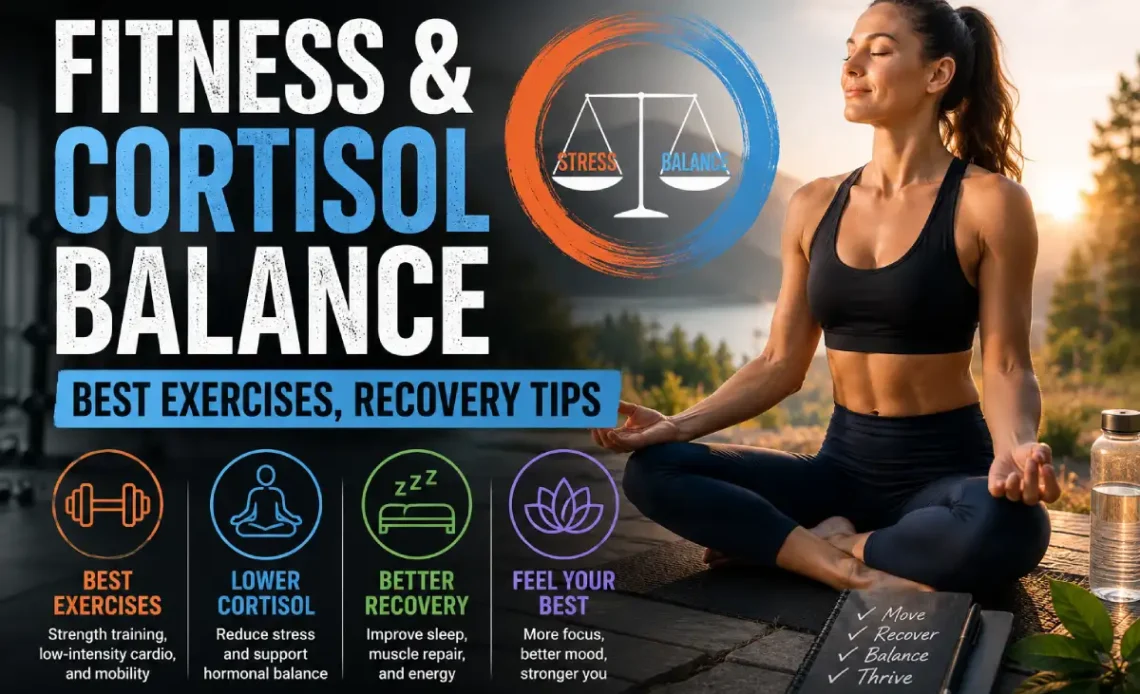
Fitness & Cortisol Balance is one of the most fundamental topics in health & wellness today because exercise has a direct influence on the body‘s stress response system (HPA axis). Most people understand the benefit of exercise on physical health, but don‘t realize how workout intensity, recovery, sleep and also nutritionall impact cortisol.
We hear about cortisol all the time, and it is usually referred to as the stress hormone. Truth is, it is so much more. It helps regulate energy generation, metabolism, inflammatory response, blood sugar levels, and also performance in the gym. You don‘t want to get rid of cortisol you need it in order to be alive. The goal here is to reach the harmony where exercise causes robustness rather than an overload.
Feeling tired even though you‘re exercising? Having trouble recovering? Not losing weight like you should? Might have something to do with cortisol.
This Article is a part of Cortisol Management
What Is Cortisol and Why Does It Matter for Fitness?
Cortisol is produced by the adrenal glands and plays a critical role in helping the body adapt to physical and also mental challenges.
Key Functions of Cortisol
- Supports energy production
- Regulates blood sugar
- Controls inflammation
- Assists recovery
- Helps the body respond to stress
- Supports exercise performance
During exercise, cortisol naturally rises to provide fuel for working muscles. This short-term increase is healthy and necessary. Problems arise when cortisol remains elevated due to chronic stress, overtraining, poor sleep, or inadequate recovery.
Healthy vs High Cortisol
| Healthy Cortisol Balance | Chronically Elevated Cortisol |
| Stable energy levels | Constant fatigue |
| Better workout recovery | Slow recovery |
| Improved focus | Brain fog |
| Healthy metabolism | Increased belly fat |
| Better sleep | Sleep disturbances |
| Strong immune function | Frequent illness |
2026 Research Insight
Recent work by others in wellness and sports recovery fields has found that recovery quality continues to track higher than just workout intensity as a predictor for the long term success of training. Athletes and active individuals who incorporate daily practices of sleep, stress reduction, and also recovery frequently maintain more balanced hormones and experience lower rates of burnout.
Overtraining and Cortisol: When Exercise Becomes a Stressor
It is an extremely popular myth in the world of fitness that the more we do, the more we get from the work we put in.
Actually, that is when your body will adapt, not during your workout.
What Is Overtraining?
Overtraining is present when volume of exercise is such that “the body can not rest and recover between bouts”.
Common causes include:
- Daily intense workouts
- Inadequate sleep
- Poor nutrition
- Excessive cardio
- Lack of recovery days
- High life stress combined with training
Signs of Overtraining
| Symptom | Potential Impact |
| Constant fatigue | Reduced performance |
| Poor sleep | Hormonal imbalance |
| Increased soreness | Delayed recovery |
| Mood changes | Elevated stress |
| Frequent illness | Weakened immunity |
| Plateaued results | Slower progress |
Real-World Example
Many people trying to lose weight add more cardio when progress slows. However, if recovery is already poor, increasing exercise volume may actually worsen fatigue and also make consistency harder to maintain.
Best Workouts for Stress Relief
Not every workout produces the same stress response.
Some forms of exercise actively help regulate stress, while others require careful recovery management.
Exercise Comparison Chart
| Exercise Type | Stress Relief Score | Recovery Demand Comparison |
| Walking | 10/10 | Low |
| Yoga | 10/10 | Low |
| Swimming | 9/10 | Moderate |
| Cycling | 8/10 | Moderate |
| Strength Training | 7/10 | Moderate |
| HIIT | 6/10 | High |
Walking: The Most Underrated Stress-Relief Workout
Walking remains one of the most effective tools for supporting cortisol balance.
Benefits
- Low-impact
- Beginner-friendly
- Supports mental wellness
- Easy recovery
- Improves cardiovascular health
Even a 20–30 minute daily walk can help reduce perceived stress while supporting overall fitness.
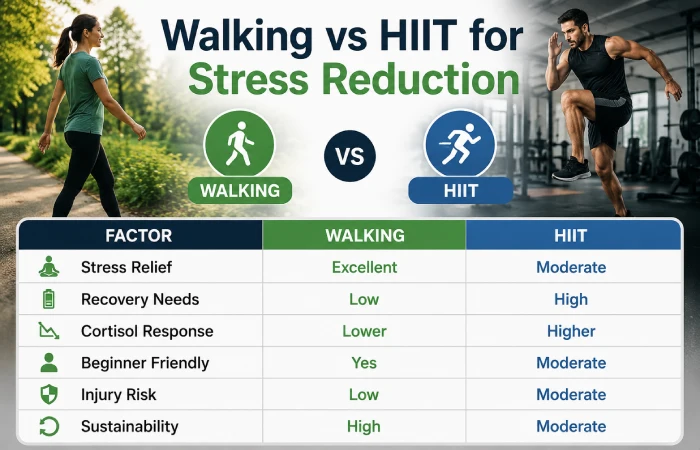
Walking vs HIIT for Stress Reduction
Many people wonder whether they should choose walking or high-intensity interval training.
The answer depends on your goals and also current stress levels.
Walking vs HIIT Comparison
| Factor | Walking | HIIT |
| Stress Relief | Excellent | Moderate |
| Recovery Needs | Low | High |
| Cortisol Response | Lower | Higher |
| Beginner Friendly | Yes | Moderate |
| Injury Risk | Low | Moderate |
| Sustainability | High | Moderate |
Expert Recommendation
If you’re experiencing chronic stress, poor sleep, or burnout symptoms, prioritizing walking and also moderate-intensity exercise may be more beneficial than adding additional high-intensity workouts.
Recovery Days Importance
One of the most overlooked aspects of fitness is recovery.
Recovery is where:
- Muscles repair
- Hormones rebalance
- Energy stores replenish
- Performance improves
Without recovery, the body remains in a prolonged stress state.
Why Recovery Days Matter
| Recovery Benefit | Impact |
| Muscle Repair | Better strength gains |
| Hormonal Balance | Reduced stress load |
| Injury Prevention | Lower injury risk |
| Energy Restoration | Improved performance |
| Mental Recovery | Better motivation |
Active Recovery Ideas
- Walking
- Stretching
- Yoga
- Mobility work
- Easy cycling
- Meditation
Recovery Rule
For most people, 1–2 recovery-focused days per week support long-term progress better than training every day.
Exercise and Hormonal Balance
Exercise affects several hormones that influence health and also performance.
Major Hormones Influenced by Exercise
| Hormone | Function |
| Cortisol | Stress response |
| Insulin | Blood sugar regulation |
| Growth Hormone | Recovery and repair |
| Testosterone | Muscle growth |
| Endorphins | Mood enhancement |
The goal isn’t simply lowering cortisol. The goal is creating a healthy hormonal environment through balanced training and also recovery.
Nutrition for Fitness & Cortisol Balance
Exercise alone cannot compensate for poor nutrition.
Recovery-supporting foods help regulate energy, reduce inflammation, and also support hormone function.
Best Foods for Recovery
| Food | Key Nutrient |
| Salmon | Omega-3 fats |
| Eggs | Protein |
| Greek Yogurt | Protein & probiotics |
| Berries | Antioxidants |
| Spinach | Magnesium |
| Oats | Complex carbohydrates |
Foods to Limit
- Energy drinks
- Sugary beverages
- Ultra-processed snacks
- Excess caffeine
Fitness Product Comparison
The right tools can support recovery and also consistency.
| Product | Best For |
| Fitness Tracker | Activity monitoring |
| Foam Roller | Muscle recovery |
| Yoga Mat | Home workouts |
| Resistance Bands | Strength training |
| Massage Gun | Recovery support |
Frequently Asked Questions
Does exercise increase cortisol?
Yes. Exercise temporarily raises cortisol levels to provide energy for physical activity. This response is normal and also beneficial when balanced with recovery.
What exercise is best for lowering stress?
Walking, yoga, swimming, and also moderate-intensity cycling are among the most effective stress-reducing activities.
Can overtraining increase cortisol?
Yes. Excessive training combined with inadequate recovery may contribute to prolonged cortisol elevation and also fatigue.
Are recovery days necessary?
Absolutely. Recovery supports muscle repair, hormone balance, and also long-term fitness progress.
Is walking better than HIIT for cortisol balance?
For individuals experiencing high stress, walking is often easier to recover from and also may better support overall cortisol balance.
Final Thoughts
Achieving Fitness & Cortisol Balance: Not about avoiding hard workouts. It is about developing the right blend of workout, rest, nutrition, sleep, not to mention stress to make your program sustainable and effective. The most successful fitness programs are ones that are flexible and also designed to optimize your physical performance and well-being.
If you are after more permanent health, be mindful of consistency over intensity. Regular walking, adequate rest days, quality foods and mindfunny eating habits tend to be more effective than ‘more’ and ‘harder’. Fitness and rest work hand in hand, so when you factor in both, we are more likely to sustain healthy cortisol levels, along with performance and health in the long term.