

 Sameena Fatima
Health & Wellness Content Writer
in
Sameena Fatima writes reader-focused
health and wellness content for
HealthBloomWeb, covering fitness,
nutrition, healthy lifestyle and
everyday wellness topics.
Sameena Fatima
Health & Wellness Content Writer
in
Sameena Fatima writes reader-focused
health and wellness content for
HealthBloomWeb, covering fitness,
nutrition, healthy lifestyle and
everyday wellness topics.
 Mirza Ibrahim Ali Khan
Editorial & Content Reviewer
in
Mirza Ibrahim Ali Khan contributes to
HealthBloomWeb's editorial review process,
with a focus on content structure,
readability, search intent and overall
editorial quality.
Mirza Ibrahim Ali Khan
Editorial & Content Reviewer
in
Mirza Ibrahim Ali Khan contributes to
HealthBloomWeb's editorial review process,
with a focus on content structure,
readability, search intent and overall
editorial quality.
 Reyansh Sethi
Medical Reviewer
in
Reyansh Sethi contributes to the medical
review process at HealthBloomWeb, focusing
on clarity, responsible health context and
reader-friendly presentation of health
information.
Reyansh Sethi
Medical Reviewer
in
Reyansh Sethi contributes to the medical
review process at HealthBloomWeb, focusing
on clarity, responsible health context and
reader-friendly presentation of health
information.
Healthy Lifestyle & Wellness: Your Foundation for a Better Life
Healthy Lifestyle & Wellness is not a passing trend, it might just be one of the best investments your can make on your body, mind, and future quality of life. As of 2016, Wellness is not just eating well or working out. It‘s limiting your amount of stress, maximizing sleep, keeping your social network vibrant, assisting with hormonal balance, and also developing daily strands of habits that keep you thriving.
A significant part of our population suffers from chronic fatigue, excessive stressful lives, fat gain, poor quality sleep and low energy levels. This is largely due to our lifestyles which promote instant gratification and also treat health as a secondary concern. The brighter side is that these few healthy choices made on a daily basis, can add up to remarkable results over the long run. Study after study shows that healthy lifestyle choices are the key to longevity, disease prevention and also wellness.
This Article is a part of Cortisol Management
Will walk you through the core dimensions of wellness, providing effective stress management techniques and maintenance methods which will promote your health and also happiness.
About Lifestyle and Wellness?
Healthy Lifestyle: the collection of day-to-day habits designed to improve overall health. Wellness is not quite the same; as it is an emphasis on mind, emotion, social interaction and also body.
The Five Pillars of Wellness, Wellness Area Why It Matters
- Physical Wellness Enhances strength and energy and also prevents disease
- Mental Wellness – Enhances concentration, resilience and also mental efficiency.
- Emotional Wellness Assists with stress and emotions
- Social Wellness Reinforces bonds and also networks
- Lifestyle WellnessMotivates making healthy lifestyle choices.
Healthy truly refers to when all of these things unite.
Why Wellness Matters More Than Ever in 2026
Modern lifestyles expose people to constant stress, excessive screen time, sleep disruption, and highly processed foods. These factors can negatively affect physical and also mental health.
Wellness Benefits Backed by Research
| Health Outcome | Potential Benefits of Healthy Habits |
| Stress Management | Improved emotional resilience |
| Heart Health | Better cardiovascular function |
| Sleep Quality | Enhanced recovery and hormone balance |
| Weight Management | Improved metabolism and appetite control |
| Mental Health | Better mood and cognitive performance |
| Longevity | Reduced risk of chronic diseases |
2026 Wellness Trends
Research continues to highlight:
- Increased focus on stress reduction
- Greater awareness of cortisol basics management
- Growing interest in preventive healthcare
- Personalized wellness approaches
- Importance of sleep optimization
- Integration of mental and also physical health
Morning Habits to Lower Cortisol Levels
Your morning routine sets the tone for the entire day. trigger cortisol naturally rises in the morning as part of the body’s wake-up process. However, certain habits can help support healthier stress responses.
1. Get Morning Sunlight
Exposure to natural light within the first hour of waking helps regulate circadian rhythms and also supports hormone balance.
Benefits
- Improved mood
- Better sleep quality
- Increased energy
- More stable cortisol patterns
2. Hydrate Before Coffee
After several hours of sleep, your body needs hydration.
Start your day with:
- Water
- Lemon water
- Electrolyte-rich drinks
3. Eat a Protein-Rich Breakfast
A balanced breakfast may help support stable blood sugar levels.
Good Choices
- Eggs
- Greek yogurt
- Oatmeal with nuts
- Protein smoothies
4. Avoid Stressful Phone Scrolling
Responding to emails or checking social media first can add mental strain before you’ve even started your day.
Mindfulness Meditation for Reducing Stress
It has become one of the most commonly suggested self-help techniques as it doesn’t involve any equipment and also can be practiced almost anywhere.
How Meditation Works
Meditation promotes mindful presence, and may calm down your nervous system.
Potential Benefits
| Benefit | Wellness Impact |
| Stress Reduction | Improved relaxation |
| Better Focus | Enhanced productivity |
| Improved Sleep | Better recovery |
| Emotional Balance | Greater resilience |
| Mental Clarity | Reduced mental fatigue |
Beginner Meditation Routine
- Find a quiet location.
- Sit comfortably.
- Focus on breathing.
- Observe thoughts without judgment.
- Practice for 5–10 minutes daily.
Consistency is more important than duration.
Best Exercises to Reduce Stress Levels
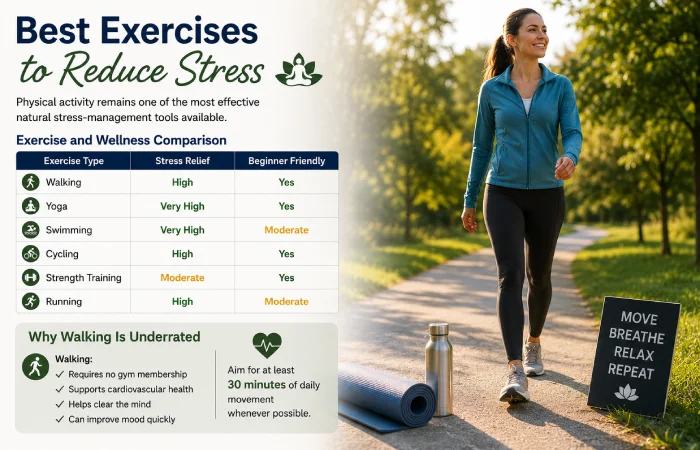
Top Exercises To Help Reduce Stress Exercise is perhaps the most efficient stress management therapy.
Exercise and Wellness Comparison
| Exercise Type | Stress Relief | Beginner Friendly Comparison |
| Walking | High | Yes |
| Yoga | Very High | Yes |
| Swimming | Very High | Moderate |
| Cycling | High | Yes |
| Strength Training | Moderate | Yes |
| Running | High | Moderate |
Why Walking Is Underrated
Walking:
- Requires no gym membership
- Supports cardiovascular health
- Helps clear the mind
- Can improve mood quickly
Aim for at least 30 minutes of daily movement whenever possible.
Yoga for Reducing Cortisol
Child Pose is awesome for relaxing you and taking out stress. Cat-Cow is also great if you want to be more productive and use mindfulness when breathing. Legs-up-the-Wall, this is a nice pose if you want to chill out after a hard day.
The Forward Fold allows for loosening of the head and shoulders.
CorpsePose, this pose will allow for full relaxation and will provide a sense of peacefulness and helps to relax each of the parts of your body and mind. It is amazing for leaving out stress.
Natural Ways to Improve Your Wellness
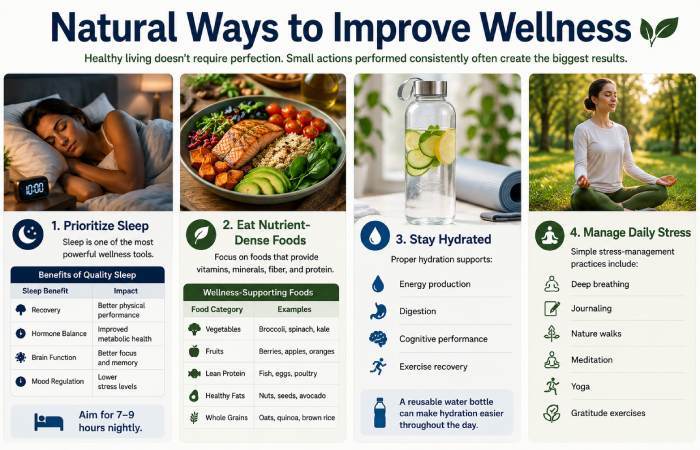
Healthy living doesn’t require perfection. Small actions performed consistently often create the biggest results.
Prioritize Sleep
Sleep is one of the most powerful wellness tools.
Benefits of Quality Sleep
| Sleep Benefit | Impact |
| Recovery | Better physical performance |
| Hormone Balance | Improved metabolic health |
| Brain Function | Better focus and memory |
| Mood Regulation | Lower stress levels |
Aim for 7–9 hours nightly.
Nutrient Dense foods
Pay attentions to anti cortisol foods in relation to nutrient density of foods in the form of vitamin , protein , fibers, minerals etc .
Wellness-Supporting Foods
| Food Category | Examples |
| Vegetables | Broccoli, spinach, kale |
| Fruits | Berries, apples, oranges |
| Lean Protein | Fish, eggs, poultry |
| Healthy Fats | Nuts, seeds, avocado |
| Whole Grains | Oats, quinoa, brown rice |
Stay Hydrated
Proper hydration supports:
- Energy production
- Digestion
- Cognitive performance
- Exercise recovery
A reusable water bottle can make hydration easier throughout the day.
Manage Daily Stress
Simple stress-management practices include:
- Deep breathing
- Journaling
- Nature walks
- Meditation
- Yoga
- Gratitude exercises
Wellness Product Comparison
While products cannot replace healthy habits, they can support nutrition your wellness journey.
| Product | Best For | Pros |
| Fitness Tracker | Activity monitoring | Tracks movement and sleep |
| Yoga Mat | Home workouts | Supports exercise consistency |
| Meditation App | Stress management | Guided mindfulness sessions |
| Water Bottle | Hydration | Encourages daily water intake |
| Sleep Tracker | Recovery | Monitors sleep quality |
Choose products that align with your goals rather than buying unnecessary gadgets.
Common Wellness Mistakes to Avoid
Many people unknowingly slow their progress through these common mistakes:
- Skipping Sleep
- Hormones, recovery, and also energy lack of sleep impacts these.
- Following Extreme Diets
- Diets that are restrictive are pretty hard to stick to.
- Overtraining
- More exercise is not always better. Recovery matters.
- Ignoring Mental Health
- Mental wellness is a part of wellness.
- Inconsistent Habits
- Small consistent acts over a long period of time are more effective than prolonged periods of short term intensity.
Final Thoughts
The Wellness Journey The goal of a healthy lifestyle & wellness isn’t to change everything overnight! Sustainable habits that bring out the most joy in your life are what truly make a difference. The great news, is some of the best wellness practices can be the simplest ones: consume nutritious foods, go outside, run, and exercise regularly, practice your breath work, manage your stress, take naps, and also take care of your friendships.
Don’t attempt the whole thing all at once. Pick one habit, perfect it over weeks and months. These little improvements can change your energy, wellbeing and also standard of living.