
 Sameena Fatima
Health & Wellness Content Writer
in
Sameena Fatima writes reader-focused
health and wellness content for
HealthBloomWeb, covering fitness,
nutrition, healthy lifestyle and
everyday wellness topics.
Sameena Fatima
Health & Wellness Content Writer
in
Sameena Fatima writes reader-focused
health and wellness content for
HealthBloomWeb, covering fitness,
nutrition, healthy lifestyle and
everyday wellness topics.
 Mirza Ibrahim Ali Khan
Editorial & Content Reviewer
in
Mirza Ibrahim Ali Khan contributes to
HealthBloomWeb's editorial review process,
with a focus on content structure,
readability, search intent and overall
editorial quality.
Mirza Ibrahim Ali Khan
Editorial & Content Reviewer
in
Mirza Ibrahim Ali Khan contributes to
HealthBloomWeb's editorial review process,
with a focus on content structure,
readability, search intent and overall
editorial quality.
 Reyansh Sethi
Medical Reviewer
in
Reyansh Sethi contributes to the medical
review process at HealthBloomWeb, focusing
on clarity, responsible health context and
reader-friendly presentation of health
information.
Reyansh Sethi
Medical Reviewer
in
Reyansh Sethi contributes to the medical
review process at HealthBloomWeb, focusing
on clarity, responsible health context and
reader-friendly presentation of health
information.
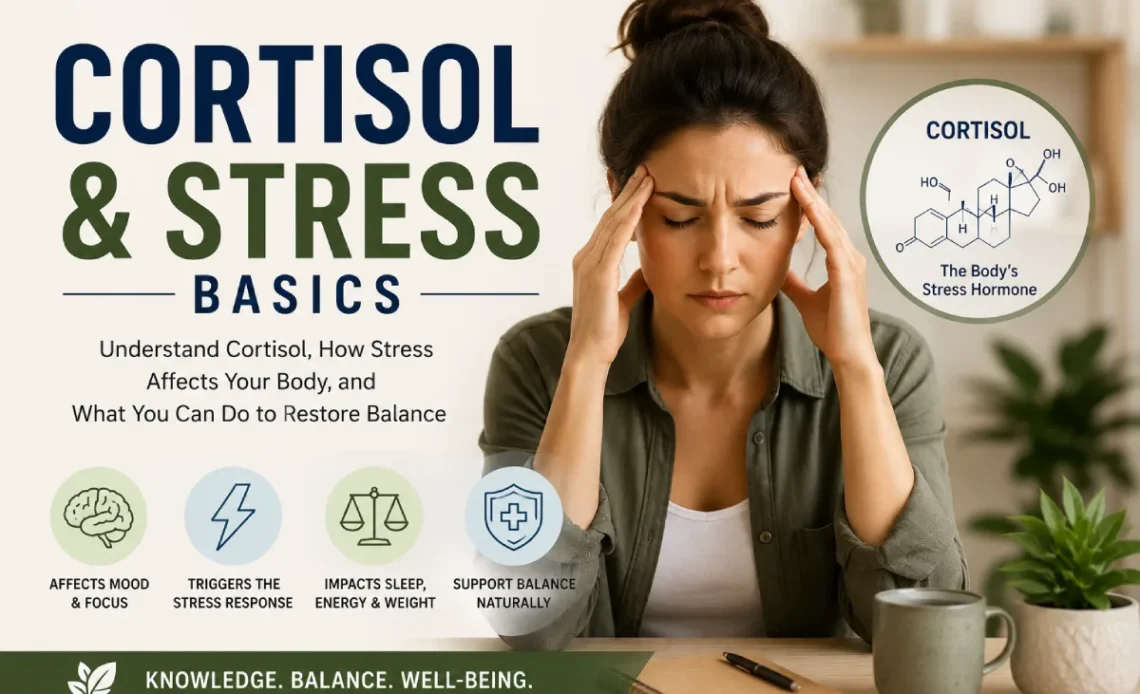
Cortisol & Stress Basics
Over the years I believe that stress has now come to be one of the biggest health issues facing modern society. Chronic stress is a condition that affects billions of people across the world due to the pressure of modern work culture and sleeping habits, bad eating habits, all of which stimulate the stress response called..
Getting acquainted with the Cortisol & Stress Basics can increase your chances of bettering your sleep, energy, metabolism and mood, and assist you with your weight loss management efforts. The basics will cover what cortisol balance is, explain you the signs and symptoms of excess cortisol levels, define what causes imbalance, and inform you of the affects stress has on your hormones in 2026.
This Article is a part of Cortisol Management
What Is Cortisol?
Cortisol is often called the “stress hormone”. It is made by the adrenal glands located above your kidneys.
Your body produces cortisol in times of anxiety, to prepare you to cope more efficiently. Low levels of cortisol is advantageous because it helps control:
- Blood sugar
- Blood pressure
- Metabolism
- Sleep-wake cycle
- Inflammation
- Energy production
Normal Cortisol Function
As well as when things are working correctly, cortisol will cause your body to::
1. Raise your energy.
2. Aid the body in the stress response.
3. Regulate inflammation and avoid an over response of the immune system.
4. Control the metabolism and metabolism of fats, carbs and proteins.
5. Control the blood pressure and keep it in a cardiovascular steady-state.
6. Contribute to sleep-wake cycle. You will be most likely to feel ‘bright’ or ‘alert’ in the morning.
When the stress response becomes prolonged, you can develop high levels of cortisol over a prolonged period. That is where problems begin.
How Stress Affects Hormones
Stress does not only affect your mood. It changes your entire hormonal system.
This causes a warning and also pressure to be sent through the body, which directs signals to the hypothalamus and consequently the body makes the launch of adrenaline and cortisol right into our blood, often called the battle as well as trip response. Foods cause the stress and anxiety hormonal agents in the body to rise in certain foods that enhance the trigger cortisol degrees regularly.
Hormones Commonly Affected by Chronic Stress
| Hormone | Effect of Chronic Stress |
|---|---|
| Cortisol | Becomes elevated |
| Insulin | Blood sugar regulation worsens |
| Testosterone | Often decreases |
| Estrogen | Can become imbalanced |
| Melatonin | Sleep quality declines |
| Thyroid hormones | Metabolism may slow down |
Long-term hormone imbalance may contribute to:
- Fatigue
- Anxiety
- Belly fat
- Poor sleep
- Brain fog
- Low motivation
- Muscle loss
According to 2026 wellness reports, chronic stress-related hormone imbalance has increased significantly among adults aged 25–45 due to digital overload, poor sleep habits, and sedentary lifestyles.
Symptoms of High Cortisol
High cortisol symptoms can appear gradually, making them easy to ignore at first.
Common Symptoms of High Cortisol
| Physical Symptoms | Mental & Emotional Symptoms |
|---|---|
| Belly fat gain | Anxiety |
| Fatigue | Mood swings |
| Poor sleep | Brain fog |
| High blood pressure | Irritability |
| Sugar cravings | Poor concentration |
| Acne or skin issues | Feeling overwhelmed |
| Frequent illness | Low motivation |
Early Warning Signs People Often Miss
The good thing about all of this, too is many have a cortisol imbalance without even knowing it early on.
Watch for:
- Waking up tired
- Afternoon crashes
- Increased caffeine dependence
- Difficulty relaxing
- Stress eating
- Frequent headaches
Causes of High Cortisol Levels

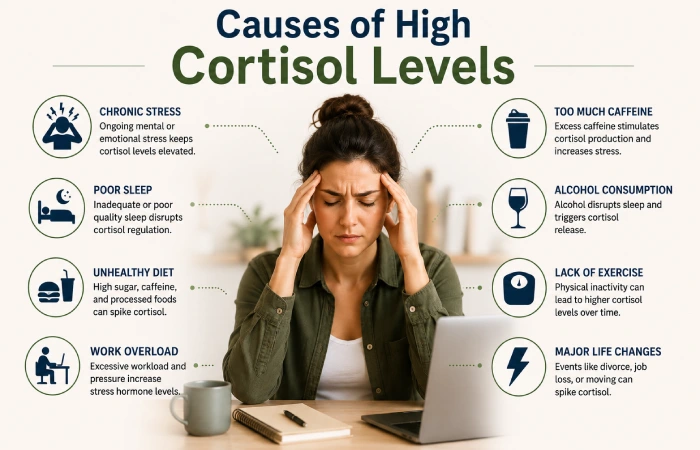
Several lifestyle and health factors may increase cortisol production.
Main Causes of High Cortisol
1. Chronic Stress
Ongoing emotional stress is the biggest contributor to elevated cortisol.
Examples include:
- Work burnout
- Financial pressure
- Relationship stress
- Academic stress
2. Poor Sleep
Sleeping less than 6–7 hours regularly may disrupt cortisol rhythms.
3. Excessive Exercise
Overtraining without recovery can increase stress hormone production.
4. High Sugar Intake
Blood sugar spikes may worsen cortisol imbalance over time.
5. Caffeine Overload
The caffeine too is potentially making your adrenal glands “fight or flight” ready.
6. Medical Conditions
Some medical disorders may also raise cortisol levels, including:
- Cushing syndrome
- Depression
- Obesity
- Chronic inflammation
Cortisol and Weight Gain
The role of cortisol and your belly fat. This health issue comes up the most during the first search.
How Cortisol Causes Weight Gain
Why it is so easy to gain weight under too much cortisol 11.
High cortisol may cause weight gain in several ways : 12. High cortisol level cause weight gain 11
| Mechanism | Comparison |
|---|---|
| Increased cravings | More sugar and junk food intake |
| Insulin disruption | More fat storage |
| Poor sleep | Slower metabolism |
| Muscle breakdown | Reduced calorie burning |
| Stress eating | Increased calorie intake |
Why Belly Fat Increases
Research suggests cortisol particularly influences visceral fat, which surrounds abdominal organs.
This explains why many people notice:
- Increased waist size
- Stubborn belly fat
- Difficulty losing weight despite dieting
Cortisol Management Trends
Now managing the stress involves more technology, lifestyle and personal wellness instruments
Most Popular Cortisol Reduction Methods
| Method | Effectiveness | Beginner Friendly |
|---|---|---|
| Walking daily | High | Yes |
| Breathwork apps | High | Yes |
| Magnesium supplements | Moderate to High | Yes |
| Meditation | High | Moderate |
| Sleep optimization | Very High | Yes |
| Therapy/counseling | Very High | Moderate |
| Reducing caffeine | Moderate | Yes |
Best Supplements for Stress Support
Many people now use nutrition supplements alongside lifestyle improvements.
Popular Stress Support Supplements
| Supplement | Main Benefit | Best For |
|---|---|---|
| Magnesium Glycinate | Relaxation & sleep | Evening stress |
| Ashwagandha | Stress resilience | Chronic stress |
| L-Theanine | Calm focus | Work anxiety |
| Omega-3 | Brain support | Mood balance |
| Rhodiola Rosea | Energy support | Fatigue |
Beginner-Friendly Cortisol Reduction Plan
Daily Habits That Help Lower Stress Hormones
Morning
- Get sunlight exposure
- Avoid checking your phone immediately
- Eat a protein-rich breakfast
Afternoon
- Take movement breaks
- Stay hydrated
- Reduce excess caffeine
Evening
- Limit screen time
- Practice deep breathing
- Sleep at consistent times
Small daily habits often produce better long-term results than extreme wellness routines.
Fortunately, certain nutrient-rich foods may help support a healthier stress response. Discover the anti-cortisol and stress-reducing foods that can help promote relaxation and overall wellness.
FAQ Section
Is cortisol always harmful?
Yes. Cortisol is required for our very existence. Problems arise when cortisolelevatesvery high levels for prolonged periods through long term stress.
Is it possible for high cortisol to result in belly fat?
Yes, it can. Excess cortisol may promote fat deposition in the abdominal area. Combined with a poor diet and too little sleep this can become a problem.
What food increase cortisol?
Highly processed foods, too much sugar, alcohol and an overload of caffeine.
How long do I need to reduce cortisol naturally?
Most people start to feel better within a few weeks after getting more sleep, less stress, and eating better.
Does exercise reduce Cortisol?
Usually, it helps with moderate exercise. Further, over training in heavy intense training and without a physiological rest interval may increase cortisol.
Final Thoughts
Cortisol & Stress Basics is a key step toward optimal health in 2026. Though we need the stress hormone cortisol to keep us alive, continual activation of stress response can throw off hormones and sleep, while throwing off metabolism and weight!
Fortunately, small lifestyle adjustments can make a big difference to your body‘s ability to handle stress in the long run. Improved sleep, optimal diet and exercise, and relaxation techniques all contribute to more natural regulation of cortisol.
Rather than seeking quicksolutions, instead, focus on developing everyday habits that can consistently support long-term wellness and endocrine balance.